Capítulo 1
Leadership's Ultimate Playbook: Mastering Influence, Growth, and Impact
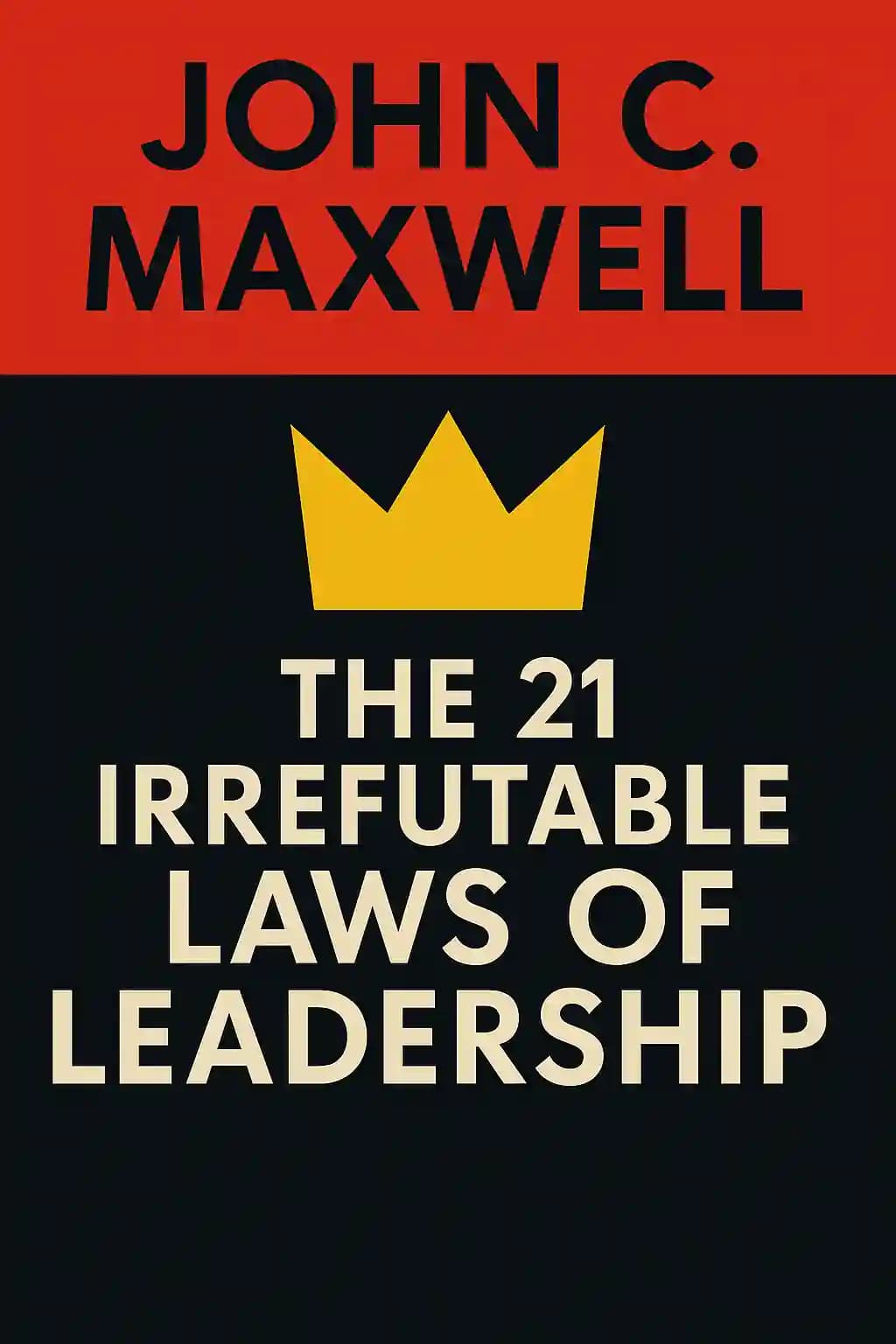
When Bill Gates was asked about the most influential books that shaped his thinking, "The 21 Irrefutable Laws of Leadership" appeared alongside works by Warren Buffett and his father. This wasn't surprising to those familiar with John Maxwell's masterpiece, which has sold over 3 million copies and become required reading in military academies, Fortune 500 companies, and MBA programs worldwide. What makes this work so powerful isn't just its practical wisdom, but how it fundamentally transforms the reader's understanding of what leadership truly means-moving beyond position or title to the art of genuine influence that can be developed by anyone willing to embrace its principles.
Capítulo 2
The Foundation: Leadership Is Pure Influence
At its core, leadership isn't about titles, management skills, or even being first. The true measure of leadership is influence-nothing more, nothing less. This revelation often surprises aspiring leaders who've mistakenly equated leadership with position or authority.
Consider Mother Teresa, who despite her small stature and lack of formal authority, built the Missionaries of Charity into an organization with over 4,000 members serving across 25 countries. When she spoke at the 1994 National Prayer Breakfast, she delivered pointed statements about abortion that would have provoked hostility from anyone else. Yet because it was Mother Teresa-perhaps the most respected person on the planet-everyone listened attentively.
Leadership myths continue to mislead many: the management myth (confusing managing systems with leading people), the entrepreneur myth (assuming all entrepreneurs are leaders), the knowledge myth (equating intelligence with leadership), the pioneer myth (believing being first makes you a leader), and the position myth (thinking titles create followers). These misconceptions cause many to miss the fundamental truth that leadership is earned through influence, not appointed through position.
The proof of leadership is found in the followers. When Maurice Saatchi was dismissed as CEO of Saatchi & Saatchi, executives and major clients followed him out, causing the company's stock to plummet. He lost his title but remained the leader because influence cannot be assigned-it must be earned through character, relationships, knowledge, intuition, experience, past success, and ability.
This explains why leadership in volunteer organizations reveals true leadership ability. As Bill Hybels notes, churches are the most leadership-intensive enterprises because followers cannot be forced to participate. The essence of influence lies in getting others to willingly participate, which requires connecting with people's hearts before asking for their hands.
Capítulo 3
The Growth Journey: Leadership Develops Daily, Not in a Day
Like Anne Scheiber who built a $22 million fortune from $5,000 through consistent investing over decades, leadership compounds over time through daily growth. There are no successful "day traders" in leadership development-what matters most is consistent daily investment in your leadership abilities.
Leadership is complicated with many facets-respect, experience, emotional strength, people skills, discipline, vision, timing-which is why leaders require seasoning to be effective. The journey follows five distinct phases: "I Don't Know What I Don't Know" (unawareness), "I Know That I Need to Know" (awakening), "I Know What I Don't Know" (intentional learning), "I Know and Grow, and It Starts to Show" (visible development), and finally "I Simply Go Because of What I Know" (intuitive leadership).
Theodore Roosevelt exemplified this growth journey. Despite beginning life as a sickly, asthmatic child with poor eyesight, he transformed himself through daily discipline when his father told him, "You have the mind, but not the body... you must make the body." This commitment to daily improvement carried throughout his life, from New York police commissioner to president. Even at 55, he co-led an expedition to explore Brazil's uncharted River of Doubt, demonstrating his lifelong dedication to growth. When he died at home in 1919, a book was found under his pillow-still learning until the end.
The most successful leaders are lifelong learners who understand that most people overestimate the importance of events and underestimate the power of processes. While events can catalyze change by encouraging decisions and motivating people, processes develop and mature people through consistent culture change.
Capítulo 4
The Navigator's Compass: Charting the Course for Others
Anyone can steer a ship, but only leaders can chart the course. The contrasting stories of explorers Roald Amundsen and Robert Scott racing to reach the South Pole in 1911 illustrate how leadership planning determines success or failure in challenging endeavors.
Amundsen meticulously planned his expedition-studying Eskimo methods, choosing expert team members, stocking supply depots along the entire route, and providing the best possible equipment. His careful navigation paid off with a successful journey where their worst problem was merely one man's infected tooth.
Scott's expedition was Amundsen's opposite. His motorized sledges failed five days in, his ponies couldn't survive the cold, and poor equipment choices led to frostbite, snowblindness, and dehydration. After ten grueling weeks, Scott's exhausted team reached the South Pole only to find Amundsen had beaten them by over a month. The return journey proved even more disastrous-Scott and his final companions perished just 150 miles from base camp.
True navigators see the entire journey before leaving port. They possess vision for the destination, understand what's required, know who belongs on the team, and anticipate obstacles long before they appear. As Leroy Eims writes, "A leader is one who sees more than others see, who sees farther than others see, and who sees before others do."
Good navigators draw on past experience, examine current conditions before making commitments, listen to what others have to say, and make sure their conclusions represent both faith and fact. They balance optimism with realism, intuition with planning, and vision with practical execution. When you prepare well as a navigator, you convey confidence and trust to your team.
Capítulo 5
The Servant's Heart: Adding Value Through Service
The Law of Addition demonstrates that leaders add value by serving others rather than seeking personal gain. Jim Sinegal, Costco's co-founder and CEO, exemplifies this principle through his modest $350,000 salary (bottom 10% for large corporation CEOs), unpretentious office, and personal approach to leadership.
Sinegal pays workers 42% more than competitors and provides superior healthcare benefits at a fraction of typical costs. His philosophy: "You get good people and good productivity" through fair compensation. Beyond compensation, he demonstrates personal care-maintaining an open-door policy, wearing a name tag, using first names, and visiting every Costco store annually.
This servant mindset stems from his mentor Sol Price, who taught him to balance the interests of shareholders, employees, customers, and managers. While Wall Street analysts criticize his generosity toward employees, Sinegal remains committed to long-term thinking: "On Wall Street, they're in the business of making money between now and next Thursday...We want to build a company that will still be here fifty and sixty years from now."
Leaders' motives fundamentally shape their impact. The critical question is: "Are you making things better for the people who follow you?" The greatest leaders-like Nobel Peace Prize winners Albert Schweitzer, Martin Luther King Jr., Mother Teresa, and Desmond Tutu-focused less on position and more on positive impact through service.
To add value to others, we must truly value them, make ourselves more valuable, know what others value, and focus on things that create lasting impact. As Dan Cathy of Chick-fil-A demonstrated by kneeling to clean Maxwell's shoes with a horsehair brush, serving others "cleans out the closet" in relationships. The leader's attitude shapes the entire organization's atmosphere.
Capítulo 6
The Bedrock of Trust: Building on Solid Ground
Trust is the foundation of leadership-it's the glue that holds an organization together. Leaders cannot repeatedly break trust with people and continue to influence them. When trust is lost, influence evaporates.
Trust is like change in a leader's pocket-good decisions earn more, poor ones deplete it. When you run out of change, you're out as leader. Leaders who consistently make good decisions build up reserves that protect them even if they make a major mistake. Trust is built through consistently exemplifying competence, connection, and character.
Character quickly communicates consistency, potential, and respect. Consistent character means people know what to expect from you daily. Character also communicates potential-as John Morley noted, "No man can climb out beyond the limitations of his own character." Poor character is like a ticking time bomb that will eventually destroy leadership ability.
Without inner character, you can't earn external respect-which is essential for lasting leadership. Leaders earn respect through sound decisions, admitting mistakes, and putting followers' needs before personal agendas. Colonel Robert Gould Shaw of the 54th Massachusetts Infantry exemplified this during the Civil War, leading the first African American regiment from the front. Though killed alongside many of his soldiers, his character earned such deep respect that it survived beyond his death.
The Vietnam War began the erosion of public faith in American leadership when Robert McNamara and President Johnson continued the war even after realizing it couldn't be won, while being dishonest with the American people. The cost wasn't just 58,000 lives but also the American people's faith in their leaders. This breach of trust continues to affect public perception of politicians today.
Capítulo 7
The Magnetic Pull: Attracting Those Like Yourself
Who you are as a leader determines who you attract as followers. This fundamental principle of leadership magnetism was powerfully demonstrated when John Maxwell moved to Skyline Church. His predecessor, Dr. Butcher, a gifted musician and artistic leader, had naturally drawn many musicians and creative individuals to the congregation. When Maxwell, known for his leadership expertise, took over, the church began attracting more business leaders, entrepreneurs, and those interested in organizational development.
Leaders naturally draw people who share key characteristics with them across multiple dimensions. These include generational alignment, where leaders often connect best with those from similar age groups who share common cultural references and experiences. Attitude similarity proves crucial - optimistic leaders attract optimistic followers, while skeptical leaders draw more cautious individuals. Background commonalities, whether educational, professional, or socioeconomic, create natural bridges of understanding. Shared values serve as a powerful magnet, bringing together people with similar ethical frameworks and priorities. Energy levels tend to match, with high-energy leaders attracting dynamic followers and more measured leaders drawing thoughtful, deliberate types. Similar giftedness often results in mutual recognition and respect, while leadership ability levels tend to align, with strong leaders attracting other capable leaders.
Teams inevitably become extensions of their leader's personality, as famously illustrated by basketball coach Al McGuire's candid admission that his Marquette teams were "arrogant and obnoxious" like himself. This mirroring effect can be observed across various organizations, from corporate environments to educational institutions. Steve Jobs' perfectionist nature at Apple attracted similarly detail-oriented individuals, while Richard Branson's adventurous spirit drew innovative risk-takers to Virgin Group.
This magnetism operates regardless of whether the values are positive or negative. Strong leaders with corrupt values will invariably attract followers with similar ethical shortcomings. History provides numerous examples, from political movements to corporate scandals, where compromised leadership attracted like-minded individuals. If you're dissatisfied with the caliber of people you're attracting, the solution lies in personal development - improving your leadership skills, character, and ethical standards. However, if you're pleased with who you attract, the next strategic step is intentionally recruiting individuals different from yourself to complement your weaknesses and create a more balanced team.
The Civil War provides a dramatic historical illustration of this law. When Robert E. Lee made the momentous decision to decline Lincoln's offer to command Union forces and instead joined the Confederacy, his choice triggered a cascade effect. Many of the most capable military leaders of the time, including Stonewall Jackson and J.E.B. Stuart, followed Lee south, drawn by his exceptional leadership abilities and personal integrity. Military historians widely believe that had Lee chosen differently and accepted Lincoln's offer, the war's duration would have been significantly shortened from five years to perhaps two, potentially saving hundreds of thousands of lives. This historical example powerfully demonstrates how superior leaders attract other strong leaders, creating a multiplier effect that can dramatically influence outcomes in any endeavor.
Capítulo 8
The Connection Factor: Touching Hearts Before Hands
Leaders must touch hearts before asking for hands. George W. Bush's presidency can be summarized by two key moments that illustrate this principle. The first came after the September 11, 2001 terrorist attacks, when he visited Ground Zero just four days after the towers collapsed. Standing in the wreckage with his arm around firefighter Bob Beckwith, Bush declared, "I can hear you. The rest of the world hears you. And the people who knocked these buildings down will hear all of us soon." This genuine connection defined his first term as Americans felt understood and validated during a time of fear and uncertainty.
The second defining moment came during Hurricane Katrina in 2005. Instead of visiting New Orleans after the levees broke, Bush merely flew over in Air Force One, peering through a window. This created an image of indifference that he could never overcome. He had broken the Law of Connection, and the people felt abandoned and betrayed.
Good leaders work at connecting with others constantly, whether addressing an entire organization or working with individuals. "People don't care how much you know until they know how much you care." When you show genuine concern and develop credibility, people respond in kind. Ronald Reagan exemplified this as "the Great Connector"-not just with audiences but with individuals. When he returned to the White House, staff would excitedly say "Daddy's home!" because his presence encouraged rather than intimidated them.
Even when addressing thousands, effective leaders connect with people as individuals. To connect effectively, communicate with openness and sincerity, know your audience, live your message, go to where they are, focus on them rather than yourself, believe in them, and offer direction and hope.
Capítulo 9
The Power of Teams: Surrounding Yourself with Excellence
A leader's potential is fundamentally determined by those closest to them. Even the most talented individuals cannot achieve greatness alone - Lance Armstrong's story provides a compelling example. Despite his extraordinary physical gifts and determination, Armstrong relied on an incredible team to win his seven Tour de France titles. His inner circle included his coach Chris Carmichael, who designed specialized training programs, tactician Johan Bruyneel, who masterminded race strategies, and specialized cyclists who each brought unique skills to the team - from climbers who excelled in mountainous stages to sprinters who could protect Armstrong in the peloton.
When selecting inner circle members, leaders must ask five critical questions that go beyond basic competence: Do they have genuine influence with others and the ability to mobilize people? Do they bring complementary gifts to the table that fill gaps in the organization? Do they hold a strategic position that can impact multiple areas of the organization? Do they add tangible value to both you and the organization through their contributions? Do they positively impact other inner circle members, creating synergy rather than discord? Look for people who display not just excellence in their field, but also emotional maturity, good character, and alignment with organizational values. Your inner circle should consist of "lifters" rather than "leaners" - people who not only carry their own weight but elevate those around them.
No leader starts with a perfectly formed inner circle - it must be built methodically over time through careful selection and development. Maxwell's experience at Skyline Church illustrates this principle in action. Upon taking leadership, he discovered the existing staff lacked the capability to drive necessary growth. He implemented a strategic transformation in three phases: first, immediately replacing the bottom third of performers to establish a new performance baseline; second, gradually upgrading middle performers through coaching or replacement; and finally, ensuring even top performers continued to grow or were succeeded by stronger leaders. Within three years, all but two original staff members had been replaced with more capable leaders. The results were dramatic - weekly attendance tripled from 1,000 to over 3,300, demonstrating how improved leadership capacity directly impacts organizational outcomes.
The process of building a strong inner circle requires both patience and decisiveness. Leaders must be willing to make difficult personnel decisions while simultaneously investing in developing promising team members. Regular assessment of team dynamics, individual growth, and collective impact helps ensure the inner circle remains effective and aligned with organizational goals.
Remember, a leader's potential is ultimately determined by those closest to them. If you want to reach your highest level possible, follow a two-step approach: first, commit to becoming the best leader you can through continuous personal development; then, systematically surround yourself with the best leaders you can find, focusing on those who complement your strengths and compensate for your weaknesses. The quality of your inner circle will either multiply or diminish your leadership effectiveness.
Capítulo 10
The Legacy Builder: Creating Impact Beyond Your Lifetime
What do you want people to say at your funeral? The Law of Legacy states that a leader's lasting value is measured by succession. Without considering this principle, leaders risk directing their influence away from their greatest potential impact.
Every person leaves some kind of legacy-positive or negative-but we have a choice about what that legacy will be. Creating an intentional legacy requires four key steps: knowing the legacy you want to leave, living that legacy daily, carefully choosing who will carry it forward, and effectively passing the baton to them.
Most people simply accept their lives rather than intentionally leading them. Leaders must be proactive about how they live and the legacy they'll leave. As Grenville Kleiser wrote, your life is like a book with each day recording your efforts and achievements until "finis" must be written. Maxwell advises: "Someday people will summarize your life in a single sentence. My advice: pick it now!"
A legacy lives on in people, not things. Though many leaders invest in organizations, buildings, or systems, only people live on after we're gone. Leadership legacy follows a natural progression: achievement comes when leaders do big things themselves; success when they empower followers; significance when they develop leaders to do great things with them; and legacy when leaders position others to do great things without them.
During a visit to Mother Teresa's headquarters in Kolkata, Maxwell discovered a ceremony where forty-five new nuns were being inducted into her order. Though Mother Teresa was gone, her legacy continued through leaders carrying on her vision. This vivid example shows how true leadership impact extends far beyond one's lifetime through those who've been developed to carry on the work.
Life is fleeting. As Jackie Robinson observed, "A life isn't significant except for its impact on other lives." In the end, leaders are judged by how well the people they invested in carry on after they're gone-that's the true measure of the Law of Legacy.
Capítulo 11
The Ultimate Question: What Will You Build?
Leadership is not about what you can gain but what you can give. The greatest leaders in history-from Lincoln to Mother Teresa, from Churchill to Mandela-understood that leadership is fundamentally about serving others and creating value that extends beyond your own lifetime. These exemplary figures demonstrated that true leadership transcends personal ambition, focusing instead on creating lasting positive change. Lincoln preserved the Union while ending slavery, Mother Teresa served the poorest of the poor in Calcutta, Churchill rallied a nation during its darkest hour, and Mandela transformed a divided country into a rainbow nation.
These 21 laws provide a comprehensive framework for developing leadership at every level. Some principles may come naturally to you, while others will require deliberate practice and growth. For instance, you might excel at the Law of Connection but struggle with the Law of Timing. You may be naturally strong in the Law of Influence but need development in the Law of Navigation. No leader excels at all 21 laws, which is precisely why building a complementary team is so essential. The key is to recognize your strengths while actively working to improve your weaknesses.
What matters most is not where you start but your commitment to growth. Leadership develops daily, not in a day. Small, consistent actions compound over time - reading leadership books, seeking mentorship, accepting challenging assignments, and learning from both successes and failures. With consistent application of these principles, you can expand your influence, build an exceptional team, and create a legacy that continues long after you're gone. Consider leaders like Sam Walton, whose leadership principles still guide Walmart, or Walt Disney, whose vision continues to inspire creativity and imagination decades after his passing.
As you close this book, ask yourself these crucial questions: What kind of leader will you become? Will you be transformational or transactional? What difference will you make in your organization and community? How will you develop the next generation of leaders? And most importantly, who will carry your vision forward when you're gone? The answers to these questions will determine not just your success as a leader, but your significance as a human being. Remember that great leadership isn't measured by the height of your achievements, but by the depth of your impact on others and the longevity of your influence.
Your leadership journey is unique, and these laws serve as guideposts rather than rigid rules. The true measure of your leadership will be the lives you touch, the organizations you transform, and the legacy you leave behind. Start today by choosing one law to master, then gradually incorporate others as you grow in your leadership capacity.