Unlock the architecture of unforgettable stories with Schmidt's masterwork - a treasure map of 55 dramatic situations that transformed modern storytelling. Why do Hollywood screenwriters keep this on their desks? Because it solves the mystery every writer faces: finding your perfect plot structure.
Victoria Lynn Schmidt, author of Story Structure Architect: A Writer’s Guide to Building Dramatic Situations and Compelling Characters, is a screenwriter, storytelling expert, and psychologist renowned for blending mythological archetypes with modern narrative techniques.
A UCLA film program graduate with an MFA from Loyola Marymount University and a PhD in psychology, Schmidt draws on her dual expertise in cinema and human behavior to create actionable frameworks for writers. Her groundbreaking work 45 Master Characters redefined character development by introducing gender-specific heroic journeys, while Book in a Month systematizes rapid novel drafting.
Schmidt’s approach—featured in writing curricula and workshops globally—emphasizes visual storytelling and psychological depth, reflecting her screenwriting background. Her books, lauded for practical yet innovative strategies, have become staple resources for fiction authors and educators. Story Structure Architect has been cited in over 50 writing guides and translated into 12 languages, solidifying its status as a trusted toolkit for crafting layered narratives.
Story Structure Architect is a writer’s guide to building narratives using timeless story structures, character archetypes, and dramatic situations. It modernizes Georges Polti’s classic 36 Dramatic Situations by adding 19 new scenarios, offering 55 frameworks for creating conflict and subplots. The book provides tools for crafting cohesive stories across genres, emphasizing three-act structure, pacing, and character motivation.
Aspiring and experienced writers, screenwriters, and novelists seeking structured approaches to storytelling will benefit most. It’s ideal for those struggling with plot holes, pacing, or character development. Screenwriters may particularly appreciate Schmidt’s film-centric examples, reflecting her UCLA film background.
Yes, for writers wanting a systematic toolkit. It’s praised for its actionable templates and clear examples but critiqued by some as overly formulaic. Those preferring organic creativity may find it restrictive, but it remains a valuable reference for troubleshooting structural issues.
Core ideas include:
Schmidt blends mythological archetypes (e.g., Jungian models) with practical screenwriting techniques. Unlike purely plot-focused guides like Save the Cat, she emphasizes character psychology and gender-specific journeys (e.g., Feminine/Masculine Hero arcs).
The 55 scenarios include “Lovers Forced Apart by Rivalry,” “Quest for Identity,” and “Betrayal of Trust.” These draw from Polti’s 19th-century work but add modern twists like workplace conflicts or AI-driven dilemmas.
Schmidt links character archetypes (e.g., “The Rebel,” “The Mentor”) to plot progression. She advocates aligning characters’ internal growth with external conflicts, citing examples like a hero overcoming self-doubt to resolve a crisis.
Some argue its rigidity stifles creativity, while others note its archetypes risk reinforcing gender stereotypes (e.g., “Feminine Journey” emphasizing relationships). However, most praise its practicality for drafting and revising.
45 Master Characters focuses on archetypes and psychology, while Story Structure Architect tackles plot mechanics. They’re complementary: the former builds personas, the latter places them in actionable scenarios.
Yes. Schmidt’s screenwriting background shines in visual storytelling advice, such as using setting as a character or balancing dialogue with action beats. The three-act template aligns with film-industry standards.
She expands Polti’s 19th-century list to 55, adding modern conflicts like technology dilemmas and societal shifts. Examples include AI ethics or climate crises, making the frameworks relevant to contemporary audiences.
Despite AI-driven writing tools, its human-centric frameworks help writers avoid generic plots. The 55 situations adapt well to emerging genres like climate fiction or AI dystopias, ensuring structural rigor amid evolving trends.
These emphasize leveraging classic patterns to create originality.
Siente el libro a través de la voz del autor
Convierte el conocimiento en ideas atractivas y llenas de ejemplos
Captura ideas clave en un instante para un aprendizaje rápido
Disfruta el libro de una manera divertida y atractiva
Modern storytelling often subverts traditional throughlines, combining elements in unexpected ways.
The Dramatic Throughline poses the central question that drives reader engagement throughout your narrative.
Conflict-the
Desglosa las ideas clave de Story Structure Architect en puntos fáciles de entender para comprender cómo los equipos innovadores crean, colaboran y crecen.
Experimenta Story Structure Architect a través de narraciones vívidas que convierten las lecciones de innovación en momentos que recordarás y aplicarás.
Pregunta cualquier cosa, elige tu estilo de aprendizaje y co-crea ideas que realmente resuenen contigo.

Creado por exalumnos de la Universidad de Columbia en San Francisco
"Instead of endless scrolling, I just hit play on BeFreed. It saves me so much time."
"I never knew where to start with nonfiction—BeFreed’s book lists turned into podcasts gave me a clear path."
"Perfect balance between learning and entertainment. Finished ‘Thinking, Fast and Slow’ on my commute this week."
"Crazy how much I learned while walking the dog. BeFreed = small habits → big gains."
"Reading used to feel like a chore. Now it’s just part of my lifestyle."
"Feels effortless compared to reading. I’ve finished 6 books this month already."
"BeFreed turned my guilty doomscrolling into something that feels productive and inspiring."
"BeFreed turned my commute into learning time. 20-min podcasts are perfect for finishing books I never had time for."
"BeFreed replaced my podcast queue. Imagine Spotify for books — that’s it. 🙌"
"It is great for me to learn something from the book without reading it."
"The themed book list podcasts help me connect ideas across authors—like a guided audio journey."
"Makes me feel smarter every time before going to work"
Creado por exalumnos de la Universidad de Columbia en San Francisco

Obtén el resumen de Story Structure Architect como PDF o EPUB gratis. Imprímelo o léelo sin conexión en cualquier momento.
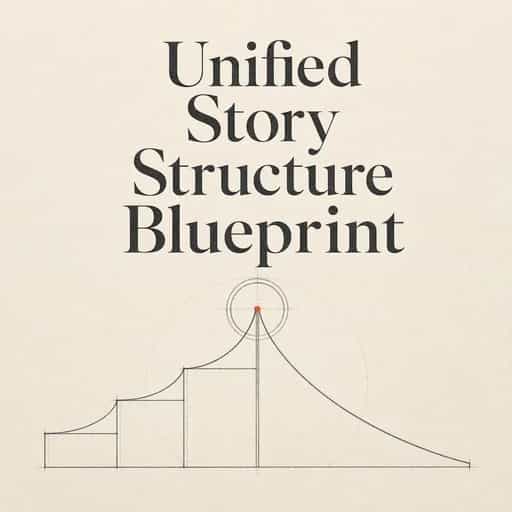
Have you ever wondered why some stories grip you completely while others leave you cold? The difference often lies not in raw talent but in structural design. Story structure isn't a creativity-killing formula-it's the invisible framework that supports your narrative vision. Like a master architect who understands that beautiful buildings need solid foundations, great storytellers recognize that compelling narratives require thoughtful blueprints. This architectural approach offers a middle path between rigid plotting and complete spontaneity, allowing writers to construct stories that feel both structured and alive. Whether crafting a novel or simply trying to understand why certain narratives resonate so deeply, mastering these building blocks creates stories that stand the test of time.
Every compelling story begins with five fundamental decisions. First, select a Dramatic Throughline-the central question driving reader engagement. Will your protagonist succeed, fail, or abandon their quest? Consider George Bailey in "It's a Wonderful Life," whose throughline explores finding satisfaction at home rather than adventure elsewhere. Next, choose your primary Conflict type: Relational (characters against each other, like Romeo and Juliet's families), Situational (environmental threats, as in "To Build a Fire"), Inner (tension within a character's mind, like Raskolnikov in "Crime and Punishment"), or Social (individuals clashing with institutions, as in "The Handmaid's Tale"). Genre selection shapes your story's emotional experience-not mere categorization but evoking specific feelings. A dark comedy transforms horror material completely, as "Shaun of the Dead" does with zombie tropes. Your Structure Model provides the architectural framework. Traditional three-act designs like the Roller Coaster maintain constant tension, while experimental approaches like Metafiction break conventions. Each creates different rhythms, such as the Circular structure where endings mirror beginnings, as in "One Hundred Years of Solitude." Finally, Dramatic Situations add depth to potentially lagging sections. These fifty-five distinct scenarios-from Supplication to Genius-create tension or emotional depth through character choices.
The Dramatic Throughline poses the central question driving reader engagement: Will this character achieve their goal, fail, or abandon their quest? This fundamental question creates tension throughout the narrative. Traditional throughlines follow established patterns. In the "Character Succeeds" throughline, protagonists achieve goals through courage or transformation, like Harry Potter defeating Voldemort. The "Character Is Defeated" throughline shows failure despite heroic effort, typically from character flaws, as with Gatsby pursuing Daisy. The "Character Abandons Goal" throughline presents protagonists who surrender objectives after realizing they won't bring happiness, like Elizabeth Gilbert in "Eat, Pray, Love." Nontraditional throughlines include the "Character's Goal Is Undefined" approach, creating an ethereal quality focused on mood and internal transformation, as in Woolf's "Mrs. Dalloway." The "Reader Creates The Goal" throughline puts audiences in control, common in interactive fiction. Modern storytelling often subverts these patterns, combining elements unexpectedly. Characters might achieve stated goals only to discover they pursued wrong objectives, or find unexpected fulfillment in failure. What makes throughlines powerful is their emotional truth. When we recognize our own struggles in a character's journey - whether they succeed, fail, or change course - we connect with stories on a profound level.
Conflict-the opposition of forces that advances plot-propels stories forward, particularly during challenging second acts. While often viewed negatively, conflict generates ideas, improves understanding, and facilitates growth. The six types provide different dramatic tensions that keep audiences invested. Relational conflict pits characters with mutually exclusive goals against each other. Siblings competing for inheritance or business rivals create tension, especially when both sides have legitimate claims. Situational conflict forces characters to face environmental threats-surviving disasters, navigating harsh wilderness, or adapting to climate change. These conflicts reveal character through responses to extreme circumstances. Inner conflict occurs when characters struggle with opposing internal influences-perceived flaws, religious guilt, or moral dilemmas. A recovering addict fighting temptation exemplifies this internal warfare, creating powerful character arcs. Social conflict emerges when characters clash with institutions or collectives. Whistleblowers, reformers, and rebels typically face this conflict, often intertwined with themes of justice. The most compelling stories layer multiple types of conflict, creating rich narratives that engage readers on multiple levels-reflecting how real challenges typically blend relational, inner, and social dimensions.
While the three-act structure remains storytelling's reliable foundation, innovative structures can transform familiar tales into unforgettable experiences. The Roller Coaster structure creates constant tension with multiple climaxes-perfect for thrillers like "The Da Vinci Code." The Replay structure presents multiple versions of the same events, either from one character experiencing them repeatedly (like "Groundhog Day") or from different perspectives (like "Rashomon"), transforming our understanding of truth. Fate structure opens with the Climax at both beginning and end, with flashbacks revealing how we got there. This works brilliantly with "Character Is Defeated" throughlines, particularly in film noir. Interactive structure breaks linearity by allowing readers to determine narrative flow through choice points, as seen in Black Mirror's "Bandersnatch." Metafiction consciously draws attention to itself as fiction, questioning the relationship between fiction and reality, exemplified by Kurt Vonnegut's "Slaughterhouse-Five." These structures mirror how we actually experience life-not always linearly, not always with clear resolution, and often with awareness of the stories we tell ourselves.
Stories resonate most deeply when they chart meaningful character transformation. The Journey structure focuses on characters experiencing major internal growth, with three primary models offering distinct patterns of evolution. The Feminine Journey follows a cyclical path where the hero questions norms and stands up for beliefs, progressing from subtle resistance to bold defiance. The hero faces a symbolic death - a profound moment of loss or sacrifice - before experiencing rebirth as a more complete being. In "The Wizard of Oz," Dorothy realizes she possessed the power to return home all along. The Masculine Journey begins in what the hero perceives as an ideal world until a catalytic event forces a choice between internal reflection or external action. The inward path leads to growth, as in "Gran Torino," where Walt Kowalski confronts his prejudices. The outward path typically leads to destruction, as in "Scarface," where Tony Montana's refusal to change leads to his downfall. The Hero's Journey follows a linear path where the hero leaves their ordinary world, faces challenges in a special world, and returns transformed. In "Star Wars," Luke Skywalker completes this quest and returns able to help others with his new abilities. These journey types help craft character arcs that mirror our own paths of growth, reflecting the universal experience of change.
Great storytelling balances structural architecture with creative vision. The most powerful narratives feel both recognizable and original, combining familiar patterns with innovative approaches. Story structure provides a foundation for your unique expression rather than constraining it. Like jazz musicians who master theory before improvising, storytellers who understand architectural principles gain freedom to experiment while maintaining coherence. The most memorable stories often come from knowing the rules well enough to break them effectively. Narrative architecture offers infinite possibilities for creating stories that captivate and transform.