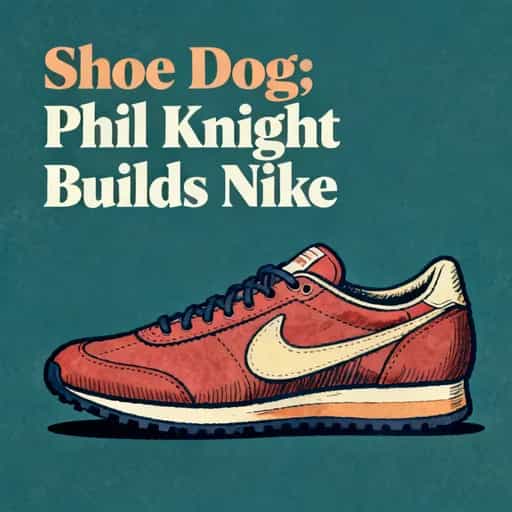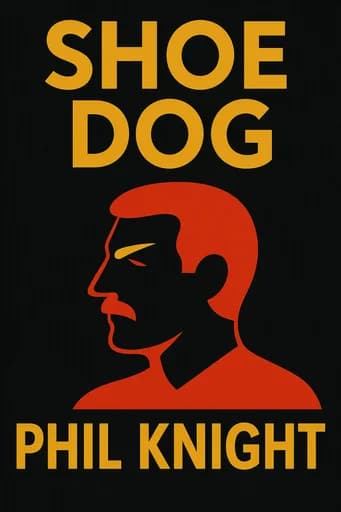
Before Nike became a $40 billion empire, Phil Knight started with $50 borrowed from his father. "Shoe Dog" reveals the gritty, near-failure journey that Bill Gates calls "a refreshingly honest reminder that success is messy, perseverance critical, and luck invaluable."
Phil Knight, co-founder of Nike and author of the bestselling memoir Shoe Dog, is a globally renowned entrepreneur and business visionary. The book, blending autobiography with business strategy, chronicles Knight’s journey from selling shoes out of his car to building a multibillion-dollar empire, offering raw insights into perseverance, innovation, and risk-taking.
A Stanford MBA graduate, Knight transformed his graduate school paper on disrupting the athletic shoe market into Blue Ribbon Sports in 1964, which later became Nike. His hands-on leadership in product innovation—including the iconic “swoosh” logo and waffle sole design—redefined athletic footwear.
Shoe Dog became a New York Times bestseller, praised for its candid storytelling and lessons on grit. Translated into over 25 languages, the memoir has sold millions of copies worldwide and is frequently cited as essential reading for aspiring entrepreneurs and business leaders. Knight, with a net worth exceeding $45 billion, remains a seminal figure in corporate history.
Shoe Dog chronicles Phil Knight’s journey of founding Nike, detailing his struggles with financial instability, ruthless competition, and personal doubts while building a global brand. The memoir highlights pivotal relationships, like those with coach Bill Bowerman and early employees, and underscores themes of resilience, innovation, and entrepreneurial grit.
Entrepreneurs, business students, and sports enthusiasts will find inspiration in Knight’s raw account of overcoming adversity. It’s also valuable for leaders seeking insights into team-building and brand creation, blending personal storytelling with actionable business strategies.
Yes—Shoe Dog offers a candid, motivational look at entrepreneurship through Nike’s origin story. Knight’s vulnerability about failures, coupled with lessons on perseverance and market intuition, makes it a compelling read for anyone interested in business or personal growth.
Knight started with a $50 loan from his father, importing Japanese shoes under Blue Ribbon Sports. Revenue reinvestment and high-risk bank loans kept the company afloat during cash-flow crises.
Bowerman, Knight’s track coach and co-founder, revolutionized footwear design (e.g., the waffle sole) and provided strategic mentorship. His relentless innovation ethos became central to Nike’s identity.
Some note the memoir glosses over labor practices and environmental concerns in Nike’s later years. Others find its focus on “hustle culture” overly romanticized.
Unlike purely tactical guides, Shoe Dog blends personal narrative with business lessons, resembling Elon Musk by Ashlee Vance in its emphasis on visionary leadership and risk-taking.
Knight’s thesis proposed importing high-quality Japanese shoes to compete with German brands. This evolved into Blue Ribbon Sports and later Nike, driven by his passion for running and disdain for corporate monotony.
Its lessons on agile problem-solving, branding, and adapting to market shifts apply to startups navigating today’s fast-paced economy. Knight’s emphasis on intuition over formal plans remains timely.
Knight highlights trusting teams, embracing dissent, and maintaining focus during chaos—principles mirrored in Nike’s hands-on management style and collaborative innovation.
Siente el libro a través de la voz del autor
Convierte el conocimiento en ideas atractivas y llenas de ejemplos
Captura ideas clave en un instante para un aprendizaje rápido
Disfruta el libro de una manera divertida y atractiva
Let everyone else call your idea crazy. Just keep digging. Don’t stop until you unearth the real thing.
Belief is irresistible.
Running wasn't merely exercise or sport - it was a metaphor for life's journey.
Runners were God's chosen.
Don't tell people how to do things, tell them what to do and let them surprise you.
Desglosa las ideas clave de Shoe Dog en puntos fáciles de entender para comprender cómo los equipos innovadores crean, colaboran y crecen.
Experimenta Shoe Dog a través de narraciones vívidas que convierten las lecciones de innovación en momentos que recordarás y aplicarás.
Pregunta cualquier cosa, elige tu estilo de aprendizaje y co-crea ideas que realmente resuenen contigo.

Creado por exalumnos de la Universidad de Columbia en San Francisco
"Instead of endless scrolling, I just hit play on BeFreed. It saves me so much time."
"I never knew where to start with nonfiction—BeFreed’s book lists turned into podcasts gave me a clear path."
"Perfect balance between learning and entertainment. Finished ‘Thinking, Fast and Slow’ on my commute this week."
"Crazy how much I learned while walking the dog. BeFreed = small habits → big gains."
"Reading used to feel like a chore. Now it’s just part of my lifestyle."
"Feels effortless compared to reading. I’ve finished 6 books this month already."
"BeFreed turned my guilty doomscrolling into something that feels productive and inspiring."
"BeFreed turned my commute into learning time. 20-min podcasts are perfect for finishing books I never had time for."
"BeFreed replaced my podcast queue. Imagine Spotify for books — that’s it. 🙌"
"It is great for me to learn something from the book without reading it."
"The themed book list podcasts help me connect ideas across authors—like a guided audio journey."
"Makes me feel smarter every time before going to work"
Creado por exalumnos de la Universidad de Columbia en San Francisco

Obtén el resumen de Shoe Dog como PDF o EPUB gratis. Imprímelo o léelo sin conexión en cualquier momento.
In the foggy mornings of Oregon in the early 1960s, a twenty-four-year-old Phil Knight found himself at life's crossroads. Despite his Stanford MBA and Army service, something was missing. During a morning run, clarity struck: he wanted to experience what athletes feel without being one himself. This epiphany birthed his "Crazy Idea" - importing Japanese running shoes to America. What began with selling shoes from the trunk of his Plymouth Valiant would eventually transform into Nike, one of the world's most recognizable brands. Knight's journey captures the essence of entrepreneurial spirit against seemingly impossible odds. What makes his story so compelling isn't just the astronomical success, but the deeply human elements woven throughout - doubt, persistence, betrayal, and triumph. Have you ever wondered what separates those who merely dream from those who build empires? Knight's answer is disarmingly simple: belief. "When you have a dream, you've got to grab it and never let go," he often reflected. His unwavering conviction in the superior quality of his product made his sales pitch naturally compelling, allowing him to sell through his first inventory of 300 pairs and confidently order 900 more.
Nike's early team was composed of outsiders and dreamers united by their passion for running. Jeff Johnson, Knight's first employee, exemplified this spirit - a former social worker who took a pay cut to sell Tiger shoes, believing runners were "God's chosen." His revolutionary customer service included detailed record-keeping and personal touches like birthday cards and handwritten notes about customers' running progress. Bob Woodell, whose track career ended after becoming wheelchair-bound, transformed his competitive drive into developing Nike's foundational inventory systems. He maintained unwavering focus even when working in their dilapidated first office, where pigeons routinely left droppings through ceiling holes onto his desk. Knight's hands-off leadership philosophy - "Don't tell people how to do things, tell them what to do and let them surprise you with their results" - created an environment where innovation flourished. Their biannual "Buttface" management retreats (named because the entire team would turn when someone yelled "Hey, Buttface!") embodied a culture where authenticity and passionate disagreement were valued over politeness.
By 1971, despite doubling sales annually, Knight discovered Onitsuka, their Japanese supplier, was secretly planning to end their partnership. He learned this after glimpsing documents in Kitami's briefcase, revealing meetings with competing American distributors. Kitami then demanded 51% controlling interest in Blue Ribbon Sports. Simultaneously, First National Bank terminated their credit line, despite years of business. The crisis sparked transformation. Knight hired Carolyn Davidson, a Portland State art student, to design a logo for $35. She created the Swoosh, which Knight initially viewed with skepticism: "Maybe it will grow on me." The company name "Nike" - after the Greek goddess of victory - was chosen with similar hesitation. When Knight informed Blue Ribbon's thirty employees about Onitsuka's departure, he reframed the crisis: "What I'm trying to say is, we've got them right where we want them." This wasn't mere optimism - the betrayal had freed them to build their own brand. Though their first Nike shoes had imperfections, including crooked swooshes, salesmen placed orders based on Blue Ribbon's trusted reputation.
Innovation became Nike's lifeblood, with Bill Bowerman as its mad scientist mentor. His obsession with lighter shoes stemmed from his mantra: "One ounce sliced off a pair of shoes is equivalent to 55 pounds over one mile." He constantly experimented, disassembling shoes and testing new materials on University of Oregon runners. The breakthrough came at breakfast when Bowerman, inspired by his wife's waffle iron, envisioned a new outsole design. Despite ruining the appliance with urethane, his experiment birthed the revolutionary Waffle Trainer. Its patterned sole provided superior traction and cushioning through raised nubs. When a test runner broke his personal record in the prototype, Bowerman called Knight, ecstatic about his "divinely inspired" creation. This everyday inspiration - a simple waffle iron - transformed athletic footwear. The shoe's blue colorway, designed to match jeans, helped bridge the gap between athletic and casual wear, pioneering what would later be called athleisure.
Nike faced several existential crises in its early years. In 1975, Knight was $75,000 short on a million-dollar payment to Nissho, their Japanese financial partner. A failed attempt at circular funding led to bounced paychecks, frozen accounts, and FBI scrutiny. Rather than concealing their troubles, Knight chose complete transparency with Nissho. During the subsequent audit, they discovered Nike's secret factory - but surprisingly, Nissho executive Ito smiled. Even more shocking, Sumeragi admitted he'd been hiding invoices to help Nike's cash flow. In 1977, U.S. Customs demanded $25 million in back duties - nearly matching Nike's annual revenue. This crisis, sparked by competitors lobbying for enforcement of an old law, hit Knight particularly hard. His solution was ingenious: launching "One Line," an American-made budget shoe that forced customs to use lower price points for duty calculations. Combined with a patriotic marketing campaign portraying Nike as a small Oregon company fighting government overreach, the strategy succeeded. The government ultimately settled for $9 million.
Knight's devotion to Nike strained his family relationships, particularly with his sons. When he'd return from management retreats, his children would question his absences, with Matthew even refusing to wear Nikes. The irony was stark - while Knight's life centered on sports, including his relationship with his own father, his sons wanted nothing to do with them. The pressure took a physical toll as well. During the customs crisis, Knight's nervous habits intensified, and he experienced concerning rage episodes. Years of stress exhausted him, with only his nightly runs providing relief. Yet amidst these sacrifices came moments of validation. During a Lakers-Rockets game, Knight received a call from his father, thrilled at seeing the swoosh on Tomjanovich's shoes. Though his father never said "proud," the excitement in his voice conveyed what words didn't.
From his Palm Springs vantage point, Knight reflected on Nike's growth to a $16 billion global enterprise. The Beaverton campus honored this legacy, with buildings named for athletes and streets commemorating founding fathers, including a Japanese Garden marking their Nissho partnership. His athlete relationships transcended business - from celebrating with Sampras at Wimbledon to Jordan's deeply personal gesture at his father's funeral. Through profound losses - his son Matthew, his parents, Bowerman's passing on Christmas Eve 1999, and Strasser's sudden death - Knight learned business was inherently personal. This conviction shaped their response to the sweatshop controversy, spurring innovations that eliminated 97% of factory carcinogens, technology they shared with competitors. His 1962 "Crazy Idea" became a global symbol of athletic excellence and human potential. Knight's journey shows that true entrepreneurship means following a calling, embracing challenges, recognizing luck's role, and maintaining faith - all embodied in Nike's essence: "Just Do It."