Transform your relationship in just 20 minutes weekly with "No More Fighting" - LPC Alicia Munoz's practical guide that turns conflict into connection. What if the secret to lasting love isn't grand gestures, but simple, consistent micro-practices that busy modern couples can actually maintain?
Alicia Muñoz is a licensed professional counselor and certified couples therapist, and the author of No More Fighting, a practical guide to resolving relationship conflicts through improved communication and emotional awareness.
With over 18 years of clinical experience, including work at New York’s Bellevue Hospital and a private therapy practice, Muñoz specializes in helping couples break cycles of conflict and strengthen intimacy. Her expertise in relationship dynamics is further showcased in A Year of Us and Stop Overthinking Your Relationship, which offer actionable strategies for nurturing trust and connection.
As a senior writer and editor for Psychotherapy Networker, she distills complex therapeutic concepts into accessible advice, reaching broad audiences through podcasts, newsletters, and her Instagram platform @aliciamunozcouples.
Muñoz holds certifications in Imago Therapy and CBT and is affiliated with the American Psychological Association and the Mid-Atlantic Association of Imago and Relationship Therapists. Her work is widely utilized by mental health professionals and couples seeking science-backed tools for lasting partnership growth.
No More Fighting by Alicia Muñoz is a practical guide for couples seeking to resolve conflicts and strengthen their relationships. It offers 52 actionable strategies to address common issues like communication breakdowns, financial disputes, and intimacy challenges. Key concepts include the "Emotional Bank Account" (balancing positive/negative interactions) and the "Relationship Garden" metaphor (nurturing long-term connection). Each chapter includes real case studies and 20-minute weekly exercises.
This book is ideal for couples at any relationship stage facing conflicts or seeking proactive tools to deepen their bond. It’s particularly valuable for partners struggling with communication, differing values, or recurring arguments. Therapists and counselors may also use it as a supplemental resource for clients.
Yes, No More Fighting is praised for its structured, actionable approach. Unlike generic advice, it provides weekly exercises (e.g., boundary-setting dialogues, joint financial planning) and evidence-based frameworks like the "5:1 positivity ratio" to reduce conflicts. Readers appreciate its focus on real-world applicability over theoretical concepts.
The "Emotional Bank Account" symbolizes the balance of trust and goodwill in a relationship. Deposits include acts of appreciation, empathy, and support, while withdrawals stem from criticism or neglect. Muñoz emphasizes maintaining a 5:1 positive-to-negative interaction ratio to prevent emotional "bankruptcy" and foster resilience during conflicts.
The book recommends creating a joint financial plan that aligns with both partners’ values and goals. Exercises guide couples in identifying spending triggers, setting shared priorities, and designing a budget that accommodates individual autonomy while fostering teamwork.
Each chapter includes a 20-minute weekly exercise designed to foster collaboration. Examples include:
Muñoz encourages couples to discuss sexual needs openly using "I-statements" (e.g., “I feel connected when…”) and to prioritize non-sexual affection. The book also addresses emotional blockers like resentment, offering tools to rebuild trust before rekindling physical intimacy.
The "Relationship Garden" illustrates the need for ongoing care, like tending to plants. Partners must regularly “weed out” negative patterns (e.g., passive aggression) and “water” the relationship with quality time, gratitude, and shared goals to sustain long-term connection.
While both focus on conflict resolution, No More Fighting emphasizes weekly structured exercises and short-term actionable steps, whereas Gottman’s work delves deeper into long-term relational dynamics. Muñoz’s approach is particularly effective for time-constrained couples seeking immediate tools.
Some note that case studies primarily feature heterosexual couples, though the exercises apply broadly. A few reviewers suggest pairing the book with therapy for deeply entrenched conflicts. However, most praise its accessibility and practical focus.
In an era of heightened stress and digital distraction, the book’s 20-minute weekly exercises help couples reconnect intentionally. Its emphasis on emotional self-care and collaborative problem-solving aligns with modern trends toward mindful relationships and mental health prioritization.
Notable quotes include:
Siente el libro a través de la voz del autor
Convierte el conocimiento en ideas atractivas y llenas de ejemplos
Captura ideas clave en un instante para un aprendizaje rápido
Disfruta el libro de una manera divertida y atractiva
Self-care isn't selfish-it's essential maintenance for sustainable love.
Healthy boundaries don't create distance but actually enable genuine intimacy.
Boundary work isn't selfish-it's an act of relationship preservation.
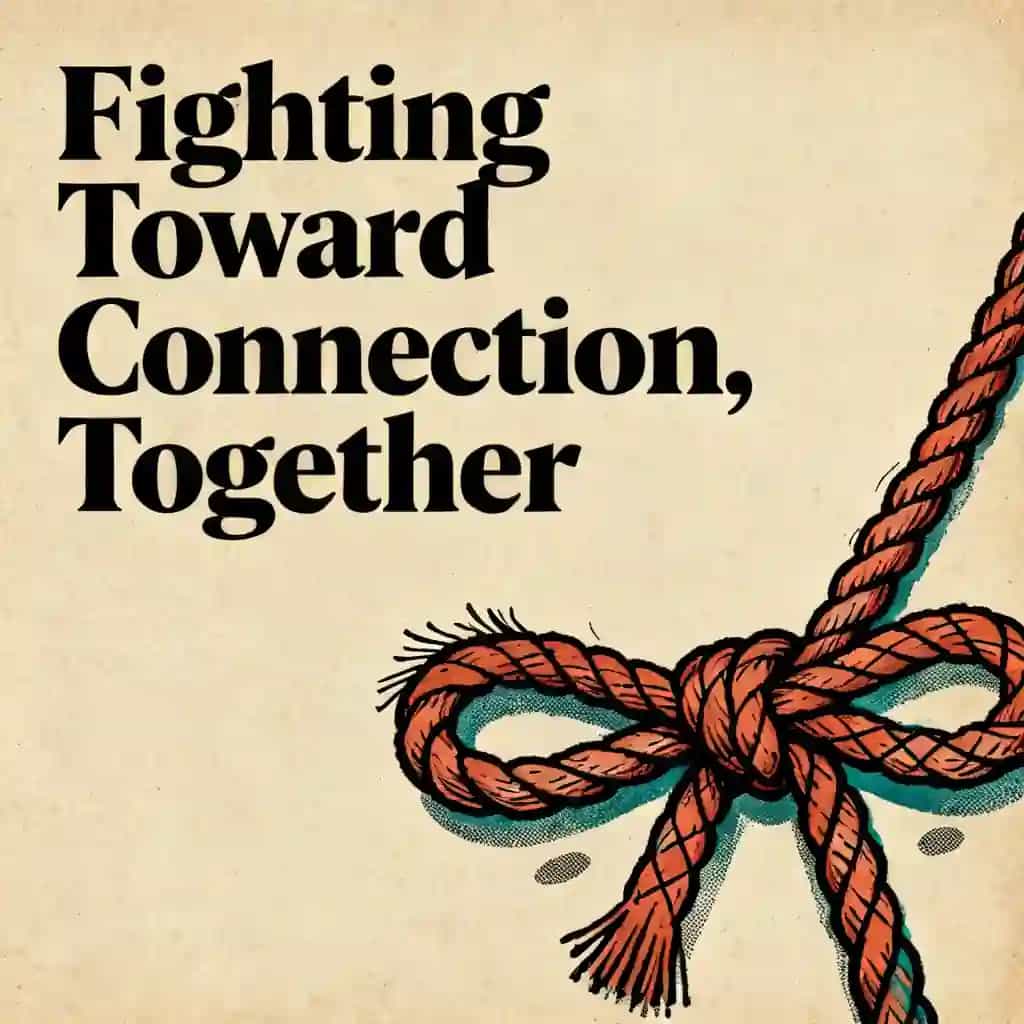
Fighting Becomes a Love Language: Navigating Relationship Storms
Desglosa las ideas clave de No More Fighting : The Relationship Book for Couples en puntos fáciles de entender para comprender cómo los equipos innovadores crean, colaboran y crecen.
Experimenta No More Fighting : The Relationship Book for Couples a través de narraciones vívidas que convierten las lecciones de innovación en momentos que recordarás y aplicarás.
Pregunta cualquier cosa, elige tu estilo de aprendizaje y co-crea ideas que realmente resuenen contigo.

Creado por exalumnos de la Universidad de Columbia en San Francisco
"Instead of endless scrolling, I just hit play on BeFreed. It saves me so much time."
"I never knew where to start with nonfiction—BeFreed’s book lists turned into podcasts gave me a clear path."
"Perfect balance between learning and entertainment. Finished ‘Thinking, Fast and Slow’ on my commute this week."
"Crazy how much I learned while walking the dog. BeFreed = small habits → big gains."
"Reading used to feel like a chore. Now it’s just part of my lifestyle."
"Feels effortless compared to reading. I’ve finished 6 books this month already."
"BeFreed turned my guilty doomscrolling into something that feels productive and inspiring."
"BeFreed turned my commute into learning time. 20-min podcasts are perfect for finishing books I never had time for."
"BeFreed replaced my podcast queue. Imagine Spotify for books — that’s it. 🙌"
"It is great for me to learn something from the book without reading it."
"The themed book list podcasts help me connect ideas across authors—like a guided audio journey."
"Makes me feel smarter every time before going to work"
Creado por exalumnos de la Universidad de Columbia en San Francisco

Obtén el resumen de No More Fighting : The Relationship Book for Couples como PDF o EPUB gratis. Imprímelo o léelo sin conexión en cualquier momento.
Why do some couples emerge from screaming matches more connected than before, while others dissolve after years of polite silence? The difference isn't about fighting less-it's about fighting better. Most relationship advice promises harmony, but what if conflict itself holds the key to deeper intimacy? When partners learn to navigate disagreements skillfully, they don't just survive storms-they become stronger because of them. This counterintuitive truth challenges everything we've been taught about love requiring constant peace. The real question isn't whether you'll fight, but whether those fights will break you apart or forge an unbreakable bond.
Hanako, a medical resident, returned home exhausted to face her husband Saul's criticism-despite his handling every household task. The harder he tried to help, the more distant they became. Saul had become a caretaker at twelve when his mother fell ill, learning to give endlessly but never receive. When Hanako cooked dinner or scheduled appointments, he dismissed her efforts, creating a one-way street that left both exhausted and resentful. This reveals the oxygen mask principle-you can't pour from an empty cup. Just as flight attendants instruct you to secure your own mask before helping others, relationships require self-care before partner-care. The strongest relationships aren't built on sacrifice but on two whole individuals choosing to share their completeness. For Saul, transformation meant confronting childhood fears-accepting help triggered deep abandonment anxieties. Through small acts like letting Hanako make breakfast or accepting her help with bills, he learned receiving care wasn't weakness. They established weekly "self-care check-ins" to share needs and boundaries, transforming from caretaker-dependent to equal partners.
"Sometimes I wonder if you married me to be polite," Susan told Arjun during therapy. The breaking point came when he offered their bed to his visiting parents without consulting her-not an isolated incident but years of prioritizing everyone's comfort over their shared boundaries. As the child of immigrant parents who worked multiple jobs, he'd learned that compliance reduced stress. What saved his family in childhood was destroying his marriage in adulthood. When we can't say no, our yes becomes meaningless. Susan couldn't trust Arjun's commitment because it came from obligation rather than choice. She noticed his tight smile when agreeing to unwanted plans, his emotional withdrawal while technically fulfilling promises. Arjun practiced declining additional work projects and suggesting alternative restaurants-low-stakes situations building his tolerance for disapproval. When he finally booked his parents a hotel room, he faced his mother's disappointment but held firm. His parents actually respected him more, and Susan could finally trust his yes came from genuine desire. Boundary work isn't selfish-it's relationship preservation. By defining where you end and your partner begins, you create clarity that prevents festering resentment and enables genuine intimacy based on choice rather than obligation.
"How it makes me feel? To see his shoes?" Janice's skeptical response revealed her emotional disconnection. As a successful diplomat, she excelled at reading others but remained detached from her own feelings. Her husband Lloyd craved vulnerability: "I need to know you're vulnerable... I like you when you're human. Even when you're scared or angry-especially then." Many couples struggle with emotional literacy-the ability to identify, express, and regulate feelings. Janice's protective Dutch parents, who survived post-war austerity, taught her to shield herself from painful emotions. She developed sophisticated mechanisms to neutralize feelings: changing subjects, focusing on tasks, retreating into work. This created emotional isolation-like playing only Middle C when you have 88 keys available. Developing emotional literacy begins with naming feelings without judgment. The basic palette includes happiness, power, peace, sadness, anger, and fear-each with countless variations. Resistance often stems from childhood experiences when expressing feelings brought punishment. Janice's father's stern response created an unconscious rule: "proper people don't lose control." Emotional literacy doesn't mean wallowing in negativity but expanding your capacity to experience the full range of human feeling, creating resilience to move through difficult emotions rather than being stuck in them.
"The story I make up is that all you care about is sex," Gabriella told her husband Jack. This simple phrase marked a breakthrough in their decade-long struggle, acknowledging her interpretation might not represent absolute truth. We constantly interpret fragments to create coherent narratives. When Jack mentioned their troubles began after Gabriella's hysterectomy, her mind filled gaps with assumptions based on past experiences and fears. These interpretations feel like absolute truth until we recognize them as subjective creations. Our relationship "horror stories" - narratives like "I'm not good enough" or "My needs don't matter" - distort reality but paradoxically feel safer than directly asking what partners think. A woman might interpret silence as rejection while he's processing a difficult workday. These stories often originate in childhood and create self-fulfilling prophecies. Prefacing assumptions with "The story I make up..." creates crucial distance between perception and reality. This linguistic shift opens space for curiosity instead of certainty. By recognizing her narrative as interpretation rather than truth, Gabriella interrupted the cycle creating the disconnection she feared.
Jessica and Andrew, a couple with a 30-year age gap, communicated only through silence or fighting. Their arguments ranged from petty nitpicking to character assassination, yet carried a strange comfort-as if conflict had become their home. When introduced to "mirroring"-repeating back what your partner says before responding-Jessica scoffed: "Why reflect back what he says when I already know everything about him?" Her question revealed a fundamental misconception. True listening isn't about gathering information but honoring your partner's separate reality. It demonstrates respect for their differences and creates space for their experience to exist without immediate judgment. This practice feels painstaking because it interrupts habitual responses-the immediate contradictions, corrections, or defenses that shut down genuine communication. As Jessica and Andrew practiced mirroring, transformation emerged. After several weeks, their pre-session interactions evolved from tense silence to even-keeled conversation and occasional laughter. Effective listening requires avoiding four "communication stoppers": criticism, defensiveness, contempt, and stonewalling. The most powerful aspect of deep listening is that it doesn't require agreement-only understanding. When partners feel truly heard, they become less rigid and more open to compromise.
Friction creates fire. Your arguments aren't signs of failure - they're invitations to deeper connection. Every fight offers a choice: will you defend your position or explore your partner's world? Thriving couples transform conflict into intimacy. Your relationship isn't broken because you fight - it's broken when you stop fighting with love. When you prioritize well-being, set boundaries with courage, expand your emotional range, question your stories, listen with sacred attention, and claim your truth with vulnerability, you create something extraordinary. Not a relationship without conflict, but one where conflict draws you closer. The next time tension rises, ask: what if this moment isn't a threat but an opportunity? What if the person across from you isn't your opponent but your greatest teacher? Choose connection over being right, curiosity over certainty, vulnerability over defense. The relationship you've always wanted isn't waiting on the other side of perfection - it's waiting on the other side of courage.