Capítulo 1
Embracing Life's Uncertainty: A Journey to Living Beautifully
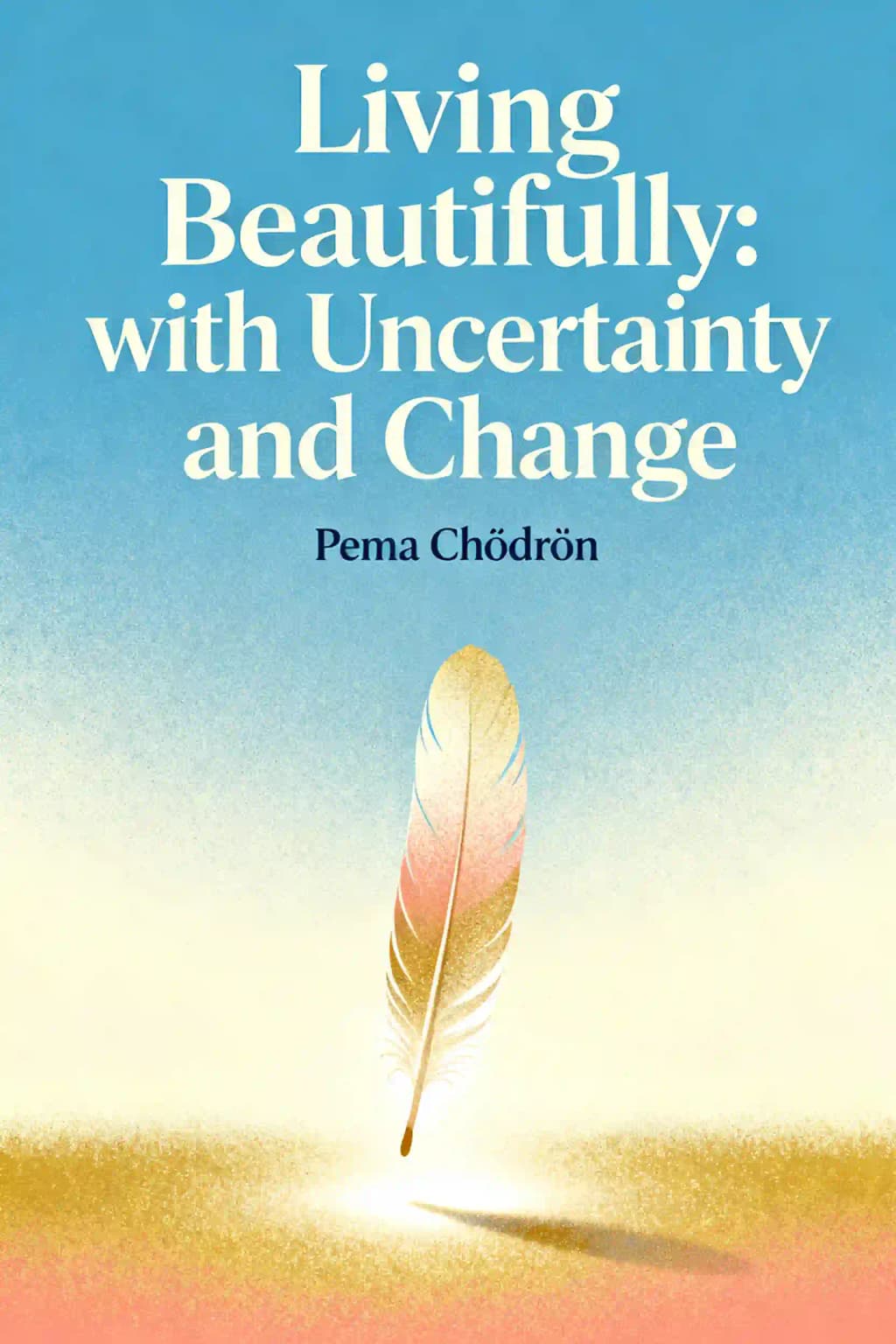
In a world obsessed with certainty, Pema Chodron's wisdom offers a radical alternative. This former elementary school teacher turned Buddhist nun has become one of the most beloved spiritual teachers in the West, with her books regularly appearing on bestseller lists and her teachings influencing millions, including celebrities like Oprah Winfrey and k.d. lang. What makes her work so powerful is her ability to translate ancient Buddhist wisdom into practical guidance for modern life without sacrificing depth. "Living Beautifully with Uncertainty and Change" emerged from a six-week winter retreat at Gampo Abbey in 2009, yet its message feels more relevant today than ever. In a post-pandemic world where uncertainty has become our constant companion, Chodron's framework for embracing groundlessness rather than fighting against it offers not just comfort, but a pathway to genuine freedom and joy.
Capítulo 2
The Fundamental Ambiguity of Being Human
We humans have a peculiar relationship with uncertainty. We know intellectually that everything changes-our bodies, relationships, circumstances-yet we continually act as if we could somehow find permanent ground beneath our feet. This fundamental contradiction causes immense suffering. We resist the very nature of reality, which the Buddha identified as marked by impermanence.
Our resistance manifests as what Chodron calls "fundamentalist tendencies"-rigid beliefs about ourselves and the world that provide an illusion of security. These fixed positions feel safe but actually cut us off from life's richness and authenticity. Think about how you might cling to being "the responsible one" or "the funny person" in your social circle. When someone suggests you're acting differently, you might feel threatened rather than curious about this new aspect of yourself.
This rigidity creates a filtering system where we automatically categorize experiences into three boxes: attraction (things we want), aversion (things we reject), or indifference (things we ignore). This automatic sorting happens so quickly we barely notice it, yet it determines how we experience each moment. Rather than seeing reality clearly, we see only our projections and judgments about it.
The source of our suffering isn't actually impermanence itself but our resistance to it. When we stop struggling against groundlessness and instead learn to recognize it as the natural state of things, something remarkable happens-we discover freedom. This isn't abstract philosophy but practical psychology. Our fixed identities create suffering because they can't accommodate life's inherent fluidity.
Often, spiritual awakening begins with crisis-when our carefully constructed identity crumbles. What feels like disaster is actually the first taste of liberation. The rigid self-concept that's falling away was never more than a mental construct anyway. Its dissolution, while terrifying to the ego, is cause for celebration.
The uncomfortable feeling that arises when our ground disappears is what Tibetan Buddhists call "shenpa"-that hooked feeling of attachment. When triggered, instead of reaching for our usual comforts (food, alcohol, criticism of others), we can practice mindfulness-opening fully to the sensation without interpretation. Just as with physical pain, giving full attention to emotional discomfort without storylines often dissolves it naturally. Research shows emotions typically last only about ninety seconds; we extend them by rekindling them with thoughts.
This practice isn't easy. Our habitual responses feel utterly compelling in the moment. But with practice, we can learn to stay with the raw energy of emotion rather than acting it out or suppressing it. We can acknowledge feelings with compassionate attention while dropping the narrative that usually accompanies them. This is the beginning of freedom.
Capítulo 3
Breaking Free from Mental Storylines
Our minds are relentless storytellers. When someone cuts us off in traffic, we don't just experience momentary annoyance-we construct elaborate narratives about the driver's character, society's decline, and our victimhood. These mental movies seem completely real while we're watching them, yet they're entirely self-generated.
Buddhist tradition describes our habitual tendencies as seeds in the unconscious that sprout when conditions are right. These propensities, not their triggers, cause our suffering. I might blame my anger on my ex-husband's behavior, but the same anger appears in my dreams when he's nowhere around. The seed of anger exists within me, waiting for suitable conditions to germinate.
With practice, our recovery time from difficult emotions can shorten dramatically-from days to hours to just those initial ninety seconds. This isn't repression, which denies what's happening, nor is it chasing after thoughts. It's allowing thoughts to come and go without making them a big deal.
The practice isn't about eliminating thoughts (impossible) but interrupting their momentum. When we notice we're caught in a storyline, we can gently label it "thinking" and return to immediate experience. Everything in us wants to pursue the storyline because it promises security and happiness, though falsely. The more we practice contacting groundlessness directly, the more we experience emotions as simple sensations free of concepts.
When tempted to return to habitual patterns, we can follow the Buddha's example with his nemesis Mara. Rather than fighting against temptation, he simply acknowledged it: "I see you, Mara." This direct recognition without judgment often dissolves the power of habitual patterns.
We are transitional beings, neither fully caught nor fully free but in the process of awakening. Every moment offers a choice point-will we strengthen our habitual patterns or create space for something new? We create our future with every word, action, and thought.
Buddhism teaches that the mind's true nature is vast as sky, with thoughts and emotions like clouds that obscure it. By looking deeply into these clouds without clinging to them, they dissolve, revealing the boundless sky that was always there. Our tendency to obscure this openness is what Trungpa Rinpoche called "putting makeup on space"-trying to make reality more solid and graspable than it actually is.
When we don't suppress thoughts and emotions but also don't run with them, we find ourselves "in the middle of nowhere"-a place where we can finally embrace our experience and see the sky. The key practice is simple: be fully present, feel your heart, and engage the next moment without an agenda.
Capítulo 4
The First Commitment: Creating a Foundation
The Three Commitments provide a framework for relaxing with the fundamental dynamic quality of our lives. The First Commitment-committing to not cause harm-creates a foundation for liberation from suffering. This commitment requires diligence to interrupt our habitual patterns of escape when we feel uncomfortable.
Walking this "narrow way" means maintaining awareness to avoid veering off course-we're either speaking or acting to escape discomfort, or we're not. This straightforward approach provides necessary grounding for the more flexible, groundless commitments that follow.
By training with everyday irritations-the driver who cuts you off, the colleague who takes credit for your work-we develop the ability to refrain when stronger urges arise. The practice works at two levels: outer renunciation (following precepts against harmful speech and actions) and inner renunciation (choosing not to escape the underlying uncomfortable feelings).
The five basic precepts include protecting life, respecting others' property, not harming with sexual energy, practicing mindful speech, and protecting body and mind from intoxicants. These aren't rigid commandments but guidelines that help us recognize when we're about to cause harm.
When tempted to act out, Shantideva advises: "Do not act! Be silent, do not speak!" Then explore what happens internally when you don't follow through. Notice how cravings feel in your body, what thoughts arise, and how these feelings affect your treatment of yourself and others.
The "detox period" when refraining from habits brings up uncomfortable feelings-anxiety, hopelessness, even terror. But by making a compassionate relationship with these feelings and moving through fear and resistance, we discover our basic goodness. As Rick Fields wrote: "Behind the fear, vulnerability. Behind that, sadness, then compassion, and behind that the vast sky."
If we break our commitment, the Sojong practice offers a way to reflect honestly on our actions without self-judgment, acknowledge where we've gone astray, and start fresh. Though we cannot completely avoid causing harm due to our interconnectedness with all beings, what matters is our intention to minimize harm and actively benefit others.
Capítulo 5
Staying Present in Challenging Moments
The on-the-spot practice of being fully present, feeling your heart, and greeting the next moment with openness can be done anytime-upon waking, before difficult conversations, or whenever fear arises. This practice helps claim our spiritual warriorship-our courage, kindness, and strength.
Imagine you're about to have a difficult conversation with your teenager about their falling grades. Before speaking, take a moment to check in with your physical and mental state. Notice the tightness in your chest, the racing thoughts about your child's future. Place your hand on your heart and extend warmth to these feelings without judging them as wrong. Then move forward into the conversation with curiosity rather than predetermined outcomes.
Meditation provides essential support for this practice, helping us stay present, nurture our hearts, and let go of habitual patterns. The meditation taught has three main parts: posture (with six points-seat, legs, torso, hands, eyes, and mouth), breath as the object of meditation, and labeling thoughts without judgment. This practice trains us to be present with both small irritations and great adversity, helping us experience life's impermanence as refreshing rather than threatening.
The first commitment allows us to develop kindhearted tolerance for our pain through "simmering"-staying in the middle between extremes rather than acting out harmful patterns. This builds inner strength and trust that we can experience groundlessness without causing harm.
Before making this commitment, we must ask if we're ready to break repetitive patterns and acknowledge when we're hooked. The key practice is mindfulness-being fully present with whatever arises. This means embracing both delightful and difficult experiences with loving-kindness.
The eight worldly concerns reveal our attachments: pleasure/pain, gain/loss, fame/disgrace, and praise/blame. These preoccupations keep us bouncing between grasping and aversion. Like the Hopi elders advised, we must let go of the shore and push into the middle of the river.
By not acting on our cravings or fears, we rest in the vulnerable middle ground, free from fixed mind and self-centeredness. This commitment builds an unshakable foundation of inner strength-the courage to break old patterns and live without a game plan, unfettered by hope and fear. Awakening isn't building ourselves up but letting go into the paradoxical, ambiguous middle.
Capítulo 6
The Second Commitment: Moving Beyond Comfort
The Second Commitment challenges us to take care of one another, to move beyond our comfort zone into the raw territory of compassion. Compassion threatens the ego-it's raw, not cozy. Building on the foundation of not causing harm, we now vow to consciously move into the world's pain to alleviate it.
This commitment connects with bodhicitta-the longing to awaken to help others do the same, to go beyond conventional happiness and open our hearts to everyone. It arises from trust in our basic goodness and ability to engage with others from curiosity and caring.
The warrior path requires cultivating bravery to live with uncertainty-the shaky, tender feeling of anxiety with nothing to hold onto-while making ourselves available to every person. It's like inviting all sentient beings to be our guests, opening our door gradually, for longer periods each time, as we build courage.
When we break this vow-by closing our heart to someone, through self-denigration, or by showing bias-we can mend it by acknowledging our failure and retaking the vow. The three-step practice helps us stay present: come into the present moment, feel your heart, then enter the next moment without agenda.
The troublemakers in our lives become our teachers, helping us cultivate patience and compassion. We can practice by continually asking, "How can I be of service?" and approaching life as an experiment, learning from both successes and failures in our infinite commitment to all beings.
Think of the person who most irritates you at work or in your family. Instead of avoiding them or rehearsing clever comebacks, what if you approached each interaction with curiosity about what makes them tick? What if you looked for ways to genuinely help them? This doesn't mean becoming a doormat but rather transforming your relationship with difficulty.
Capítulo 7
Breathing In Pain, Breathing Out Relief
Tonglen practice offers a powerful method for developing compassion. Unlike our usual pattern of avoiding pain and seeking pleasure, tonglen reverses the flow-we breathe in suffering and breathe out relief. This counterintuitive approach helps dissolve the barriers between self and other.
The practice begins by creating spaciousness. Imagine breathing into a vast sky-like space where your body becomes boundless and transparent, able to accommodate any suffering without it getting stuck. This spaciousness is your true nature, always available beneath habitual patterns.
The formal meditation has four stages: First, begin with a pause, a moment of stillness and space. Second, breathe in hot, heavy, thick energy while breathing out freshness, coolness, and light. Third, breathe in a specific painful situation and breathe out spaciousness and relief. Fourth, extend this practice to include all beings suffering in similar ways.
For example, if you're experiencing anxiety about a medical test, you might start by breathing in your own fear and breathing out calm. Then extend the practice to include others waiting for test results in the same clinic, then to all people awaiting medical news worldwide. This gradual expansion helps develop genuine compassion rather than abstract good intentions.
We start with immediate, real situations rather than vague concepts, then gradually extend our practice to include more beings. The practice takes time to develop, requiring patience and gentleness. As Chogyam Trungpa would say when confidence wavers: "You can do it!"
Through tonglen, we realize others' welfare is as important as our own, creating relationships of mutual support rather than pity. By helping others, we help ourselves, and by helping ourselves, we help the world. The artificial boundary between self-care and care for others dissolves.
The warrior commitment to care for all beings is beautifully illustrated in the poem "Birdfoot's Grampa," where an elderly man repeatedly stops his car in the rain to save toads crossing the road, telling his impatient grandson, "They have places to go too." This commitment plants a seed in our consciousness that catalyzes our inherent capacity for compassion.
Though we inevitably break this commitment, what matters is recognizing when we've closed our hearts and renewing our intention to stay open. We can use Shantideva's verse to reaffirm our intention to benefit others. This isn't about perfection but about continually sowing seeds that predispose our hearts to expand without limit.
Capítulo 8
The Third Commitment: Embracing Reality Completely
With the third commitment, we fully embrace groundlessness, relaxing into the continuously changing nature of reality and experiencing it as awakened energy. This commitment demands that we be fully present, which can feel intensely uncomfortable, like there's nowhere to hide. It's a sacred vow to accept an unshakable bond with life-surrendering to our experience without rejection or withdrawal. This radical acceptance extends to all aspects of our experience, including physical sensations, emotions, thoughts, and external circumstances.
This practice requires seeing the intrinsic goodness in all experience, even those we typically label as negative or unwanted. We continue with mindfulness practices but add deep appreciation for each fleeting, precious moment. Even irritating sounds like persistent hammering become doorways to wakefulness when fully attended to. A crying baby, traffic noise, or physical discomfort - all become opportunities for deeper presence. Through this complete presence, we may suddenly encounter vast spaciousness-not by transcending ordinary reality, but by appreciating simple experiences free of storyline. The taste of morning coffee, the sensation of wind on skin, the rhythm of breathing - each moment contains infinite depth when met with full attention.
As Chogyam Trungpa taught, everything we perceive is "vividly unreal in emptiness, yet there is still form"-our perceptions are manifestations of awakened energy. This paradoxical teaching points to the simultaneous emptiness and vividness of all phenomena. Enlightenment isn't found by escaping ordinary experience but by fully touching it. We practice seeing things as they are (like snow as simply snow) without projecting our preferences and emotional reactions onto them. A sunset isn't beautiful or ordinary - it simply is what it is. Pain isn't good or bad - it's pure sensation. Through this commitment, we gradually let go of our fixed identity and find that "the less there was of me, the happier I got."
Imagine sitting in a cafe watching people pass by. Instead of categorizing them (attractive/unattractive, interesting/boring), you simply witness each person as a unique expression of life itself. Colors appear more vivid, sounds more distinct. The steam rising from your cup, conversations floating through the air, sunlight playing on the floor - each element exists in perfect completeness. You're not trying to change anything or achieve a special state-you're simply present with what is. In such moments, the boundary between self and world becomes permeable, and ordinary experience reveals its extraordinary nature. This state isn't about achieving something special but rather about dropping all attempts to make things different from what they are.
This commitment asks us to meet each moment with curiosity and wonder, like a child experiencing everything for the first time. Whether facing joy or sorrow, success or failure, we remain open to the full spectrum of human experience. Through this practice, we discover that freedom isn't found in controlling our experience but in completely allowing it to be as it is.
Capítulo 9
Finding Beauty in Life's Charnel Ground
In Tibet, where frozen ground makes burial impossible, bodies are cut into pieces and left in charnel grounds for scavengers. These grisly places have become metaphors for embracing life exactly as it is-uncertain, unpredictable, and ever-changing. The charnel ground represents our home ground, the mandala of our life where we practice fearlessness and compassion.
Charnel-ground practice tests our commitment to embrace the world beyond comfort zones. We face life's totality-both wretchedness and splendidness-discovering we need both. Splendidness provides vision and inspiration, while wretchedness grounds us and prevents arrogance. They complement each other perfectly-when we're ready to give up, beauty saves us; when we become arrogant, misfortune reconnects us with our tender heart.
The most difficult yet rewarding times to stay present are when we're despondent or overwhelmed. These tight spots provide ideal practice opportunities to accept suffering as part of our enlightened mandala. Most of us instinctively seek escape from pain, which can initially motivate spiritual seeking. The problem is that we often spend our lives chasing relief without learning from discomfort.
Charnel-ground practice begins when we become curious about difficult emotions rather than avoiding them. The first two commitments provide the foundation-learning to acknowledge shenpa without harmful reactions, and extending awareness to others through compassion. With the third commitment, we reject nothing in our mandala of awakening, taking our seat amidst life's gritty reality to discover profound well-being.
The practice involves feeling emotions directly and selflessly, letting their power open us up. We approach uncomfortable feelings in small doses-"short moments again and again"-gradually building our capacity to stay present. By experiencing emotions without commentary or interpretation, we discover their impermanence and insubstantiality. What seemed solid and threatening begins to dissolve or transform.
Through this practice, we develop confidence in groundlessness. We learn to stand in the center of chaos with an open heart, discovering that even the most intense emotions can wake us up rather than shut us down. As we age and move closer to death, this practice helps us let go with ease and great happiness, finding preciousness in every fleeting moment.
Capítulo 10
We Are Needed: The Collective Journey
At my lowest point, when I felt utterly despondent, owls began appearing to me in daylight-winking from woodpiles, trees, and clifftops. These unexpected encounters made me laugh at myself and shifted my perspective completely. Similarly, committing to sanity through the Three Commitments provides a wake-up call exactly when we need it most-when we're about to crash.
The Three Commitments support us in embracing groundlessness-the fundamental ambiguity of being human. This journey transforms our relationship with uncertainty from resistance to acceptance. Like removing cataracts, we experience a breathtaking expansiveness that words cannot adequately convey. We discover we can simultaneously hold pain in our hearts while being deeply touched by life's wonder and magic.
As the Hopi elders prophesied, we must let go of the shore and stay in the middle of the river together: "The time of the lone wolf is over." We make this journey not just for ourselves but for everyone sharing this planet. Pain is not the end of the journey, nor is delight-we can hold both simultaneously, recognizing that everything in these unsettled, heart-stirring times is a doorway to awakening.
In a world increasingly divided by rigid certainties and fundamentalist positions, this practice of embracing ambiguity becomes not just personal healing but political action. When we refuse to solidify our views and instead remain open to complexity and contradiction, we create space for genuine dialogue and collective wisdom to emerge.
The journey of living beautifully with uncertainty and change is ultimately not about achieving a permanent state of enlightenment but about developing the courage to remain present with life exactly as it is-messy, unpredictable, heartbreaking, and breathtakingly beautiful. Through the Three Commitments, we discover that groundlessness isn't something to fear but the very ground of awakening itself.