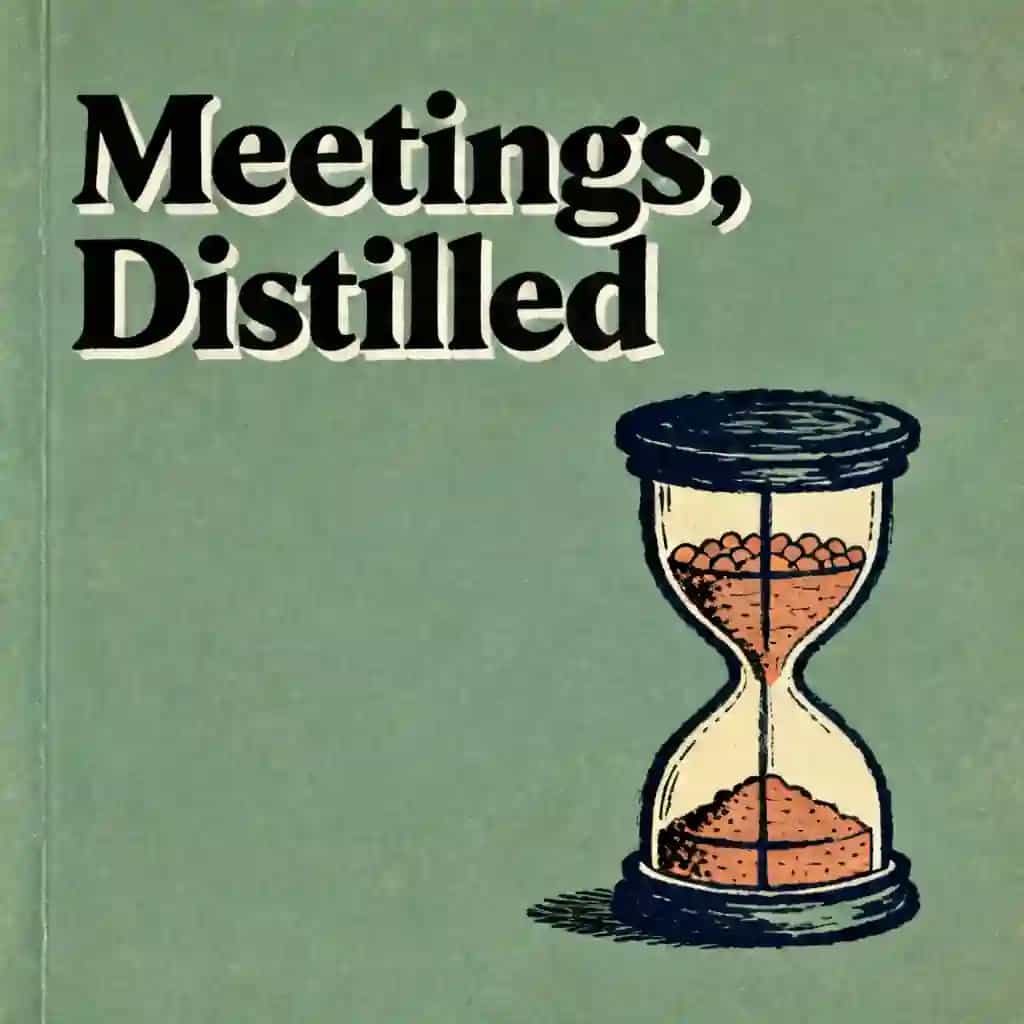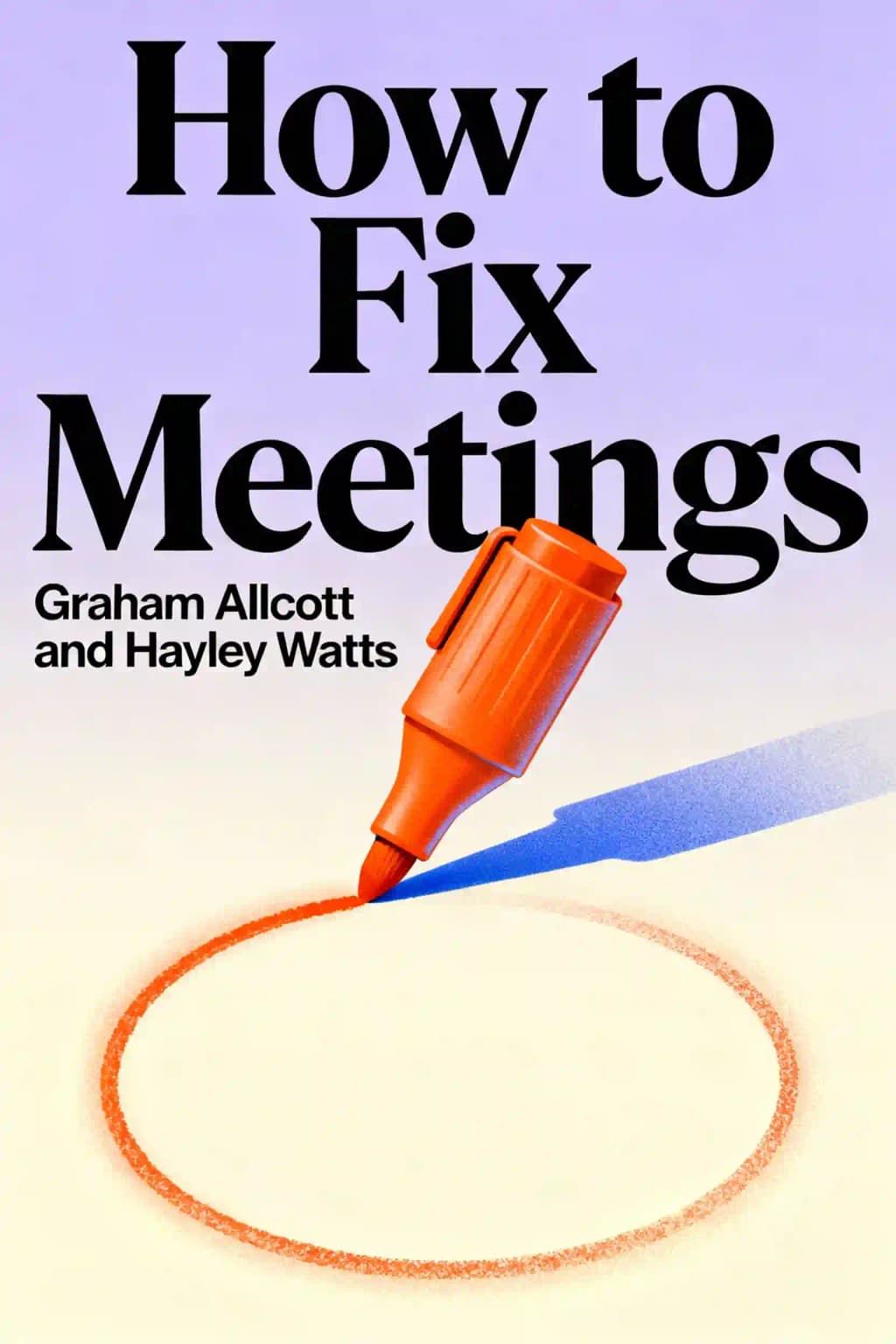
Rescue your workday from meeting hell! The 40-20-40 Continuum revolutionized post-pandemic productivity, with Jackie Weaver calling it "thought-provoking." Ever wonder why 71% of meetings fail? This book delivers the antidote to your calendar chaos.
Graham Allcott, co-author of How to Fix Meetings: Meet Less, Focus on Outcomes and Get Stuff Done, is a bestselling author, productivity expert, and founder of Think Productive, a global training company helping organizations optimize workflows.
His 2013 breakout book, How to Be a Productivity Ninja, has sold over 100,000 copies in the UK alone and been translated into 15 languages. A TEDx speaker and host of the Beyond Busy podcast, Allcott combines tactical strategies with psychological insights to address modern workplace challenges, including ineffective meetings. His other works, like Study Ninja and Work Fuel, cement his reputation in productivity literature.
Hayley Watts, Allcott’s co-author, is a seasoned Productivity Ninja at Think Productive, specializing in implementing practical organizational systems for clients worldwide.
With a focus on actionable outcomes, Watts brings frontline experience from facilitating workshops with companies like Microsoft and UNICEF. Her collaborative approach in How to Fix Meetings reflects her belief in empowering teams through clarity and intentional communication. The book builds on Think Productive’s decade-long legacy of reshaping workplace culture, with tools adopted by Fortune 500 firms and educational institutions.
How to Fix Meetings provides actionable strategies to transform unproductive meetings into efficient, outcome-driven sessions. Graham Allcott and Hayley Watts emphasize the 40-20-40 rule: 40% preparation (clear agendas, defined goals), 20% execution (focused discussions), and 40% follow-up (actionable next steps). The book tackles common issues like poor structure, lack of engagement, and wasted time, offering frameworks for leaders and teams to optimize collaboration.
This book is ideal for leaders, facilitators, and professionals seeking to eliminate unproductive meetings. It’s particularly valuable for managers aiming to foster accountability, teams struggling with decision paralysis, and organizations transitioning to remote/hybrid work models. The authors’ practical advice benefits anyone tired of meetings that lack purpose or results.
The 40-20-40 rule prioritizes preparation (40% effort) with agendas and goal-setting, execution (20%) through structured discussions, and follow-up (40%) with clear action items and accountability. This framework ensures meetings drive progress rather than consume time. For example, pre-meeting surveys and post-meeting summaries are recommended to maintain momentum.
The authors advocate for detailed agendas shared in advance, limiting invites to essential participants, and clarifying desired outcomes. Templates and pre-read materials help attendees arrive informed. A key tip: Cancel meetings lacking a clear purpose or decision-making goal.
The book advises leveraging technology for async updates (e.g., shared docs) and reserving live meetings for collaborative problem-solving. Tips include using video breaks for engagement and tools like Miro or Trello to visualize discussions.
The authors draw from their work with companies like Heineken and eBay, showcasing how structured agendas and follow-up systems reduced meeting time by 30% in some teams. Case studies highlight turning brainstorming sessions into actionable project plans.
While Productivity Ninja focuses on individual efficiency, How to Fix Meetings targets team dynamics. Both emphasize "stealth productivity" tactics, but the latter expands on collective accountability, collaboration tools, and systemic fixes for organizational culture.
Yes. The book advocates auditing recurring meetings, implementing "no-meeting days," and replacing poorly attended sessions with concise written updates. Teams reported higher energy and creativity after adopting these changes.
Allcott and Watts stress creating environments where all voices are heard. Techniques include round-robin speaking, anonymous feedback tools, and facilitators trained to redirect dominant speakers. This fosters inclusive decision-making.
Yes. The book includes agendas, checklists, and scripts for common scenarios (e.g., conflict resolution, brainstorming). Downloadable resources from Think Productive’s website help teams implement the strategies immediately.
With remote work and AI-driven tools reshaping collaboration, the book’s focus on intentionality and human-centric practices remains critical. Updated editions address hybrid meeting challenges, like balancing in-person and virtual participation.
Siente el libro a través de la voz del autor
Convierte el conocimiento en ideas atractivas y llenas de ejemplos
Captura ideas clave en un instante para un aprendizaje rápido
Disfruta el libro de una manera divertida y atractiva
Meetings remain essential to organizational success-when done right.
Meetings begin and end with people, and investing in the human element yields tremendous returns.
True ruthlessness means questioning each commitment.
Meetings are a symptom of bad organisation, the fewer the better.
Preparation Is Everything
Desglosa las ideas clave de Fixing Meetings en puntos fáciles de entender para comprender cómo los equipos innovadores crean, colaboran y crecen.
Experimenta Fixing Meetings a través de narraciones vívidas que convierten las lecciones de innovación en momentos que recordarás y aplicarás.
Pregunta cualquier cosa, elige tu estilo de aprendizaje y co-crea ideas que realmente resuenen contigo.

Creado por exalumnos de la Universidad de Columbia en San Francisco
"Instead of endless scrolling, I just hit play on BeFreed. It saves me so much time."
"I never knew where to start with nonfiction—BeFreed’s book lists turned into podcasts gave me a clear path."
"Perfect balance between learning and entertainment. Finished ‘Thinking, Fast and Slow’ on my commute this week."
"Crazy how much I learned while walking the dog. BeFreed = small habits → big gains."
"Reading used to feel like a chore. Now it’s just part of my lifestyle."
"Feels effortless compared to reading. I’ve finished 6 books this month already."
"BeFreed turned my guilty doomscrolling into something that feels productive and inspiring."
"BeFreed turned my commute into learning time. 20-min podcasts are perfect for finishing books I never had time for."
"BeFreed replaced my podcast queue. Imagine Spotify for books — that’s it. 🙌"
"It is great for me to learn something from the book without reading it."
"The themed book list podcasts help me connect ideas across authors—like a guided audio journey."
"Makes me feel smarter every time before going to work"
Creado por exalumnos de la Universidad de Columbia en San Francisco

Obtén el resumen de Fixing Meetings como PDF o EPUB gratis. Imprímelo o léelo sin conexión en cualquier momento.
Picture a typical Tuesday morning. You're already running behind, coffee in hand, rushing to your third meeting of the day. It's only 10 AM. As you settle into your chair-physical or virtual-a familiar thought crosses your mind: "Why am I even here?" If this sounds painfully familiar, you're experiencing what costs U.S. companies $37 billion annually in wasted productivity. The average employee now spends 31 hours monthly in meetings, while CEOs dedicate a staggering 27 hours weekly-more than half their working time-to gatherings that often accomplish little. Yet here's the paradox: meetings remain essential to organizational success. From climate treaties to product launches, humanity's greatest achievements emerge from people coming together with focused attention. The challenge isn't eliminating meetings but transforming them from soul-crushing obligations into engines of meaningful progress.
We're living through an unprecedented attention crisis. British adults' attention spans have collapsed from twelve minutes a decade ago to barely five minutes today. Microsoft research reveals something even more unsettling: your smartphone drains cognitive resources even when it's off and tucked away, reducing your available mental capacity by 10% simply by existing nearby. This isn't just about distraction - it's about a fundamental shift in how our brains process information. The spaces between activities, what psychologists call "white space," are rapidly disappearing. Yale researchers found 67% of men would rather receive electric shocks than sit alone with their thoughts for fifteen minutes. This aversion to reflection creates a vicious cycle: the busier we become, the less effort we invest in making meetings worthwhile, which makes them even more draining. Yet within this chaos lies opportunity. Well-structured meetings become sanctuaries where giving undivided attention to colleagues becomes non-negotiable. Great leaders deliberately create environments where high standards for participation, healthy intellectual challenges, and genuine empathy can flourish. The stark reality? A Harvard Business Review survey found 65% of senior managers feel meetings actively prevent them from completing their work, while 71% consider them unproductive and inefficient. The meetings aren't broken because people don't care - they're broken because we've forgotten how to design them properly.
The ancient concept of yin and yang offers wisdom for modern meetings. Effective gatherings require balance between opposing energies. Yin represents receptive, softer energy-bringing intuition, creativity, and connection. Yang embodies active, aggressive energy-driving goals and results. Without yin, workplaces lack creativity; without yang, nothing gets accomplished. Yin behaviors create meaningful connection through presence without digital distractions, emotional regulation, and deep listening. Whether facilitating or participating, yin energy means creating psychological safety and naming unspoken tensions. Start meetings by genuinely welcoming participants and using opening rounds so everyone speaks early. End by expressing gratitude, allowing final thoughts, and recapping outcomes. Yang behaviors protect our most valuable resource: attention. Ruthlessness means working backward from desired results and saying "no" strategically. Warren Buffett captured this: "Really successful people say no to almost everything." Strategic avoidance includes skipping recurring meetings, sending representatives, or creating "sneaky work time" around appointments. Personal policies provide frameworks for declining: setting open-door hours, limiting travel days, establishing meeting-free mornings, or creating mysterious calendar blocks like "Project Magenta" that colleagues won't question.
The actual meeting should consume only 20% of your total energy, with 40% devoted to preparation and 40% to follow-through. Most people invert this, focusing entirely on the meeting while winging preparation and neglecting follow-up. This explains why meetings feel unproductive-they're built on shaky foundations and lead nowhere concrete. Proper preparation creates meeting "magic." The 4 Ps framework provides structure: Purpose defines goals and attendance; Plan structures the flow; Protocols establish ground rules; People ensures right participants. Every meeting needs a clear purpose statement: "By the end of this meeting, we will have..." followed by specific outcomes using action verbs like "decided" or "identified." Strong agendas include specific topics, time allocations, preparation requirements, and responsibility assignments-yet 63% of American meetings lack them. Consider the meeting's narrative arc using frameworks like "beginning, middle, end" or GROW (Goal, Reality, Options, Way Forward). Smart timing includes starting at odd times like ten past the hour and allocating two minutes for end-of-meeting actions. Follow-through determines whether your meeting mattered. Define next physical actions (specific tasks with clear ownership) and delegated outcomes (broader responsibilities where individuals determine steps). Even as a participant, improve clarity by asking "Who will do that?", "What's the next physical action?" and "When's it due?" Transform vague actions like "Jason, budget" into "Jason to circulate updated budget figures with recommendations one week before next meeting."
After designing your meeting with clear purpose, plan, protocols and people, selecting the right format becomes crucial. The meetings menu offers various approaches that can be mixed depending on needs. Truth amnesties scrutinize workplace culture by addressing issues that rarely make regular agendas. Team members anonymously write concerns on Post-it notes, discussing each by asking if it's working, how it could improve, or if it should be scrapped. This blame-free approach leads to significant changes - from revising leave policies to eliminating unnecessary meetings. Daily huddles are brief standing meetings under ten minutes that reduce the need for longer sessions, allowing teams to check in and maintain momentum. Silent meetings use shared documents where participants type questions and opinions in real-time, addressing the problem of certain voices dominating discussions. Everyone contributes equally regardless of personality type, completing thoughts without interruption. One-to-one meetings deserve the same attention as any other format. Share discussion topics in advance, vary meeting locations, stick to an agenda that changes format occasionally, and honor scheduled time without frequent rescheduling. Even informal catch-ups between two or three people need clear purpose - these can easily drift into extended casual conversation without addressing the original reason for meeting.
Meetings are rare spaces where people genuinely share attention and cooperate-qualities desperately needed today. From climate conventions to peace treaties, humanity's greatest achievements emerge from successful gatherings. Your meetings matter too, whether shaping strategy, building culture, or making career decisions. Master the balance between meeting time and implementation time. Too many meetings prevent actual work; too few cause misalignment. Smart leaders actively eliminate unproductive meetings, combining or canceling redundant sessions and questioning whether each gathering serves vital purpose. Organizations develop habits-some helpful, others harmful. Challenge established patterns by refusing "this is how we've always done it" as valid reason. Experiment with standing huddles for quick updates, silent meetings where everyone reads before discussing, walking meetings for creative conversations, or meeting-free days for focused work. The ultimate test: Are your meetings producing meaningful results? Do participants leave energized? Is focus on action and decisions rather than endless discussion? If not, time for change. Begin today: question one recurring meeting, transform one vague action item into a specific deliverable, or introduce one innovative format. The world doesn't need another meeting about meetings-it needs people brave enough to make the meetings they have actually matter.