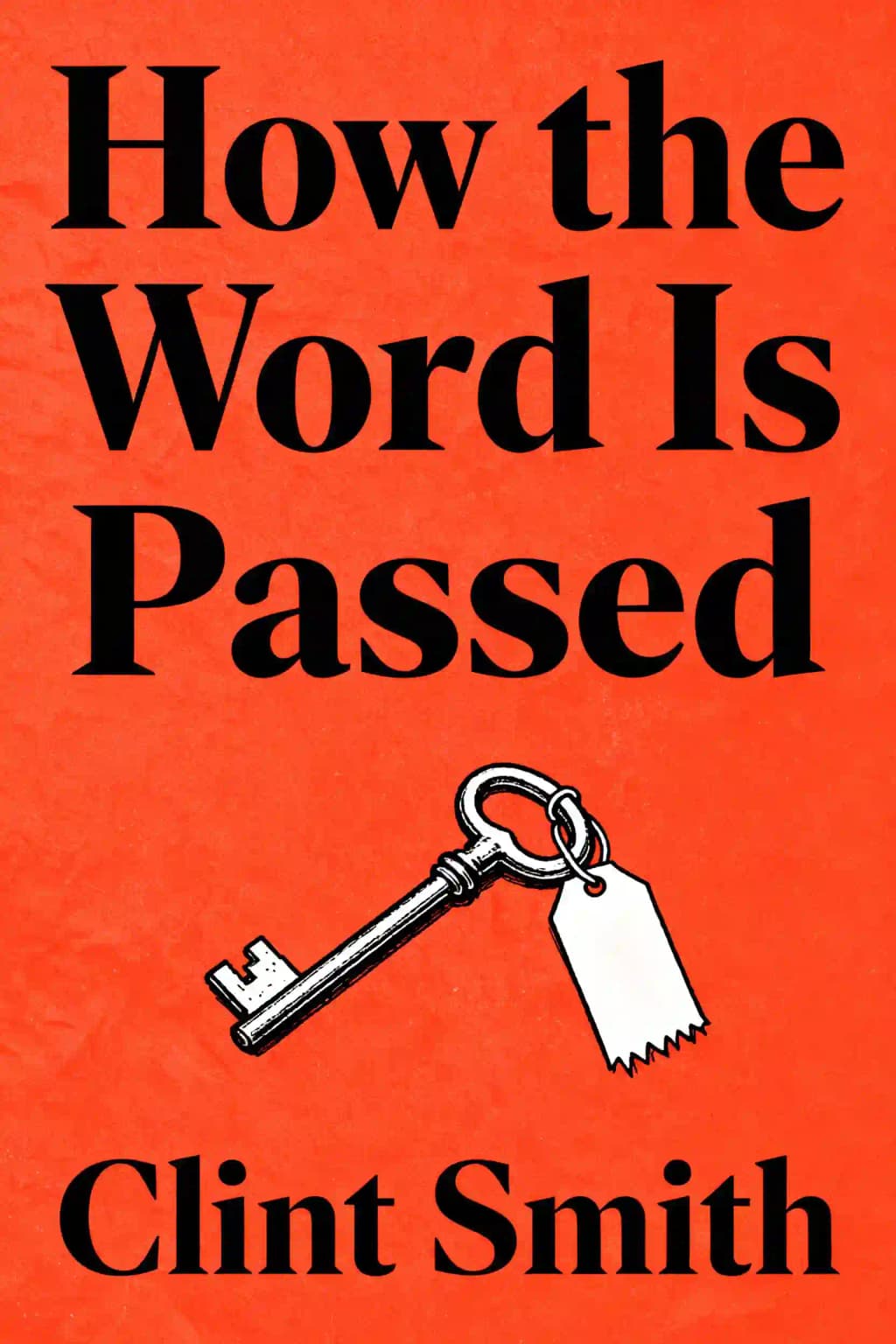
Clint Smith's #1 NYT bestseller journeys through America's slavery sites, revealing hidden histories that shape our present. John Green praised its "piercingly alive" prose while it earned the National Book Critics Circle Award by confronting truths most Americans never learned.
Clint Smith is the #1 New York Times bestselling author of How the Word Is Passed: A Reckoning With the History of Slavery Across America and Above Ground. He is also a celebrated poet, educator, and staff writer at The Atlantic.
His award-winning nonfiction work, How the Word Is Passed, won the National Book Critics Circle Award and was named one of the New York Times’ 10 Best Books of 2021. It explores the legacy of slavery through historical sites and their impact on collective memory. Born and raised in New Orleans, where Confederate monuments shaped his early understanding of racial narratives, Smith holds a Ph.D. in Education from Harvard University. He previously taught high school English, earning Maryland’s Christine D. Sarbanes Teacher of the Year award.
A National Poetry Slam champion, Smith is also the author of the poetry collection Counting Descent, a finalist for an NAACP Image Award. His writing has appeared in The New Yorker, The New York Times Magazine, and Poetry Magazine. He hosts the educational YouTube series Crash Course Black American History. How the Word Is Passed has sold over a million copies worldwide and is translated into 15 languages, cementing its role as a pivotal work in contemporary historical discourse.
How the Word Is Passed examines how America memorializes slavery through visits to historical sites like plantations, prisons, and monuments. Clint Smith, a poet and scholar, blends firsthand accounts, historical analysis, and personal reflection to reveal how systemic racism persists in cultural memory. The book challenges narratives that sanitize slavery’s legacy, urging honest reckoning with its enduring impact on racial and economic inequality.
This book is essential for readers interested in U.S. history, social justice, and antiracism education. Educators, students, and advocates will find its exploration of public memory and historical accountability particularly valuable. Smith’s lyrical prose also appeals to fans of narrative nonfiction and poetic storytelling.
Yes—it won widespread acclaim for its unflinching examination of slavery’s legacy, including a National Book Award nomination. Reviewers praise its blend of rigorous research, emotional depth, and accessible storytelling. The Christian Science Monitor calls it “a harrowing journey” that balances challenge with hope.
Smith links slavery to contemporary racial inequality, mass incarceration, and cultural erasure. For example, he analyzes Angola Prison’s origins as a plantation to show how systems of Black subjugation evolved post-emancipation. These connections underscore how systemic racism remains embedded in America’s institutions.
Key locations include:
Smith interweaves interviews with descendants, tour guides, and his own family to humanize slavery’s legacy. His grandmother’s refrain, “I lived it,” anchors abstract historical truths in lived reality. This approach fosters empathy and bridges past injustices to present-day disparities.
Some critics note Smith occasionally overreaches in drawing parallels between past and present. However, most agree his methodology—grounding analysis in specific sites—strengthens the narrative. The Christian Science Monitor praises the book’s balance of rigor and accessibility despite these minor flaws.
Smith argues memory shapes national identity: sites like Confederate monuments perpetuate false narratives, while honest storytelling (e.g., Whitney Plantation) fosters accountability. He posits that confronting “uncomfortable truths” is vital for societal progress.
These lines reflect Smith’s poetic precision and thematic depth.
Unlike purely academic texts, Smith combines travelogue, memoir, and reportage. This hybrid style echoes Isabel Wilkerson’s Caste but focuses on spatial memory. It offers a more visceral, place-based approach to understanding systemic racism.
As debates over critical race theory and monument removal persist, Smith’s work provides a framework for discussing historical accountability. Its insights into cultural erasure remain urgent amid ongoing struggles for racial equity.
The book’s site-specific chapters facilitate discussions on public history and narrative bias. Educators use group activities (e.g., “cross-chapter analyses”) to explore how location shapes historical understanding. Resources like the Zinn Education Project offer lesson plans.
Siente el libro a través de la voz del autor
Convierte el conocimiento en ideas atractivas y llenas de ejemplos
Captura ideas clave en un instante para un aprendizaje rápido
Disfruta el libro de una manera divertida y atractiva
It lives in the soil beneath our feet.
That's reality.
Lineage is a strand of smoke making its way into the sky.
How do you tell a story that has been told the wrong way for so long?
When pulled, the bell's chime reverberates like a heavy heart.
Desglosa las ideas clave de How the Word Is Passed en puntos fáciles de entender para comprender cómo los equipos innovadores crean, colaboran y crecen.
Experimenta How the Word Is Passed a través de narraciones vívidas que convierten las lecciones de innovación en momentos que recordarás y aplicarás.
Pregunta cualquier cosa, elige tu estilo de aprendizaje y co-crea ideas que realmente resuenen contigo.

Creado por exalumnos de la Universidad de Columbia en San Francisco
"Instead of endless scrolling, I just hit play on BeFreed. It saves me so much time."
"I never knew where to start with nonfiction—BeFreed’s book lists turned into podcasts gave me a clear path."
"Perfect balance between learning and entertainment. Finished ‘Thinking, Fast and Slow’ on my commute this week."
"Crazy how much I learned while walking the dog. BeFreed = small habits → big gains."
"Reading used to feel like a chore. Now it’s just part of my lifestyle."
"Feels effortless compared to reading. I’ve finished 6 books this month already."
"BeFreed turned my guilty doomscrolling into something that feels productive and inspiring."
"BeFreed turned my commute into learning time. 20-min podcasts are perfect for finishing books I never had time for."
"BeFreed replaced my podcast queue. Imagine Spotify for books — that’s it. 🙌"
"It is great for me to learn something from the book without reading it."
"The themed book list podcasts help me connect ideas across authors—like a guided audio journey."
"Makes me feel smarter every time before going to work"
Creado por exalumnos de la Universidad de Columbia en San Francisco

Obtén el resumen de How the Word Is Passed como PDF o EPUB gratis. Imprímelo o léelo sin conexión en cualquier momento.
What if the distance between slavery and today could be measured not in centuries, but in a single human lifetime? Ruth Odom Bonner, who stood beside the Obamas at the opening of the National Museum of African American History and Culture, was the daughter of a man born enslaved. This isn't ancient history buried in dusty archives-it's breathing, walking, living memory. The same Mississippi River that flows past New Orleans today once carried over one hundred thousand enslaved people after 1808, yet most tourist brochures remain silent. This silence isn't accidental. It's a choice we make about which stories to tell and which to bury. The question isn't whether this history exists, but whether we're brave enough to look it in the eye.
Walk Monticello's grounds and you'll encounter America's founding contradiction carved into landscape. Up the hill: Jefferson's ornate cemetery marking two hundred descendants. Down the slope: the enslaved burial ground with weathered fencing, unmarked graves, over forty identified sites with hundreds more beneath. "All men are created equal," he wrote, while owning over 600 people across his lifetime. His intellectual pursuits existed only because enslaved people operated his nail factory, tended his gardens, and maintained his estate. Public historian Niya Bates has "zero patience" for claims that discussing slavery tarnishes Jefferson's legacy. "He owned ancestors of people I know. That's reality." Yet Monticello wasn't defined solely by Jefferson. The hundreds of enslaved people who lived there built vibrant communities spanning generations while Jefferson spent over half his life away. They were Monticello. How we tell this story reveals as much about our present values as our past.
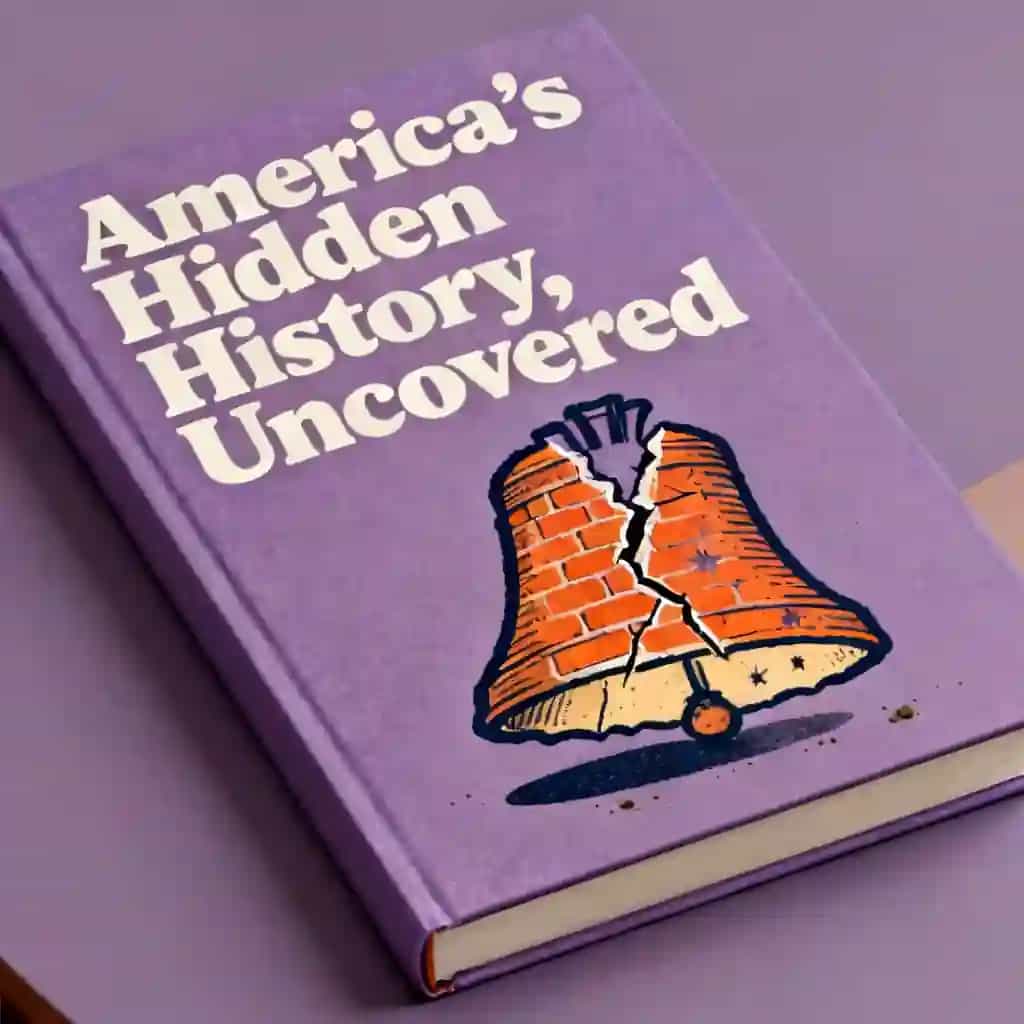
The Whitney Plantation in Louisiana offers no tours of fine furniture. Instead, visitors encounter the Field of Angels - a memorial to 2,200 enslaved children who died in Saint John the Baptist Parish between 1823 and 1863. Black granite plaques list their names surrounding a statue of a winged woman cradling a limp child. Most died as toddlers from malnutrition and disease. Some enslaved mothers made the unimaginable choice to kill their children rather than see them grow up in bondage. From a slave cabin porch, the plantation's full expanse becomes visible. Behind the Big House stands a memorial with 100,000 names etched into black stone - people enslaved in Louisiana whose descendants might be anywhere. Near the cabins stands a bell once used to control enslaved people's movements. Now repurposed, visitors ring it to honor those who lived and died in the struggle for freedom. When pulled, the chime reverberates "like a heavy heart." The Whitney exists as "a laboratory for historical ambition," rewriting narratives falsified for generations. This isn't comfortable history - it's necessary history that forces us to reckon with what was done and who profited from it.
The Louisiana State Penitentiary sits on land once occupied by a plantation bearing the same name-a connection that's literal, not metaphorical. Walking through death row feels like invading privacy, the air too fragile for anything beyond silent nods. The average sentence here is eighty-seven years. The most disturbing parallel appears in Angola's fields, where incarcerated men in white-and-blue sweatshirts work with garden hoes. Seeing Black men laboring in these fields makes time bend in on itself. Norris, a former inmate now serving as tour guide, is beloved by those still inside. Workers earn seven cents an hour-and only after six months of earning nothing while "paying off" their prison clothes. "This place really is just like the plantation was," Norris states. "They lost all that free labor to emancipation, and now they've created laws to put them back in servitude." The 13th Amendment's exception for "punishment for crime" allows forced labor within prison walls-a direct line from slavery to mass incarceration that's intentional, not coincidental.
At Blandford Cemetery in Petersburg, Virginia, thirteen Tiffany windows depict Christian saints alongside Confederate state seals - Christianity weaponized to sanctify a cause built on human bondage. Tour guide Ken reframes visitors as having "Confederate empathy" rather than sympathy, noting many have ancestral connections. Both he and supervisor Martha acknowledge their overwhelmingly white visitor demographic. Martha suggests Black visitors might feel uncomfortable and expresses discomfort with Confederate heritage groups using the cemetery for Memorial Day events. She believes Robert E. Lee, whom she describes as humble, would have disapproved of monuments in his honor. Yet Lee's writings tell a different story. While calling slavery "a moral & political evil," he considered it "a greater evil to the white man than to the black race." As a slave owner, he broke up families and brutally punished escapees. During the Civil War, his forces executed Black Union soldiers at the Battle of the Crater - which began near Blandford Cemetery, a connection the tour omits. This selective remembering reveals how we choose which uncomfortable truths to confront and which to bury beneath beauty.
On June 19, 1865-two and a half years after the Emancipation Proclamation-Union General Gordon Granger arrived in Galveston, Texas, announcing that all enslaved people were free. A quarter-million Texans had been deliberately kept in bondage so enslavers could extract additional forced labor, with many waiting until after harvest or refusing acknowledgment until forced by Union troops. Juneteenth represents profound duality-celebration born from tragedy. Early commemorations featured community gatherings, barbecues, prayer services, and oral history sharing, often incorporating red foods symbolizing blood shed in the struggle for freedom. The holiday gained momentum during the Civil Rights Movement and achieved federal status in 2021. The Al Edwards Sr. statue-holding House Bill 1016 that made Juneteenth a Texas state holiday-confronts visitors with an essential truth: liberation on paper doesn't automatically translate to liberation in practice. This pattern repeated throughout American history, with legal rights for Black Americans often requiring federal intervention against local resistance. Juneteenth serves as both memorial and call to action.
At Manhattan's African Burial Ground, tour guide Damaras advises: "Question everything. Fact-check, fact-check, fact-check. Don't believe anything if it makes you comfortable." This wisdom applies everywhere - from Central Park's former Seneca Village, a thriving free Black community forcibly removed in 1857, to the Statue of Liberty's broken shackles hidden beneath her robe. An elderly grandmother recalls her enslaved grandfather forced to stand eight hours on a Greyhound despite available seats in the white section. At four, she learned invisibility. Her school received tattered hand-me-down textbooks teaching that Africans were "nasty, bad people... monkeys... savages." She never learned about the Middle Passage until college. At the National Museum of African American History and Culture, she found the exhibits devastating yet familiar. "I lived it," she repeated. When students asked why people didn't fight back: "A lot of people fought back, and they were killed. You never hear about them anymore." The past lives in our landscapes, institutions, and collective psyche. The ground beneath our feet remembers - the question is whether we're willing to listen.