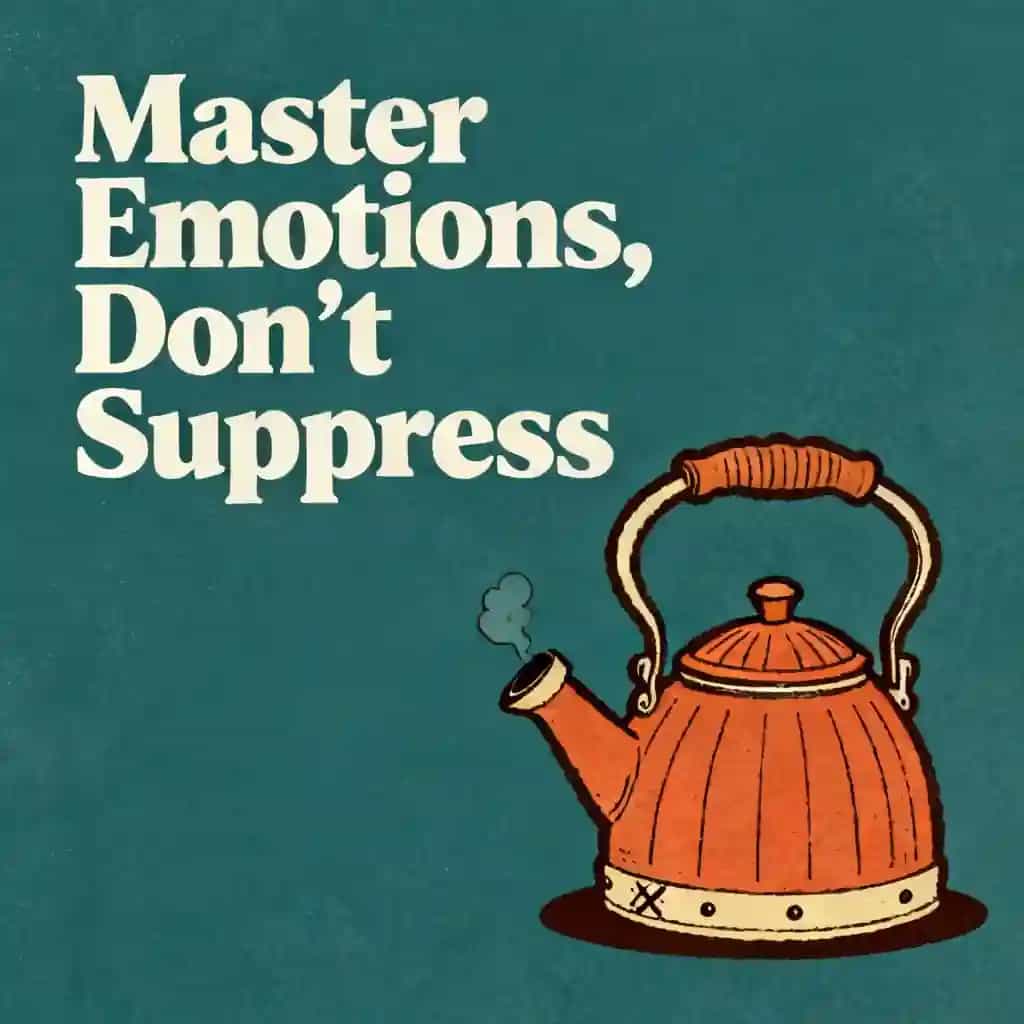
Master Your Emotions: A Practical Guide to Overcome Negativity and Better Manage Your Feelings by Thibaut Meurisse Summary

Overview of Master Your Emotions
Master your emotions or let them master you? Thibaut Meurisse's practical guide has earned a 4.13/5 from 16,500+ readers seeking freedom from anxiety and negativity. Discover why some call it "life-changing" while others question its depth - your emotional intelligence awaits transformation.
- Thibaut Meurisse reveals emotions are temporary states requiring objective evaluation, not suppression.
- Cognitive reframing transforms negative emotions into growth opportunities through perspective shifts.
- Master Your Emotions teaches the cascade effect linking thoughts, feelings, and behaviors.
- Emotional mastery requires separating your identity from transient mental states and physical reactions.
- Practical journaling strategies in Master Your Emotions decode recurring emotional patterns.
- Thibaut Meurisse's resentment formula: unspoken expectations + poor communication = prolonged suffering.
- The book's ego framework exposes how self-narratives amplify unnecessary emotional suffering.
- Mindfulness practices in Master Your Emotions interrupt autopilot reactions to triggers.
- Procrastination stems from fearing failure rather than the task itself.
- Thibaut Meurisse's neutral event theory removes inherent meaning from life challenges.
- Emotional intelligence growth requires daily recognition of feelings and their physical manifestations.
- Master Your Emotions prioritizes responsibility-taking over blame-shifting for lasting emotional control.
About the Author of Master Your Emotions
Thibaut Meurisse, bestselling author of Master Your Emotions and a leading self-help expert, specializes in practical strategies for emotional mastery and personal growth.
A French entrepreneur turned full-time writer, Meurisse launched his career in 2017 after years of studying and applying personal development principles. His books, including Dopamine Detox and Master Your Focus, distill complex psychological concepts into actionable steps, reflecting his mission to make self-improvement accessible worldwide.
Meurisse’s work is celebrated for its clarity and relatability, with therapists, coaches, and high achievers frequently adopting his methods. He connects with readers through his blog at thibautmeurisse.com and Instagram (@thibaut_meurisse), where he shares free resources and insights.
Master Your Emotions, a cornerstone of his Mastery Series, has sold over 500,000 copies and been translated into 30+ languages, solidifying Meurisse’s impact as a global voice in modern self-help.
FAQs About Master Your Emotions
What is Master Your Emotions by Thibaut Meurisse about?
Master Your Emotions is a practical guide to overcoming negativity and cultivating emotional balance through actionable strategies. It explains how emotions form, their link to survival instincts and ego, and provides exercises like journaling prompts and relaxation techniques. The book also offers frameworks like the "Interpretation + Identification + Repetition" formula to manage strong emotions effectively.
Who should read Master Your Emotions by Thibaut Meurisse?
This book is ideal for individuals struggling with stress, anxiety, or negative thought patterns. It’s particularly useful for self-help enthusiasts seeking structured advice on emotional resilience, personal growth, or improving relationships. Coaches and therapists may also find its exercises valuable for client support.
Is Master Your Emotions by Thibaut Meurisse worth reading?
Yes, for its clear, actionable approach to emotional management. Readers praise its practical exercises and relatable examples, though some critique its repetitive structure or reliance on common-sense advice. The included free workbook enhances its utility for applying concepts.
What is the main formula for managing emotions in Master Your Emotions?
The book introduces the formula: Interpretation of an event + Identification with the emotion + Repetition = Strong emotions. By adjusting how you interpret situations and disidentify from fleeting feelings, you can reduce emotional intensity over time.
Are there actionable exercises in Master Your Emotions?
Yes, the book includes:
- Daily journaling prompts to track emotional triggers
- Breathing techniques for immediate stress relief
- Reflection questions to challenge negative thought patterns A free companion workbook provides step-by-step guidance for implementing these strategies.
How does Thibaut Meurisse explain the ego-emotion connection?
Meurisse argues that the ego amplifies emotions by attaching personal identity to transient feelings. For example, interpreting criticism as a personal attack (ego-driven) fuels resentment, while viewing it neutrally reduces emotional impact. The book teaches detachment from ego to regain emotional control.
What critiques exist about Master Your Emotions?
Some readers note:
- Repetitive explanations of core concepts
- Overuse of common-sense advice without novel insights
- Potential oversimplification of complex mental health issues However, most agree the exercises offer tangible value despite these limitations.
Does Master Your Emotions address specific emotions like fear or procrastination?
Yes, it dedicates sections to 10 common negative emotions, including: Fear: Reframing it as a signal to prepare, not retreat Procrastination: Linking it to emotional avoidance patterns Each emotion includes real-life examples and tailored coping strategies.
How does Master Your Emotions compare to other self-help books?
Unlike theoretical guides, Meurisse’s book focuses on immediate application through exercises and workbooks. It’s less academic than works by Brené Brown but more structured than motivational titles like The Power of Now. The emphasis on daily habits aligns it with Atomic Habits for emotional health.
Can Master Your Emotions strategies improve workplace or relationship dynamics?
Absolutely. The book’s communication techniques help:
- Navigate conflicts by separating facts from emotional narratives
- Build resilience against criticism in professional settings
- Foster empathy by understanding others’ emotional triggers Case studies show applications in team management and marital counseling.
What free resources complement Master Your Emotions?
Readers receive:
- A step-by-step workbook with worksheets and trackers
- A free eBook on personal development fundamentals
- Access to journaling templates via the author’s website
Why is Master Your Emotions relevant in 2025?
With rising stress from technological and societal changes, the book’s focus on emotional agility remains critical. Updated editions include insights on managing digital overwhelm, making it a timely resource for maintaining mental health in fast-paced environments.
Feel the book through the author's voice
Turn knowledge into engaging, example-rich insights
Capture key ideas in a flash for fast learning
Enjoy the book in a fun and engaging way
Key Themes in Master Your Emotions
Quotes from Master Your Emotions
Our brains evolved primarily for survival, not happiness.
The ego constantly seeks validation.
You must actively take control of your emotional life.
Your approach to life matters far more than what happens to you.
You are not your thoughts or emotions—you are the awareness that observes them.
Characters in Master Your Emotions
Quick Summary Mode - Read or listen to Master Your Emotions Summary in 9 Minutes

Break down key ideas from Master Your Emotions into bite-sized takeaways to understand how innovative teams create, collaborate, and grow.

Flash Card Mode - Top 11 Insights from Master Your Emotions in a Nutshell

Distill Master Your Emotions into rapid-fire memory cues that highlight key principles of candor, teamwork, and creative resilience.

Fun Mode - Master Your Emotions Lessons Told Through 24-Min Stories

Experience Master Your Emotions through vivid storytelling that turns innovation lessons into moments you'll remember and apply.
Personalize Mode - Read or listen to Master Your Emotions Summary in 0 Minutes

Ask anything, pick the voice, and co-create insights that truly resonate with you.

From Columbia University alumni built in San Francisco
"Instead of endless scrolling, I just hit play on BeFreed. It saves me so much time."


"I never knew where to start with nonfiction—BeFreed’s book lists turned into podcasts gave me a clear path."


"Perfect balance between learning and entertainment. Finished ‘Thinking, Fast and Slow’ on my commute this week."
"Crazy how much I learned while walking the dog. BeFreed = small habits → big gains."
"Reading used to feel like a chore. Now it’s just part of my lifestyle."

"Feels effortless compared to reading. I’ve finished 6 books this month already."
"BeFreed turned my guilty doomscrolling into something that feels productive and inspiring."

"BeFreed turned my commute into learning time. 20-min podcasts are perfect for finishing books I never had time for."
"BeFreed replaced my podcast queue. Imagine Spotify for books — that’s it. 🙌"

"It is great for me to learn something from the book without reading it."
"The themed book list podcasts help me connect ideas across authors—like a guided audio journey."
"Makes me feel smarter every time before going to work"
From Columbia University alumni built in San Francisco
"Instead of endless scrolling, I just hit play on BeFreed. It saves me so much time."
"I never knew where to start with nonfiction—BeFreed’s book lists turned into podcasts gave me a clear path."
"Perfect balance between learning and entertainment. Finished ‘Thinking, Fast and Slow’ on my commute this week."
"Crazy how much I learned while walking the dog. BeFreed = small habits → big gains."
"Reading used to feel like a chore. Now it’s just part of my lifestyle."
"Feels effortless compared to reading. I’ve finished 6 books this month already."
"BeFreed turned my guilty doomscrolling into something that feels productive and inspiring."
"BeFreed turned my commute into learning time. 20-min podcasts are perfect for finishing books I never had time for."
"BeFreed replaced my podcast queue. Imagine Spotify for books — that’s it. 🙌"
"It is great for me to learn something from the book without reading it."
"The themed book list podcasts help me connect ideas across authors—like a guided audio journey."
"Makes me feel smarter every time before going to work"
"Instead of endless scrolling, I just hit play on BeFreed. It saves me so much time."
"I never knew where to start with nonfiction—BeFreed’s book lists turned into podcasts gave me a clear path."
"Perfect balance between learning and entertainment. Finished ‘Thinking, Fast and Slow’ on my commute this week."
"Crazy how much I learned while walking the dog. BeFreed = small habits → big gains."
"Reading used to feel like a chore. Now it’s just part of my lifestyle."
"Feels effortless compared to reading. I’ve finished 6 books this month already."
"BeFreed turned my guilty doomscrolling into something that feels productive and inspiring."
"BeFreed turned my commute into learning time. 20-min podcasts are perfect for finishing books I never had time for."
"BeFreed replaced my podcast queue. Imagine Spotify for books — that’s it. 🙌"
"It is great for me to learn something from the book without reading it."
"The themed book list podcasts help me connect ideas across authors—like a guided audio journey."
"Makes me feel smarter every time before going to work"
"Instead of endless scrolling, I just hit play on BeFreed. It saves me so much time."
"I never knew where to start with nonfiction—BeFreed’s book lists turned into podcasts gave me a clear path."
"Perfect balance between learning and entertainment. Finished ‘Thinking, Fast and Slow’ on my commute this week."
"Crazy how much I learned while walking the dog. BeFreed = small habits → big gains."
"Reading used to feel like a chore. Now it’s just part of my lifestyle."
"Feels effortless compared to reading. I’ve finished 6 books this month already."
"BeFreed turned my guilty doomscrolling into something that feels productive and inspiring."
"BeFreed turned my commute into learning time. 20-min podcasts are perfect for finishing books I never had time for."
"BeFreed replaced my podcast queue. Imagine Spotify for books — that’s it. 🙌"
"It is great for me to learn something from the book without reading it."
"The themed book list podcasts help me connect ideas across authors—like a guided audio journey."
"Makes me feel smarter every time before going to work"

Get the Master Your Emotions summary as a free PDF or EPUB. Print it or read offline anytime.