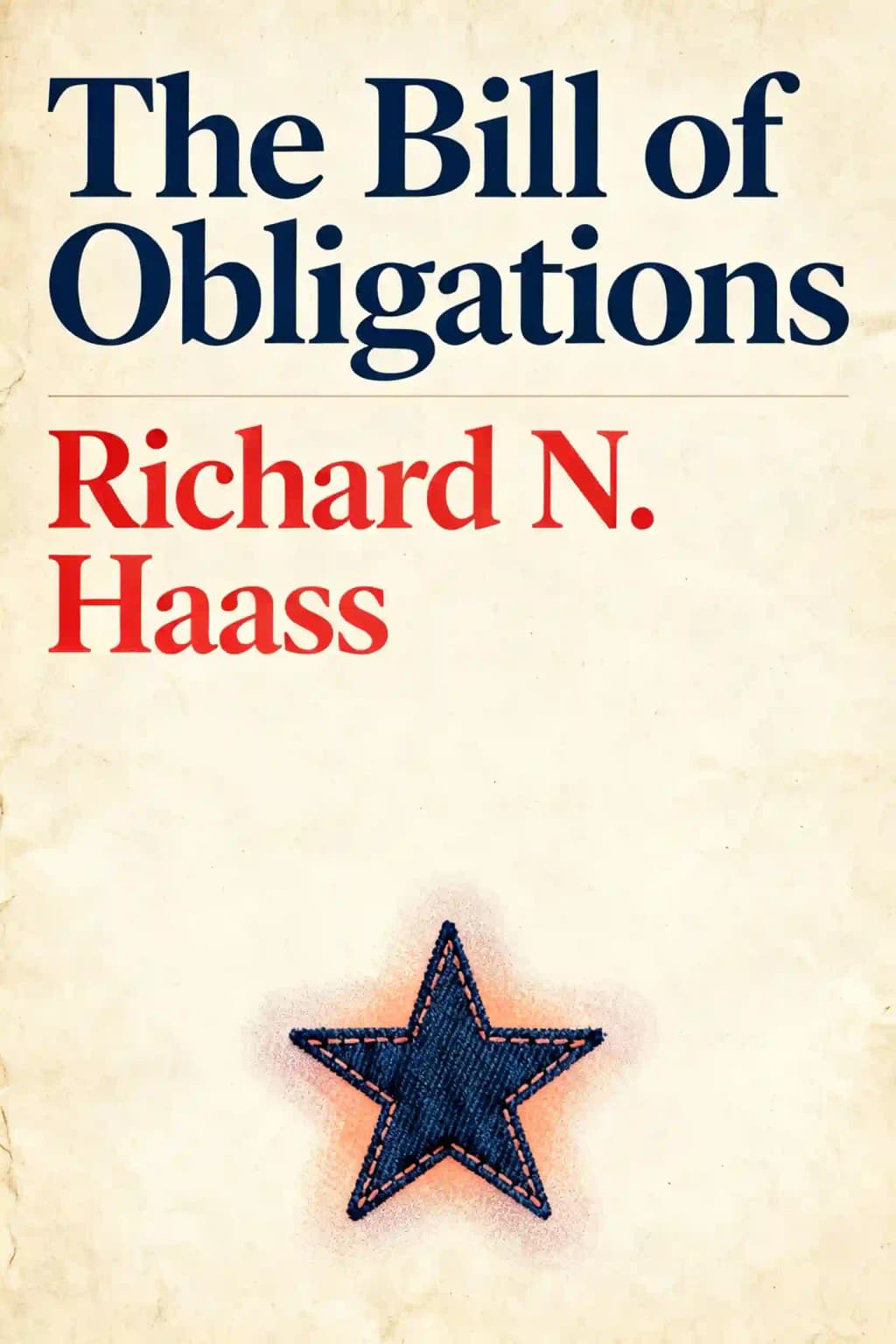
Bill of Obligations
The Ten Habits of Good Citizens
Overview of Bill of Obligations
In "The Bill of Obligations," Richard Haass challenges Americans to embrace ten civic duties essential for democracy's survival. Endorsed by Princeton's Dr. Glaude as "clear and thoughtful," this provocative manifesto asks: What if citizenship requires more than demanding rights?

Key Themes in Bill of Obligations
- civic responsibility
- democratic backsliding
- political polarization
- representative government
- peaceful transfer of power
Quotes from Bill of Obligations
"Ambition must be made to counteract ambition."
"Democracy never lasts long. It soon wastes exhausts and murders itself."
"A republic, if you can keep it."
Americans should be deeply concerned about their democracy's future.
"wherever the people are well informed they can be trusted with their own government"
Characters in Bill of Obligations
- Richard N. HaassAuthor and foreign policy expert
- Patrick HenryCritic of federal power and the Constitution
About the Author
About the Author of Bill of Obligations
Richard N. Haass, author of The Bill of Obligations: The Ten Habits of Good Citizens, is a renowned diplomat and foreign policy expert who served as president of the Council on Foreign Relations for two decades.
The book, a compelling exploration of civic responsibility and democratic renewal, draws on Haass’s extensive career shaping U.S. foreign policy, including roles as Director of Policy Planning under Secretary of State Colin Powell and U.S. envoy to Northern Ireland’s peace process.
A Rhodes Scholar with a doctorate from Oxford University, Haass has authored over a dozen influential works like A World in Disarray and Foreign Policy Begins at Home, which analyze global governance and America’s role in a fractured world. His insights are frequently cited in The New York Times and The Washington Post, and he has appeared on NPR, TED Talks, and BBC programs.
Haass’s books, widely used in academic courses, have been translated into more than a dozen languages, cementing his status as a leading voice on international relations and civil discourse.
Download Summary of Bill of Obligations
Get the Bill of Obligations summary as a free PDF or EPUB. Print it or read offline anytime.
FAQs About This Book
The Bill of Obligations by Richard N. Haass argues that American democracy’s survival depends on redefining citizenship to balance rights with civic duties. Haass introduces ten obligations—like staying informed, practicing civility, and prioritizing country over party—to counter polarization, misinformation, and apathy threatening the nation. The book blends historical analysis and practical solutions to revive collective responsibility in a divided society.
This book is essential for citizens, educators, and policymakers invested in strengthening democracy. Haass targets voters seeking actionable steps to bridge political divides, teachers emphasizing civic education, and leaders modeling civil discourse. Its nonpartisan approach appeals to readers alarmed by societal fragmentation and eager to uphold democratic norms.
Yes, for its timely critique of America’s civic crisis and clear framework for reform. Haass combines scholarly rigor with relatable examples, offering tools to combat misinformation, polarization, and apathy. The ten obligations provide a roadmap for individuals and institutions to rebuild trust in democratic systems, making it a vital read in today’s political climate.
Key obligations include:
- Be informed: Prioritize factual knowledge over opinion.
- Stay civil: Foster respectful dialogue.
- Reject violence: Uphold peaceful conflict resolution.
- Value norms: Protect democratic institutions.
- Put country first: Prioritize national unity over partisan loyalty.
Haass structures these as interdependent habits to revive civic responsibility.
This obligation urges citizens to prioritize democracy’s health over personal or party interests. Haass argues that sustaining freedom requires sacrificing short-term gains for long-term collective stability, such as compromising on policies or rejecting extremist rhetoric. It encapsulates the book’s core message: national survival depends on shared sacrifice.
Haass identifies obligations like practicing compromise and respecting institutions as antidotes to division. By encouraging citizens to engage constructively with opposing views and uphold electoral integrity, the book aims to reduce tribalism and rebuild trust in democratic processes.
Civility is foundational to productive discourse, preventing discussions from devolving into hostility. Haass contends that polite disagreement fosters cooperation on shared goals, making it a practical obligation rather than a moral luxury. He calls on leaders, educators, and media to model this behavior.
While rights protect individual freedoms, obligations are commitments to others and democracy itself. Haass warns that focusing solely on rights—without duties like informed voting or civic participation—erodes the social fabric necessary to sustain those rights.
Haass echoes Jefferson, stating informed citizens are democracy’s cornerstone. This obligation emphasizes discerning facts from misinformation, engaging with diverse sources, and understanding history. Without this foundation, civic participation risks being misguided or harmful.
Some argue Haass underestimates systemic barriers to civic engagement, like inequality or gerrymandering, which limit individuals’ ability to fulfill obligations. Others note the challenge of inspiring behavioral change in a polarized media landscape. Despite this, the book sparks crucial conversations about citizenship’s evolving role.
Yes. The “be informed” obligation urges critical media literacy, fact-checking, and relying on reputable sources. Haass advocates for educational reforms and social media accountability to combat disinformation, ensuring public debate rests on shared facts.
Unlike his foreign policy-focused books, this work addresses domestic democratic decline. It shares themes of institutional stewardship from A World in Disarray but shifts to prescriptive civic engagement, reflecting Haass’s concern over internal threats to U.S. stability.