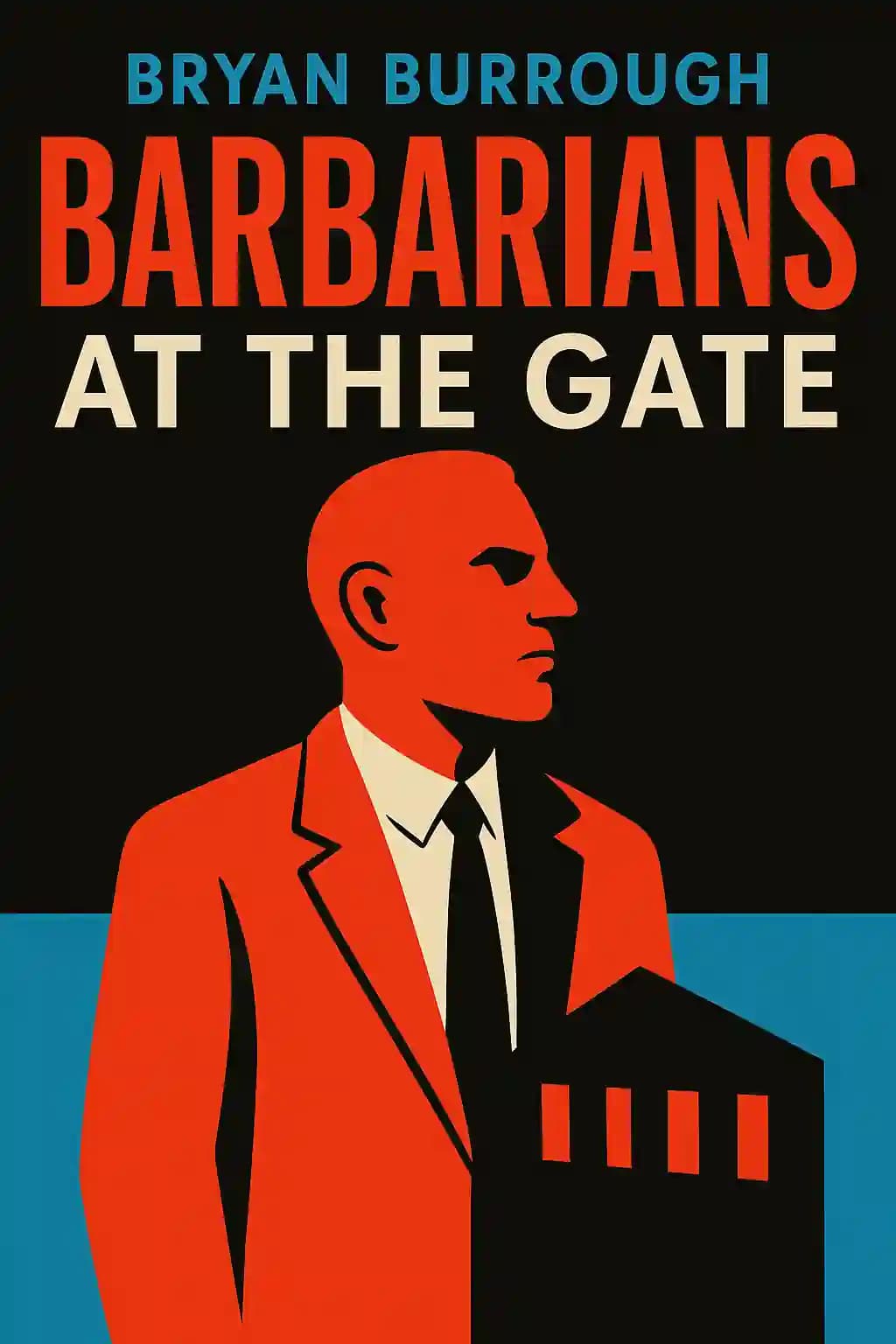
Barbarians at the Gate
Overview of Barbarians at the Gate
Dive into the cutthroat 1980s takeover battle that defined Wall Street excess. This #1 New York Times bestseller for 39 weeks exposes corporate greed with thriller-like intensity. What shocking tactics turned a $25 billion deal into required reading for every aspiring business titan?

Key Themes in Barbarians at the Gate
- leveraged buyouts
- corporate excess
- hostile takeovers
- eighties wall street
- boardroom politics
Quotes from Barbarians at the Gate
"The chief executive can do whatever he wants" became his overriding principle.
Nabisco had become a stagnant organization that "venerated past glories"
Johnson had no master plan for Nabisco, preferring to wait for opportunistic moves.
Even decades later, the tale serves as a cautionary fable about greed, ambition.
Johnson transformed Standard Brands into what employees called "Phi Delta Johnson"
Characters in Barbarians at the Gate
- Ross JohnsonFlamboyant CEO of RJR Nabisco
- Henry KravisWall Street's most formidable dealmaker
- Henry WeiglFormer boss of Standard Brands
- Bob SchaeberleFormer CEO of Nabisco
- J. Tylee WilsonCEO of RJ Reynolds Industries
About the Author
About the Author of Barbarians at the Gate
Bryan Burrough, bestselling author of Barbarians at the Gate: The Fall of RJR Nabisco, is a Pulitzer Prize-finalist journalist renowned for his gripping narratives about corporate power and American history.
A University of Missouri journalism graduate, Burrough honed his expertise during a decade at The Wall Street Journal, where he won three Gerald Loeb Awards for financial reporting. His co-authored exposé of the 1988 RJR Nabisco leveraged buyout—a landmark work of business nonfiction—remains a Wall Street classic and was adapted into an Emmy-nominated HBO film.
Burrough further solidified his authority through Vanity Fair contributions and books like Public Enemies (2004), which dissects 1930s crime waves, and The Big Rich (2009), chronicling Texas oil dynasties. As Editor at Large for Texas Monthly, his 2023 true-crime podcast Stephenville reached top-10 podcast charts.
His upcoming The Gunfighters (2025) continues his exploration of Western mythology. Barbarians at the Gate has sold over 2 million copies worldwide and is frequently cited as one of Fortune’s “75 Smartest Business Books.”
Download Summary of Barbarians at the Gate
Get the Barbarians at the Gate summary as a free PDF or EPUB. Print it or read offline anytime.
FAQs About This Book
Barbarians at the Gate chronicles the 1988 leveraged buyout (LBO) of RJR Nabisco, a landmark corporate takeover battle involving Wall Street titans like Henry Kravis, Ross Johnson, and Ted Forstmann. The book exposes the greed, excess, and financial maneuvers that defined 1980s Wall Street, culminating in KKR’s record $25 billion acquisition—a deal that reshaped modern finance.
Finance professionals, business students, and readers interested in corporate history will find this book essential. Its gripping narrative also appeals to general audiences drawn to high-stakes drama, flawed characters, and critiques of unchecked capitalism.
Yes—it’s widely hailed as the definitive account of Wall Street’s excesses. The Wall Street Journal called it “one of the finest business narratives ever written,” blending investigative rigor with page-turning storytelling about ambition and moral compromise.
CEO Ross Johnson initiated the LBO to privatize RJR Nabisco, aiming to profit personally while sidestepping shareholder scrutiny. His move triggered a brutal bidding war among private equity firms, fueled by junk bonds and unprecedented debt.
- Ross Johnson: RJR’s CEO, whose lavish lifestyle epitomized corporate excess.
- Henry Kravis: KKR co-founder, leveraging junk bonds to win the bid.
- Ted Forstmann: A critic of risky LBOs who lost the battle but predicted its fallout.
- Corporate greed: Executives prioritizing personal gain over company health.
- Debt dangers: How leveraged buyouts burden companies with unsustainable loans.
- Wall Street ethics: Moral compromises by bankers and lawyers enabling deals.
The title references the fall of Rome, framing Wall Street raiders as “barbarians” storming corporate gates. Battles like the “cookie wars” and terms like “troops” reinforce cutthroat competition and strategic maneuvering.
Ted Forstmann coined “barbarians” to criticize rivals like Kravis, whom he viewed as destroying ethical finance. The phrase became shorthand for 1980s Wall Street’s destructive LBO culture.
Some readers find its dense financial details challenging, while others argue it glamorizes greed. However, most praise its balanced reporting and enduring relevance to modern corporate scandals.
Both expose financial recklessness, but Barbarians focuses on corporate takeovers (1980s) while The Big Short tackles mortgage crises (2000s). Barbarians offers deeper character studies, while The Big Short simplifies complex instruments.
The book warns against short-term profit chasing, hubris, and ethical decay. Johnson’s downfall illustrates how arrogance and poor oversight can destroy corporate value.
Its themes—corporate greed, debt-fueled growth, and regulatory gaps—mirror modern issues like hedge fund activism and tech industry LBOs. The 20th-anniversary edition updates post-deal fallout, reinforcing its timeless cautionary tale.