Capítulo 1
The Forgotten Heroines: Britain's Overlooked Female Pioneers
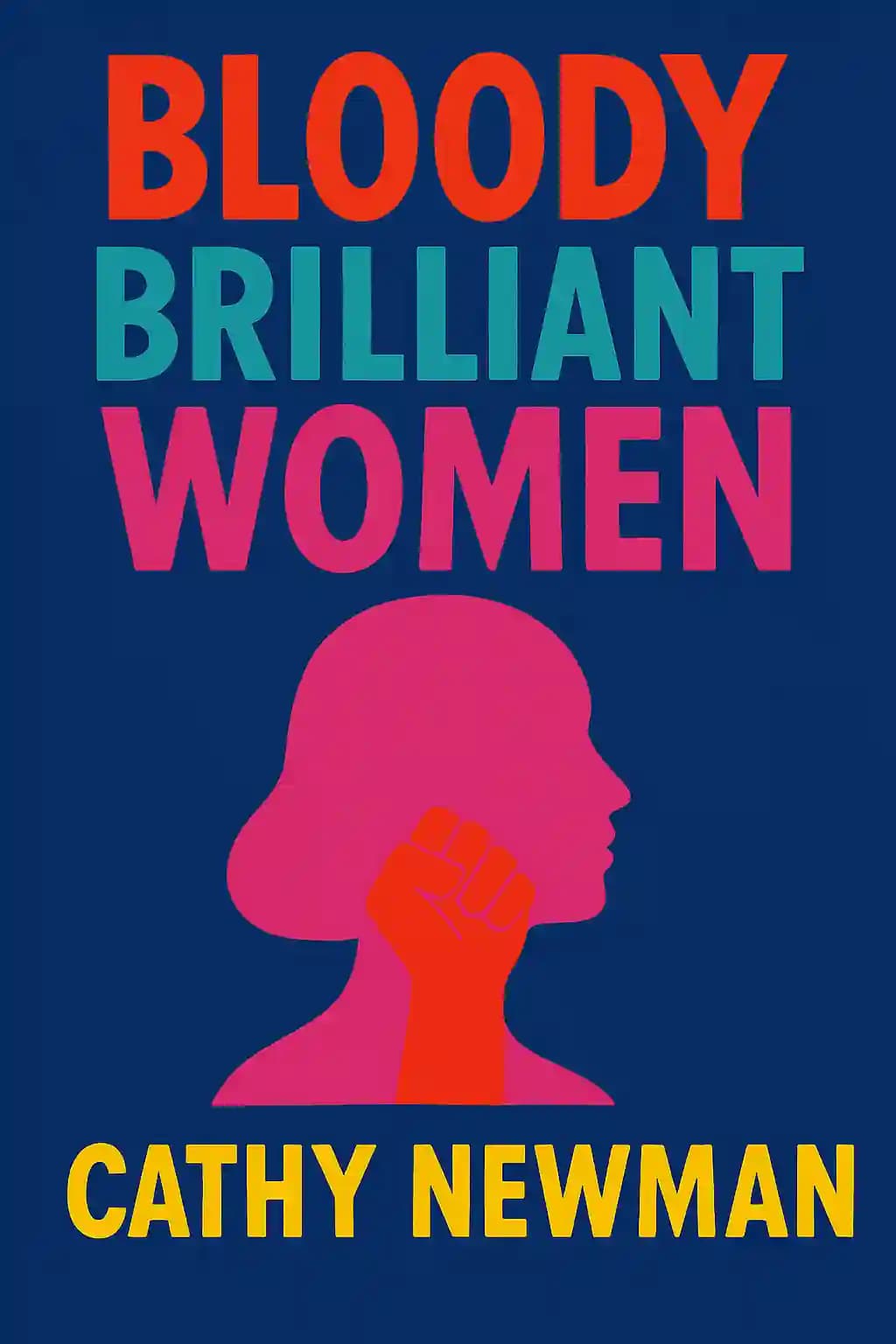
In a society that often celebrates male achievement while relegating women to historical footnotes, Cathy Newman's "Bloody Brilliant Women" arrives as a necessary corrective to our collective amnesia. This meticulously researched work has become something of a phenomenon, with celebrities from Emma Watson to Sadiq Khan praising its revelatory power. As The Guardian noted, it "should be on the curriculum of every school in Britain." The book's cultural impact stems from its ability to unearth extraordinary stories of female achievement that have been systematically erased from our historical narrative-women who shaped modern Britain through their courage, intellect, and determination, yet remain largely unknown compared to their male counterparts.
Capítulo 2
Fighting for Basic Rights in a Man's World
The early 19th century marked a particularly restrictive period for women's opportunities, with their legal status effectively rendering them invisible under the law. Paradoxically, by embracing traditional female virtues of morality, piety, and maternal care, women gained moral authority they later wielded for radical purposes. This strategy proved particularly effective in Victorian society, where feminine virtue was highly prized even as women's rights were severely curtailed.
Caroline Norton's 1837 battle became a watershed moment in women's rights history. After fleeing her violently abusive husband George Norton, she discovered the full extent of married women's legal powerlessness - they had no legal identity separate from their husbands, couldn't own property, sign contracts, or even maintain custody of their children. Norton's personal tragedy - being denied access to her three young sons - transformed into a powerful catalyst for change. Though she ultimately failed to secure formal access to her children, her tireless campaigning and influential writings, including "English Laws for Women in the Nineteenth Century," led to landmark legislation: the Custody of Infants Act 1839, the Matrimonial Causes Act 1857, and eventually the Married Women's Property Act 1870.
Even Queen Victoria embodied the period's contradictions regarding women's rights. While privately confiding to her daughter that marriage made women "bodily and morally the husband's slave," she publicly denounced women's suffrage as "mad, wicked folly" and advised women to focus on domestic duties. However, her decision to use chloroform during Prince Leopold's birth in 1853 inadvertently advanced women's bodily autonomy by challenging the religious doctrine that women must endure childbirth pain as punishment for Eve's sin.
The suffrage movement emerged from this context of systematic inequality, finding its epicenter in the complex dynamics of the Pankhurst household. Emmeline Pankhurst, its leading figure, was a study in calculated contradictions. Always immaculately dressed in the latest Paris fashions, she deliberately countered the popular caricatures of suffragists as masculine and unkempt. This attention to appearance extended to controlling her daughters' image - notably denying young Sylvia glasses despite her severe myopia, fearing it would make her look unfeminine.
The WSPU's evolution from peaceful protest to militant action was marked by several pivotal moments. The October 1905 arrest of Christabel Pankhurst for deliberately spitting at a policeman transformed the movement's tactics. The escalation to more violent methods - including window-breaking campaigns, arson of empty buildings, and chemical attacks on mailboxes - was met with increasingly harsh government responses. The force-feeding of imprisoned suffragettes and the notorious 1913 "Cat and Mouse Act" created a cycle of release and re-imprisonment that only intensified public sympathy for the cause.
Emily Davison's fatal injury at the 1913 Derby became the movement's most dramatic moment. Modern analysis of film footage and her personal effects suggests she was attempting to attach a suffragette scarf to the King's horse's bridle rather than committing suicide as initially reported. Her death became a powerful symbol of the sacrifice suffragettes were willing to make. Throughout the struggle, male allies played crucial roles - from Frederick Pethick-Lawrence, who endured imprisonment and force-feeding alongside his wife Emmeline, to MP George Lansbury, who resigned his seat to campaign for women's suffrage and defended the militant tactics despite public criticism.
Capítulo 3
Women's Wartime Revolution
World War I created unprecedented opportunities for women, though Britain drew the line at allowing them to fight-yet this didn't stop some from trying. Dorothy Lawrence disguised herself as a man to report from the trenches, while Flora Sandes officially joined the Serbian army, rising to Sergeant Major and receiving Serbia's Order of Karaore's Star.
The war empowered women in unprecedented ways. As Mabel Potter Daggett wrote, the assassination that triggered the conflict "summoned men to their most ancient occupation-and women to every other." With men fighting, women filled crucial roles in munitions factories and other industries. These "munitionettes" or "canaries" (named for their TNT-yellowed skin) faced deadly conditions-between May-October 1916, forty-one workers died from TNT poisoning, and a 1917 explosion at White Lund killed ten people.
Women entered countless professions as acetylene welders, fitters, lens-grinders, plumbers, carpenters, bank clerks and more. Yet employers kept wages artificially low by assigning women only portions of jobs previously done entirely by men. The sight of women in trousers and overalls shocked many, though some celebrated the arrival of the "trained handy woman."
Female doctors made remarkable contributions despite initial resistance. Louisa Garrett Anderson and Flora Murray formed the Women's Hospital Corps after War Office rejection, establishing a hospital in Paris before later running London's Endell Street Hospital, which served 26,000 patients. The Scottish Women's Hospitals, founded by suffragist Dr. Elsie Inglis after being told to "go home and sit still," operated across Europe until her death from cancer in 1917.
The most famous female casualty was nurse Edith Cavell, memorialized in marble at London's Trafalgar Square. When war broke out, she rushed back to Belgium before German occupation, converting her medical institute into a Red Cross Hospital treating soldiers from both sides. By November 1914, Cavell began sheltering Allied soldiers and helping them escape to neutral Netherlands. Despite diplomatic efforts, she was executed by German firing squad on October 12, 1915, transforming her into Britain's most famous woman and doubling recruitment rates when her image appeared on posters.
At Bletchley Park during World War II, women outnumbered men eight to one. While initially divided between aristocratic "gels" working as secretaries and older women managing offices, talented female codebreakers like Joan Clarke and Mavis Batey made crucial contributions. Alfred "Dilly" Knox assembled a team known as "Dilly's Fillies," recognizing women's "nimbleness of mind and capacity for lateral thought" along with "care and attention to detail that many men might not have had."
Capítulo 4
Between Wars: New Freedoms, Old Barriers
The interwar period brought new opportunities alongside persistent discrimination. Lilian Wyles became one of Britain's first female police officers in 1918, when Home Secretary Sir Neville Macready reluctantly agreed to trial one hundred policewomen, provided no "vinegary spinsters" were hired and the experiment could be immediately disbanded if unsuccessful. Wyles faced constant hostility from male colleagues and was initially restricted to dealing with cases involving women and children, though she later became renowned for her skilled handling of sexual assault cases and child protection matters.
Nancy Astor, the first woman to take her seat in Parliament, was legendary for handling hecklers with wit and grace. When asked why she wasn't home with her five children, she replied: "I feel someone ought to be looking after the more unfortunate children. My children are among the fortunate ones." Despite her immense wealth, Astor possessed genuine empathy, fighting for widows' pensions and raising the age of consent. She championed temperance, women's rights, and educational reform, though her controversial political views sometimes overshadowed her achievements. Her Plymouth constituency office became a model for constituent services, with regular surgeries and direct engagement with voters.
By 1929, when Margaret Bondfield became the first female cabinet member as Minister of Labour, there were fourteen women in the Commons-just fifteen by 1931, despite women comprising 52.9% of the electorate. Bondfield's appointment was groundbreaking, yet she faced criticism from both conservatives who opposed women in high office and fellow Labour members who considered her too moderate. Within Westminster, women occupied separate spaces from men, missing important debates and gossip in male drinking and smoking areas. However, they forged valuable cross-party friendships-Nancy Astor and Labour MP Ellen Wilkinson sparred in debates but remained close friends, often collaborating on women's issues and social reform.
For working women, post-war Britain proved deeply disappointing. Many who had gained employment during the war were made redundant or pressured to resign, particularly in manufacturing and engineering sectors. In November 1918, six thousand women demonstrated after being sacked from Woolwich Arsenal, where they had excelled in munitions production. When their union complained, Lloyd George replied that "anybody who places before women the prospect of absolute equality is doing something which is inconsistent with the nature of things." This attitude pervaded government policy, with women routinely paid lower wages and denied promotion opportunities.
The legal profession proved particularly resistant to women. Dr. Ivy Williams became the first woman called to the bar in 1922, though she went into teaching at Oxford, where she continued to break barriers as the first woman to teach law at an English university. Helena Normanton, forty years old and formerly a teacher, became the first practicing female barrister that same year, motivated by childhood trauma-her father's likely suicide when she was four and witnessing her mother being patronized by a solicitor when she was twelve. Normanton went on to achieve many firsts, including becoming the first woman to lead prosecution in a murder trial and the first to obtain a divorce for a client.
The "marriage bar" remained a significant obstacle across professions. In 1921, St Pancras Borough Council dismissed Dr. Gladys Miall-Smith when she married, despite protests from multiple organizations and publications, including The Lancet and the Medical Women's Federation. This practice was widespread in teaching, civil service, and banking, forcing women to choose between career and marriage. Consequently, professionally prominent women were often lesbians or self-declared spinsters like Sarah Burton in Winifred Holtby's novel South Riding: "I was born to be a spinster and, by God, I'm going to spin." These women formed supportive networks and communities, creating their own spaces for professional and personal fulfillment despite societal constraints.
Capítulo 5
Postwar Reconstruction and Persistent Inequality
The post-war welfare state created by Labour's 1945-51 government brought transformative changes but retained deeply embedded gender discrimination. Despite progressive reforms like the National Health Service and expanded social security, the system remained fundamentally patriarchal. Married women were treated as dependents rather than individuals, requiring husband's signatures for mortgages until the 1970s and facing restrictions on their National Insurance contributions. The education system, while opening some doors through grammar schools, systematically disadvantaged girls through weighted 11-plus exams that favored boys and limited curriculum options, especially in science, mathematics, and technical subjects. Girls were routinely steered toward domestic science and secretarial courses regardless of their abilities.
Educationalist John Newsom's influential 1948 report "The Education of Girls" exemplified prevailing attitudes. He argued forcefully against educating women for professional careers, claiming that most women wanted to be housewives and that training them as doctors or architects was wasteful since "probably 75 percent" would practice for fifteen years at most. His suggestion that women should be teachers or nurses as these provided "sublimation of the maternal instinct" reflected widespread assumptions about women's natural roles. Progressive voices like Alva Myrdal and Viola Klein countered these views, arguing that educated women who abandoned their skills "commit a sin against society" and advocating for continuous careers combining family and professional life.
The Beveridge Report's vision of social security reinforced women's unpaid domestic role as "vital though unpaid, without which their husbands could not do their paid work and without which the nation could not continue." This framework institutionalized women's economic dependency. Equal pay remained deeply controversial, with the 1946 Royal Commission on Equal Pay producing a contradictory report concluding that while educated professional women might deserve equal pay, factory women didn't - using vague justifications like women's supposed "lack of flexibility" and lower productivity, despite evidence to the contrary during wartime.
Elizabeth II's accession in 1952 symbolized possibilities for change in British society, despite her traditionally feminine role. Her coronation in 1953 marked a media revolution, being televised to an estimated 27 million viewers and bringing modernity into British homes. However, her ascension did little to advance gender equality as women continued to be sidelined in public life. By 1951, the Royal Society had admitted only seven women as fellows, despite numerous qualified candidates. The Civil Service maintained marriage bars until 1946, and women were excluded from the diplomatic service until 1946.
The scientific establishment's treatment of Rosalind Franklin epitomized institutional sexism. Her crucial X-ray crystallography work revealing DNA's structure was shown without her knowledge to Watson and Crick by her colleague Maurice Wilkins. Franklin died of ovarian cancer in 1958, four years before Crick, Watson, and Wilkins received the Nobel Prize for work that relied heavily on her insights. Despite computing's origins with Ada Lovelace's pioneering algorithm work, science remained predominantly male. Early female programmers like Emma Gifford at LEO Computers and Grace Hopper in the US made fundamental contributions to computer science, though programming was initially considered "secretarial drudgery" suitable for women while men handled the more prestigious hardware development. This gendered division would ironically reverse as programming gained status and better pay.
Capítulo 6
The Sexual Revolution and Women's Liberation
The 1960s sexual revolution emerged between the lifting of the ban on Lady Chatterley's Lover in 1960 and the Beatles' first album in 1963. While historian Brian Harrison notes it "merely rendered public much that had long been going on privately," the shift represented a dramatic cultural transformation. The era's sexual politics remained deeply misogynistic, as starkly illustrated by several high-profile cases. The treatment of Christine Keeler in the Profumo scandal exposed how young women were simultaneously exploited and vilified, while the Duchess of Argyll's divorce case saw Lord Justice Wheatley's infamous condemnation of her as "a highly sexed woman" with "a debased sexual appetite" - language that would have been unthinkable if applied to a man of similar status.
The contraceptive pill's arrival in Britain in 1961 marked a watershed moment, though it was initially restricted to married women. The medical establishment engaged in heated debates about prescribing it for "social as well as medical reasons," revealing deep-seated paternalistic attitudes. Sir Charles Dodds exemplified this mindset, warning against interfering with women's bodies by comparing them to delicate clocks that shouldn't be tampered with. Despite these reservations, women eagerly embraced this new control over their fertility - from 150,000 users in 1962 to 480,000 by 1964. The pill's rapid adoption reflected women's determination to take charge of their reproductive rights, despite establishment resistance.
By 1970, feminism had transformed from quiet dissatisfaction to militant action. The Miss World protest became a defining moment when demonstrators disrupted Bob Hope's performance with flour bombs, rattles, and chants of "We're not beautiful, we're not ugly, we're angry." This dramatic action, broadcast live on BBC television, captured headlines worldwide and marked feminism's second wave breaking into mainstream consciousness. Earlier that year, the groundbreaking National Women's Liberation Conference at Ruskin College exposed the persistent inequality in domestic life. Research presented there revealed the stark reality that men performed less than 25% of housework, even in supposedly progressive households.
Erin Pizzey's establishment of Britain's first women's refuge in Chiswick in 1971 addressed the hidden epidemic of domestic violence. The refuge, though desperately overcrowded with mattresses in hallways and makeshift hessian curtains, became a lifeline for countless women and their children fleeing abuse. Pizzey's influential book "Scream Quietly or the Neighbours Will Hear" broke the silence surrounding domestic violence through powerful first-hand accounts, forcing society to confront this previously taboo issue.
The movement faced significant internal challenges, particularly regarding its focus on white, middle-class experiences. Black feminist organizations emerged to address this gap, including the Brixton Black Women's Group (founded 1973 by activist Olive Morris) and the Organisation of Women of Asian and African Descent. These groups highlighted how gender oppression intersected with racial and class discrimination. Writer Amrit Wilson's groundbreaking 1978 book "Finding a Voice" detailed how gender experiences were fundamentally shaped by race and cultural background, challenging white feminists to confront their own privileges and biases. These critiques, though often met with discomfort, were crucial in pushing the movement toward a more inclusive understanding of women's liberation.
Capítulo 7
From Thatcher to #MeToo
Margaret Thatcher became Britain's first female Prime Minister in 1979, yet did remarkably little for women despite her historic position. She declared in 1982 that "the battle for women's rights has been largely won" while dismissing "strident" feminists, even as she employed voice coaches to give her speech a more masculine pitch.
The internet's early development was notably male-dominated. Among the few women pioneers was Nicola Pellow, who joined Tim Berners-Lee's team at CERN in 1990 despite having "no knowledge of any computing languages really." She created the first "line mode" web browser that allowed the Web to "take its first tentative step on to the world stage" by running on any platform, not just Berners-Lee's NeXT computer.
During the late 1990s internet boom, Martha Lane Fox became the UK's dot-com poster girl as co-founder of lastminute.com. Though the company briefly reached a valuation of 800 million when floated in March 2000, Lane Fox has spoken candidly about sexism in tech, noting that while being a woman "attracted attention - not the sort of attention I wanted," it also meant media coverage for attending "the opening of an envelope."
By 2018, the world had changed considerably with Brexit, Trump, and the Weinstein revelations sparking the #MeToo movement. The BBC's China editor Carrie Gracie resigned over pay inequality, revealing male international editors were paid "at least 50 percent more" than she was. When the 2010 Equality Act clause requiring companies with 250+ employees to publish gender pay gaps came into force, the results confirmed fears-78% of reporting firms paid male employees more on average than females.
Social media has enabled powerful feminist platforms like Laura Bates' Everyday Sexism, which collected 100,000 stories of sexist abuse by April 2015. However, Bates and other activists like Caroline Criado-Perez (who successfully campaigned to get Jane Austen on the 10 note) faced horrific online abuse including rape and death threats.
Newman concludes by celebrating contemporary "bloody brilliant women" across fields: politicians like Nicola Sturgeon, Jess Phillips and Eleanor Smith; Metropolitan Police Commissioner Cressida Dick; writers including Hilary Mantel, Carol Ann Duffy and J.K. Rowling; campaigners against gender violence like Leyla Hussein and Nimco Ali; arts leaders like Jude Kelly; and business leaders such as Helena Morrissey who established the 30% Club while raising nine children.
Capítulo 8
The Ongoing Struggle for Equality
Despite significant progress over the past century, women continue to face substantial barriers in numerous professional fields. In engineering, women represented just 11.5% of applicants in 2014, with similar underrepresentation in physics (20%) and computer science (16%). The financial sector shows particular resistance to female leadership - no woman has yet served as Chancellor of the Exchequer in Britain, while only 7% of FTSE 100 companies have female CEOs. Most alarmingly, domestic violence remains a deadly threat, with two women killed weekly in England and Wales by current or former partners, and one in four women experiencing domestic abuse in their lifetime.
The UN's HeForShe campaign, launched by Emma Watson but conceived by Elizabeth Nyamayaro, marked a crucial shift in feminist strategy by explicitly recognizing that gender equality requires male participation and support. Watson's compelling speech at the UN highlighted how rigid gender stereotypes harm both sexes: "If men don't have to be aggressive in order to be accepted women won't feel compelled to be submissive." The campaign has since gathered over 2 million commitments from men and boys worldwide to act as agents of change.
Newman identifies ongoing backlash against feminist progress as stemming from deep-seated male insecurity, drawing parallels with feminist critic Elaine Showalter's observations about the late nineteenth century: "In periods of cultural insecurity... the longing for strict border controls around the definition of gender... becomes especially intense." This pattern has resurfaced with the #MeToo movement, where some men feel threatened as behaviors once dismissed as harmless - from workplace harassment to casual sexism - are being reexamined and condemned. The movement has led to over 200 powerful men losing their positions, while sparking crucial conversations about consent and power dynamics.
Examining women's relationship with posterity, Newman contrasts Maria Jewsbury's pessimistic nineteenth-century view that "a woman's mind - what is it?" with the enduring impact of pioneering figures like Mary Shelley, whose Frankenstein continues to influence literature and popular culture two centuries later. She points to contemporary achievements - from Malala Yousafzai's Nobel Peace Prize to Katherine Johnson's crucial role in NASA's space program - as evidence that women are increasingly "built for the long haul."
The author concludes optimistically, celebrating women's growing strength to shatter glass ceilings across industries, from politics to science. She raises a toast to "strength, usefulness and not fading on the stalk - and the coming generations of bloody brilliant women," while acknowledging that true equality requires continued vigilance and activism. Recent achievements, like the record number of women in parliament (34% as of 2019) and growing representation in STEM fields, suggest progress, though the pace remains slower than many would hope.
Through this comprehensive exploration of women's struggles and triumphs across nearly two centuries, Newman's work serves as both historical documentation and inspiration for continued progress toward genuine equality. The stories of these "bloody brilliant women" demonstrate both how far society has advanced and the significant challenges that remain in achieving true gender parity.