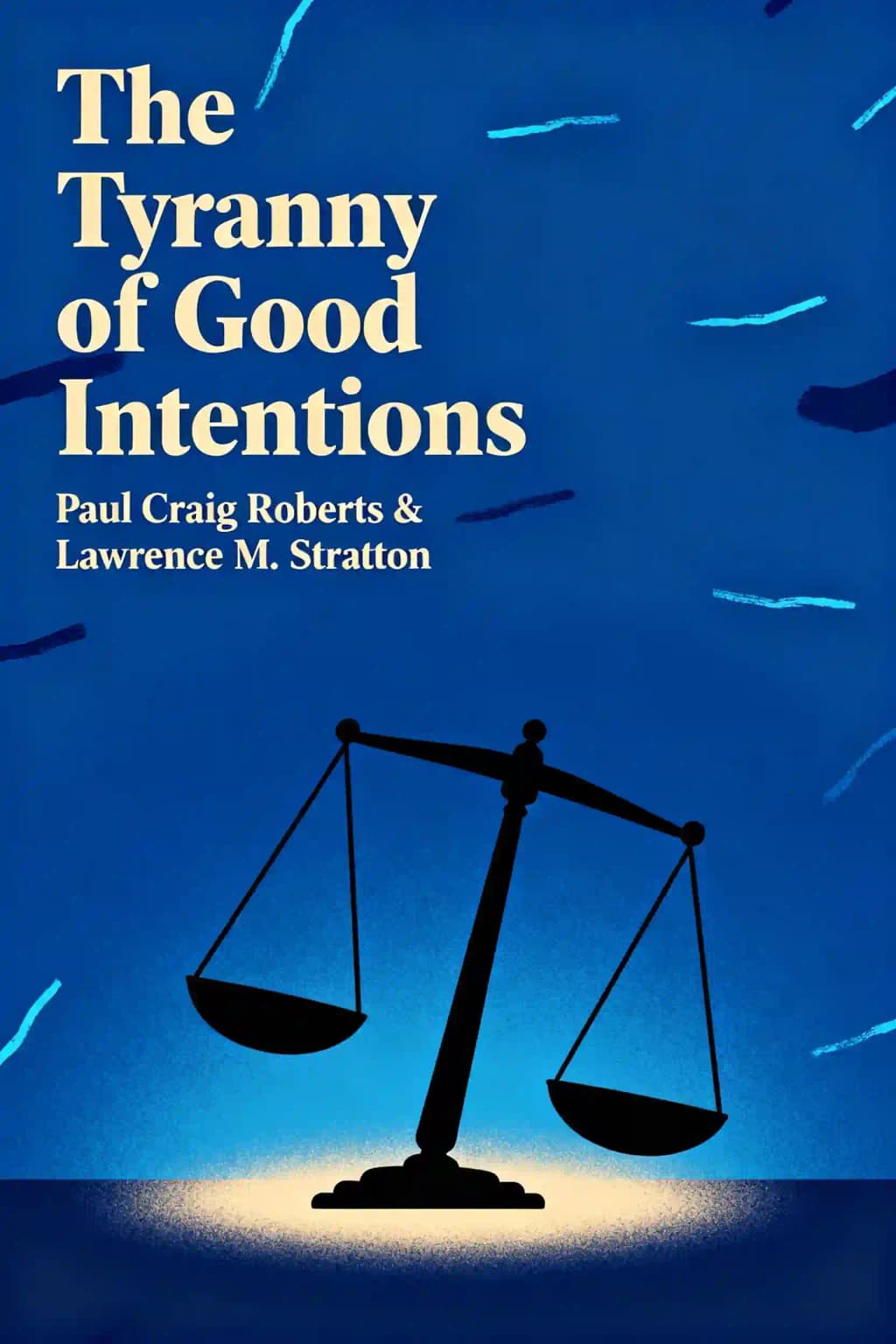
The tyranny of good intentions: how prosecutors and bureaucrats are trampling the constitution in the name of justice book cover

The tyranny of good intentions

how prosecutors and bureaucrats are trampling the constitution in the name of justice

Paul Craig Roberts & Lawrence M. Stratton
4.05 (128 Reviews)

Overview of The tyranny of good intentions

A chilling expose of American justice gone wrong. Nobel economist Milton Friedman called it "a devastating indictment" of a system where prosecutors trample constitutional rights. Both Alan Dershowitz and Harvey Silverglate agree - its warnings about eroding civil liberties proved prophetic after 9/11.

Key Themes in The tyranny of good intentions

  • prosecutorial misconduct
  • civil liberty erosion
  • legal intent doctrine
  • anglo-american jurisprudence
  • government overreach

Quotes from The tyranny of good intentions

  • Law transforms from shield to weapon.

  • Law flows from the people.

  • Nonsense on stilts.

  • No crime without intent.

  • Accidents could be treated as crimes.

Characters in The tyranny of good intentions

  • Paul Craig RobertsCo-author and economist
  • Lawrence M. StrattonCo-author and legal scholar
  • Sir Edward Coke17th-century jurist who defended English liberties
  • William BlackstoneAuthor of Commentaries on the Laws of England
  • Jeremy BenthamUtilitarian philosopher who attacked legal rights

About the Author

About the Author of The tyranny of good intentions

Paul Craig Roberts and Lawrence M. Stratton, authors of The Tyranny of Good Intentions, are acclaimed voices in legal scholarship and civil liberties advocacy. Roberts, a former U.S. Assistant Secretary of the Treasury under President Reagan and economist, combines policy expertise with a sharp critique of government overreach. Stratton, an attorney and research fellow, contributes legal depth to their examination of eroding constitutional protections.

Their collaboration blends historical analysis and contemporary case studies to expose how prosecutors and lawmakers undermine foundational rights like habeas corpus and presumption of innocence.

The duo’s earlier work, The New Color Line: How Quotas and Privilege Destroy Democracy, similarly challenged systemic inequities, establishing their reputation as bold critics of institutional power. Roberts’ other notable books, including How America Was Lost and The Failure of Laissez Faire Capitalism, further explore themes of governance and economic policy.

Praised by figures like Milton Friedman and Alan Dershowitz, The Tyranny of Good Intentions has been hailed as essential reading across the political spectrum, with translations in multiple languages underscoring its global relevance.

Download Summary of The tyranny of good intentions

Get the The tyranny of good intentions summary as a free PDF or EPUB. Print it or read offline anytime.

FAQs About This Book

The Tyranny of Good Intentions critiques how prosecutors and bureaucrats erode constitutional rights like due process and property protections under the guise of pursuing justice. Authors Paul Craig Roberts and Lawrence M. Stratton argue that both liberals and conservatives enable government overreach through policies prioritizing convictions over fairness, with examples ranging from coercive plea bargains to abusive asset forfeiture laws.

Paul Craig Roberts is an economist, former U.S. Assistant Secretary of the Treasury under Reagan (1981), and co-author of The Tyranny of Good Intentions. A prolific columnist and academic, he’s known for advocating supply-side economics and critiquing government overreach. His career spans roles at The Wall Street Journal, Stanford’s Hoover Institution, and Georgetown University.

This book suits legal professionals, civil liberties advocates, and readers concerned with government power abuse. It offers historical insights into eroding rights, making it valuable for those interested in criminal justice reform, constitutional law, or libertarian critiques of prosecutorial misconduct.

Yes—it’s a provocative examination of systemic legal corruption, praised by figures like Milton Friedman. While criticized for its polemic tone, its harrowing case studies and analysis of forfeiture laws, plea bargaining, and bureaucratic overreach remain relevant for understanding modern justice system flaws.

The book highlights:

  • Withheld evidence in high-profile cases.
  • Coerced confessions in child abuse trials.
  • Politically motivated prosecutions, such as targeting Exxon after the Valdez oil spill.

These examples illustrate how officials prioritize convictions over truth.

Plea bargaining coerces defendants into admitting guilt to avoid trial risks, even if innocent. This system sacrifices justice for efficiency, eroding the presumption of innocence and enabling wrongful convictions.

It traces protections like due process to the Magna Carta (1215) and English common law, arguing modern legal practices—such as retroactive laws and asset forfeiture—betray these foundations. The authors warn against repeating tyrannical patterns seen in pre-constitutional eras.

  • Reinstate mens rea (intent) requirements.
  • Hold prosecutors accountable for misconduct.
  • Public awareness campaigns to reclaim eroded rights.

These measures aim to restore legal safeguards against arbitrary state power.

Cases like Leona Helmsley’s tax evasion charges and abusive civil forfeiture laws exemplify how officials bypass constitutional protections. The authors argue such practices normalize “guilty until proven innocent” standards.

The authors blame Jeremy Bentham’s utilitarian philosophy (“greatest good for the greatest number”) for justifying rights violations. They argue this mindset enables prosecutors and regulators to trample individuals for perceived societal benefits.

Historically, laws shielded citizens from state power. Today, agencies weaponize regulations against individuals—a shift the authors call a “tyranny of good intentions.” For example, forfeiture laws now let police seize property without charges.

Critics argue its polemic tone oversimplifies complex issues, such as portraying J. Edgar Hoover as a restraint model. However, its core warnings about prosecutorial abuse and eroded liberties resonate across ideological lines.

Explore Your Way of Learning

The tyranny of good intentions isn't just a book — it's a masterclass in Politics. To help you absorb its lessons in the way that works best for you, we offer five unique learning modes. Whether you're a deep thinker, a fast learner, or a story lover, there's a mode designed to fit your style.

Quick Summary Mode

Read or listen to The tyranny of good intentions Summary in 10 Minutes

Break down key ideas from The tyranny of good intentions into bite-sized takeaways to understand how innovative teams create, collaborate, and grow.

play
00:00
00:00

Fun Mode

The tyranny of good intentions Lessons Told Through 23-Min Stories

Experience The tyranny of good intentions through vivid storytelling that turns innovation lessons into moments you'll remember and apply.

play
00:00
00:00

Personalize Mode

Experience The tyranny of good intentions in your own learning style

Ask anything, choose your learning style, and co-create insights that truly resonate with you.

Personalize Mode

From Columbia University alumni built in San Francisco

BeFreed Brings Together A Global Community Of 1,000,000 Curious Minds

"Instead of endless scrolling, I just hit play on BeFreed. It saves me so much time."

@Moemenn
platform
star
star
star
star
star

"I never knew where to start with nonfiction—BeFreed’s book lists turned into podcasts gave me a clear path."

@Chloe, Solo founder, LA
platform
comments
12
likes
117

"Perfect balance between learning and entertainment. Finished ‘Thinking, Fast and Slow’ on my commute this week."

@Raaaaaachelw
platform
star
star
star
star
star

"Crazy how much I learned while walking the dog. BeFreed = small habits → big gains."

@Matt, YC alum
platform
comments
12
likes
108

"Reading used to feel like a chore. Now it’s just part of my lifestyle."

@Erin, Investment Banking Associate , NYC
platform
comments
254
likes
17

"Feels effortless compared to reading. I’ve finished 6 books this month already."

@djmikemoore
platform
star
star
star
star
star

"BeFreed turned my guilty doomscrolling into something that feels productive and inspiring."

@Pitiful
platform
comments
96
likes
4.5K

"BeFreed turned my commute into learning time. 20-min podcasts are perfect for finishing books I never had time for."

@SofiaP
platform
star
star
star
star
star

"BeFreed replaced my podcast queue. Imagine Spotify for books — that’s it. 🙌"

@Jaded_Falcon
platform
comments
201
thumbsUp
16

"It is great for me to learn something from the book without reading it."

@OojasSalunke
platform
star
star
star
star
star

"The themed book list podcasts help me connect ideas across authors—like a guided audio journey."

@Leo, Law Student, UPenn
platform
comments
37
likes
483

"Makes me feel smarter every time before going to work"

@Cashflowbubu
platform
star
star
star
star
star

"Instead of endless scrolling, I just hit play on BeFreed. It saves me so much time."

@Moemenn
platform
star
star
star
star
star

"I never knew where to start with nonfiction—BeFreed’s book lists turned into podcasts gave me a clear path."

@Chloe, Solo founder, LA
platform
comments
12
likes
117

"Perfect balance between learning and entertainment. Finished ‘Thinking, Fast and Slow’ on my commute this week."

@Raaaaaachelw
platform
star
star
star
star
star

"Crazy how much I learned while walking the dog. BeFreed = small habits → big gains."

@Matt, YC alum
platform
comments
12
likes
108

"Reading used to feel like a chore. Now it’s just part of my lifestyle."

@Erin, Investment Banking Associate , NYC
platform
comments
254
likes
17

"Feels effortless compared to reading. I’ve finished 6 books this month already."

@djmikemoore
platform
star
star
star
star
star

"BeFreed turned my guilty doomscrolling into something that feels productive and inspiring."

@Pitiful
platform
comments
96
likes
4.5K

"BeFreed turned my commute into learning time. 20-min podcasts are perfect for finishing books I never had time for."

@SofiaP
platform
star
star
star
star
star

"BeFreed replaced my podcast queue. Imagine Spotify for books — that’s it. 🙌"

@Jaded_Falcon
platform
comments
201
thumbsUp
16

"It is great for me to learn something from the book without reading it."

@OojasSalunke
platform
star
star
star
star
star

"The themed book list podcasts help me connect ideas across authors—like a guided audio journey."

@Leo, Law Student, UPenn
platform
comments
37
likes
483

"Makes me feel smarter every time before going to work"

@Cashflowbubu
platform
star
star
star
star
star

"Instead of endless scrolling, I just hit play on BeFreed. It saves me so much time."

@Moemenn
platform
star
star
star
star
star

"I never knew where to start with nonfiction—BeFreed’s book lists turned into podcasts gave me a clear path."

@Chloe, Solo founder, LA
platform
comments
12
likes
117

"Perfect balance between learning and entertainment. Finished ‘Thinking, Fast and Slow’ on my commute this week."

@Raaaaaachelw
platform
star
star
star
star
star

"Crazy how much I learned while walking the dog. BeFreed = small habits → big gains."

@Matt, YC alum
platform
comments
12
likes
108

"Reading used to feel like a chore. Now it’s just part of my lifestyle."

@Erin, Investment Banking Associate , NYC
platform
comments
254
likes
17

"Feels effortless compared to reading. I’ve finished 6 books this month already."

@djmikemoore
platform
star
star
star
star
star

"BeFreed turned my guilty doomscrolling into something that feels productive and inspiring."

@Pitiful
platform
comments
96
likes
4.5K

"BeFreed turned my commute into learning time. 20-min podcasts are perfect for finishing books I never had time for."

@SofiaP
platform
star
star
star
star
star

"BeFreed replaced my podcast queue. Imagine Spotify for books — that’s it. 🙌"

@Jaded_Falcon
platform
comments
201
thumbsUp
16

"It is great for me to learn something from the book without reading it."

@OojasSalunke
platform
star
star
star
star
star

"The themed book list podcasts help me connect ideas across authors—like a guided audio journey."

@Leo, Law Student, UPenn
platform
comments
37
likes
483

"Makes me feel smarter every time before going to work"

@Cashflowbubu
platform
star
star
star
star
star

See More Stories?

How people are talking about BeFreed across the web
1.5K Ratings4.7
Start your learning journey, now
