Capítulo 1
The Digital Leviathan: How Facebook Betrayed Its Users and Democracy
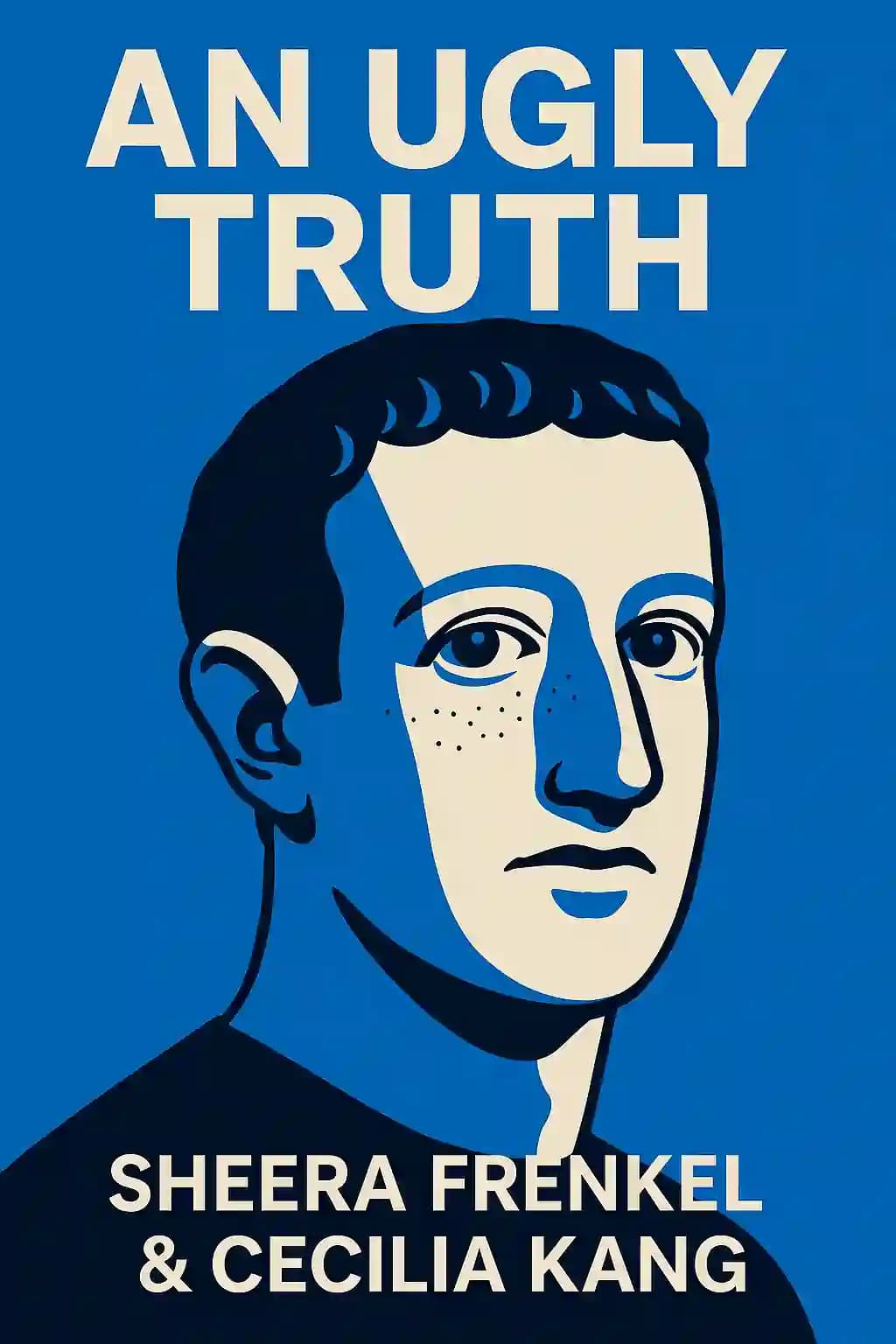
In 2021, Facebook faced an unprecedented crisis as the Federal Trade Commission and forty-eight states filed lawsuits seeking to break up the company. The complaints portrayed Mark Zuckerberg as a rule-breaking bully who demolished competitors while Sheryl Sandberg converted his technology into a profit machine by surveilling users. This legal assault represented the culmination of years of growing concern about Facebook's business practices. The book, which spent 12 weeks on the New York Times bestseller list and was named one of Time magazine's top 10 nonfiction books of 2021, reveals how Facebook's leaders consistently chose growth and profit over user safety and social responsibility. Through interviews with over 400 sources, including Facebook employees, lawmakers, and regulators, authors Sheera Frenkel and Cecilia Kang expose the contradiction between Facebook's public mission of creating an open, connected world and its secretive corporate culture that prioritizes dominance at any cost.
Capítulo 2
The Birth of a Digital Empire: Zuckerberg's Vision and Early Days
At Phillips Exeter Academy, Mark Zuckerberg established himself as a programming prodigy who relished challenging his peers. When another student initiated a project to put the school's "Photo Address Book" online, Zuckerberg inserted code that crashed browsers when visiting his profile-an early demonstration of his technical superiority.
This pattern continued at Harvard, where his creation of "FaceMash" immediately sparked privacy concerns. When confronted, he dismissed the site as merely a coding experiment that unexpectedly went viral. Unlike his competitor Aaron Greenspan's professional-focused network, Zuckerberg envisioned a casual space where users would freely share personal information. He understood early that collecting open-ended data would be more valuable than data gathered for specific purposes.
In a revealing online chat from this period, Zuckerberg boasted about having access to thousands of students' personal information, noting they "trust me" and infamously calling them "dumb fucks"-an early glimpse into his cavalier attitude toward user privacy that would later shape Facebook's corporate culture.
By January 2005, Thefacebook had grown to over a million users. Having left Harvard for Palo Alto, Zuckerberg absorbed Silicon Valley's libertarian ethos from mentors like Peter Thiel and Marc Andreessen. When meeting with Washington Post chairman Donald Graham, the awkward young founder explained his platform's focus wasn't revenue but attracting more users. Graham immediately recognized the platform's potential, seeing it as a revolutionary idea rather than just another tech startup.
Despite Graham offering $6 million for a 10% stake, Zuckerberg ultimately chose Accel Partners' larger investment, aligning with Silicon Valley's "grow first, profit later" mentality. By 2005, Facebook had become Silicon Valley's hottest company, collecting unprecedented user data and reaching millions of college students who checked the site multiple times daily.
Zuckerberg's audacity became legendary when he rejected Yahoo's stunning $1 billion buyout offer, believing Facebook could grow exponentially larger. This decision cost him his entire management team but reinforced his reputation for bold vision. His game-changing News Feed feature, launched in 2006, reorganized content into a personalized stream that initially sparked user protests but dramatically increased engagement. When faced with backlash, Zuckerberg issued a non-apology that established his crisis response pattern: acknowledge concerns while insisting users would eventually appreciate the changes.
Capítulo 3
The Business of Data: Sandberg's Monetization Machine
In 1989, Harvard professor Lawrence Summers was surprised when Sheryl Sandberg earned the top grade in his economics course. Following Summers to Washington as his research assistant at the World Bank, she was described as "a Mozart of human relations." After transforming Google's advertising into a $16.6 billion enterprise, she met Zuckerberg at a 2007 Christmas party and joined Facebook as COO in March 2008.
A month after her appointment, Sandberg gathered Facebook's ad team to determine their business model. Unlike Google's AdWords which fulfilled existing demand through search queries, she envisioned Facebook creating demand by using detailed user profiles and activity data. Rather than relying on cookies like other sites, Facebook had users' personal information and engagement patterns in one place-allowing unprecedented targeting precision.
Sandberg proposed a revolutionary approach to tracking where Facebook would invite brands to create interactive campaigns through polls, quizzes, and brand pages that users would share with friends, generating even more data. However, she struggled to get Zuckerberg's attention for her advertising initiatives. Despite scheduling twice-weekly meetings with him, she found he prioritized product development over profits. A division emerged between "Sheryl people" and "Mark people," with engineers reluctant to work on ad tools instead of new user features.
Undeterred, Sandberg wooed major brands by emphasizing Facebook's unique advantage: users with real identities creating the world's largest word-of-mouth advertising platform. When Sony's CEO expressed doubts about Facebook's ad effectiveness, she quickly established a partnership with Nielsen to measure ad performance.
Meanwhile, privacy advocate Jeff Chester had been monitoring Facebook's data practices. In November 2007, he was alarmed by Zuckerberg's announcement of "Beacon," a program that published users' purchases from partner sites on their friends' News Feeds without consent. The backlash was immediate, with 50,000 people signing a MoveOn.org petition against it. Zuckerberg eventually apologized and made Beacon opt-in rather than opt-out, but the underlying data collection practices remained unchanged.
In February 2009, Facebook introduced the Like button, designed by product manager Leah Pearlman. Despite initial internal disagreements, the feature became wildly popular, creating a new social currency where users competed for validation through digital thumbs-ups. A year later, Facebook extended the Like button beyond its site, allowing any website to embed it-giving Facebook unprecedented insight into users' off-platform activities.
By late 2009, with 350 million users, Facebook faced competition from Twitter. In response, Zuckerberg made a controversial decision to switch certain user details from "private" to "public" by default. Despite internal warnings about privacy backlash, he proceeded, confusing many users who inadvertently exposed personal information. This change triggered outrage and regulatory attention, with privacy groups filing a complaint with the FTC claiming deceptive practices.
Capítulo 4
The Corporate Culture: Secrecy, Surveillance, and Loyalty
Facebook's internal culture mirrored its approach to user data-comprehensive surveillance justified by "radical transparency." Sonya Ahuja's internal investigations unit maintained extraordinary oversight over employees-recording every mouse move and keystroke, accessing all communications, and even deploying "mousetraps" with fake secret information to test employee loyalty.
When journalist Michael Nunez published a leaked memo about racism at Facebook, Ahuja's team swiftly identified Ben Fearnow as the source by accessing his Gmail conversations. They also fired Ryan Villarreal, Fearnow's roommate, simply for "liking" Nunez's article on Facebook, demonstrating the company's zero-tolerance approach to leaks.
As Donald Trump's candidacy gained credibility in 2016, employee frustration with Zuckerberg intensified. When one worker submitted a question for the all-hands meeting asking "What responsibility does Facebook have to help prevent a President Trump in 2017?", the communications team panicked. Despite their coaching Zuckerberg to emphasize neutrality and free speech, Nunez published another explosive article revealing the internal debate, further alarming conservatives who suspected liberal bias.
The controversy escalated when Nunez exposed that Facebook's supposedly algorithmic "Trending Topics" feature was actually curated by a team of journalism school graduates making subjective decisions about which topics to promote or suppress. A conservative insider revealed how the team could shape trending content, leading to a bombshell May 2016 article titled "Former Facebook Workers: We Routinely Suppressed Conservative News"-confirming suspicions long held by right-wing pundits.
The Republican National Committee denounced Facebook for allegedly silencing conservative viewpoints. To contain the crisis, Joel Kaplan organized a meeting between Zuckerberg and sixteen prominent conservative leaders, where Zuckerberg assured them the platform welcomed all political viewpoints. Many Facebook employees were horrified that the company legitimized figures known for spreading conspiracy theories, marking a pivotal moment when Facebook abandoned political neutrality and began appeasing conservative critics to avoid government scrutiny.
As the 2016 presidential race intensified, Facebook's News Feed filled with partisan and outright false content. Employees raised concerns about fake news sites gaining prominence but were told these stories didn't violate Facebook rules. An algorithm change intended to prioritize family and friends' content inadvertently deprioritized legitimate news sources while allowing hyper-partisan content to spread.
Amid growing internal dissent, executive Andrew "Boz" Bosworth posted his infamous "The Ugly" memo, declaring "We connect people. Period," and suggesting that even if people died from terrorist attacks coordinated on Facebook, connection remained "de facto good." The memo sparked fierce debate, with most employees uncomfortable with its cold calculus.
Capítulo 5
Russian Interference: The Warning Signs Facebook Ignored
In August 2016, just months before the U.S. presidential election, Facebook security analyst Ned Moran discovered Russian hackers communicating with an American journalist through Facebook Messenger. Moran had uncovered hard evidence that Russians were hacking the Clinton campaign and releasing emails to damage her candidacy-an unprecedented breach of cyberwarfare norms.
Despite the severity of these findings, Facebook's leadership structure meant security concerns weren't reaching the top effectively. Security reports went from Alex Stamos to Colin Stretch to Elliot Schrage and Joel Kaplan, who decided what Zuckerberg and Sandberg needed to know. The security team operated from the periphery while teams focused on growth and engagement reported directly to Zuckerberg.
Using details from cybersecurity reports, Moran identified suspicious pages like "DCLeaks" and "Fancy Bear Hack Team" on Facebook that were sharing stolen Democratic Party emails. Facebook had no policies for handling state-sponsored hackers using their platform exactly as intended-making connections and forming groups to spread ideas. The Russians released emails at critical moments for maximum impact: DNC emails just before the Democratic National Convention and Podesta emails immediately after the damaging Trump Access Hollywood tape emerged.
In his first public comments after Trump's victory, Zuckerberg appeared at the Techonomy conference and dismissed the notion that fake news on Facebook influenced the election as "a pretty crazy idea." His comments made headlines worldwide, leaving Facebook employees confused and questioning whether their platform had indeed helped elect Trump.
On December 9, 2016, Alex Stamos finally briefed Zuckerberg, Sandberg, and other executives on Russian election interference. His eight-page report detailed how Facebook's security team had identified Russian actors creating fake accounts to spread disinformation since March 2016 and warned that Russia was already preparing similar operations for France's upcoming election. Zuckerberg was stunned, demanding to know how they had missed this, while Sandberg questioned why she hadn't been informed earlier.
In response, Facebook formed "Project P" (P for "propaganda"), an investigative team led by early Facebook employee Naomi Gleit. By late January 2017, they had found little additional evidence of Russian campaigns but uncovered a vast network of false news sites spreading fictional stories about Clinton for financial gain. Despite Stamos's continued warnings about disinformation campaigns affecting other countries, executives viewed him as "alarmist" and were reluctant to reorganize the company in ways that might invite further scrutiny.
Capítulo 6
The Cambridge Analytica Scandal: Privacy Betrayed
On March 17, 2018, the New York Times and Observer of London revealed Cambridge Analytica had obtained profile information and activity data from tens of millions of Facebook users without their permission. This political consulting firm, funded by Trump supporter Robert Mercer and led by Trump adviser Stephen Bannon, had allegedly used this data to create sophisticated political ad targeting during Trump's 2016 campaign.
The privacy breach affected up to 87 million users and represented the latest in Facebook's pattern of data abuses. The scandal traced back to 2010 when Zuckerberg launched "Open Graph," allowing outside developers access to Facebook users' data. In the first week, 50,000 websites installed these plug-ins, gaining access to users' personal information including names, emails, locations, and political affiliations.
Facebook prioritized partner recruitment over safety, with a 10:1 ratio of salespeople to oversight personnel. In 2012, platform operations manager Sandy Parakilas warned executives including Chris Cox about privacy and security risks, suggesting Open Graph had created a black market for user data, but executives dismissed his concerns.
By 2014, Zuckerberg shut down Open Graph, but not before Cambridge University researcher Aleksandr Kogan created a personality quiz that harvested data from 300,000 participants plus their friends, expanding his dataset to nearly 90 million users before transferring it to Cambridge Analytica against Facebook's rules.
The revelations triggered immediate outrage. Senator Amy Klobuchar called for Zuckerberg to testify before Congress, while #DeleteFacebook trended on Twitter. Facebook's stock plummeted 10 percent, erasing $50 billion in market value. The Federal Trade Commission launched an investigation into potential violations of Facebook's 2011 privacy consent decree, which had required twenty years of privacy audits.
As the crisis unfolded, tensions between Zuckerberg and Sandberg emerged. During their regular Friday meeting, Zuckerberg blamed Sandberg for failing to control the narrative around both the Cambridge Analytica scandal and the Russian election interference. Sandberg confided to friends she feared being fired, though some employees felt this expectation was unrealistic since Cambridge Analytica stemmed from product decisions under Zuckerberg's control.
The congressional hearings ultimately backfired on lawmakers when many senators revealed their profound ignorance of how Facebook worked, asking technically inaccurate questions that made them, rather than Facebook, objects of ridicule. In a stroke of enormous luck for Facebook, public anger shifted from the company to Washington's technological illiteracy.
Capítulo 7
Global Harm: From Myanmar to America's Capitol
By August 2017, Facebook had become a platform for coordinating genocide against Myanmar's Rohingya Muslims. With minimal content moderation resources-just five Burmese speakers for eighteen million users-Facebook had essentially thrown a lit match onto decades of racial tensions and ignored warnings from activists as violence spread.
The United Nations' fact-finding mission would later declare that Facebook had played a "determining role" in the genocide that killed over 24,000 Rohingya and forced 700,000 to flee to Bangladesh. During congressional hearings, Zuckerberg admitted "we need to do more," promising to hire "dozens more" Burmese speakers.
As early as 2013, American aid worker Matt Schissler noticed alarming changes in Myanmar as Facebook became widely available. His Buddhist friends began showing him grainy photos purportedly of monks killed by Muslims and sharing conspiracy theories about Rohingya plots. The spread of this content coincided with Myanmar's sudden access to affordable smartphones, which came preloaded with Facebook.
In March 2014, Schissler joined a call with Facebook about dangerous speech online, where he detailed how the platform was hosting Islamophobic content in Myanmar. Facebook representatives seemed to equate this with cyberbullying rather than recognizing the severity of the situation. Four months later, when rumors of a Buddhist woman being raped by Muslim men spread on Facebook, riots erupted across Myanmar leaving two dead and fourteen injured.
In March 2015, Schissler visited Facebook headquarters to present evidence that hate speech on the platform was leading to real-world violence. When asked if genocide was possible, he affirmed it absolutely could happen if anti-Muslim hate speech continued unabated. After he left, Facebook employees dismissed his warning as implausible.
The fundamental problem was Facebook's technology itself-algorithms designed to amplify emotionally engaging content regardless of whether it was hateful or false. This design flaw became publicly evident in June 2014 when news broke of Facebook's secret emotional manipulation experiment on nearly 700,000 users, showing they could influence users' emotional states without their knowledge.
This same algorithmic amplification of divisive content would later contribute to the January 6, 2021 Capitol riots. Despite Facebook's security team removing some threatening content, they couldn't contain the momentum built across thousands of "Stop the Steal" pages. During the attack, rioters livestreamed their actions and received real-time directions through Facebook Messenger about where to find legislators.
Capítulo 8
The Wartime CEO: Zuckerberg's Consolidation of Power
In July 2018, Facebook's top executives gathered for an M-Team meeting amid ongoing scandals and employee demoralization. Zuckerberg made a pivotal announcement: he was transforming from a "peacetime" to a "wartime" CEO. Inspired by Ben Horowitz's leadership philosophy, he declared he would take more direct control over all aspects of the business to combat existential threats facing the company.
This marked a significant shift from Facebook's previous governance structure, signaling the end of relative autonomy for department heads and subsidiaries. The announcement came after a major reorganization that had already reshuffled leadership duties, while Sheryl Sandberg's role as second-in-command seemed increasingly ambiguous.
At thirty-four, Zuckerberg was reasserting his control over Facebook, doubling down on the motto he'd typed at the bottom of the website in 2004: "A Mark Zuckerberg Production." His declaration as a "wartime CEO" came after major departures, including WhatsApp co-founder Jan Koum and Instagram co-founder Kevin Systrom, both of whom left because Zuckerberg had broken promises about keeping their platforms independent.
The shift revealed Zuckerberg's ruthless competitive streak, exemplified by Facebook's 2013 acquisition of Onavo, an Israeli mobile analytics company that provided valuable data on competitors' apps. Through Onavo, Zuckerberg gained unprecedented insight into how people worldwide used mobile applications, allowing him to track competitors like WhatsApp, which had surpassed Facebook Messenger in daily message volume.
While Zuckerberg focused on products and denied fundamental issues with Facebook's data collection practices, he expected Sandberg to change public perception. In September 2018, Sandberg testified before the Senate Intelligence Committee investigating Russian disinformation campaigns, insisting she would only appear alongside other tech CEOs. Her calculated performance contrasted with Twitter CEO Jack Dorsey's candid responses, earning her poor reviews despite her polished delivery.
In July 2018, Zuckerberg gave his first extended interview in years to tech journalist Kara Swisher. During the interview, he defended allowing conspiracy theorist Alex Jones on Facebook despite Jones's harmful Sandy Hook denial claims. When pressed about removing false content, Zuckerberg compared it to Holocaust denial, arguing that while personally offensive to him as a Jewish person, such content shouldn't be removed because people weren't "intentionally getting it wrong."
Capítulo 9
Facebook's Reckoning: Regulation, Resistance, and the Future
As Chris Hughes, Facebook co-founder and former Zuckerberg friend, traveled through Paris for diplomatic meetings with Prime Minister Macron about hate speech regulation, his former Harvard roommate and Facebook co-founder Chris Hughes published a scathing New York Times op-ed calling for Facebook to be broken up. Hughes argued that Facebook had become a dangerous monopoly with Zuckerberg wielding too much unchecked power.
Hughes had joined a growing coalition of former Facebook executives speaking out against the platform they helped build, alongside political leaders from both parties calling for the breakup of tech giants. When finally addressing the op-ed publicly, Zuckerberg warned that breaking up Facebook would undermine its ability to invest billions in election security tools.
Zuckerberg's "pivot to privacy" announcement in a blog post titled "A Privacy-Focused Vision for Social Networking" revealed plans to encrypt and link Facebook's three messaging services-Facebook Messenger, WhatsApp, and Instagram Messaging. This dramatic strategic shift divided employees into opposing camps. While presented as enhancing user privacy and streamlining communications, many security experts saw dangerous consequences.
In October 2019, Zuckerberg delivered a carefully orchestrated speech at Georgetown University defending Facebook's hands-off approach to political speech. He began with a revisionist history of Facebook's origins, falsely claiming the platform emerged from his desire to foster dialogue about the Iraq War. Positioning Facebook as part of a "fifth estate" giving voice to billions, Zuckerberg invoked civil rights leaders like Martin Luther King Jr. to justify his free speech stance.
The speech triggered immediate backlash from King's daughter Bernice, who noted disinformation campaigns created the atmosphere for her father's assassination. Civil rights leaders criticized Zuckerberg's fundamental misunderstanding of both civil rights history and the First Amendment, while academics pointed out that free expression rights don't include "algorithmic amplification" of misinformation.
In January 2020, Zuckerberg began receiving intelligence briefings about COVID-19 from top infectious disease experts at his Chan Zuckerberg Initiative. Recognizing the potential pandemic, Zuckerberg ordered Facebook teams on January 26 to drop nonessential work to prepare for the crisis. When the WHO designated COVID-19 a public health emergency on January 30, Facebook was ready with a comprehensive response plan, becoming the first Silicon Valley company to remove harmful misinformation, connect users to authoritative sources, and provide unlimited ad credits to health organizations.
Despite these efforts, Facebook's fundamental business model remained unchanged. When the election proved too close to call, Facebook's team implemented emergency measures that temporarily adjusted the News Feed algorithm to emphasize content from outlets with high "news ecosystem quality" scores. For five days, Facebook employees witnessed what they called "the nicer News Feed"-"a brief glimpse of what Facebook could be." But by month's end, the old algorithm returned. Executives worried about conservative backlash if right-wing outlets remained demoted, and internal data showed users spent less time on the platform under the modified system.
Even amid scandals, Facebook's business thrived. In January 2021, while Zuckerberg announced plans to deemphasize political content in the News Feed, Sandberg reported a 33% revenue increase to $28 billion for the fourth quarter. With $55 billion in cash reserves, Facebook continued expanding into new territories.
Throughout its history, Facebook's profits have repeatedly come at the expense of consumer privacy, safety, and democratic integrity. The company faces a fundamental dichotomy between its stated mission to connect people and its profit motive. As the authors conclude, even if Facebook undergoes radical transformation, "that change is unlikely to come from within. The algorithm that serves as Facebook's beating heart is too powerful and too lucrative." This contradiction represents "Facebook's dilemma and its ugly truth."