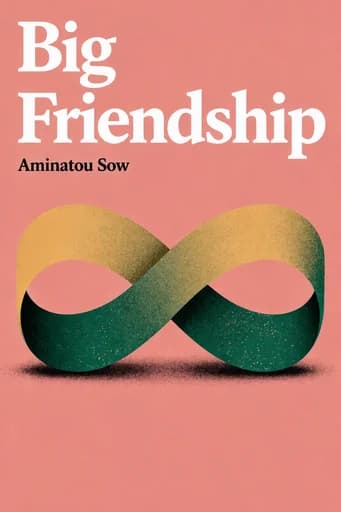
In "Big Friendship," podcast stars Sow and Friedman revolutionize how we view platonic bonds, arguing they deserve as much effort as romantic relationships. Their interracial friendship navigates the "trapdoor of racism" while introducing "Shine Theory" - a concept that's transformed how we nurture our most vital connections.
Aminatou Sow is the acclaimed author of Big Friendship: How We Keep Each Other Close and a leading voice on modern friendships, feminism, and social activism. Co-written with journalist Ann Friedman, this nonfiction work blends memoir and cultural analysis to explore sustaining adult relationships through life’s challenges, drawing from their own decade-long friendship.
A Guinea-born, Belgium-raised immigrant turned U.S. digital strategist, Sow co-founded Tech LadyMafia, a global network empowering women in tech. She also hosts the influential podcast Call Your Girlfriend, which dissects politics, pop culture, and workplace dynamics through an intersectional feminist lens.
Her expertise in social impact spans roles like Google’s Social Impact Marketing lead and appearances at SXSW, Sydney Writers Festival, and Chicago Ideas Week. Recognized in Forbes’ “30 Under 30 in Tech,” Sow’s work bridges personal narratives with systemic change.
Big Friendship was named one of TIME’s 100 Must-Read Books of 2020, cementing her status as a vital commentator on connection in the digital age. She is currently working on a memoir expanding themes of resilience and community.
Big Friendship explores the complexities of sustaining deep, long-term friendships through the authors’ decade-long journey. It introduces concepts like “Shine Theory” (mutual empowerment) and “chosen family,” while addressing challenges like distance, cultural differences, and conflict resolution. The memoir blends personal anecdotes with cultural commentary, advocating for friendships to be valued as seriously as romantic relationships.
This book is ideal for readers prioritizing platonic relationships, those navigating long-distance friendships, or anyone interested in intersectional perspectives on race and belonging. It’s particularly relevant for millennials seeking actionable advice on maintaining connections amid life changes.
Yes—it was named one of TIME’s 100 Must-Read Books of 2020 and offers relatable insights into modern friendship. Its blend of humor, vulnerability, and practical strategies (like joint therapy sessions) makes it a standout in personal development and relationship literature.
Shine Theory emphasizes mutual growth: “If you don’t shine, I don’t shine.” It encourages celebrating friends’ successes and supporting them during struggles, fostering relationships built on collaboration rather than competition. The authors developed this concept through their podcast and advocacy work.
They prioritize regular video calls, intentional visits, and collaborative projects like their podcast Call Your Girlfriend. The book highlights the importance of “stretching”—adapting to each other’s evolving needs—to sustain connection across distances.
The authors attended couples counseling to address unresolved tensions, illustrating that friendships require proactive effort. Therapy helped them navigate cultural differences (e.g., race-related misunderstandings) and communicate more effectively, reinforcing the book’s thesis that friendships deserve rigorous care.
A pivotal moment involves Sow being the only Black guest at Friedman’s party, sparking candid discussions about racial blind spots. The book critiques societal assumptions that friendships transcend systemic issues, advocating for intentional inclusivity and accountability.
Key takeaways include:
It argues that friendships are as vital as romantic partnerships, deserving similar societal validation and effort. The book critiques the myth of “effortless” friendships, framing them as dynamic bonds requiring compromise and growth.
“Stretching” refers to adapting to friends’ evolving circumstances, such as career shifts or relocation. It involves flexibility and willingness to redefine the relationship’s terms, ensuring longevity despite external pressures.
Some reviewers note its focus on the authors’ privileged perspectives and limited broader sociological analysis. Others suggest its therapeutic approach may not resonate with all readers, though most praise its originality in elevating friendship discourse.
Unlike purely academic works, it combines memoir with actionable advice, similar to Text Me When You Get Home but with a stronger emphasis on mutual growth. Its focus on interracial friendship dynamics also sets it apart in the genre.
Siente el libro a través de la voz del autor
Convierte el conocimiento en ideas atractivas y llenas de ejemplos
Captura ideas clave en un instante para un aprendizaje rápido
Disfruta el libro de una manera divertida y atractiva
When was the last time you fought for a friendship?
Chosen fam is everything.
Friendship deserves equal importance to romantic and family bonds.
We grow in response to each other.
They were creating what linguist Deborah Tannen calls a 'story of sameness'.
Desglosa las ideas clave de Big Friendship en puntos fáciles de entender para comprender cómo los equipos innovadores crean, colaboran y crecen.
Experimenta Big Friendship a través de narraciones vívidas que convierten las lecciones de innovación en momentos que recordarás y aplicarás.
Pregunta cualquier cosa, elige tu estilo de aprendizaje y co-crea ideas que realmente resuenen contigo.

Creado por exalumnos de la Universidad de Columbia en San Francisco
"Instead of endless scrolling, I just hit play on BeFreed. It saves me so much time."
"I never knew where to start with nonfiction—BeFreed’s book lists turned into podcasts gave me a clear path."
"Perfect balance between learning and entertainment. Finished ‘Thinking, Fast and Slow’ on my commute this week."
"Crazy how much I learned while walking the dog. BeFreed = small habits → big gains."
"Reading used to feel like a chore. Now it’s just part of my lifestyle."
"Feels effortless compared to reading. I’ve finished 6 books this month already."
"BeFreed turned my guilty doomscrolling into something that feels productive and inspiring."
"BeFreed turned my commute into learning time. 20-min podcasts are perfect for finishing books I never had time for."
"BeFreed replaced my podcast queue. Imagine Spotify for books — that’s it. 🙌"
"It is great for me to learn something from the book without reading it."
"The themed book list podcasts help me connect ideas across authors—like a guided audio journey."
"Makes me feel smarter every time before going to work"
Creado por exalumnos de la Universidad de Columbia en San Francisco

Obtén el resumen de Big Friendship como PDF o EPUB gratis. Imprímelo o léelo sin conexión en cualquier momento.
When was the last time you fought for a friendship? Not just sent a "we should catch up!" text, but actually rolled up your sleeves and did the messy, uncomfortable work of repair? We'll attend couples therapy to save a six-month romance. We'll fly across the country for a cousin's wedding. But friendships? Those we let slip away with a shrug and a "we just grew apart." Yet some friendships aren't casual acquaintances or weekend brunch buddies-they're the people who become your chosen family, who shape your worldview, who know every version of you. Aminatou Sow and Ann Friedman's story reveals what happens when we treat these bonds with the seriousness they deserve-and what we risk when we don't.
Their story begins at a 2009 Gossip Girl viewing party in Washington DC. Aminatou walked in wearing a "CHUCK+BLAIR" T-shirt. Ann noticed immediately. As they talked, Ann found herself hanging on every word, laughing harder than anyone else. This wasn't just shared taste in trashy teen dramas - it was recognition. Ann was suffocating in DC's buttoned-up political culture, trying to reconcile creative ambitions with formal expectations. Aminatou was navigating visa issues and career uncertainty after graduating into the 2008 crisis. Both were at turning points, receptive to finding someone who understood without explanation. What they experienced was platonic attraction - that initial spark that can't be manufactured. Research shows friends profoundly shape us, influencing everything from spending habits to immune function. Strong friendships can increase longevity as much as quitting smoking. When you feel that rare connection, it's worth investigating.
Meaningful friendships require significant time investment. Research shows thresholds of 30 hours for casual friends, 140 for good friends, and 300 for best friends. Aminatou and Ann easily surpassed these through ritual texting, spontaneous apartment visits, shedding bras, queuing up DVDs, and sharing snacks-creating a judgment-free zone away from male-dominated workplaces. The comfort of doing nothing together signaled they were enough for each other, building trust that would later help them weather difficulties. Despite different backgrounds-Aminatou in Guinea and Nigeria teaching herself to read during power outages, Ann in small-town Iowa escaping through books-they discovered striking similarities. Both came from conservative cultures, wanted lives far from home, and refused to apologize for taking up space. Linguists call this a "story of sameness"-actively amplifying similarities while overlooking differences. This selective focus isn't dishonest; it's how early friendship works, building foundation before testing it with complexity.
Within months, they became deeply attached. When Ann ended her long-term relationship, she realized through Aminatou what true emotional intimacy felt like. Aminatou supported every step-from emotional discussions to honest feedback about Ann's impulsive post-breakup haircut. When Aminatou struggled with her father, she found herself on Ann's couch crying uncontrollably-something she rarely did with someone she'd known only months. Ann remained calm and steady, passing Aminatou's unconscious test of whether showing strong emotion would drive her away. They became chosen family. Friends joined their names: "Ann & Amina. Amina & Ann." They exchanged keys, cooked for each other, attended weddings together, gave joint gifts signed "Love, the Sow-Friedmans." This expressed their political belief that friendship deserves equal importance to romantic bonds. Historian Stephanie Coontz explains friendship expectations evolved dramatically-from emotionally central 19th-century same-sex friendships to the 1950s-60s when women were expected to abandon friendships after marriage. Early in their careers, both faced sexism and lack of mentorship-studies showed 63% of women never had mentors. They turned to each other, exchanging information about jobs, salaries, obstacles. This mutual support exemplifies "Shine Theory"-the idea that "I don't shine if you don't shine." When Ann's article went viral, they had to legally secure the trademark after someone tried claiming it.
Friendship requires stretching-adapting to accommodate life changes. When Aminatou developed severe anemia requiring blood transfusions, both friends struggled. For Aminatou, asking for help was difficult. For Ann, staying connected across distance while respecting privacy required new approaches. Though both stretched for each other, they failed to communicate their true feelings about the effort, causing problems later. Their friendweb-an ever-changing, interconnected network spanning different life chapters-added complexity. When Ann organized a "Desert Ladies" retreat for her 30th birthday, what began as 17 women grew to 50 by the third year. When Aminatou confided about feeling betrayed by another attendee, their different approaches to friendweb management created the first cracks. Ann told the women to handle problems directly; Aminatou questioned Ann's loyalty. Race created another unbridgeable gap. At Ann's birthday party, Aminatou realized she was the only Black person present. This triggered what writer Wesley Morris calls "the trapdoor of racism"-that moment when Black people in friendships with white people suddenly drop through an unexpected opening into racial discomfort. Aminatou left early without mentioning it. Months later, she finally confronted Ann, who responded defensively. This highlights the unequal emotional labor in interracial friendships-non-white friends often must educate white friends while managing stereotypes.
In January 2014, they launched "Call Your Girlfriend" podcast. Despite early technical awkwardness, they committed to weekly recordings. The podcast unexpectedly took off, creating a strange dynamic: their real, sometimes messy friendship existed alongside a public, idealized version. They joked they were "too big to fail" - sharing an LLC, bank account, trademark, public identity. But research shows only 30% of closest friendships remain close after seven years. Their rough patch came at six. Unlike dramatic breakups, their friendship simply stumbled. Miscommunications accumulated - like when Ann invited her boyfriend to dinner hoping Aminatou would know him better, while Aminatou thought Ann brought him as a buffer. Once they stopped discussing difficult things, they repeatedly hurt each other without realizing they no longer spoke the same language. During sleepless nights, Aminatou contemplated ending everything - the difficult conversations, podcast cancellation, LLC dissolution, explaining to friends. Most painfully: what would seeing each other at parties be like? Despite feeling their friendship was toxic at times, neither was ready to give up. Ann reasoned: "It would be so difficult to leave. It's going to be difficult to stay and fix things too. If it's painful either way, why not stay?" While countless resources exist for repairing marriages, almost nothing guides friends through crises. Their professional connection created an opening - Silicon Valley's trend of "couples counseling" for business partners gave them permission to seek help.
A decade past their meet-cute, they've lived apart more than twice as long as they lived together. Experts say ages 30 to 50 are friendship low points, when unstructured time becomes luxurious rather than natural. The "four burners" theory suggests life priorities compete - family, friends, health, work - and friendship is typically first sacrificed. Yet extinguishing friendship affects everything else. Loneliness has physical consequences comparable to smoking 15 cigarettes daily. Their early ideal was perpetual closeness without conflict. Now they value resilience over perfection. Big Friendships require active maintenance - there's no autopilot. Researcher Emily Langan identifies three strategies: ritual, assurances, and openness. They celebrate their friendship anniversary with gifts and calls. Annual getaways serve as recommitments. Small rituals matter equally: shared Photo Streams for outfit selfies, consistent travel check-ins. Their matching tattoos serve as permanent assurances - an external sign they belong to each other. Aristotle believed friends hold mirrors to each other, allowing us to see ourselves clearly in ways impossible alone. Big Friendships require work through periods of stretching, strain, and failing each other. The rewards are profound: being truly seen, having a safe harbor, the satisfaction of choosing each other daily, deeper self-knowledge, countless inside jokes. When you find a Big Friendship, invest in it and stretch for it, even when society suggests it's fine to let it languish.