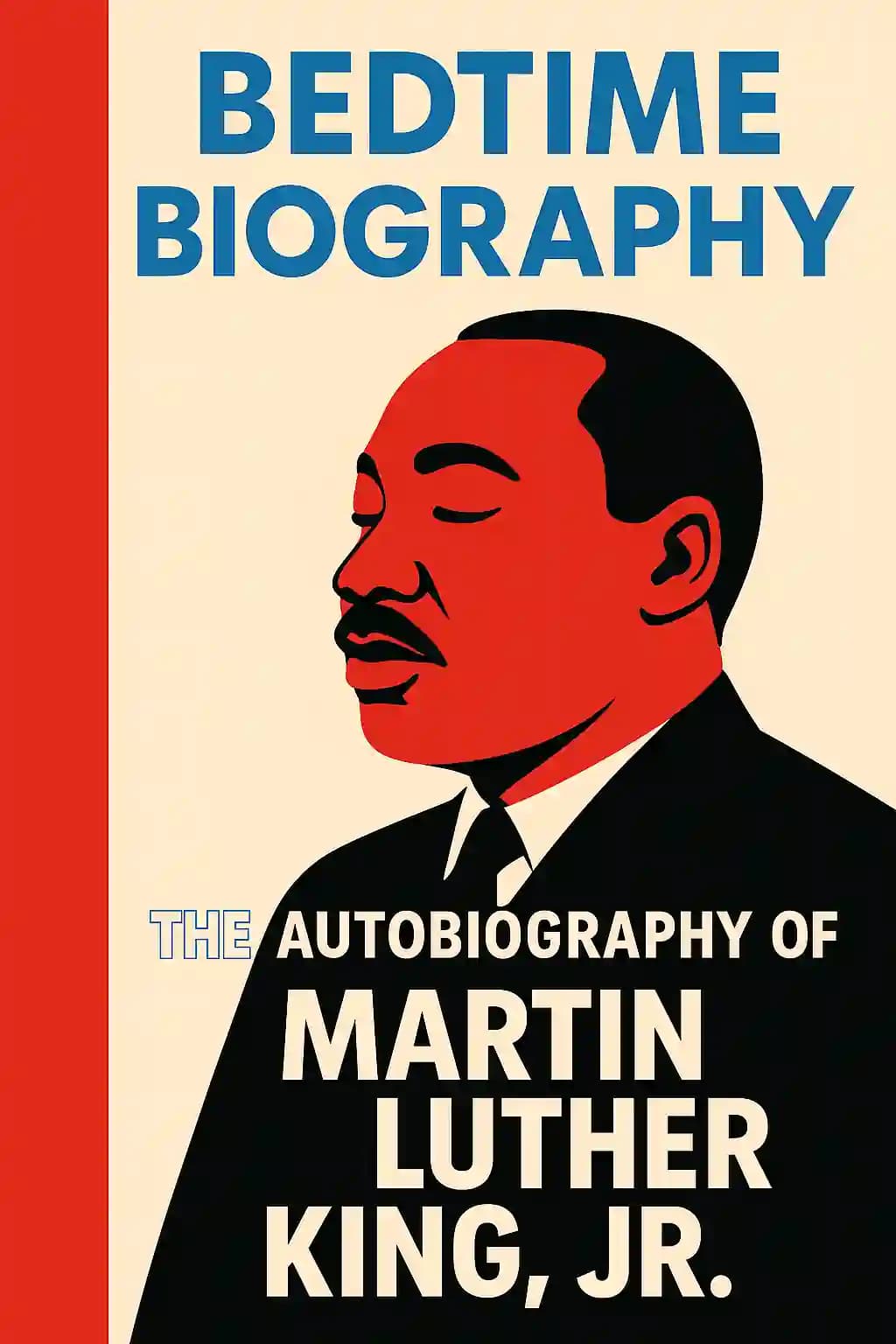
Bedtime Biography
The Autobiography of Martin Luther King, Jr.
Resumen de Bedtime Biography
Martin Luther King Jr.'s posthumous autobiography chronicles his extraordinary journey through segregation, nonviolent resistance, and the civil rights movement. This firsthand account of American history inspired global leaders like Nelson Mandela and continues shaping social justice movements today. What untold stories await in the words of a Nobel Peace Prize winner?
Temas clave en Bedtime Biography
- nonviolent resistance
- civil rights movement
- racial justice activism
- christian social ethics
- jim crow south
Citas de Bedtime Biography
The arc of the moral universe is long, but it bends toward justice.
I believe in the inherent goodness of humanity.
The dream of true equality remains unfulfilled.
It was then that I began to question the system of segregation.
Personajes en Bedtime Biography
- Martin Luther King, Jr.The author, civil rights leader, and minister
- Martin Luther King, Sr.MLK's father and minister at Ebenezer Baptist
Descargar resumen de Bedtime Biography
Obtén el resumen de Bedtime Biography como PDF o EPUB gratis. Imprímelo o léelo sin conexión en cualquier momento.
Preguntas Frecuentes Sobre Este Libro
Bedtime Biography: The Autobiography of Martin Luther King, Jr. chronicles MLK's life from his segregated childhood in Georgia to his leadership in the civil rights movement, including pivotal events like the Montgomery Bus Boycott and the 1963 March on Washington. Written in King’s own voice, it blends personal reflections with historical activism, offering insights into his philosophy of nonviolence and advocacy for racial and economic justice.
This book is ideal for history enthusiasts seeking firsthand accounts of the civil rights era, social justice advocates inspired by King’s strategies, and curious learners interested in understanding systemic racism and activism. Its accessible narrative also appeals to educators teaching 20th-century American history or leadership principles rooted in moral courage.
Yes—it provides an unfiltered perspective on King’s challenges, triumphs, and evolving ideals, from early protests to his Nobel Peace Prize acceptance. The memoir humanizes his legacy, detailing lesser-known struggles like opposition to the Vietnam War and advocacy for economic equality, making it essential for understanding his broader impact beyond "I Have a Dream".
Key themes include nonviolent resistance, racial justice, faith-driven activism, and intersectional equity. King emphasizes collective action, moral accountability, and the interconnectedness of civil rights with economic and anti-war movements. His reflections on enduring threats, such as bombings and arrests, underscore the personal risks of his leadership.
Unlike third-party accounts, this memoir offers King’s personal narrative, blending intimate reflections (e.g., childhood influences, marital partnership) with political strategy. It avoids sanitized portrayals by addressing controversies, such as FBI surveillance and internal movement conflicts, while highlighting overlooked later campaigns for labor rights and poverty eradication.
King’s Baptist upbringing and theological training frame his activism as a moral imperative. He credits faith for sustaining resilience amid violence, citing prayer and spiritual community as foundations for his commitment to love-driven protest. The book also explores tensions between religious ideals and political pragmatism.
King details the logistical and ideological challenges of organizing the 1963 march, including debates over its message. He recounts ad-libbing the "I Have a Dream" climax after feeling disconnected from his script, highlighting how shared cultural references (e.g., spirituals, the Constitution) united diverse audiences.
The memoir acknowledges critiques of King’s tactics, including accusations of idealism from militant activists and perceived incrementalism from younger leaders. It also reflects on media portrayals that simplified his message, as well as government efforts to discredit him via surveillance and smear campaigns.
Post-1965, King shifted toward economic justice, organizing multiracial coalitions like the Poor People’s Campaign. He critiques systemic poverty and the Vietnam War’s diversion of resources from social programs, arguing that true equality requires dismantling militarism and wealth inequality—a stance that alienated some allies.
Key lessons include:
- perseverance through adversity
- strategic coalition-building
- ethical consistency
King’s emphasis on empathy, dialogue, and incremental progress offers frameworks for modern activists and organizational leaders navigating complex social challenges.
Chronological chapters interweave personal milestones (e.g., marriage, fatherhood) with historical events, creating a cohesive narrative of King’s public and private growth. First-person anecdotes, like surviving a near-fatal stabbing, add emotional depth to his philosophical convictions.
The memoir’s themes—systemic racism, economic disparity, and ethical leadership—remain urgent amid modern movements like Black Lives Matter. Its focus on intersectional activism and nonviolent discipline provides timeless guidance for addressing contemporary social inequalities.




