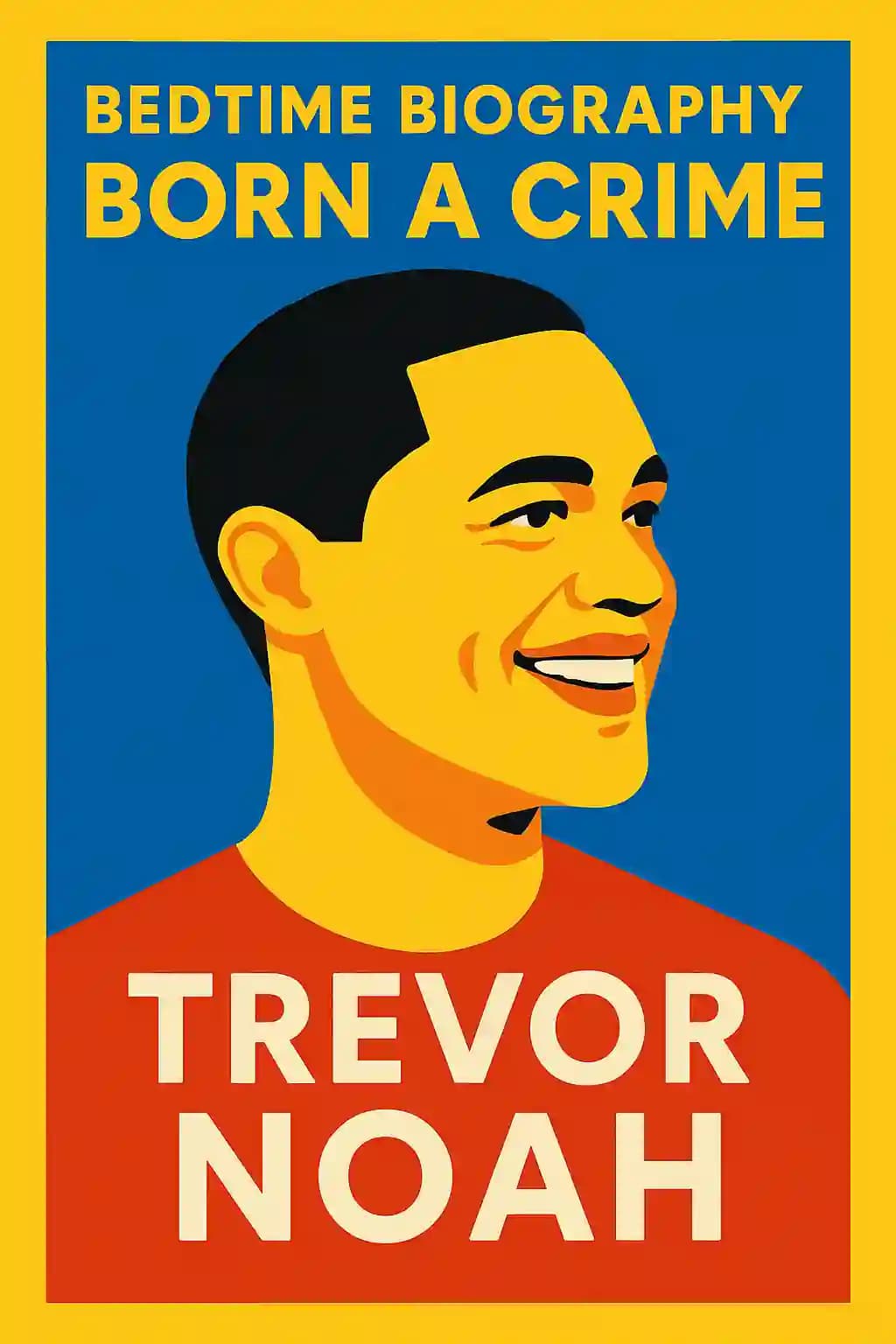
Bedtime Biography
Born a Crime
Resumen de Bedtime Biography
Trevor Noah's #1 NYT bestseller unveils his extraordinary childhood under apartheid, where his very existence was illegal. Jill Biden made it required college reading, while Lupita Nyong'o is set to star in the film adaptation of this darkly funny, deeply moving memoir.
Temas clave en Bedtime Biography
- apartheid south africa
- multilingual identity
- interracial family dynamics
- systemic racial oppression
- maternal influence
Citas de Bedtime Biography
I was born a crime. Not figuratively, but literally.
"Trevor," she would say, "you need to learn how to think."
Education is the only thing they can't take away from you.
My mother taught me that love is not just an emotion - it's an action.
I was too light to be considered black, but not light enough to be white.
Personajes en Bedtime Biography
- Trevor NoahThe protagonist and author of the memoir
- Trevor's MotherA rebellious woman who raised Trevor to think
- Trevor's FatherA white Swiss-German man
- Trevor's StepfatherA man who committed domestic violence
Descargar resumen de Bedtime Biography
Obtén el resumen de Bedtime Biography como PDF o EPUB gratis. Imprímelo o léelo sin conexión en cualquier momento.
Preguntas Frecuentes Sobre Este Libro
Born a Crime is Trevor Noah’s memoir about growing up mixed-race in apartheid South Africa, where his birth was literally illegal. It explores his tumultuous childhood, his fiercely independent mother’s influence, and his journey navigating racial identity, poverty, and systemic injustice with humor and resilience.
This book appeals to readers interested in memoirs, South African history, or social justice. It’s ideal for fans of Noah’s comedy, those exploring biracial identity, or anyone seeking insights into apartheid’s legacy through a personal lens.
Yes. Noah balances raw honesty with sharp wit, offering both a gripping personal story and a nuanced critique of systemic racism. Its blend of humor and heartbreak makes it accessible while tackling heavy themes like violence, inequality, and survival.
Noah details his struggle to belong in a racially stratified society, using language and cultural fluency to bridge groups. His “colored” identity forces him to code-switch constantly, highlighting apartheid’s absurdity and the resilience required to navigate it.
Trevor’s mother, Patricia, is portrayed as a defiant, resourceful figure who challenges apartheid’s rules. Her unshakable faith and tough love shape Trevor’s worldview, culminating in her surviving a gunshot to the head—a testament to her resilience.
Noah illustrates how systemic inequality traps communities like Alexandra in cycles of crime and deprivation. His teenage hustling ventures reveal how poverty forces ingenuity but rarely leads to escape, underscoring structural barriers.
- “I was born a crime”: Reflects Noah’s illegal status under apartheid for being mixed-race.
- “A dog is a great thing for a kid to have”: Highlights his mother’s pragmatic lessons about survival and loyalty.
Noah shows how apartheid’s racial categories distorted personal and communal identities long after its end. His anecdotes about police brutality and economic disparity underscore systemic racism’s lingering effects.
Noah uses comedy to soften harsh truths, making apartheid’s horrors accessible without trivializing them. His focus on his mother’s influence and his hybrid identity offers a fresh perspective on resilience.
The book’s themes—racial injustice, economic inequality, and identity fluidity—resonate in global discussions about systemic racism. Noah’s storytelling humanizes issues often reduced to statistics.
Unlike typical memoirs, it prioritizes sociohistorical analysis over fame-focused anecdotes. Its depth places it closer to Ta-Nehisi Coates’ Between the World and Me than conventional celebrity life stories.
Some argue Noah’s comedic tone occasionally overshadows apartheid’s brutality. However, most praise his ability to balance levity with gravity, ensuring the narrative remains engaging yet impactful.
Fans may enjoy The Glass Castle (resilient parenting), Educated (escaping hardship through education), or Between the World and Me (race and identity). All blend personal stories with broader social commentary.




