Capítulo 1
A Journey Through Time, Stone, and Spirit
The Grand Canyon has always been more than a mere landscape. It's a cathedral of geological time, a living museum of Earth's history, and a sacred space for indigenous peoples who have called it home for millennia. When Kevin Fedarko and his photographer friend Pete McBride decided to walk the entire length of the Grand Canyon-a journey of over 750 miles through some of America's most challenging terrain-they had no idea what awaited them. Their adventure, chronicled in Fedarko's "A Walk in the Park," has become a modern classic of outdoor literature, earning comparisons to Edward Abbey and Colin Fletcher. The book has resonated deeply with nature enthusiasts and adventure seekers alike, with Cheryl Strayed calling it "an instant adventure classic" and Jon Krakauer praising its "extraordinary narrative power." Beyond its gripping storytelling, the book serves as a powerful conservation plea for one of America's most threatened natural treasures.
Capítulo 2
Into the Abyss: First Steps into Magnificent Desolation
The Grand Canyon defies comprehension through mere statistics. While river guides jokingly claim it's larger than Texas, the reality is perhaps more astonishing-a six-thousand-foot vertical drop from rim to river, equivalent to five Empire State Buildings stacked atop one another. This immense depth creates distinct ecological zones, with temperatures increasing 5F for every thousand feet of descent. The canyon hosts four distinct biomes, 90 mammal species, 373 bird species (one-third of all continental U.S. birds), and a geological record spanning nearly 40% of Earth's chronology, with the oldest rocks approaching 2 billion years.
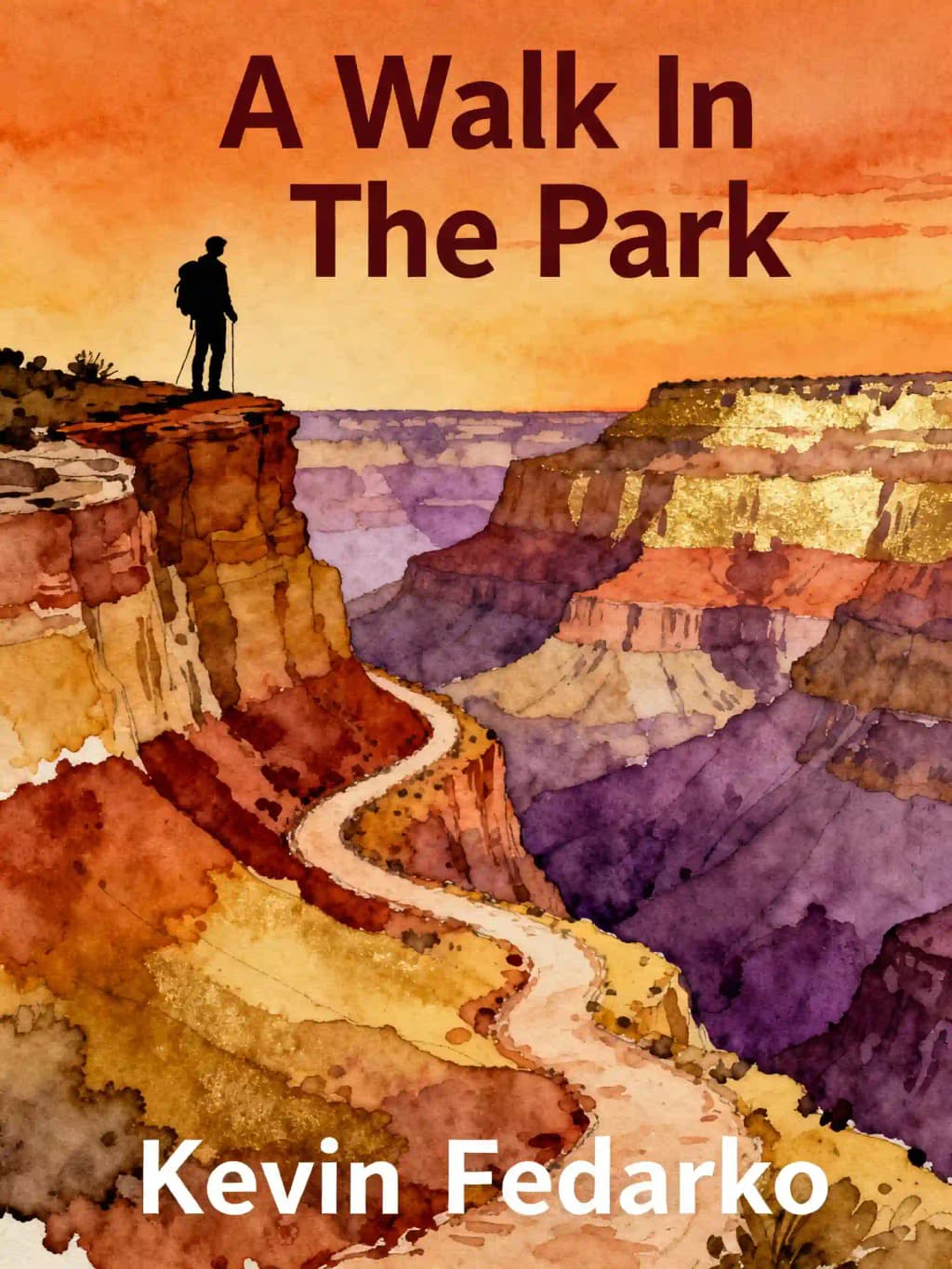
When Fedarko first encountered Colin Fletcher's "The Man Who Walked Through Time" as a child, he was captivated not by the writing but by the cover photo-a man with hiking boots and walking stick gazing into an endless landscape of rock and shimmering blue air. This image represented everything his industrial Pennsylvania hometown lacked. Pittsburgh, which had produced half of America's steel by World War II, paid a devastating environmental price with air so polluted that businessmen changed blackened shirt collars twice daily and streetlights burned during daylight. Fedarko's grandfather had spent fifty years working in coal mines, beginning at just fourteen years old. The region's industrial legacy had severed people's connection to the land, most dramatically illustrated by the 1948 "Donora Death Fog" disaster when a temperature inversion trapped toxic emissions over a town for days, killing at least twenty people while the mills kept operating.
Years later, while researching a magazine story on river trips, Fedarko encountered a fleet of whitewater dories in Flagstaff that would change his life. These seventeen-foot rowboats with their elegant lines, painted in bright colors and decorated with desert imagery, captivated him instantly. At thirty-eight, he abandoned caution to become an unpaid apprentice with river guides, driven by a childhood longing to escape Pittsburgh's industrial legacy for true wilderness. His first season proved disastrous-breaking oars, melting raft floors with hot coals, crashing into granite walls, and nearly drowning at Horn Creek rapid. Despite his incompetence, he wasn't fired and eventually found his niche managing the expedition's waste disposal system, earning the nickname "Groover Boy."
Through his river experiences, Fedarko discovered that the Colorado River corridor offered a sumptuous green oasis-alive with dragonflies, canyon wrens, bubbling springs, and wildflowers. He witnessed extraordinary sights: hundreds of simultaneous waterfalls during rainstorms, bighorn rams battling on terraces above, and a mother bobcat with kittens lapping water mere feet away. He came to love both the Colorado and its guides-"misfits, outcasts, and dreamers" bound by their addiction to the canyon's beauty.
Capítulo 3
The Legend of Kenton Grua: A Canyon's Greatest Champion
Among the river guides' stories, one name appeared repeatedly: Kenton Grua. Built like a wolverine-short, wiry, and ferociously strong-Grua became obsessed with the canyon after his first teenage visit in 1962. He dropped out of college to guide, eventually joining the only outfitter using exclusively dories. In his hands, the boats "responded like floating mandolins." Grua believed there was an absolutely right way to do everything in the canyon and constantly tested himself against the landscape.
Dissatisfied with Fletcher's claim of walking "the entire length of the Grand Canyon," Grua decided to tackle the journey himself in autumn 1973. Unlike Fletcher, he chose Native American-style moccasins-"the next best thing to going barefoot"-believing if the canyon's original inhabitants navigated without heavy boots, so could he. His ultralight approach kept his pack under thirty pounds compared to Fletcher's sixty. Initially, he made excellent progress, feeling his "head soaring like a raven on the wind." But his moccasins quickly deteriorated in the harsh terrain, and when cactus spines pierced his foot, an infection ended his journey after barely a week.
In 1977, after Congress expanded the park boundaries, Grua tried again-this time wearing proper hiking boots. Moving at an astonishing pace of 15-30 miles daily, he completed the entire 600-mile journey in just 37 days, becoming the first person in modern times to walk the entire canyon and setting a speed record that would stand for 35 years. Unlike Fletcher, who published bestselling books and became a backpacking celebrity, Grua never sought publicity for his achievement, sharing nothing from his 285-page journal, not even with his wife.
Decades later, when National Geographic approached photographer Pete McBride about documenting the Grand Canyon for the National Park Service's hundredth anniversary, he immediately contacted Fedarko to join him. Their plan: to inventory the canyon's hidden treasures, highlight development threats, and engage with Native American perspectives, all while noting how few people had walked the entire canyon since Grua's original transect. What Pete conveniently omitted was the canyon's deadly reputation-over 800 deaths making it one of America's deadliest parks. Among the eighteen previous traverse attempts, three had ended in disaster. Yet Pete made it sound simple, framing it as a quest to find a line through America's "open-air cathedral in the desert."
Capítulo 4
The Shakedown: When Hubris Meets the Unforgiving Canyon
To guide them, Pete and Kevin recruited Rich Rudow, a mild-mannered businessman who was actually a living legend in desert exploration. Unlike previous thru-hikers who stayed close to the river for safety, Rich had conceived an audacious high route that would glide across bare slickrock thousands of feet above the river but below the rim. After years of meticulous planning using maps and satellite images, Rich had created a 700-mile, 57-day itinerary with experienced teammates. Despite warnings from respected canyon expert Glenn Rink not to bring "those two idiots," Rich inexplicably agreed to let Pete and Kevin join for the first twelve days as a "shakedown" phase.
The contrast between the teams was stark from the beginning. While Rich's experienced hikers had meticulously laid out ultralight gear on gossamer ground cloths, each item carefully selected through rigorous elimination, Pete and Kevin struggled to stuff their haphazard gear into overloaded packs weighing over fifty pounds each-nearly twenty pounds heavier than the others. As they bickered about forgotten gaiters, Rich's team listened in dismay.
A grueling routine developed. Rich would wake everyone at 4:30 a.m., triggering a scramble to prepare while his experienced team waited impatiently for Pete and Kevin to finish their disorganized packing. For twelve hours daily, they struggled desperately to keep pace, progressively slowing the entire group until darkness forced them to stop. Their gear deteriorated in the heat despite nightly repairs, with Kevin's untreated blisters festering into "a putrefying mess that felt like my feet were marinating in battery acid."
In Rider Canyon, Pete suddenly developed bizarre muscle spasms visible beneath his skin-the first real crisis of their journey. He was suffering from hyponatremia, a dangerous electrolyte imbalance caused by drinking too much water without replenishing lost minerals. Despite attempts to help Pete with salty food, his condition remained dangerous. Meanwhile, Kevin's feet had become so painful that even soaking them in the river and taking excessive ibuprofen provided little relief.
As they approached the formidable Redwall Limestone, a barrier with cliffs up to 600 feet high that would force them onto a high route with limited water sources and no easy access to the river for nearly forty miles, the team worried that Pete and Kevin wouldn't survive without rest. After struggling to reach South Canyon, they bid farewell to Rich's team and began their 2,200-foot climb to the rim. Near the top, Kevin confronted their failure-they'd covered less distance than Kenton Grua had walked alone in moccasins forty years earlier before giving up. They had been treating the canyon exactly as Kevin had treated a snake that a herpetologist had quizzed him about at Lee's Ferry-with negligent disrespect.
Capítulo 5
Rebooting: Learning Humility and Returning Wiser
Pete and Kevin returned to Flagstaff utterly humiliated. Kevin's feet were shredded, leaving bloody footprints across the floor, while Pete suffered from cactus spines embedded in his ankle joint. Physician Tom Myers, co-author of "Over the Edge: Death in Grand Canyon," informed Pete he'd suffered severe hyponatremia and had been "about an hour or two away from a seizure" that could have led to brain herniation and death without hospital intervention. Myers emphasized that the canyon was "essentially the biggest heat laboratory on the planet" and advised specific protocols for their return journey.
When Pete and Kevin expressed doubt about continuing, Myers reminded them of Kenton Grua's story-how he had failed on his first attempt but returned to complete the traverse. "Kenton didn't quit," he told them. Back home, a solution emerged when they discovered Rich had secretly sent messages from the canyon to the Flagstaff hiking community seeking help for them. That evening, they found themselves surrounded by an all-star team of outdoor professionals-river guides, wilderness instructors, and expedition leaders with extensive canyon experience who offered to help them "climb back in the saddle."
They returned to the canyon with completely revamped gear and approach, guided by ultralight backpacking experts. After weeks of ruthless equipment culling to save every ounce, they reorganized their route into five segments instead of three. Rather than attempting to build physical strength, their mentors focused on efficiency and smart decision-making. They descended to the Redwall ledge that became their pathway for the next week, invisible to river expeditions below.
Following Bighorn sheep trails, they continued downstream for days, crossing the river with help from river runners. They hiked through tributary canyons beneath cottonwood canopies before ascending into a moonscape of multicolored shaley dunes. Kevin followed Mathieu, absorbing his extensive knowledge about everything from Bighorn sheep's water conservation abilities to prehistoric cave fossils. One evening, Kevin carelessly set up camp in the dark, only to discover at dawn he'd bedded down amid hundreds of prehistoric potsherds-fragments of ancient water jars and bowls.
Capítulo 6
Sacred Waters: The Confluence and Native American Connections
At the Confluence where the turquoise Little Colorado River meets the Colorado, they camped on a boulder-strewn beach. That night, moonlight cast the landscape in a milky glow, creating a half-black, half-silver scene where the waters mingled. This was their goal from the beginning-the end of the first and presumably harshest segment of their journey.
After ascending to the rim, they met Navajo woman Renae Yellowhorse, who had brought her daughter to this area when she realized the child was losing her Navajo language. Living with her grandparents near the canyon rim, Renae received language lessons and developed a connection to the land, especially the sacred Confluence where the turquoise Tochi'ikooh meets Bits'iis Nineezi. Her relatives explained this was where life began and spirits returned-a shrine so important that Navajo, Hopi, Zuni and other tribes made pilgrimages there.
In 2012, Renae discovered developers planned to build "Escalade"-a $500 million to $1.1 billion resort with hotels, restaurants, and a tramway carrying 10,000 visitors daily down to the Confluence. Developer Lamar Whitmer claimed the project would "employ an awful lot of people in an impoverished area and help them save their culture." In response, Renae joined "Save the Confluence," a group of locals determined to fight the development and protect this sacred place.
From the overlook where they stood, they could gaze directly along the canyon, with the Palisades of the Desert soaring to the south and Vishnu Temple rising on the far side of the river. "You know, there's a myth that we left this landscape-but we never did," Yellowhorse told them. "Native peoples have never stopped using these lands." She explained this was a holy place where people's spirits return after death-where her parents, uncles, and grandparents now resided spiritually.
When Kevin asked if the developers' gestures softened her objections, she firmly replied, "No. Because we don't want to be the Disneyland on the edge of the Grand Canyon. That's not how we want our stories told-we are not 'Pocahontas on the Rim.'" If she could speak directly to developer Whitmer, she would simply ask: "Why can't you listen when we say this is where we pray? Why can you not hear our voices-really hear them?"
Capítulo 7
The Great Thumb: Testing Limits in Winter's Grip
Beyond the Tonto Trail lies the Great Thumb Mesa, an enormous protrusion jutting nearly twenty miles from the South Rim. Almost a thousand yards wide at its narrowest point and towering 4,500 feet above the river, it forces the Colorado to detour twenty miles around terrain a raven could cross in minutes. For thru-hikers, the Thumb presents a tempting shortcut-simply climbing to the rim and crossing its narrow base would save tremendous effort. But this violates both park restrictions and thru-hiking ethics.
Given the dangers of this section, their supervisors assigned Amy Martin to guide them through this treacherous terrain. For two days, they navigated the frost-chilled Esplanade, weaving through cactus, yucca, and dwarf pinon over heavily fractured ground. Throughout their journey, evidence of ancient inhabitants appeared everywhere-storage overhangs, fire pits, and agave roasting areas. In one shallow cave, they discovered arrowheads, pottery fragments, charcoal, and even an unfinished basket, its woven yucca fibers still arranged in a checkerboard pattern, abandoned by its maker for reasons they'd never know.
As they advanced, a massive winter storm approached, threatening to trap them on the Thumb with snow, high winds, and no possibility of rescue. The situation worsened when Amy's knee dislocated, a recurring condition dating back to childhood. Despite their concerns about potential torn ligaments and cartilage damage, Amy refused helicopter extraction, insisting "We are not calling this in." She understood the burden such rescues placed on park resources and flight crews.
The storm hit as they reached the exposed outer point of the Thumb. Thunderheads spilled over the rim, engulfing the canyon in freezing rain and hail. They frantically sought shelter as water streamed everywhere, finally securing their tents on a small patch of level ground. By morning, they faced an alien landscape-the narrow Esplanade catwalk was buried under nearly a foot of snow, with their position thousands of feet above the canyon floor visible through holes in the scudding clouds.
With limited food supplies, waiting for better weather wasn't an option. They needed to reach the point where the Esplanade widened beyond the tip of the Thumb by nightfall. Moving across this transformed landscape was terrifying, especially with Rich warning them about the Esplanade Sandstone becoming brittle and friable when wet. After more than two hours of struggle across a treacherous slope with a 400-foot drop to the first ledge and another 600 feet to the Redwall below, they reached a small promontory in the middle of Owl Eyes Bay-a beak-like outcropping with a carefully stacked cairn about four feet tall.
Capítulo 8
Hidden Worlds: Slot Canyons and Ancient Footprints
Dawn broke frigid and clear at ten degrees as Kevin huddled in their tent's vestibule, desperately trying to thaw his frozen shoes over their camp stove. The night had transformed everything liquid into solid ice, but the storm had passed, revealing golden morning light touching the far canyon walls. After traversing the remainder of Owl Eyes Bay, they reached the Esplanade in its full glory on the far side of the Great Thumb, a remote wonderland few ever see.
As they moved across the stony plain, weaving among frozen puddles, they discovered the Esplanade's complex surface-strange humps and domes shaped like turtle backs and mushroom caps, all polished by grit-laden western winds. Every few minutes brought new discoveries: potsherds and arrowheads peeking through dirt, stacked-stone granary walls tucked beneath overhangs, even a band of wild horses disappearing into distant arroyos.
By day's end, Rich located a wedge-shaped fissure-less than thirty yards wide-that would allow their descent to the river. They followed its boulder-studded ramp down to the Redwall and made camp, hungrily consuming their last half-rations. The next morning, they reached a narrow, fifteen-foot-wide vertical crack where they could hear water flowing far below. They unpacked climbing gear-helmets, carabiners, rope-and prepared to rappel into the darkness, entering a hidden world whose secrets Rich had helped discover nearly a decade earlier.
Rain in the canyon creates slot canyons when torrents encounter harder limestone layers. These narrow fissures, often just seven feet wide at the base while soaring hundreds of feet high, were traditionally avoided by canyon hikers due to deadly flash flood dangers. Yet Rich and his friend Todd became obsessed with exploring them, discovering that each slot offered unique mechanical, cognitive, and navigational puzzles within terrain harboring distinctive perils and extraordinary treasures.
The slots were sculpted into works of astonishing symmetry by gritty torrents, with graceful curves and silken walls. No two were alike-some featured waterfalls, others terraced basins, and some had water percolating through moss-covered ceilings. They discovered slots with elegant limestone arches, floors carpeted with Scarlet Monkey Flowers and Maidenhair Ferns, and one whose final drop delivered them into a blooming redbud tree beside the Colorado River.
Rappelling 110 feet into Olo slot canyon, Kevin experienced a queasy sensation before being mesmerized by the extraordinary space. The narrow slot gradually balloons outward like the neck of a wine bottle, with walls that flare like a trumpet before pinching back. Though the sky eventually disappears as the walls arch inward, sunlight still pours down, filling the interior with an effulgent glow that inspires hushed, reverent whispers. The group navigates a series of increasingly complex rappels separated by stretches of walking, encountering islands of vegetation and a chain of stair-step pools ringed with moss, watercress, and Maidenhair Fern.
Capítulo 9
The Combat Zone: Helicopter Alley and Native Struggles
At precisely 7:15 a.m., their peaceful riverside camp was shattered by the roar of a helicopter flying low over the canyon. By 7:30, as if on cue, dozens more appeared-maroon, gray, white, and yellow-flying barely 300 feet above the river. By 8:15 when they broke camp, they had counted thirty-eight helicopters, roughly one every ninety seconds.
As they hiked downstream, the aerial traffic intensified. By 11:30, having counted sixty-five helicopters, they encountered landing zones with picnic tables, windsocks, and American flags where tourists in street clothes sipped champagne after brief helicopter rides. Each chopper would land, disgorge passengers who would take selfies at the canyon edge for ten to fifteen minutes, then depart as the next aircraft arrived-a perfectly choreographed airborne conveyor belt of tourism.
Despite being directly in their line of sight, they remained invisible to the tourists, while they and their aircraft dominated Kevin and Pete's experience. They trudged along enormous silt banks-unsightly remnants of Lake Mead's receding waters-beneath the constant roar of engines. By late afternoon, dispirited after counting 250 helicopters, they stopped keeping track.
"Whenever I walk through here and hear the constant drone of aviation, it just shocks me," Rich said. "It's like a punch to the jaw." When Pete asked how this was allowed inside a national park, the answer revealed a complex story of historic injustice involving the Hualapai tribe.
The Hualapai ("People of the Tall Pines") have inhabited the region for over a thousand years. When white settlers arrived in the 1860s seeking silver and grazing lands, the Hualapai fought back until the U.S. Army tricked them at a peace parley, confined them to a concentration camp, and later forced them to march over 100 miles to a scorching valley near Yuma. After enduring sickness and malnutrition, they walked home carrying their children, only to find settlers had taken their land and springs.
Though they eventually secured a million-acre reservation along 108 miles of the Colorado River, they were cut off from 80% of their ancestral lands and forced into poverty. For the first half of the twentieth century, over a third of reservation households lived below the poverty line. When Interstate 40 was completed in 1984, bypassing Peach Springs by 25 miles, the tribe's tourism aspirations suffered further. Undeterred, they established Grand Canyon West with a small casino in a Quonset hut near Eagle Point.
The operation struggled until David Jin from Shanghai proposed building a glass-bottomed "Skywalk" that would give tourists the sensation of walking on air 4,000 feet above the canyon floor. By 2016, the tribe and air-tour companies were running up to 400 helicopter flights daily-sometimes 500 during Chinese New Year-making Grand Canyon West one of the busiest heliports worldwide. The operation generated approximately $55 million annually for air-tour operators and nearly $110 million for the tribe, which hosted 1.1 million tourists yearly.
Capítulo 10
Pilgrims All: Finding Meaning in the Journey's End
After witnessing the helicopter onslaught, they desperately needed to escape. The morning after their dispiriting experience in Helicopter Alley, they began ascending a tributary, and within thirty minutes the helicopter noise vanished, replaced by the canyon's natural sounds-falling pebbles clicking, water droplets trickling into pools, Canyon Wrens warbling. After yesterday's cacophony, these subtle sounds and the silence between them felt like salvation.
In the early morning light, they spotted a line of saw-toothed escarpments to the west-the Grand Wash Cliffs, which had long seemed mythical, a destination they never fully believed they'd reach. "I promise you, after that line of cliffs, there's no more canyon," Rich assured them. "It's just the Basin-and-Range country of the Mojave, all the way to California."
The Sanup Plateau revealed itself as truly magnificent-a plateau of golden grass and red dirt where the rims pulled back and the sky opened up. They could see cliffs ascending toward Zion in Utah to the north, deep into Nevada ahead, and Arizona's Music Mountains to the south, ghostly blue above the Colorado Plateau's edge. The plateau teemed with wildlife-jackrabbits bounding through sagebrush, bobblehead quail darting among pinon trees, bobcats, coyotes, lizards, gophers, and massive mule deer.
From dawn to dusk, they drank in the visions-shadows playing among cactus needles, the hard-edged radiance of the sky, the openness of country etched only by the creatures that called it home. These closing days were dreamlike, filled with impressions that would remain imprinted on their memories. Even more vivid was the nightly drama of absolute silence washing over the land-a silence so pure, flecked with starlight and chilled by autumn air, that it seemed to form its own river, pooling and deepening until the entire plateau was bathed in a hush that charged the senses and settled the mind.
On a Sunday afternoon in early November, they arrived at the canyon's final tributary. Before stepping over the edge, they paused to look back at the rows of terraces and cliffs behind them, disappearing into a purple horizon beneath an indigo sky. The next morning, they followed the drainage down through a series of long curves until the walls fell away. They reached the river's muddy embankment, found their cached pack rafts, and cast off. For nearly an hour, they spun in lazy circles as the river carried them through the Grand Wash Cliffs and out of the canyon.
On a Thursday morning in November, ten days after passing through the Grand Wash Cliffs, Kevin found himself heading back into the canyon-this time without Pete. Instead, his brother Aaron had flown from Maine to accompany him as he filled in the final piece of their puzzle. For the next week, Aaron and Kevin awoke at first light but lingered over coffee before striking camp. They ambled unhurriedly down the trail, taking long lunches and dawdling by every spring. They set up camp early each day to ensure they could spend the evening conducting an extended heart-to-heart conversation between brothers.
As they walked beneath the flawless autumn sky, they talked about their lives, careers, and families: how they had played out against the hopes and dreams they'd chased as younger men. They discussed their boyhoods in Pennsylvania, and how they'd both fled Pittsburgh-Aaron to coastal Maine, Kevin to the Southwestern deserts-seeking places where nature hadn't been treated so poorly.
Reaching the rim, Kevin could now identify every formation visible and beyond-features that had once seemed mysterious were deeply familiar after their journey. This seemed to validate what Pete and he had believed: to truly know this world, one must move through it on foot, step by step. Yet watching the parade of visitors below-most there for less than a day, many venturing just a mile from the rim-he saw their excitement and joy. He realized perhaps it isn't necessary to hike 800 miles to touch the canyon's magic. Taking even a few steps into this landscape might be enough for an authentic encounter.
The tourists they passed were pilgrims too-not because of how far they traveled, but because they had come to a holy place seeking something greater than themselves. They were pilgrims because they believed that despite the world's ugliness, places of wonder still exist. And most importantly, they sought their benedictions on foot-doing exactly what Kevin's father had prepared him and his brother to do all those years ago: going for a walk in the park.
Capítulo 11
Legacy of Stone: What Remains When the Journey Ends
If Pete and Kevin had undertaken a journey that was reckless and misguided, conceived in ignorance and initially executed poorly, it was also the purest thing either of them had ever done-an adventure in a landscape like no other that would remain with them forever.
The memories of their time in the canyon return with undimmed radiance: apricot-colored cliffs reaching toward cobalt skies, the setting sun softening the day's glare, swallows dipping through twilight, and starshine sliding like mercury down glistening walls. Kevin remembers planets winking out at dawn, morning shadows playing among rabbitbrush and cholla, and noon light making limestone edges twinkle like sea glass.
These small details stood out against the immensity of stone and the even greater depth of time within its folds. Evening winds would abate as constellations filled the sky, bringing a silence so vast it formed its own ocean. They would crawl to cliff edges to watch moonbeams dance among river ripples below, and occasionally hear Bighorn sheep bleating from the Redwall, calling to each other against the splendor and loneliness of night.
After their journey, Lamar Whitmer's development group intensified their campaign for the tramway project, courting Navajo politicians while Renae Yellowhorse and her volunteers, with minimal funding, continued their grassroots opposition. Their efforts paid off when the Navajo legislative council overwhelmingly rejected the project-sixteen delegates against, only two in favor. Meanwhile, air tours in Helicopter Alley have only increased, with the Skywalk growing in popularity through events like DJ Kaskade's electronic dance music performance livestreamed with drone footage and pink lights playing against the canyon walls.
Signs of progress have emerged. The Desert View Watchtower on the South Rim was converted into an interpretive center honoring indigenous peoples, with park superintendent Dave Uberuaga formally apologizing for a century of pain inflicted on tribal communities-the first such acknowledgment in Park Service history. In 2023, President Biden established Baaj Nwaavjo I'tah Kukveni ("Ancestral Footprints of the Grand Canyon"), protecting nearly one million acres of culturally significant land beyond the park's borders.
Rich Rudow continues exploring the canyon's most inaccessible recesses while devoting much of his time to volunteering with backcountry rangers. He visits the memorial cairn for Ioana Hociota and still searches for Floyd Roberts, who vanished in the 2016 heat wave and remains unfound-testament to the Sanup Plateau's unforgiving nature.
Somewhere along the final stretch of his hike, Kevin deliberately created a gap in his line through the canyon-no more than a few hundred yards, but enough to disqualify him from the official thru-hiker list. Though perhaps its own form of vanity, this symbolic incompleteness reaffirms his belief in the beauty of stories whose endings don't tie off perfectly, inspired by the Navajo weaving tradition of including a deliberate imperfection called a ch'ihonit'i or "spirit line"-a break in the pattern that ensures the work remains incomplete.
When his journey ended, Kevin hoped to complete this book quickly enough to place it in his father's hands, closing the circle they began drawing when he first gave him Colin Fletcher's work forty years earlier. Despite his efforts, he couldn't write faster than his father's death. Four years after they brought him west to see the canyon, he passed away at home in Pennsylvania just before his eightieth birthday, without reading this story. Yet he experienced their trek differently, thanks to Pete, who created a coffee-table book showcasing his photographs from Lee's Ferry to the Grand Wash Cliffs. As his father studied the images before the fireplace, Kevin took a photo with his cell phone. In that moment, he believes his father was not just absorbing the images but counting his blessings as he prepared for the grandest walk of all.