Capítulo 1
A Memoir That Defies Its Own Brilliance
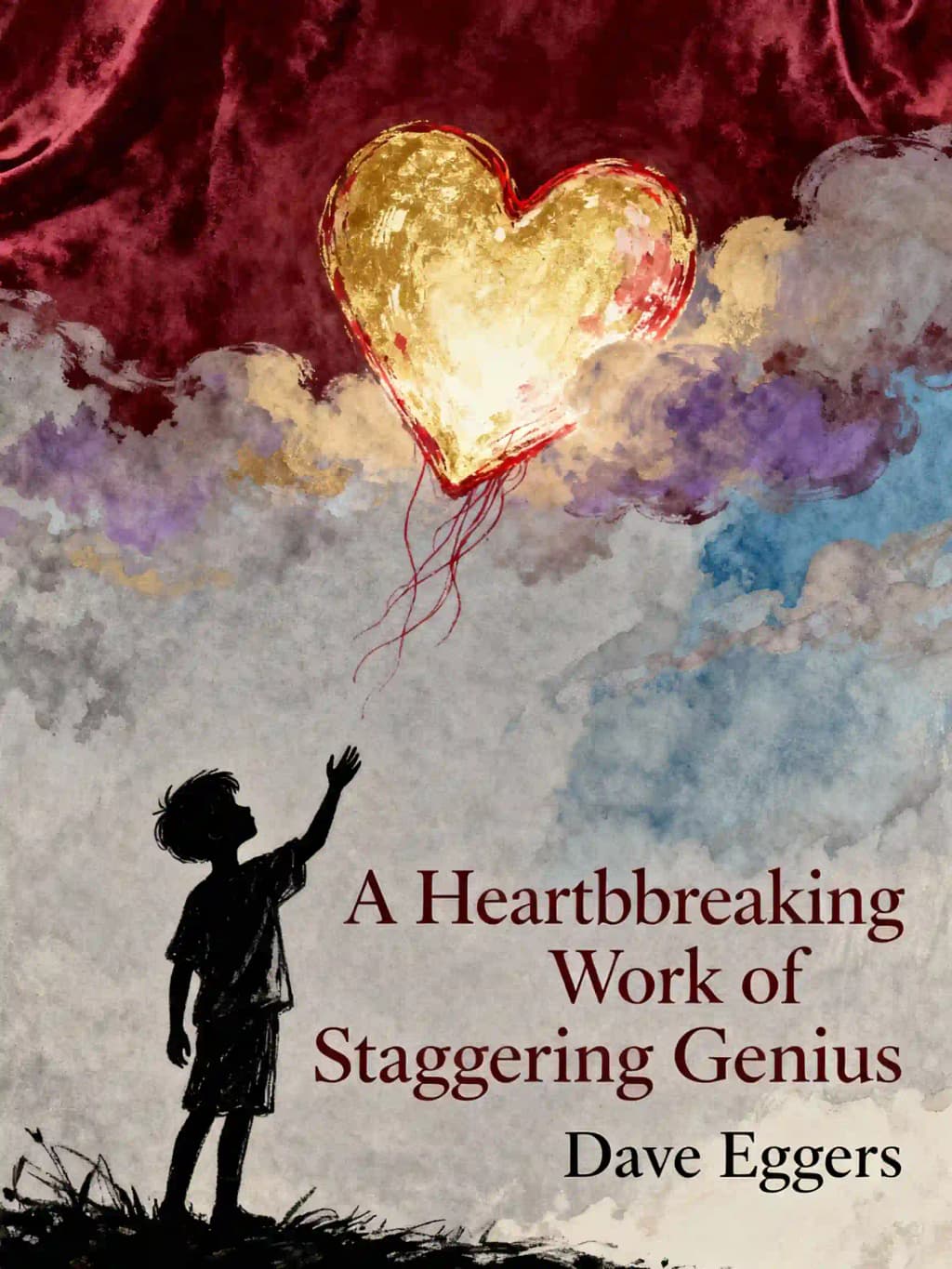
Dave Eggers' "A Heartbreaking Work of Staggering Genius" became an instant literary sensation upon its 2000 release, landing on The New York Times bestseller list and becoming a Pulitzer Prize finalist. The book's audacious title perfectly captures its dual nature-both sincere in its emotional depth and ironic in its self-awareness. Beloved by celebrities like David Bowie and Jon Stewart, who called it "the book that made me believe in literature again," Eggers' memoir revolutionized the genre with its metafictional approach. The book's cultural impact extended beyond literature, influencing a generation of writers to embrace vulnerability while maintaining intellectual distance. What makes this work so compelling is how it transforms devastating personal tragedy into something that feels both uniquely specific and universally relatable-a young man's journey through grief, responsibility, and the chaotic search for meaning in a world suddenly stripped of certainty.
Capítulo 2
The Devastating Setup: Death and Responsibility
Within a span of just 32 days, Dave Eggers loses both parents to cancer, leaving him at age 21 to raise his eight-year-old brother Toph. The opening scenes unfold in their Lake Forest, Illinois home, which has become "a factory" of illness. His mother lies immobile on the couch, spitting green fluid into plastic containers, her body ravaged by cancer that returned after her stomach was removed. Eggers describes the cancer in visceral terms-"a thousand writhing worms" with "one blind evil eye"-while maintaining a matter-of-fact tone about the mundane aspects of caregiving.
The narrative moves between the horrific and the ordinary with jarring speed. One moment, Eggers is helping his mother with nosebleeds; the next, he's noticing the dated slogan-covered wallpaper in their bathroom. This juxtaposition creates a disorienting effect that mirrors the experience of grief itself-how the catastrophic and the trivial coexist in ways that feel both absurd and painfully real.
In the hospital's final moments, Eggers sits in a pleather chair watching his mother's labored breathing and the rhythmic suction machine that seems like a prop in a play. The ceiling appears to swim, the room feels unreal, and he obsesses about buying flowers from the hospital gift shop for her birthday. When she briefly stirs, he whispers "Happy birthday," but she doesn't respond, not truly awake. This scene captures the surreal quality of watching someone die-how reality itself seems to waver and distort.
The section ends with a dreamlike transition-Toph takes the narrator's hand, and they seemingly fly through the window toward California, symbolizing their escape from the Midwest and their parents' deaths. This magical realist moment marks the boundary between their old life and the uncertain future that awaits them.
Capítulo 3
California Dreaming: Freedom and Fear
After their parents' deaths, Dave and Toph flee to California, driving along Highway 1 in their "little red car" with a sense of entitlement born from suffering. "We are owed," Eggers declares, "we are collecting on what's coming to us." The Pacific Ocean "cheers heartily" for them as they descend rickety steps to Montara Beach, their arrival feeling both like an escape and a homecoming. The vastness of the coastline represents their newfound freedom, yet also highlights their profound isolation in this unfamiliar landscape.
Their beach interaction reveals complex relationship dynamics - Toph expects payment for building sandcastles, a habit their mother started during happier times, which Dave finds simultaneously endearing and ridiculous. This small moment exemplifies their struggle to maintain childhood traditions while adapting to their new reality. The sandcastle ritual becomes a poignant reminder of their loss and the challenge of transitioning from brothers to guardian and ward.
Dave's anxiety manifests constantly as he watches the dangerous ocean, his mind conjuring vivid scenarios of Toph drowning in the powerful undertow. He obsessively tracks his brother's movement, calculating distances to safety, revealing the weight of his new parental responsibilities. His teasing about inherited traits - protruding nipples, unruly hair, terrible acne - telling Toph "You will slowly grow ugly," masks deeper fears about genetic destiny and his ability to guide his brother through adolescence. Toph's confident rejection of these predictions demonstrates his resilience, even as Dave struggles with his own insecurities.
Their extraordinary frisbee game becomes an elaborate dance of skill and grace, moments where they transcend their circumstances. Dave's thoughts race between immediate practical concerns - Toph needs a doctor, health insurance, a permanent home - and traumatic memories that surface unexpectedly. The vivid flashback of finding his mother after her fall, bleeding on black slate, murmuring "I wanted to see the flower," haunts him with its mixture of beauty and horror. His conviction that he'll die before thirty reveals how deeply trauma has shaped his worldview.
The brothers' athletic display draws admiration from beach-goers, and Dave imagines them as "perfection, harmony, young and lithe, fast like Indians," their movements expressing a freedom their circumstances deny them. These moments of physical grace provide temporary escape, creating an illusion of normalcy and control. Yet beneath their impressive performance lies a constant undercurrent of anxiety - about money, stability, and survival. Their frisbee game becomes a perfect metaphor for their new life: moments of exhilarating freedom punctuated by the constant awareness of potential disaster, their talent and youth both blessing and burden as they navigate their uncertain future together.
Capítulo 4
The Domestic Battlefield: Creating a Home
House-hunting reveals their diminished circumstances. After living in a spacious Chicago home and a beautiful Berkeley Hills sublet with panoramic views, they face the reality of cramped, amenity-free apartments. Dave, feeling responsible for this decline, sometimes looks without Toph "to spare him the gore."
Their household is dissolving-Dave's sister Beth and friends Katie and Kirsten all moving to separate places. Dave had dreamed of a spacious artist's loft, but reality proves harsh. When calling about Oakland lofts, he's mockingly told to "get serious" about finding a neighborhood suitable for an eight-year-old.
Potential landlords react with suspicion to their unusual situation. One man, initially enthusiastic on the phone, looks "stricken" upon seeing them, refusing to even show the property after learning their ages. Finally desperate by mid-August, they find a small adobe house owned by a woman whose son just left for college. When she expresses concern about Dave's joblessness, he offers his only advantage: "We could pay the year's rent all at once."
After settling in, they repaint the entire house in one week-light blue family room, deep burgundy living room, salmon bedroom, off-yellow kitchen-skipping corners and molding for a "fuzzy, Rothkoesque" finish. For Toph's tenth birthday, during a spell of nightmares, Dave paints two huge superheroes on his bedroom walls for "decoration and protection."
Their home descends into chaos, with the coffee table serving as "purgatory" for everything eaten, worn or broken. Dave worries constantly that authorities will discover their slovenly lifestyle and take Toph away to "somewhere where the house is kept clean, where laundry is done properly." Every day they manage basic functioning feels like "some fantastic trick-an escape from the jaws of death."
Capítulo 5
Daily Life: Chaos, Routine, and Performance
By mid-fall, the brothers establish a chaotic routine. Toph wakes at 3 or 4 AM to shower, dress, eat breakfast, finish homework, and watch cartoons for hours. Dave drives him to school perpetually late, parking where he's been repeatedly told not to, and writing honest excuse notes signed "Brother of Chris." Their relationship has wonderfully flexible rules-when Dave doesn't want to do something, he claims he's "not actually his parent," but when someone needs to be blamed, Toph takes responsibility.
Their menu consists of eight precisely defined meals, each with rigid specifications: The Saucy Beefeater (sirloin strips in soy sauce with tortillas), The Saucy Chicken (similar but with chicken), The Crunchy Chicken (from Church's), The Crumbling Wall (hamburgers with too much barbecue sauce), The Mexican-Italian War (ground beef in Prego sauce), unnamed pizza, The Old Man and the Sea (frozen fried clams), and Gavin MacLeod and Charo (grilled cheese or quesadillas). All meals come with strict rules-no spices except oregano, raw vegetables only, and always served with 1% milk.
Their home life is a deliberate circus of distraction-sword fights with wooden spoons, water-spitting chases, food thrown at each other. Dave consciously creates a "music video" atmosphere of "fun, fun, fun!" to counterbalance his sister Beth's photo albums and emotional check-ins. He threatens Toph with knives because "threatening children with seventeen-inch knives is funny," justifying it as something their father did.
At school events, Dave oscillates between feeling pathetic and glamorous, sad and sickly or "unusual and tragic and alive." He imagines them as celebrities, "orphans from a place where there are still orphans," standing out among the aging, "walking corpse" parents. When approached by curious parents, they perform their well-rehearsed script about their parents' deaths, Dave always ending with his standard deflection: "Well, what are you gonna do?"-a line that both defuses tension and challenges the questioner's pity.
Capítulo 6
The Guilt of Freedom: Parenting vs. Youth
Dave grapples with the stark contrast between his actual life and the life he believes he should be living as a twenty-something. On Friday nights, while his peers are "across the Bay... fixing their hair, spilling beer, trying to get someone to touch their penis, laughing with and at people," he finds himself at home with Toph, methodically preparing dinner and maintaining their routine. This disparity weighs heavily on him, highlighting the sacrifice of his youth for parental responsibilities. He's established stringent rules about dating and childcare that would seem excessive to most young adults: absolutely no babysitters except family members, careful and sometimes paranoid screening of Beth's friends, and an elaborate waiting period before any romantic interests can meet Toph.
The rare occasions when Dave does venture out become exercises in anxiety rather than liberation. During one particular evening, leaving Toph with a babysitter named Stephen, he experiences a fleeting moment of freedom that quickly dissolves into paralyzing worry. His mind spirals into increasingly dark scenarios, each more horrific than the last, imagining returning home to find his brother harmed or murdered. He vividly envisions the subsequent criminal trial, where he'd face accusations of negligence for leaving his brother with someone who turned out to be dangerous. These thoughts aren't just passing concerns but consuming fears that demonstrate the depth of his parental responsibility.
Crossing the Bay Bridge becomes a symbolic journey between his two worlds. As the city lights reflect off the water, Dave's mind continues its relentless parade of worst-case scenarios. At a San Francisco bar, he finds himself in a scene that should feel natural for someone his age. His friend Brent engages in typical band-naming exercises, throwing out ridiculous combinations like "Jon & Pontius Pilate" and "Pat Buchanitar," representing the kind of carefree creative expression Dave rarely gets to indulge in. The presence of his Chicago friends, who have mysteriously all migrated to the Bay Area, provides an essential support network for both him and Toph, though it also highlights the unusual nature of his situation.
The disconnect between Dave and the bar scene grows more pronounced as the night progresses. He surveys the crowded space, feeling like an impostor in this world of casual socializing, wondering if the risk of leaving Toph at home was worth such a mundane experience. His frustration manifests in increasingly bitter observations about the meaninglessness of bar culture, and he finds himself yearning for something truly significant to occur - an orgy, a riot, any event that would justify his absence from home. The constant inquiries about Toph's whereabouts from well-meaning friends only serve to heighten his irritation, eventually pushing him to fabricate an outrageous story about Toph running away after shooting a classmate, a dark joke that reveals his growing resentment of having to constantly explain his unique family situation.
Capítulo 7
The Shadow of the Past: Family Trauma Revealed
Dave reveals the devastating extent of his father's elaborate deception during a supposed period of sobriety-secretly maintaining his alcoholism by disguising vodka in tall glasses of quinine water for nearly a year while dutifully attending AA meetings. The family, desperately wanting to believe in his recovery, was "flush with pride and hope" thinking he'd finally quit drinking. They dared to imagine a future where they'd no longer need to seek refuge at relatives' homes during his violent episodes. However, the reality was far darker - he was actually consuming more alcohol than before, which explained the persistent slurred speech, unpredictable mood swings, and sudden explosions of rage despite his apparent "sobriety."
The psychological impact on young Dave manifested in what he describes as his "wild, horror-infested imagination." At night, he would lie awake convinced their downstairs had transformed into a sinister human experimentation laboratory, complete with imagined screams and mechanical sounds. This vivid childhood fantasy world reflected his deep-seated fears and uncertainty about what might actually be happening in their home after dark. The "thin brittle rope of trust" between him and his father - already frayed by years of broken promises and volatile behavior - finally snapped completely when Dave was eight during what he refers to as "the door thing."
This pivotal incident occurred one night when his father, heavily intoxicated and demanding Dave "assume the position" for punishment over a minor infraction, pursued him through the house until Dave barricaded himself in his bedroom. The terror of that night remains crystallized in his memory - first attempting to reach his aunt and uncle who were familiar with AA and might help, then desperately fashioning an escape rope from twisted bedsheets. Just as he was suspended halfway out his second-story window, "the door came in, an explosion of wood, and he was upon me." His mother's immediate intervention possibly prevented serious harm, but the incident served as undeniable proof of "the extremes of his volatility."
When questioned about whether these experiences constituted child abuse, Dave's response reveals complex layers of denial and normalization: "Oh God no. He didn't spank us very hard." He deflects by pointing out that his mother actually hit them more frequently and harder, describing her signature "karate chop" maneuvers that evolved from terrifying to almost darkly humorous as the children grew older. Yet beneath this attempted lightness, Dave acknowledges developing a permanent "flinch mentality" and "overly defensive" reactions to sudden movements or confrontations. He lived with the constant underlying fear that there was "a better than average chance" his father might accidentally kill one of them during a drunken rage. The broken bedroom door remained unrepaired for twelve years, serving as a daily physical reminder of that traumatic night and the persistent threat of violence that shaped their family life.
Capítulo 8
Might Magazine: Creative Ambition Meets Reality
Dave and his friends create Might magazine, an ambitious but struggling publication that embodies both the creative energy and harsh realities of independent publishing in the mid-1990s. Operating out of San Francisco's Mission District, their workplace conditions deteriorate steadily - their office toilet regularly overflows with raw sewage, forcing them to use a coffee shop bathroom down the street, and they're essentially squatting in a condemned Victorian building since the landlord ordered mandatory seismic retrofitting months ago. The staff works punishing hours without pay, surviving on donated snack foods and pure determination. Their health suffers visibly - Marny battles recurring bronchitis, Moodie appears to have a chronic case of mononucleosis, and everyone shows signs of exhaustion and malnutrition.
Their survival depends heavily on an endless stream of idealistic interns and volunteers who bring fresh energy and free labor to the operation. Elliot arrives from Ohio with a backpack full of enthusiasm and zero publishing experience. Gabe, a Columbia journalism dropout, becomes their de facto copy editor. Lance Crapo, an Idaho potato heir whose family fortune comes from french fry technology, assumes the role of vice president and occasional emergency financier. Most notably, there's Zev Borow from Syracuse University, whose boundless optimism leads him to spend weeks organizing hundreds of useless publicity photos into meticulous categories, simply because someone mentioned it might be helpful. While the original staff members increasingly snap at each other over missed deadlines and bounced checks, these newcomers maintain an almost religious devotion to the magazine's mission.
Zev's perpetual enthusiasm eventually inspires their most ambitious issue yet: "The Future," a satirical examination of predictions and prophecies. The magazine solicits intentionally absurd expert opinions about the year 2020, including forecasts about hover-cars powered by recycled dreams and psychic internet connections.
This creative renaissance leads to their most controversial project - an elaborate hoax claiming the death of former child star Adam Rich from "Eight Is Enough." They construct a detailed narrative: Rich, allegedly working on an experimental film called "The Squatter Project," is stabbed outside The Viper Room in Los Angeles by an unemployed stagehand. Their fabricated obituary begins with purple prose: "It is said that to fly too close to the sun will cause you to fall," and includes manufactured quotes from Hollywood insiders about Rich's supposed creative renaissance.
The hoax implodes spectacularly when television show Hard Copy attempts to verify the story with LAPD records. Though they've already set devastating events in motion - Dick Van Patten, Rich's TV father, breaks down crying on camera upon hearing the news, and Adam's real-life friends spend days in genuine mourning - they're forced to issue an immediate retraction. The media response is merciless, with entertainment shows and newspapers not only condemning the magazine's ethics but also dredging up Rich's previous struggles with drug addiction and his arrest for attempted pharmacy burglary. The stunt, meant to critique celebrity death coverage, instead becomes a cautionary tale about journalistic responsibility and the real human cost of satirical stunts.
Capítulo 9
Confronting Mortality: The Journey Home
Dave returns to Chicago in winter without a coat, not because he forgot one but because he never even thought to bring one. Despite having lived there "for a hundred years," mastering winter's elements, he's now freezing in just a cellophane pullover-a physical manifestation of his disconnection from his past life.
His plans are both practical and morbid-visiting his hometown, looking up old flames, seeing his father's friends and secret bar, visiting the funeral home, and his childhood home. More disturbingly, he's obsessed with finding where his parents' bodies went after cremation, imagining the medical school where they were used as cadavers.
When he visits his childhood home, the new owners-a father with a mustache, mother with a bobbed haircut, and three small children-have transformed it completely. The walls are repainted, wood paneling gone, some walls removed entirely. His old room is unrecognizable-orange forest wallpaper gone, drawings gone, carpet gone, mirrors removed, broken door replaced. Where his father's walk-in closet once stood, there's now a Jacuzzi. "We put a lot of time into this house," the father says with a soft whistle. "Yeah," Dave replies. "We kind of let things slide there for a while."
At the funeral home, Chad, a young employee, unexpectedly discovers a box containing Dave's mother's cremated remains that had never been delivered to the family. On his final night in Chicago, Dave takes his mother's remains to the beach. Opening the container, he's surprised to find not fine ash but multi-colored pebble-like fragments that force him to confront the physical reality of cremation.
As he throws handfuls of the remains into Lake Michigan, he spills some onto the rocks and his clothes, becoming increasingly frantic and disgusted with himself. Throughout the process, he oscillates wildly between seeing his actions as "beautiful and loving and glorious" or "small and disgusting," worrying that his self-awareness ruins any potential beauty in the act.
Capítulo 10
The Final Throw: Moving Forward
The memoir concludes with Dave and Toph driving toward Black Sands Beach, just minutes from San Francisco. As they cross the Golden Gate Bridge, Toph leans out the window mooing at tourists, reducing them both to tears of laughter. The sky shifts dramatically-torn cotton clouds below them, Easter blue above-as they climb the Headlands drive.
They've skipped a mandatory high school entrance test, having decided to leave San Francisco entirely for New York. Dave feels the city growing smaller, colder, and more extreme-homeless people defecating on Market Street, broken-down buses, repetitive routines. Even his work at Might magazine has become tiresome, with endless fruitless meetings with potential investors who never commit.
On Black Sands Beach, they continue their frisbee game, displaying increasingly complex tricks. Dave describes his signature cartwheel catch that Toph hasn't yet mastered but enables through his perfect throws. Their frisbee prowess attracts imagined crowds of admirers as they "wing that fucker" with impressive skill.
Dave marvels at Toph's growth-"he's so tall all of a sudden, he'll be some kind of giant"-while describing their violent, cathartic frisbee throws that rip "through that paperblue sky like a screen." The section builds to a fevered, stream-of-consciousness crescendo as Dave addresses an unseen audience: "Don't you know that I am connected to you? Don't you know that I'm trying to pump blood to you?"
His desperate plea for recognition culminates in raw vulnerability: "I'll raise my arms and give you my chest and throat and wait... Oh do it, do it, you motherfuckers, do it do it you fuckers finally, finally, finally." This cryptic, emotional outburst encapsulates the memoir's central tension-between wanting connection and fearing it, between performing grief and authentically experiencing it, between protecting oneself and opening up to the possibility of being hurt again.
In this final scene, the frisbee becomes a perfect metaphor for Dave and Toph's relationship-each throw requiring trust, each catch a small triumph against gravity and loss. Their game continues indefinitely, suspended in that moment of perfect flight, before the inevitable descent.