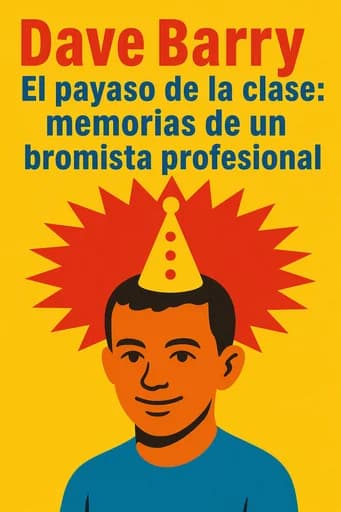
Dave Barry's Pulitzer-winning wit explodes in "Class Clown," chronicling his journey from high-school jokester to cultural satirist. Ever wondered how one man's columns reached 500+ newspapers? Discover the genius who claims his greatest achievement is "having a sewage lift station named after you."
David McAlister Barry, Pulitzer Prize-winning humorist and author of Class Clown, is celebrated for his sharp wit and satirical commentary.
His career as a syndicated columnist for The Miami Herald (1983–2005), reaching over 500 newspapers, cemented his reputation for blending absurdity with astute social observations.
The memoir Class Clown draws from Barry’s own experiences as the self-proclaimed "class clown" of Pleasantville High School, connecting his early irreverence to his acclaimed writing style. Beyond this autobiography, Barry penned bestselling works like Lessons From Lucy and co-authored the young-adult Starcatchers series, adapted into the Tony-winning play Peter and the Starcatcher.
His columns earned the 1988 Pulitzer Prize for Commentary, and in a uniquely quirky honor, Grand Forks, North Dakota, named a sewage lifting station after him—a testament to his cultural impact.
Class Clown is Dave Barry’s memoir chronicling his journey from a rock-throwing childhood in the pre-internet era to winning a Pulitzer Prize as a humor columnist. The book blends absurd anecdotes—like being elected "class clown" in high school and preparing for nuclear war under desks—with reflections on his career at The Miami Herald, crusades against telemarketers, and misadventures in journalism. Interwoven with Barry’s signature wit, it also tackles darker family themes like his father’s alcoholism and mother’s suicide.
This book is ideal for fans of Barry’s humor columns, readers seeking lighthearted memoirs, or anyone interested in journalism’s "Golden Age." It appeals to those who enjoy self-deprecating wit and unconventional life lessons, particularly midlife readers nostalgic for pre-digital-era antics. Barry’s blend of absurdity and sincerity also resonates with audiences navigating personal challenges, as he balances comedy with poignant themes like mental health.
Yes, for its authentic humor and insightful storytelling. Barry’s memoir delivers laugh-out-loud moments (e.g., alienating Neil Diamond fans or demonstrating Rollerblade Barbie hazards on Letterman) while offering candid reflections on resilience. Though some critics note uneven pacing between columns and personal narrative, the book’s warmth and relatability make it a standout. As Publishers Weekly highlights, Barry’s refusal to "grow up" fuels a vibrant celebration of life’s absurdity and joy.
Barry credits his darkly comic mother and Presbyterian-minister father for shaping his humor. Childhood episodes—like his mother’s cheerful "Don’t drown, kids!" warnings—taught him to "never take anything too seriously." This foundation surfaces in his satirical career, where he transformed family struggles (his father’s alcoholism, mother’s depression) into a comedic lens for life’s chaos. The subtitle, "How I Went 77 Years Without Growing Up," nods to this irreverent worldview.
Key moments include:
Barry uses wit to process trauma, like his mother’s suicide. For example, he contrasts nuclear-war drills with schoolyard antics, framing fear through comedy. His columns—such as exposing flammable Pop-Tarts—mask deeper critiques of societal absurdity. This approach, praised as "laugh-through-tears" storytelling, balances levity and vulnerability, showcasing humor as armor against life’s hardships.
Publishers Weekly notes uneven pacing, citing "greatest hits" columns that interrupt narrative flow, particularly in election-coverage chapters. The memoir’s blend of heartfelt reflection and recycled material can feel disjointed, though Barry’s comedic voice remains compelling throughout.
Barry’s themes—media integrity, corporate absurdity, and finding joy in chaos—resonate amid modern issues like misinformation and workplace burnout. His telemarketing crusade foreshadows today’s robocall battles, while his satire on politics and fame critiques current celebrity culture. The memoir reminds readers that humor is timeless, especially when confronting societal ironies.
Barry employs self-mocking, accessible prose filled with hyperbole and punchy one-liners. He mocks his literary "merits" ("Was Marcel Proust ever on Carson?") while weaving poignant observations. His style mirrors his columns: conversational, irreverent, and packed with relatable absurdities, like describing a sommelier contest by tasting "bat urine."
Unlike fiction like Swamp Story, this memoir delves into Barry’s personal history, blending raw autobiography with career highlights. It shares the humor of his columns but adds emotional depth, particularly around family tragedy. For fans, it’s a definitive origin story—more introspective than his satirical novels, yet retaining his trademark wit.
Siente el libro a través de la voz del autor
Convierte el conocimiento en ideas atractivas y llenas de ejemplos
Captura ideas clave en un instante para un aprendizaje rápido
Disfruta el libro de una manera divertida y atractiva
If you had to identify, in one word, the reason why the human race has not achieved, and never will achieve, its full potential, that word would be 'meetings.'
Without question, the greatest invention in the history of mankind is beer. Oh, I grant you that the wheel was also a fine invention, but the wheel does not go nearly as well with pizza.
There is a very fine line between 'hobby' and 'mental illness.'
We prided ourselves on taking nothing seriously.
Desglosa las ideas clave de Class clown: the memoirs of a professional wiseass en puntos fáciles de entender para comprender cómo los equipos innovadores crean, colaboran y crecen.
Experimenta Class clown: the memoirs of a professional wiseass a través de narraciones vívidas que convierten las lecciones de innovación en momentos que recordarás y aplicarás.
Pregunta cualquier cosa, elige tu estilo de aprendizaje y co-crea ideas que realmente resuenen contigo.

Creado por exalumnos de la Universidad de Columbia en San Francisco
"Instead of endless scrolling, I just hit play on BeFreed. It saves me so much time."
"I never knew where to start with nonfiction—BeFreed’s book lists turned into podcasts gave me a clear path."
"Perfect balance between learning and entertainment. Finished ‘Thinking, Fast and Slow’ on my commute this week."
"Crazy how much I learned while walking the dog. BeFreed = small habits → big gains."
"Reading used to feel like a chore. Now it’s just part of my lifestyle."
"Feels effortless compared to reading. I’ve finished 6 books this month already."
"BeFreed turned my guilty doomscrolling into something that feels productive and inspiring."
"BeFreed turned my commute into learning time. 20-min podcasts are perfect for finishing books I never had time for."
"BeFreed replaced my podcast queue. Imagine Spotify for books — that’s it. 🙌"
"It is great for me to learn something from the book without reading it."
"The themed book list podcasts help me connect ideas across authors—like a guided audio journey."
"Makes me feel smarter every time before going to work"
Creado por exalumnos de la Universidad de Columbia en San Francisco

Obtén el resumen de Class clown: the memoirs of a professional wiseass como PDF o EPUB gratis. Imprímelo o léelo sin conexión en cualquier momento.
Dave Barry's journey from small-town class clown to Pulitzer Prize-winning humorist reveals how embracing your natural tendencies-even the "inappropriate" ones-can lead to an extraordinary life. Growing up in 1950s Armonk, New York, Barry developed his comedic lens by observing the world's inherent absurdities through the influence of two remarkable parents: a Presbyterian minister father who appreciated good humor despite his serious occupation, and a mother whose dark, sharp wit would shape Barry's own comedic sensibilities. "Don't drown, kids!" she'd cheerfully call as they headed to the pond, or console them with "Oh well, someday we'll all be dead" when things went wrong. This gallows humor became the foundation for a writing style that would eventually captivate millions of readers worldwide. What makes Barry's story so compelling isn't just his success, but how he transformed an instinct for mockery into an art form that connects deeply with readers who recognize their own absurd experiences in his words.
Have you ever felt like you didn't quite fit the mold society expected of you? Barry's school years illuminate the struggle many of us face between conformity and authenticity. As America panicked over Sputnik in 1957, suddenly fifth graders were expected to save the nation through mastering math and science-a perfect example of how society often misplaces responsibility. Meanwhile, Barry navigated the awkward terrain of puberty as a late bloomer with thick glasses and amateur haircuts that left him with "an expanse of bare forehead that appeared to be the size of a regulation volleyball court." Rather than trying to fit in, he found his niche as the "wiseass" alongside his best friend Lanny, who once charged at a fencing opponent while blowing a trombone instead of using a sword. Their approach to life-taking nothing seriously and living to mock everything-eventually evolved into Barry's distinctive writing voice. His high school English teacher, Regina Adams, recognized and encouraged this talent, showing how sometimes the very qualities that make us outcasts can become our greatest strengths when properly channeled. Barry's experience reminds us that embracing our authentic selves-quirks and all-often leads to finding our true calling.
Sometimes the most fulfilling careers emerge from seemingly random choices and unexpected opportunities. Barry's professional journey began with a $98-per-week reporter job at a small Pennsylvania newspaper, where he covered everything from county commissioners to unusually large zucchinis. The chaotic newsroom atmosphere and unpredictability of assignments sparked something in him that bookkeeping never could. During Tropical Cyclone Agnes in 1972, after nearly getting swept away in waist-deep floodwaters with photographer Larry McDevitt, Barry realized while toasting their survival with scotch in the empty newsroom: "I love this job." While fulfilling his reporting duties, he began experimenting with humor columns, developing his signature "Wildly Incorrect Authority" voice where he'd confidently spout nonsense about topics like wilderness survival. After a career detour through the Associated Press and corporate consulting, his breakthrough came when the Miami Herald offered him complete creative freedom to write a weekly humor column about anything that amused him. What's striking about Barry's path is how he prioritized creative freedom over prestige, turning down offers from more prestigious publications to preserve his autonomy. His story challenges the conventional wisdom about career advancement, suggesting that finding work that energizes rather than depletes you matters more than climbing traditional ladders.
The Miami Herald's Tropic magazine operated like "a mad scientist's laboratory," where talented misfits could experiment freely. Under Gene Weingarten and Tom Shroder's leadership, the magazine embraced unconventional journalism, allowing Barry to explore eccentric topics from Rollerblade Barbie experiments to flaming Pop-Tarts investigations. When Barry won a Pulitzer Prize in 1987, it validated this unorthodox approach. The front-page photo captured his seven-year-old son Rob hugging him-not for the award, but for the promised Nintendo console. (Rob later became a Pulitzer-winning journalist himself at the Wall Street Journal.) The Tropic experience proves how finding your creative tribe-people who understand and nurture your unique perspective-can lead to both personal fulfillment and public recognition.
The most meaningful success comes not from awards or recognition but from genuine connection with your audience. Barry's readers weren't passive consumers-they became active participants in his journalistic adventures, suggesting experiments and responding passionately to his provocations. When he criticized Neil Diamond's lyrics in "I Am... I Said," Diamond's devoted fans unleashed a tsunami of outrage, calling Barry an idiot, jealous, and talentless. Rather than feeling remorseful, he used their rage as material for another column, recognizing that strong emotional reactions-even negative ones-indicated he'd struck a chord. Similarly, when he mocked North Dakota's attempt to rebrand itself, the state's residents responded with proud defenses, culminating in Grand Forks' mayor offering to name a sewage lifting station after him-an honor Barry accepted during a frigid January visit. Perhaps his most meaningful reader impact came from his colonoscopy column, which went viral among gastroenterologists worldwide. Barry later heard from people who got colonoscopies because of his column and discovered serious issues requiring immediate treatment-some even said it saved their lives. These experiences reveal how humor can transcend mere entertainment to create community, provoke important conversations, and occasionally even save lives. The connection between writer and reader becomes a two-way street, with each enriching the other's experience.
Barry's approach to political coverage reveals the value of seeing through campaign theatrics. Covering the 1984 New Hampshire primary, he highlighted the absurdity: exhausted candidates with fake smiles, weary staff, and grumpy reporters performing obligatory photo ops. At the 1988 Democratic convention, Barry and two colleagues demonstrated media sensationalism by standing in the protest zone wearing cardboard boxes with eyeholes. Their meaningless "protest" instantly drew swarms of photographers and became AP's lead convention story. Through his observations of Clinton's charm, Obama's inauguration (where he marched with the "Lawn Rangers" precision lawnmower team), and the 2016 election, Barry shows that political humor isn't merely entertainment-it's essential for maintaining perspective in a system that takes itself too seriously.
From Barry's twenty-five life lessons at fifty, five endure as essential truths: Don't confuse your career with your life; A person who's nice to you but rude to the waiter isn't nice; No matter what happens, somebody will take it too seriously; Your friends love you anyway; and Nobody cares if you can't dance well-just dance. His newest insight: "It's gonna be OK." He's witnessed endless doomsday predictions about nuclear war, climate disasters, economic collapse, and government takeovers, yet life persists. While staying informed matters, obsessing over potential catastrophes wastes the precious days we have. Even when contemplating mortality, Barry maintains his humor, joking about his experience playing a corpse in Puccini's Gianni Schicchi, declaring death "loud and itchy." His approach demonstrates that finding humor in life's uncertainties isn't merely coping-it's embracing our humanity.