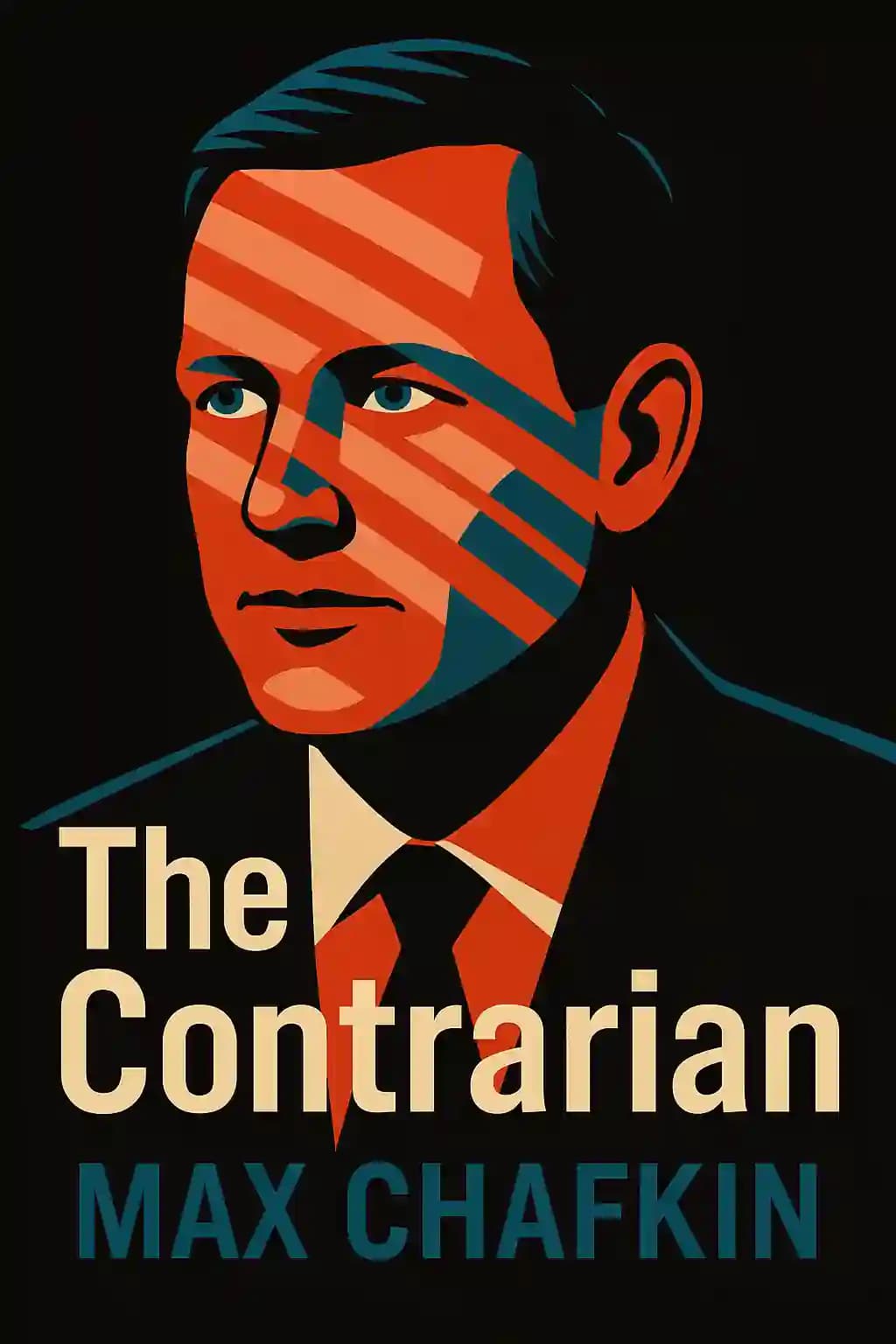
Contrarian
Peter Thiel and Silicon Valley's Pursuit of Power
Overview of Contrarian
Peek inside Peter Thiel's enigmatic mind as "The Contrarian" reveals how this Trump-backing billionaire built PayPal, funded Facebook, and bankrupted Gawker. What dark philosophy drives Silicon Valley's most influential conservative? The answer reshapes how we understand modern power.

Key Themes in Contrarian
- silicon valley power
- contrarian investment strategy
- data surveillance ethics
- libertarian political influence
- tech elite networks
Quotes from Contrarian
Fuck you, world.
The concept of a speed limit may not make sense.
Definitely an infringement on liberty.
Corrupt as the Catholic Church 500 years ago.
Characters in Contrarian
- Klaus ThielPeter's father and a chemical engineer
- Keith RaboisThiel's protege and Stanford Review contributor
- David SacksStanford Review writer and future tech executive
- Max ChafkinThe author and investigative journalist
About the Author
About the Author of Contrarian
Max Chafkin is the author of The Contrarian: Peter Thiel and Silicon Valley’s Pursuit of Power and a renowned technology journalist and investigative reporter at Bloomberg Businessweek.
His biography of Peter Thiel, a provocative exploration of tech industry power, political influence, and contrarian philosophy, draws from Chafkin’s decades of covering Silicon Valley’s evolution.
A features editor at Bloomberg Businessweek, his work has appeared in Fast Company and other leading publications, and he frequently analyzes tech’s societal impact through platforms like the Commonwealth Club and Bloomberg’s The Big Picture podcast.
Chafkin’s previous book, Design Crazy: Good Looks, Hot Tempers, and True Genius at Apple, cemented his reputation for dissecting tech’s pivotal figures. The Contrarian has been praised by The New York Times as a “chilling” and “masterly” portrait, with endorsements from authors like Brad Stone and Sheelah Kolhatkar. The book has sparked widespread discourse on tech’s role in reshaping global power structures.
Download Summary of Contrarian
Get the Contrarian summary as a free PDF or EPUB. Print it or read offline anytime.
FAQs About This Book
The Contrarian explores Peter Thiel’s rise from a socially awkward teenager to a billionaire tech mogul, revealing how his libertarian ideology shaped Silicon Valley’s unchecked power. Max Chafkin traces Thiel’s influence through PayPal, Palantir, and political ventures, arguing that tech leaders like Thiel eroded democratic norms by prioritizing growth over ethics.
This book suits tech industry observers, political analysts, and readers interested in Silicon Valley’s impact on democracy. It offers critical insights for those debating corporate power, libertarianism’s societal risks, and the role of figures like Thiel in shaping modern governance.
Yes. Chafkin’s rigorously reported biography exposes Thiel’s contradictions and Silicon Valley’s darker ambitions. Reviewers praise its gripping narrative and relevance to understanding tech’s threats to democracy, though some note its chilling portrayal of Thiel’s fear-driven worldview.
The book critiques how Thiel and peers sidestepped legal/ethical frameworks by framing tech as too complex for regulation. Examples include Palantir’s data-mining contracts and PayPal’s growth-at-all-costs culture, which prioritized disruption over accountability.
Chafkin links Thiel’s libertarian distrust of government to his 2016 Trump endorsement, viewing it as a tactic to disrupt traditional politics. The book argues Thiel saw Trump as a tool to advance tech’s anti-regulatory agenda, despite ideological mismatches.
Thiel champions monopolies over competition, distrusts democracy, and advocates for tech-driven societal transformation. His “contrarian” strategies—like betting against crowd mentalities—reflect a belief in elite-driven innovation, often at democracy’s expense.
The book frames libertarianism as a blueprint for Silicon Valley’s power grabs, enabling figures like Thiel to evade oversight. Chafkin highlights how this ideology fuels anti-government rhetoric, tax avoidance schemes, and anti-democratic policy influence.
Palantir exemplifies Thiel’s blurring of tech and surveillance. Chafkin details its government contracts and ethical controversies, showing how Thiel leveraged data-mining for both profit and political sway.
Chafkin argues Silicon Valley shifted from utopian idealism to a hub of concentrated power, where figures like Thiel manipulate public policy and culture. The book ties this shift to declining trust in institutions and rising authoritarianism.
Some reviewers argue the book overly focuses on Thiel’s negatives, downplaying his tech contributions. Others note its reliance on associates’ accounts, though most praise its balance of depth and readability.
As debates about AI ethics and antitrust intensify, Chafkin’s analysis of Thiel’s playbook remains vital. The book clarifies how unchecked tech power threatens democracy—a pressing issue amid ongoing regulatory battles.
Pair with:
- Brotopia (Emily Chang) on Silicon Valley’s culture
- Chaos Monkeys (Antonio García Martínez) for insider tech critiques
- The Age of Surveillance Capitalism (Shoshana Zuboff) for data-power analysis