The Age of Surveillance Capitalism: The Fight for a Human Future at the New Frontier of Power

Overview of The Age of Surveillance Capitalism
In "The Age of Surveillance Capitalism," Shoshana Zuboff reveals how tech giants harvest our personal data for profit. Compared to Rachel Carson's "Silent Spring" by Berkeley scholars, this TIME 100 Must-Read exposes the hidden economy threatening democracy that Jeff Bezos and Mark Zuckerberg understand all too well.
- Surveillance capitalism monetizes human experience as free raw data without consent
- Google pioneered selling behavioral surplus as prediction products in behavioral futures markets
- Users become data sources while advertisers become surveillance capitalism’s true customers
- Machine intelligence grows value by converting personal data into automated profit engines
- Surveillance capitalism’s economic logic mirrors industrialism but extracts from human behavior instead of nature
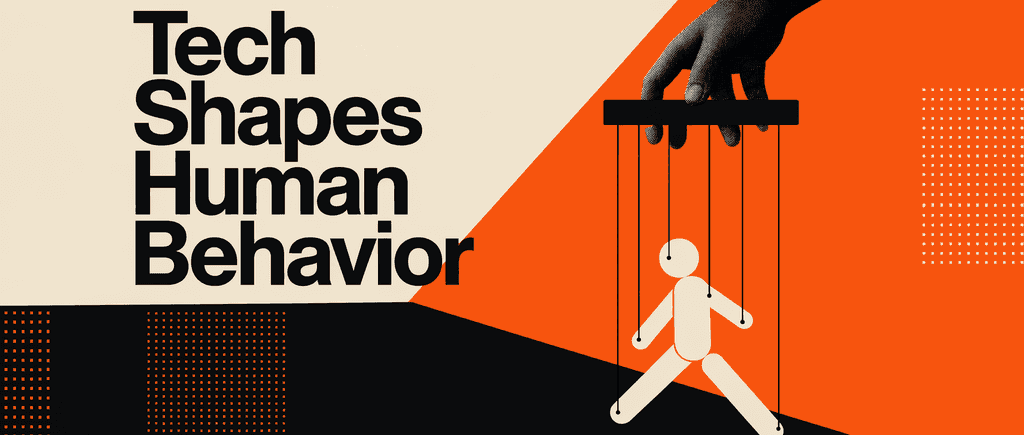
- Zuboff argues unchecked data extraction creates unprecedented power imbalances threatening democracy
- Behavioral actuation replaces simple monitoring to herd users toward profitable outcomes
- The “age of surveillance capitalism” began when Google commodified surplus user data in 2001
- Prediction products trade human futures while bypassing traditional consumer-producer relationships
- Surveillance capitalists avoid margin costs by treating personal experience as zero-cost resource
- Zuboff’s framework exposes how data colonialism displaces industrial capitalism’s power structures
- Facebook’s “connect everyone” ethos masks surveillance capitalism’s indifference to human consequences
About the Author of The Age of Surveillance Capitalism
Shoshana Zuboff, author of the groundbreaking work The Age of Surveillance Capitalism, is a renowned scholar, social psychologist, and Professor Emeritus at Harvard Business School.
Her book, a critical examination of the digital economy’s hidden power structures, established her as a leading voice on surveillance capitalism—a term she coined to describe tech giants’ exploitation of personal data for profit.
Zuboff’s expertise stems from decades of research on technology’s societal impacts, including her seminal works In the Age of the Smart Machine and The Support Economy, which foresaw the transformative and disruptive potential of digital innovation.
A recipient of the Axel Springer Award and the EPIC Lifetime Achievement Award, she has shaped global discourse on privacy and corporate power through board roles at organizations like the Electronic Privacy Information Center (EPIC). The Age of Surveillance Capitalism, translated into 30 languages and hailed as the “Silent Spring of the digital age,” remains a cornerstone text in technology ethics and political economy.
FAQs About The Age of Surveillance Capitalism
What is The Age of Surveillance Capitalism about?
The Age of Surveillance Capitalism by Shoshana Zuboff examines how tech giants like Google and Facebook exploit personal data as a "behavioral surplus" to predict and manipulate human behavior for profit. It traces the rise of surveillance capitalism as a new economic order, warning of threats to democracy, privacy, and autonomy through pervasive data extraction and algorithmic control.
Who should read The Age of Surveillance Capitalism?
This book is essential for tech professionals, policymakers, and anyone concerned about digital privacy. It appeals to readers interested in understanding how data-driven economies reshape society, offering insights for activists, academics, and individuals seeking to navigate the ethical challenges of AI and big data.
Is The Age of Surveillance Capitalism worth reading?
Yes—it’s hailed as a landmark work, compared to Silent Spring for its critique of tech’s societal impact. While critics note its dense academic prose, it provides a rigorous framework for understanding data exploitation and its consequences, making it a vital read for the digital age.
How does The Age of Surveillance Capitalism define "behavioral surplus"?
Behavioral surplus refers to the vast, hidden data extracted from users’ online activities (clicks, location, preferences) beyond what’s needed for service delivery. Surveillance capitalists monetize this surplus by training AI models to predict behavior, creating products sold to advertisers, insurers, and other third parties.
What is "instrumentarianism" in Zuboff’s framework?
Instrumentarianism describes surveillance capitalism’s power to shape human behavior at scale through automated systems. Unlike totalitarianism, it avoids overt coercion, instead using subtle nudges (e.g., targeted ads, personalized content) to steer choices, eroding free will and collective autonomy.
What are Zuboff’s main criticisms of Silicon Valley?
Zuboff argues tech firms exploit legal loopholes to harvest data without consent, prioritize profit over human rights, and collaborate with governments to evade regulation. She warns this undermines democracy, creating a "division of learning" where corporations know everything about users, while users know little about corporate practices.
How does The Age of Surveillance Capitalism compare to 1984 or Brave New World?
Zuboff distinguishes surveillance capitalism from Orwellian dystopias: instead of state-enforced repression, control emerges from corporate commodification of privacy. Unlike Brave New World’s engineered happiness, it manipulates behavior through predictive algorithms, making oppression feel impersonal and inevitable.
What real-world examples does Zuboff use to illustrate surveillance capitalism?
She highlights Google’s AdSense, which turned search queries into behavioral data goldmines, and Facebook’s emotion-manipulation experiments. These cases show how “ubiquitous computing” embeds data extraction into daily life, from smart home devices to location tracking.
What solutions does Zuboff propose to counter surveillance capitalism?
Zuboff advocates for stricter data ownership laws, transparency in algorithmic processes, and global regulatory frameworks. She urges collective action to redefine digital rights, treating privacy as a fundamental human right rather than a tradable commodity.
How has The Age of Surveillance Capitalism influenced public discourse?
The book sparked debates on tech ethics, inspiring legislation like the EU’s Digital Services Act. It’s cited in antitrust cases against Meta and Google, and its terms (“surveillance capitalism,” “behavioral surplus”) are now mainstream in discussions about AI ethics.
Why is The Age of Surveillance Capitalism relevant in 2025?
As AI and IoT devices become ubiquitous, Zuboff’s warnings about data exploitation and algorithmic control grow more urgent. The book provides a lens to critique emerging technologies like generative AI and neural interfaces, emphasizing the need for ethical guardrails.
What are key quotes from The Age of Surveillance Capitalism?
- “Surveillance capitalism unilaterally claims human experience as free raw material.”
- “The goal is to automate us.”
These lines underscore the dehumanizing logic of data extraction and the threat of replacing human agency with machine predictability.
Feel the book through the author's voice
Turn knowledge into engaging, example-rich insights
Capture key ideas in a flash for fast learning
Enjoy the book in a fun and engaging way
Characters in The Age of Surveillance Capitalism
- Shoshana ZuboffAuthor and scholar who defined surveillance capitalism
- Jaron LanierTech pioneer who analyzed Zuboff's definitions
Key Themes in The Age of Surveillance Capitalism
- behavioral surplus
- digital dispossession
- prediction products
- algorithmic manipulation
- data extraction logic
Quotes from The Age of Surveillance Capitalism
We aren't the customers or even the products - we're the source of surplus extracted for others' profit.
Google claims decision rights over whatever lies in its path, saying effectively, "I'm taking this. These are mine now."
The once-unthinkable becomes ordinary, then seemingly inevitable.
This wasn't an inevitable technological development but a deliberate human invention, carefully architected and refined.
Explore Your Way of Learning
 Quick Summary Mode
Read or listen to The Age of Surveillance Capitalism Summary in 9 Minutes
Break down key ideas from The Age of Surveillance Capitalism into bite-sized takeaways to understand how innovative teams create, collaborate, and grow.

 Fun Mode
The Age of Surveillance Capitalism Lessons Told Through 26-Min Stories
Experience The Age of Surveillance Capitalism through vivid storytelling that turns innovation lessons into moments you'll remember and apply.
 Personalize Mode
Experience The Age of Surveillance Capitalism in your own learning style
Ask anything, choose your learning style, and co-create insights that truly resonate with you.

From Columbia University alumni built in San Francisco
"Instead of endless scrolling, I just hit play on BeFreed. It saves me so much time."


"I never knew where to start with nonfiction—BeFreed’s book lists turned into podcasts gave me a clear path."


"Perfect balance between learning and entertainment. Finished ‘Thinking, Fast and Slow’ on my commute this week."
"Crazy how much I learned while walking the dog. BeFreed = small habits → big gains."
"Reading used to feel like a chore. Now it’s just part of my lifestyle."

"Feels effortless compared to reading. I’ve finished 6 books this month already."
"BeFreed turned my guilty doomscrolling into something that feels productive and inspiring."

"BeFreed turned my commute into learning time. 20-min podcasts are perfect for finishing books I never had time for."
"BeFreed replaced my podcast queue. Imagine Spotify for books — that’s it. 🙌"

"It is great for me to learn something from the book without reading it."
"The themed book list podcasts help me connect ideas across authors—like a guided audio journey."
"Makes me feel smarter every time before going to work"
From Columbia University alumni built in San Francisco
"Instead of endless scrolling, I just hit play on BeFreed. It saves me so much time."
"I never knew where to start with nonfiction—BeFreed’s book lists turned into podcasts gave me a clear path."
"Perfect balance between learning and entertainment. Finished ‘Thinking, Fast and Slow’ on my commute this week."
"Crazy how much I learned while walking the dog. BeFreed = small habits → big gains."
"Reading used to feel like a chore. Now it’s just part of my lifestyle."
"Feels effortless compared to reading. I’ve finished 6 books this month already."
"BeFreed turned my guilty doomscrolling into something that feels productive and inspiring."
"BeFreed turned my commute into learning time. 20-min podcasts are perfect for finishing books I never had time for."
"BeFreed replaced my podcast queue. Imagine Spotify for books — that’s it. 🙌"
"It is great for me to learn something from the book without reading it."
"The themed book list podcasts help me connect ideas across authors—like a guided audio journey."
"Makes me feel smarter every time before going to work"
"Instead of endless scrolling, I just hit play on BeFreed. It saves me so much time."
"I never knew where to start with nonfiction—BeFreed’s book lists turned into podcasts gave me a clear path."
"Perfect balance between learning and entertainment. Finished ‘Thinking, Fast and Slow’ on my commute this week."
"Crazy how much I learned while walking the dog. BeFreed = small habits → big gains."
"Reading used to feel like a chore. Now it’s just part of my lifestyle."
"Feels effortless compared to reading. I’ve finished 6 books this month already."
"BeFreed turned my guilty doomscrolling into something that feels productive and inspiring."
"BeFreed turned my commute into learning time. 20-min podcasts are perfect for finishing books I never had time for."
"BeFreed replaced my podcast queue. Imagine Spotify for books — that’s it. 🙌"
"It is great for me to learn something from the book without reading it."
"The themed book list podcasts help me connect ideas across authors—like a guided audio journey."
"Makes me feel smarter every time before going to work"
"Instead of endless scrolling, I just hit play on BeFreed. It saves me so much time."
"I never knew where to start with nonfiction—BeFreed’s book lists turned into podcasts gave me a clear path."
"Perfect balance between learning and entertainment. Finished ‘Thinking, Fast and Slow’ on my commute this week."
"Crazy how much I learned while walking the dog. BeFreed = small habits → big gains."
"Reading used to feel like a chore. Now it’s just part of my lifestyle."
"Feels effortless compared to reading. I’ve finished 6 books this month already."
"BeFreed turned my guilty doomscrolling into something that feels productive and inspiring."
"BeFreed turned my commute into learning time. 20-min podcasts are perfect for finishing books I never had time for."
"BeFreed replaced my podcast queue. Imagine Spotify for books — that’s it. 🙌"
"It is great for me to learn something from the book without reading it."
"The themed book list podcasts help me connect ideas across authors—like a guided audio journey."
"Makes me feel smarter every time before going to work"

Download Summary of The Age of Surveillance Capitalism
Get the The Age of Surveillance Capitalism summary as a free PDF or EPUB. Print it or read offline anytime.