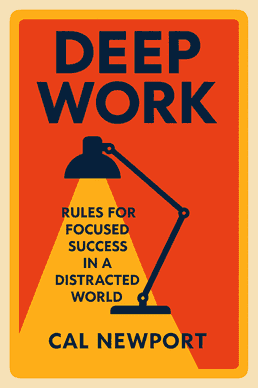
Smarter, faster, better: the secrets of being productive in life and business by Charles Duhigg Summary

Overview of Smarter, faster, better
Discover the science of productivity that captivated Ray Dalio so completely he bought copies for his entire company. From Disney's "Frozen" breakthrough to Marine Corps training secrets, Duhigg reveals the counterintuitive psychology behind extraordinary achievement - and why motivation matters less than you think.
- Motivation thrives when individuals feel control over their choices and environment
- Psychological safety in teams enables risk-taking and drives innovative solutions
- SMART goals provide structure while stretch goals ignite ambition for breakthroughs
- Mental models help maintain focus during complex tasks by predicting outcomes
- Bayesian thinking improves decisions by updating beliefs with new evidence
- Decentralized decision-making empowers teams closest to problems for faster solutions
- Cognitive tunneling harms productivity by fixating on immediate tasks over priorities
- Reactive thinking becomes strategic when paired with scenario-planning mental models
- Innovation emerges through remixing existing ideas into novel combinations
- Productive teams balance speaking equality with sensitivity to emotional cues
- Disfluency techniques like handwritten notes deepen information retention and understanding
- Charles Duhigg shows productivity stems from strategic choice frameworks, not hustle
About the Author of Smarter, faster, better
Charles Duhigg is the Pulitzer Prize-winning author of Smarter Faster Better: The Secrets of Being Productive in Life and Business and a leading expert on productivity, habit formation, and human behavior.
A former investigative reporter for The New York Times and current contributor to The New Yorker, Duhigg combines rigorous research with narrative storytelling to explore the science of achievement.
His bestselling works, including The Power of Habit (a New York Times bestseller for over three years) and Supercommunicators, examine how individuals and organizations harness focus, communication, and routine to excel.
A Yale and Harvard Business School graduate, Duhigg’s insights are frequently cited by Fortune 500 leaders and institutions like McKinsey & Company. He hosts the podcast How To! and has been featured in talks for global audiences, including a 2024 discussion on the neuroscience of connection.
Smarter Faster Better has been widely adopted by productivity enthusiasts and corporate training programs, solidifying Duhigg’s reputation as a defining voice in modern self-improvement literature.
FAQs About Smarter, faster, better
What is Smarter Faster Better by Charles Duhigg about?
Smarter Faster Better explores eight science-backed strategies to enhance productivity, including motivation, goal setting, and decision-making. Charles Duhigg combines neuroscience, psychology, and case studies from CEOs, pilots, and artists to show how reframing choices and mental models drives success. The book emphasizes that productivity stems from how we perceive challenges, not just habits.
Who should read Smarter Faster Better?
This book is ideal for professionals, leaders, and anyone seeking to optimize performance with less stress. Entrepreneurs will benefit from innovation frameworks, managers from team dynamic insights, and individuals from actionable strategies for goal achievement. It’s also valuable for fans of Duhigg’s The Power of Habit seeking deeper productivity insights.
Is Smarter Faster Better worth reading?
Yes, it offers practical, research-driven methods to improve efficiency across personal and professional domains. Readers praise its engaging storytelling (e.g., FBI cases, Broadway teams) and actionable takeaways like SMART goals and Bayesian decision-making. Critics note its anecdotal approach, but most find it a fresh take on productivity science.
What are the main concepts in Smarter Faster Better?
Key ideas include:
- Motivation through autonomy (control drives effort)
- Psychological safety in teams (trust enables risk-taking)
- Mental models for focus (visualizing tasks)
- Bayesian reasoning (updating decisions with new data)
- SMART vs. stretch goals (balancing clarity and ambition)
How does Smarter Faster Better define motivation?
Motivation stems from fostering a sense of control over actions and environment. Duhigg argues it’s a biological imperative: when people believe their choices matter, they persist through challenges. Techniques include empowering decision-making and reframing tasks as autonomous choices.
What is "psychological safety" in Smarter Faster Better?
Psychological safety refers to team environments where members freely share ideas without fear of judgment. Duhigg cites Google’s research showing such teams outperform others due to open communication and collaborative problem-solving. Examples include aviation crews and corporate innovation labs.
How does Smarter Faster Better improve decision-making?
The book advocates Bayesian thinking: continuously updating beliefs with new information to reduce bias. It also emphasizes creating mental simulations to anticipate outcomes and practicing probabilistic reasoning. Case studies include poker players and FBI agents refining strategies under uncertainty.
What’s the difference between SMART and stretch goals in the book?
- SMART goals (Specific, Measurable, Achievable, Relevant, Time-bound) provide clear, tactical steps.
- Stretch goals push boundaries to spark innovation (e.g., Disney’s Frozen script overhaul).
Duhigg argues combining both creates a "productive tension" that drives sustained progress.
How does Smarter Faster Better address innovation?
Innovation thrives in environments where failure is normalized, and diverse perspectives collide. Duhigg highlights Disney’s iterative process for Frozen and tech companies using "disfluency" (challenging assumptions) to generate breakthroughs. Structured creativity, not chaos, yields results.
What are critiques of Smarter Faster Better?
Some reviewers argue the book prioritizes anecdotes over universal frameworks, making strategies harder to replicate. Others note overlaps with Duhigg’s prior work. However, most praise its fresh case studies and accessible synthesis of complex research.
How does Smarter Faster Better compare to The Power of Habit?
While The Power of Habit focuses on automatic behaviors, Smarter Faster Better examines conscious choices shaping productivity. Both blend science and storytelling, but the latter targets decision-making systems, team dynamics, and cognitive strategies rather than individual routines.
Can Smarter Faster Better help with career advancement?
Yes, its frameworks aid in setting strategic goals (SMART/stretch balance), leading teams (psychological safety), and making data-driven decisions. Professionals in competitive fields like tech, healthcare, or entrepreneurship can apply these tools to stand out and drive results.
Feel the book through the author's voice
Turn knowledge into engaging, example-rich insights
Capture key ideas in a flash for fast learning
Enjoy the book in a fun and engaging way
Key Themes in Smarter, faster, better
Quotes from Smarter, faster, better
Motivation isn't primarily about rewards but about feeling in control of our choices.
Motivation isn't something we're born with or without-it's a skill we can develop.
How team members treated each other mattered far more than who was on the team.
The tragedy illustrated a paradox of modern technology: automation can make us less capable of handling emergencies when they arise.
Our increasingly automated world makes maintaining proper focus more challenging than ever.
Characters in Smarter, faster, better
Quick Summary Mode - Read or listen to Smarter, faster, better Summary in 9 Minutes

Break down key ideas from Smarter, faster, better into bite-sized takeaways to understand how innovative teams create, collaborate, and grow.

Flash Card Mode - Top 11 Insights from Smarter, faster, better in a Nutshell

Distill Smarter, faster, better into rapid-fire memory cues that highlight key principles of candor, teamwork, and creative resilience.

Fun Mode - Smarter, faster, better Lessons Told Through 25-Min Stories

Experience Smarter, faster, better through vivid storytelling that turns innovation lessons into moments you'll remember and apply.
Personalize Mode - Read or listen to Smarter, faster, better Summary in 0 Minutes

Ask anything, pick the voice, and co-create insights that truly resonate with you.

From Columbia University alumni built in San Francisco
"Instead of endless scrolling, I just hit play on BeFreed. It saves me so much time."


"I never knew where to start with nonfiction—BeFreed’s book lists turned into podcasts gave me a clear path."


"Perfect balance between learning and entertainment. Finished ‘Thinking, Fast and Slow’ on my commute this week."
"Crazy how much I learned while walking the dog. BeFreed = small habits → big gains."
"Reading used to feel like a chore. Now it’s just part of my lifestyle."

"Feels effortless compared to reading. I’ve finished 6 books this month already."
"BeFreed turned my guilty doomscrolling into something that feels productive and inspiring."

"BeFreed turned my commute into learning time. 20-min podcasts are perfect for finishing books I never had time for."
"BeFreed replaced my podcast queue. Imagine Spotify for books — that’s it. 🙌"

"It is great for me to learn something from the book without reading it."
"The themed book list podcasts help me connect ideas across authors—like a guided audio journey."
"Makes me feel smarter every time before going to work"
From Columbia University alumni built in San Francisco
"Instead of endless scrolling, I just hit play on BeFreed. It saves me so much time."
"I never knew where to start with nonfiction—BeFreed’s book lists turned into podcasts gave me a clear path."
"Perfect balance between learning and entertainment. Finished ‘Thinking, Fast and Slow’ on my commute this week."
"Crazy how much I learned while walking the dog. BeFreed = small habits → big gains."
"Reading used to feel like a chore. Now it’s just part of my lifestyle."
"Feels effortless compared to reading. I’ve finished 6 books this month already."
"BeFreed turned my guilty doomscrolling into something that feels productive and inspiring."
"BeFreed turned my commute into learning time. 20-min podcasts are perfect for finishing books I never had time for."
"BeFreed replaced my podcast queue. Imagine Spotify for books — that’s it. 🙌"
"It is great for me to learn something from the book without reading it."
"The themed book list podcasts help me connect ideas across authors—like a guided audio journey."
"Makes me feel smarter every time before going to work"
"Instead of endless scrolling, I just hit play on BeFreed. It saves me so much time."
"I never knew where to start with nonfiction—BeFreed’s book lists turned into podcasts gave me a clear path."
"Perfect balance between learning and entertainment. Finished ‘Thinking, Fast and Slow’ on my commute this week."
"Crazy how much I learned while walking the dog. BeFreed = small habits → big gains."
"Reading used to feel like a chore. Now it’s just part of my lifestyle."
"Feels effortless compared to reading. I’ve finished 6 books this month already."
"BeFreed turned my guilty doomscrolling into something that feels productive and inspiring."
"BeFreed turned my commute into learning time. 20-min podcasts are perfect for finishing books I never had time for."
"BeFreed replaced my podcast queue. Imagine Spotify for books — that’s it. 🙌"
"It is great for me to learn something from the book without reading it."
"The themed book list podcasts help me connect ideas across authors—like a guided audio journey."
"Makes me feel smarter every time before going to work"
"Instead of endless scrolling, I just hit play on BeFreed. It saves me so much time."
"I never knew where to start with nonfiction—BeFreed’s book lists turned into podcasts gave me a clear path."
"Perfect balance between learning and entertainment. Finished ‘Thinking, Fast and Slow’ on my commute this week."
"Crazy how much I learned while walking the dog. BeFreed = small habits → big gains."
"Reading used to feel like a chore. Now it’s just part of my lifestyle."
"Feels effortless compared to reading. I’ve finished 6 books this month already."
"BeFreed turned my guilty doomscrolling into something that feels productive and inspiring."
"BeFreed turned my commute into learning time. 20-min podcasts are perfect for finishing books I never had time for."
"BeFreed replaced my podcast queue. Imagine Spotify for books — that’s it. 🙌"
"It is great for me to learn something from the book without reading it."
"The themed book list podcasts help me connect ideas across authors—like a guided audio journey."
"Makes me feel smarter every time before going to work"

Get the Smarter, faster, better summary as a free PDF or EPUB. Print it or read offline anytime.