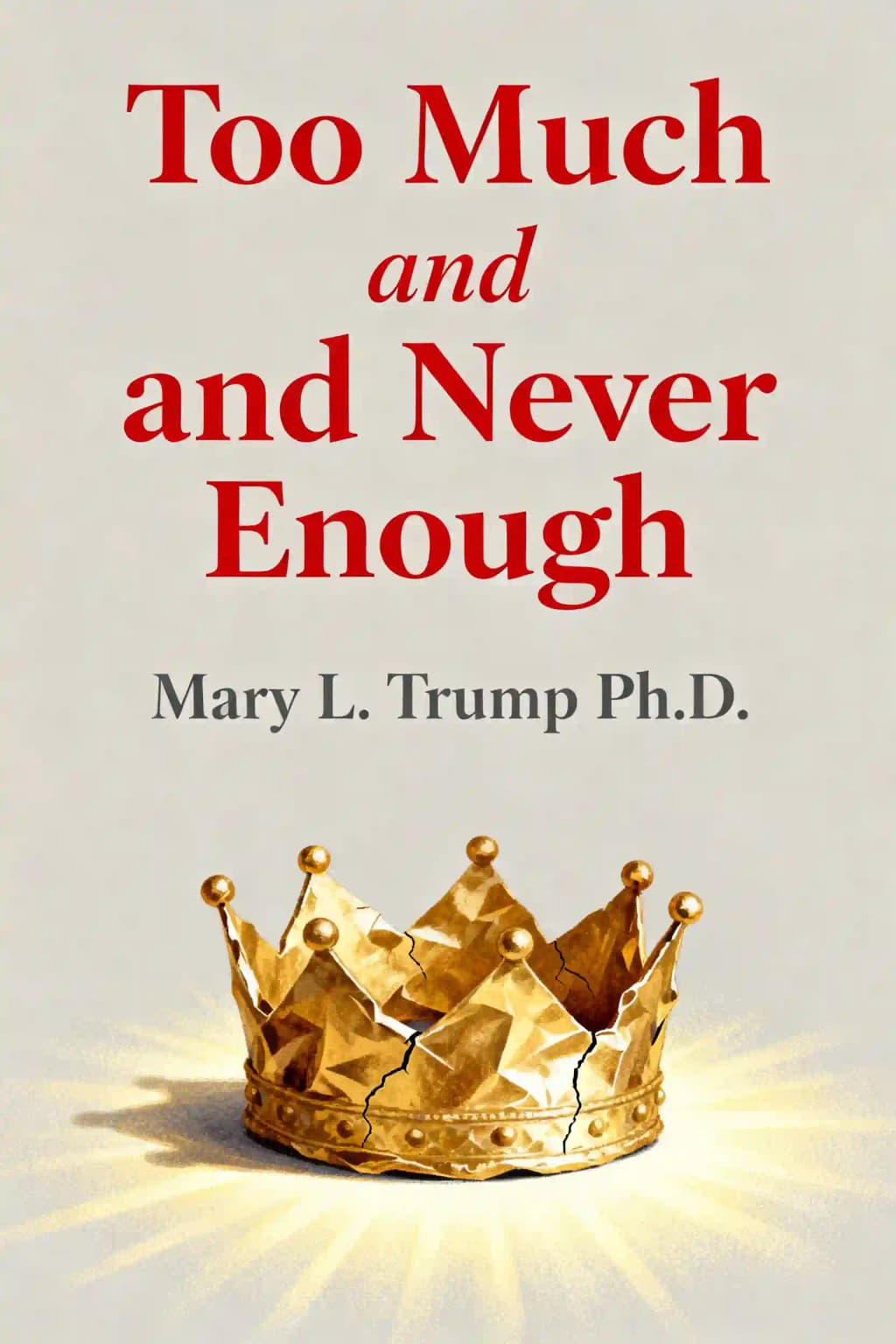
Too Much and Never Enough
Overview of Too Much and Never Enough
Inside the Trump dynasty, a clinical psychologist reveals the disturbing family dynamics that shaped a president. Despite legal battles to block publication, Mary Trump's explosive #1 NYT bestseller exposes psychological insights and financial revelations that sparked national debate about power and personality.

Key Themes in Too Much and Never Enough
- intergenerational trauma
- narcissistic family systems
- toxic masculinity
- emotional abandonment
- sociopathic parenting
Quotes from Too Much and Never Enough
The result was a family culture where cruelty wasn't an unfortunate byproduct-it was the point.
Power over others justified any means, and relationships were transactional rather than emotional.
Emotional needs were dismissed as weaknesses, empathy was viewed as vulnerability.
Donald saw not an opportunity to support his sibling but a chance to further cement his own status.
This scene perfectly encapsulates the emotional barrenness that would define the Trump household.
Characters in Too Much and Never Enough
- Mary L. TrumpAuthor, psychologist, and niece of Donald Trump
- Fred TrumpThe family patriarch and central architect
- Freddy TrumpThe firstborn son who struggled under Fred Sr.
- Maryanne TrumpThe eldest daughter of Fred and Mary Trump
About the Author
About the Author of Too Much and Never Enough
Mary Lea Trump, Ph.D., is a clinical psychologist, bestselling author, and outspoken political commentator renowned for her incisive analysis of power dynamics and family trauma.
Her groundbreaking book Too Much and Never Enough: How My Family Created the World’s Most Dangerous Man (2020) blends memoir and psychological critique to dissect the Trump family’s influence on her uncle, Donald Trump. Drawing from her doctorate in clinical psychology and firsthand experience within the Trump dynasty, she exposes systemic dysfunction and its ramifications on leadership.
Trump expanded her exploration of societal trauma in The Reckoning (2021) and chronicled her personal journey in the memoir Who Could Ever Love You (2024). A frequent analyst on MSNBC, CNN, and The Late Show with Stephen Colbert, she hosts The Mary Trump Show podcast, offering sharp political commentary.
Too Much and Never Enough sold over one million copies on its release day and spent weeks atop The New York Times bestseller list, cementing its status as a defining work on modern American politics.
Download Summary of Too Much and Never Enough
Get the Too Much and Never Enough summary as a free PDF or EPUB. Print it or read offline anytime.
FAQs About This Book
Too Much and Never Enough is a psychological exposé of Donald Trump’s upbringing, revealing how decades of familial neglect, emotional abuse, and Fred Trump Sr.’s toxic parenting shaped his destructive behavior. Mary L. Trump, a clinical psychologist and Trump’s niece, blends personal anecdotes and professional analysis to explain how systemic family dysfunction fostered her uncle’s narcissism, insecurity, and authoritarian tendencies.
This book appeals to readers interested in political psychology, family dynamics, or insider accounts of the Trump family. It’s particularly valuable for those seeking to understand Donald Trump’s behavior through the lens of intergenerational trauma, as well as critics of his presidency.
Yes, for its unique blend of familial insight and psychological analysis. While some critics call it biased, its firsthand accounts—like Donald belittling his father’s Alzheimer’s or Fred Sr.’s emotional abuse—offer unparalleled context about Trump’s worldview. However, those seeking policy critiques may find its focus on personal history narrow.
Key themes include generational trauma, toxic masculinity, and emotional scarcity. Mary Trump attributes Donald’s behavior to Fred Sr.’s prioritization of wealth over empathy, which created a family culture of manipulation, competition, and emotional withholding.
She describes Donald as a bullied child who internalized his father’s cruelty, learning to weaponize insecurity and arrogance. Fred Sr. openly favored Donald over his siblings, fostering a zero-sum mindset that left Donald incapable of empathy or self-reflection.
Fred Sr. is portrayed as a sociopathic patriarch who equated human worth with financial success. His emotional neglect, favoritism toward Donald, and humiliation of Fred Jr. (Mary’s father) created a legacy of dysfunction. Mary argues this directly enabled Donald’s pathological behavior.
Some reviewers argue the book overstates Fred Sr.’s influence or dismisses Donald’s agency. Others note Mary’s personal grievances (e.g., inheritance disputes) may cloud objectivity. Political readers may find its psychological focus less actionable than policy analyses.
Notable disclosures include Donald’s role in isolating Fred Sr. during his Alzheimer’s decline, Mary’s covert assistance to The New York Times’ 2018 tax fraud investigation, and how Fred Sr. secretly bankrolled Donald’s failing ventures to maintain his “self-made” facade.
Unlike journalistic accounts (e.g., Woodward’s), this book offers intimate family dynamics. Its fusion of memoir and clinical analysis provides a unique lens on Trump’s psyche, though it lacks broader political context.
Donald dismissed it as “lies,” while Maryanne Trump unsuccessfully sought a court injunction to block its publication. The book deepened existing rifts, particularly over Mary’s claims about Fred Jr.’s marginalization.
She diagnoses Donald with untreated PTSD and narcissistic personality traits, rooted in childhood emotional neglect. The book also explores “toxic positivity” (denying negative emotions) and how Fred Sr.’s transactional parenting stifled emotional development.
As Donald’s niece, she witnessed key family events firsthand. Her psychology PhD enables her to contextualize behaviors like gaslighting and cognitive dissonance, blending personal experience with clinical rigor.





