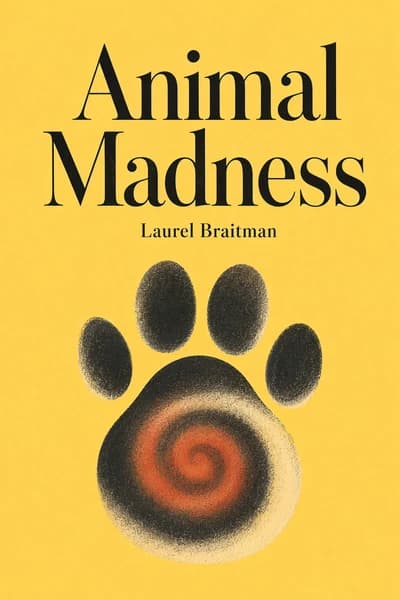
Animal Madness: How Anxious Dogs, Compulsive Parrots, and Elephants in Recovery Help Us Understand Ourselves book cover

Animal Madness

How Anxious Dogs, Compulsive Parrots, and Elephants in Recovery Help Us Understand Ourselves

Laurel Braitman
3.85 (1292 Reviews)

Overview of Animal Madness

Discover why animals suffer mental illness just like us. Braitman's journey, sparked by her anxious dog Oliver, reveals surprising parallels between human and animal psychology. Can understanding elephants in recovery and compulsive parrots help us heal our own emotional wounds?

Key Themes in Animal Madness

  • animal psychopathology
  • evolutionary psychiatry
  • human-animal emotional bonds
  • comparative psychology
  • wildlife trauma

Quotes from Animal Madness

  • Tip "must reform or die" following violent attacks on his keeper.

  • Animals are "liable to insanity, though far less often than in the case of man."

  • Feelings aren't limited to humans just because we describe them with words.

  • Darwin delivered the most significant blow to human exceptionalism.

  • Animals can suffer from versions of almost every human psychiatric disorder.

Characters in Animal Madness

  • Laurel BraitmanAuthor and researcher of animal mental health
  • OliverBernese Mountain Dog with severe anxiety
  • William Lauder LindsayPhysician who documented animal mental illness
  • TipAsian elephant whose behavior led to execution

About the Author

About the Author of Animal Madness

Laurel Braitman is the New York Times-bestselling author of Animal Madness: Inside Their Minds and a trailblazer in exploring the intersection of mental health across species.

A historian and anthropologist of science (MIT PhD), her work bridges animal behavior and human psychology, informed by years studying animals in environments from Alaskan wilderness to clinical settings.

As Director of Writing and Storytelling at Stanford Medicine’s Medical Humanities Program, she trains healthcare professionals to combat burnout through narrative medicine—a practice she extends globally via her Writing Medicine initiative.

Braitman’s insights reach millions through three TED Talks, NPR appearances, and her Wall Street Journal essays. Her follow-up memoir, What Looks Like Bravery, expands on themes of resilience and loss.

Animal Madness has been translated into six languages and remains a seminal work in anthrozoology, praised for groundbreaking research into nonhuman emotional suffering.

Download Summary of Animal Madness

Get the Animal Madness summary as a free PDF or EPUB. Print it or read offline anytime.

FAQs About This Book

Animal Madness explores mental illness in animals, from anxious dogs to traumatized elephants, revealing striking parallels with human psychological struggles. Laurel Braitman combines personal anecdotes—like her Bernese Mountain Dog Oliver’s severe anxiety—with scientific research to argue that animals experience conditions like PTSD, OCD, and depression. The book highlights treatments like behavioral therapy and medication while underscoring the emotional bonds between humans and animals.

Animal lovers, psychology enthusiasts, and veterinarians will find this book compelling. It appeals to readers interested in animal behavior, mental health connections across species, or narratives blending science and storytelling. Professionals in veterinary medicine or zoology gain insights into treatment approaches, while general audiences appreciate its accessible, emotionally resonant case studies.

Yes, praised as a New York Times bestseller, Animal Madness offers a thought-provoking blend of memoir and science. Critics highlight Braitman’s engaging storytelling and well-researched examples, such as elephants recovering from trauma and parrots with compulsive behaviors. While some note its reliance on anecdotes, the book’s empathy and interdisciplinary approach make it a standout in animal psychology.

Animals in the book exhibit anxiety, OCD, PTSD, and depression. Examples include Oliver (Braitman’s dog) licking himself raw from stress, logging elephants traumatized by calf loss, and parrots plucking their feathers compulsively. Braitman argues these behaviors mirror human mental health struggles, emphasizing that emotional suffering transcends species.

Oliver’s extreme anxiety—jumping from windows and self-mutilation—drives Braitman’s exploration of animal mental health. His struggles frame the narrative, illustrating how nonhuman animals experience distress akin to humans. Oliver’s story personalizes the science, making complex concepts relatable.

The book discusses behavioral therapy, environmental enrichment, and medications like antidepressants. Braitman cites zoo elephants benefiting from social interaction and dogs on Prozac. She emphasizes tailored care, noting recovery often requires combining medical and psychological support.

Yes. Braitman shares success stories, such as elephants healing through herd bonds and dogs overcoming separation anxiety with treatment. Recovery hinges on compassionate intervention, whether through medication, therapy, or lifestyle changes, underscoring resilience across species.

Some reviewers argue the book prioritizes anecdotes over empirical data, though Braitman’s historical and anthropological lens adds depth. Critics also note limited focus on domesticated animals, but most praise its compelling narratives and emotional impact.

Unlike purely academic texts, Braitman blends memoir, history, and science, making it accessible to general readers. It stands out for emphasizing emotional health over purely instinctual behavior, aligning with works like Temple Grandin’s but with a stronger narrative drive.

Zoos both contribute to stress (via captivity) and aid recovery through specialized care. Braitman details cases where zoo animals, like gorillas with depression, improve with environmental adjustments and social interaction, highlighting the ethical complexities of captivity.

Yes, Braitman highlights antidepressants for dogs, anti-anxiety drugs for primates, and sedatives for traumatized elephants. She contextualizes medication within broader treatment plans, addressing debates about overmedication while acknowledging its lifesaving potential.

Her PhD in science history (MIT) and role at Stanford’s Medical Humanities Program inform the book’s interdisciplinary approach. Personal experiences with Oliver and ranch-raised animals lend authenticity, blending academic rigor with emotional resonance.

Explore Your Way of Learning

Animal Madness isn't just a book — it's a masterclass in Psychology. To help you absorb its lessons in the way that works best for you, we offer five unique learning modes. Whether you're a deep thinker, a fast learner, or a story lover, there's a mode designed to fit your style.

Quick Summary Mode

Read or listen to Animal Madness Summary in 11 Minutes

Break down key ideas from Animal Madness into bite-sized takeaways to understand how innovative teams create, collaborate, and grow.

play
00:00
00:00

Fun Mode

Animal Madness Lessons Told Through 23-Min Stories

Experience Animal Madness through vivid storytelling that turns innovation lessons into moments you'll remember and apply.

play
00:00
00:00

Personalize Mode

Experience Animal Madness in your own learning style

Ask anything, choose your learning style, and co-create insights that truly resonate with you.

Personalize Mode

From Columbia University alumni built in San Francisco

BeFreed Brings Together A Global Community Of 1,000,000 Curious Minds

"Instead of endless scrolling, I just hit play on BeFreed. It saves me so much time."

@Moemenn
platform
star
star
star
star
star

"I never knew where to start with nonfiction—BeFreed’s book lists turned into podcasts gave me a clear path."

@Chloe, Solo founder, LA
platform
comments
12
likes
117

"Perfect balance between learning and entertainment. Finished ‘Thinking, Fast and Slow’ on my commute this week."

@Raaaaaachelw
platform
star
star
star
star
star

"Crazy how much I learned while walking the dog. BeFreed = small habits → big gains."

@Matt, YC alum
platform
comments
12
likes
108

"Reading used to feel like a chore. Now it’s just part of my lifestyle."

@Erin, Investment Banking Associate , NYC
platform
comments
254
likes
17

"Feels effortless compared to reading. I’ve finished 6 books this month already."

@djmikemoore
platform
star
star
star
star
star

"BeFreed turned my guilty doomscrolling into something that feels productive and inspiring."

@Pitiful
platform
comments
96
likes
4.5K

"BeFreed turned my commute into learning time. 20-min podcasts are perfect for finishing books I never had time for."

@SofiaP
platform
star
star
star
star
star

"BeFreed replaced my podcast queue. Imagine Spotify for books — that’s it. 🙌"

@Jaded_Falcon
platform
comments
201
thumbsUp
16

"It is great for me to learn something from the book without reading it."

@OojasSalunke
platform
star
star
star
star
star

"The themed book list podcasts help me connect ideas across authors—like a guided audio journey."

@Leo, Law Student, UPenn
platform
comments
37
likes
483

"Makes me feel smarter every time before going to work"

@Cashflowbubu
platform
star
star
star
star
star

"Instead of endless scrolling, I just hit play on BeFreed. It saves me so much time."

@Moemenn
platform
star
star
star
star
star

"I never knew where to start with nonfiction—BeFreed’s book lists turned into podcasts gave me a clear path."

@Chloe, Solo founder, LA
platform
comments
12
likes
117

"Perfect balance between learning and entertainment. Finished ‘Thinking, Fast and Slow’ on my commute this week."

@Raaaaaachelw
platform
star
star
star
star
star

"Crazy how much I learned while walking the dog. BeFreed = small habits → big gains."

@Matt, YC alum
platform
comments
12
likes
108

"Reading used to feel like a chore. Now it’s just part of my lifestyle."

@Erin, Investment Banking Associate , NYC
platform
comments
254
likes
17

"Feels effortless compared to reading. I’ve finished 6 books this month already."

@djmikemoore
platform
star
star
star
star
star

"BeFreed turned my guilty doomscrolling into something that feels productive and inspiring."

@Pitiful
platform
comments
96
likes
4.5K

"BeFreed turned my commute into learning time. 20-min podcasts are perfect for finishing books I never had time for."

@SofiaP
platform
star
star
star
star
star

"BeFreed replaced my podcast queue. Imagine Spotify for books — that’s it. 🙌"

@Jaded_Falcon
platform
comments
201
thumbsUp
16

"It is great for me to learn something from the book without reading it."

@OojasSalunke
platform
star
star
star
star
star

"The themed book list podcasts help me connect ideas across authors—like a guided audio journey."

@Leo, Law Student, UPenn
platform
comments
37
likes
483

"Makes me feel smarter every time before going to work"

@Cashflowbubu
platform
star
star
star
star
star

"Instead of endless scrolling, I just hit play on BeFreed. It saves me so much time."

@Moemenn
platform
star
star
star
star
star

"I never knew where to start with nonfiction—BeFreed’s book lists turned into podcasts gave me a clear path."

@Chloe, Solo founder, LA
platform
comments
12
likes
117

"Perfect balance between learning and entertainment. Finished ‘Thinking, Fast and Slow’ on my commute this week."

@Raaaaaachelw
platform
star
star
star
star
star

"Crazy how much I learned while walking the dog. BeFreed = small habits → big gains."

@Matt, YC alum
platform
comments
12
likes
108

"Reading used to feel like a chore. Now it’s just part of my lifestyle."

@Erin, Investment Banking Associate , NYC
platform
comments
254
likes
17

"Feels effortless compared to reading. I’ve finished 6 books this month already."

@djmikemoore
platform
star
star
star
star
star

"BeFreed turned my guilty doomscrolling into something that feels productive and inspiring."

@Pitiful
platform
comments
96
likes
4.5K

"BeFreed turned my commute into learning time. 20-min podcasts are perfect for finishing books I never had time for."

@SofiaP
platform
star
star
star
star
star

"BeFreed replaced my podcast queue. Imagine Spotify for books — that’s it. 🙌"

@Jaded_Falcon
platform
comments
201
thumbsUp
16

"It is great for me to learn something from the book without reading it."

@OojasSalunke
platform
star
star
star
star
star

"The themed book list podcasts help me connect ideas across authors—like a guided audio journey."

@Leo, Law Student, UPenn
platform
comments
37
likes
483

"Makes me feel smarter every time before going to work"

@Cashflowbubu
platform
star
star
star
star
star

See More Stories?

How people are talking about BeFreed across the web
1.5K Ratings4.7
Start your learning journey, now