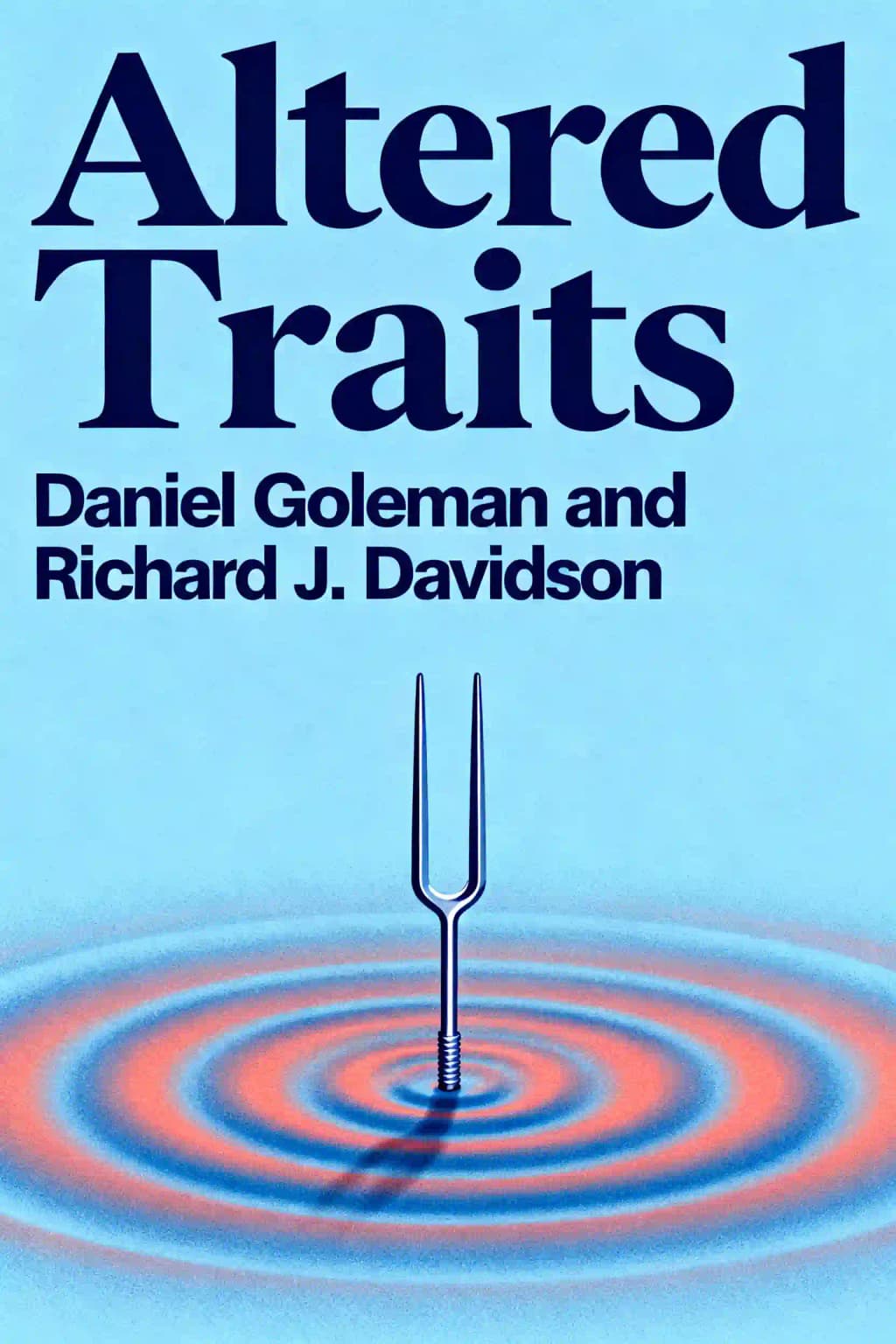
Altered traits
science reveals how meditation changes your mind, brain, and body
Overview of Altered traits
Beyond meditation hype, "Altered Traits" distills 6,000 studies into science-backed revelations. Endorsed by Arianna Huffington, this guide reveals how consistent practice rewires your brain. What if 60 minutes of meditation could permanently transform your neural pathways?

Key Themes in Altered traits
- contemplative neuroscience
- enduring brain changes
- meditation research methodology
- human potential optimization
- long-term mindfulness effects
Quotes from Altered traits
What was once considered fringe has become mainstream.
Science needs both skeptics and speculators to grow knowledge.
Mindfulness has gone viral, becoming extremely popular in Western culture.
Could meditation change not just momentary experiences but fundamental aspects of who we are?
The scientific establishment simply wasn't ready to take meditation seriously.
Characters in Altered traits
- Daniel GolemanCo-author and researcher of meditation traditions
- Richard J. DavidsonCo-author and pioneer of contemplative neuroscience
- Lieutenant Colonel Steve Z9/11 survivor who used mindfulness for PTSD
- S.N. GoenkaMeditation teacher who led intensive retreats
About the Author
About the Author of Altered traits
Daniel Goleman, renowned psychologist and bestselling author of Emotional Intelligence, and Richard J. Davidson, pioneering neuroscientist and founder of the University of Wisconsin-Madison’s Center for Healthy Minds, co-wrote Altered Traits: Science Reveals How Meditation Changes Your Mind, Brain, and Body. This groundbreaking neuroscience work synthesizes decades of research on meditation’s transformative effects, leveraging Goleman’s expertise in psychology and Davidson’s fMRI studies on expert meditators. Both authors have shaped modern understanding of mental well-being—Goleman through his iconic works on emotional intelligence and Davidson through his neuroplasticity research featured in Time’s 2006 “100 Most Influential People” list.
Their collaboration blends Davidson’s academic rigor (1000+ peer-reviewed articles) with Goleman’s accessible science communication, showcased in media appearances from TED Talks to the LinkedIn Speaker Series.
The book builds on their shared 40-year exploration of contemplative practices, debunking mindfulness myths while validating lasting neural changes from sustained meditation. Translated into 30 languages, their joint works have sold over six million copies globally, establishing them as trusted authorities in mind-body science.
Download Summary of Altered traits
Get the Altered traits summary as a free PDF or EPUB. Print it or read offline anytime.
FAQs About This Book
Altered Traits examines the scientific evidence behind meditation, distinguishing between temporary altered states (during practice) and lasting altered traits (enduring psychological changes). The authors analyze over 6,000 studies, focusing on rigorous research to show how meditation rewires the brain, reduces stress, and enhances emotional resilience. It blends ancient practices with modern neuroscience.
This book is ideal for psychologists, neuroscientists, meditation practitioners, and skeptics seeking evidence-based insights into mindfulness. It’s also valuable for anyone interested in neuroplasticity or stress reduction. Professionals in mental health or education will find its research-backed conclusions particularly useful.
Yes. Goleman and Davidson cut through meditation hype by prioritizing peer-reviewed studies, making it a credible resource. It offers actionable insights for beginners and advanced meditators alike, while debunking myths about quick fixes. The blend of science and practicality makes it a standout in mindfulness literature.
Altered states are temporary shifts in consciousness during meditation (e.g., calmness). Altered traits are permanent changes, like reduced reactivity to stress or increased empathy, that persist beyond practice. The book argues lasting traits—not fleeting states—are meditation’s true value.
Meditation strengthens prefrontal cortex activity (linked to focus) and reduces amygdala reactivity (fear/stress responses). Neuroplasticity allows these changes to become traits over time. For example, long-term practitioners show thicker brain regions associated with self-regulation.
The deep path involves intensive retreats for profound self-transformation (e.g., monks). The wide path refers to accessible daily practices for general well-being. Both paths create altered traits, but their timelines and impacts differ.
Yes. Studies cited show meditation lowers cortisol (stress hormone) and quiets the amygdala. For instance, mindfulness practitioners recover faster from stressors, and PTSD patients see reduced hypervigilance. Effects strengthen with consistent practice.
The authors highlight flawed methodologies, like small sample sizes or lacking control groups. They advocate for "active controls" (comparing meditation to other interventions) to isolate its unique benefits and avoid placebo effects.
Besides Goleman and Davidson, the book cites Helen Neville’s work on neuroplasticity in deaf individuals, Jon Kabat-Zinn’s mindfulness-based stress reduction (MBSR), and Clifford Saron’s Shamatha Project studying advanced meditators.
Some benefits (e.g., focus improvements) emerge in weeks with daily practice. Lasting traits like emotional stability may require years. Intensive retreats accelerate changes, but even brief sessions yield measurable effects.
Yes. Mindfulness enhances attention and self-awareness, while compassion practices boost empathy and social connectedness. Brain scans show distinct neural activation patterns for each type, supporting tailored approaches for specific goals.
The authors call for studies on lifelong meditators, optimal practice "doses," and biomarkers for trait changes. They also emphasize exploring how different meditation types (e.g., loving-kindness vs. focused attention) uniquely shape the brain.





