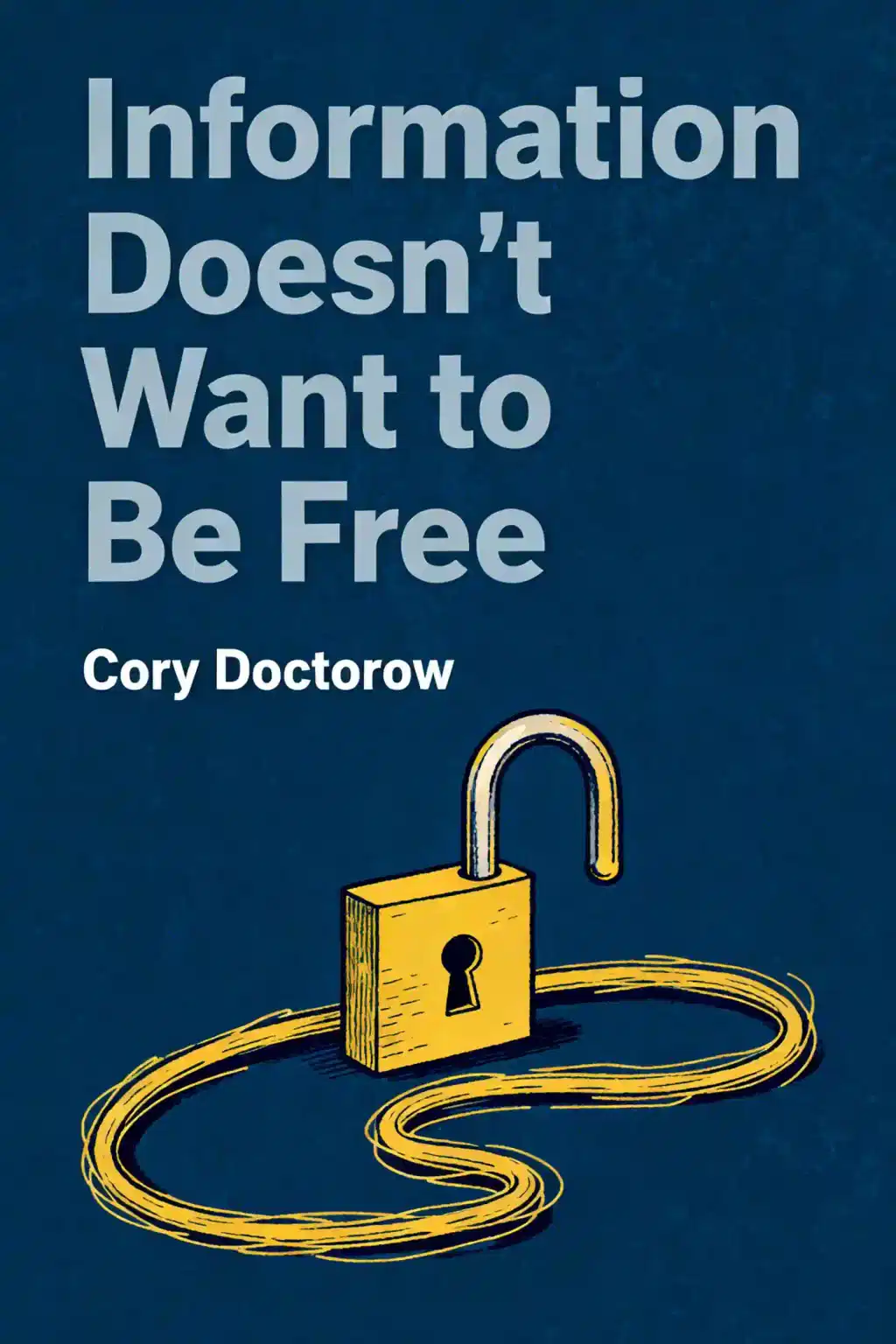
Information Doesn't Want to Be Free: Laws for the Internet Age by Cory Doctorow Summary

Overview of Information Doesn't Want to Be Free
In "Information Doesn't Want to Be Free," Cory Doctorow challenges digital copyright laws that stifle creativity. McKenzie Wark praised this manifesto for creators' rights, while Sam Ferree celebrated its radical vision. What if trusting your audience - not restricting them - actually makes you more successful?
- Digital locks provoke piracy instead of preventing it—focus on trust, not control
- Embrace dandelion strategies: free distribution builds audience loyalty and revenue streams
- Copyright should empower creators, not restrict user rights or stifle innovation
- Join the "copyfight"—challenge laws that prioritize corporate control over digital creativity
- Blanket licenses offer fair compensation while preserving open access to content
- Cory Doctorow argues intermediaries exploit artists when copyright enforcement backfires
- DRM fails artists and consumers—flexible access models drive sustainable creativity
- Monetize through visibility, not scarcity: free content creates paid opportunities
- Internet freedom enables creative diversity—resist platform monopolies and digital locks
- Control your digital tools: locked devices threaten user autonomy and innovation
- Artists thrive by bypassing gatekeepers and connecting directly with engaged audiences
About the Author of Information Doesn't Want to Be Free
Cory Doctorow, acclaimed science fiction author and digital rights activist, is the co-author of Information Doesn’t Want to Be Free, a nonfiction guide examining copyright, creativity, and internet freedom. A pioneering voice in technology and privacy advocacy, Doctorow combines his background as a special advisor to the Electronic Frontier Foundation and co-founder of the Open Rights Group with sharp critiques of surveillance capitalism.
His fiction, including bestselling novels like Little Brother and Walkaway, often explores themes of hacktivism, decentralization, and societal resilience—themes mirrored in his tech policy work.
A MIT Media Lab research affiliate and Visiting Professor of Computer Science at Open University, Doctorow amplifies his ideas through the popular blog Pluralistic.net and keynote speeches at global forums like TED and World Economic Forum events. His 2024 Neil Postman Award for Public Intellectual Activity underscores his influence in bridging speculative fiction with real-world digital rights battles.
Information Doesn’t Want to Be Free has been cited in legislative debates and academic curricula, cementing Doctorow’s role as a essential thinker on technology’s societal impacts.
FAQs About Information Doesn't Want to Be Free
What is Information Doesn't Want to Be Free about?
Information Doesn't Want to Be Free analyzes the tension between digital freedom and creators' rights in the internet age. Cory Doctorow argues against restrictive copyright practices like DRM, advocating for balanced policies that protect both open access and creative livelihoods. The book outlines three core laws for navigating digital content, emphasizing user control and equitable compensation.
Who should read Information Doesn't Want to Be Free?
This book is essential for creators, digital rights advocates, and policymakers. It offers actionable insights for artists navigating monetization in the digital economy and provides policymakers with frameworks to regulate technology without stifling innovation. Tech enthusiasts and educators will also benefit from its critique of surveillance capitalism.
Is Information Doesn't Want to Be Free worth reading?
Yes, particularly for those interested in copyright law, digital activism, or the creative economy. Doctorow combines firsthand experience as a sci-fi author and activist to deliver a compelling, jargon-free analysis of internet policy. Critics praise its practicality but note it prioritizes ideological depth over diverse economic solutions.
What are the main ideas in Information Doesn't Want to Be Free?
- Anti-DRM stance: Doctorow condemns Digital Rights Management as anti-consumer and counterproductive.
- Three laws of the internet: Rules for balancing creativity, distribution, and regulation.
- Creators’ empowerment: Strategies for monetizing work without relying on restrictive platforms.
How does Cory Doctorow address DRM in the book?
Doctorow argues DRM stifles innovation, enables corporate control, and violates user autonomy. He highlights how DRM lets companies remotely disable devices or content, comparing it to a "lock that only the manufacturer can open." Instead, he advocates for open standards and direct fan support models.
What are key quotes from Information Doesn’t Want to Be Free?
- “People want to be free—even if information doesn’t.” (Critique of prioritizing data over human agency).
- “Artists deserve to get paid… but not by making technology worse.” (Argument against DRM).
How does this book compare to The Googlization of Everything?
Both critique tech monopolies, but Doctorow focuses on copyright and creator agency, while Siva Vaidhyanathan examines Google’s cultural influence. Doctorow’s work is more prescriptive, offering policy solutions, whereas Googlization analyzes search-engine biases.
What criticisms exist about the book?
Some argue Doctorow’s anti-DRM stance overlooks smaller creators’ need for piracy protection. Others question if his “open internet” vision might still concentrate power among tech giants. A 2015 review noted the book’s solutions work best for established artists.
Why is Information Doesn’t Want to Be Free relevant in 2025?
As AI and NFTs reshape digital ownership, Doctorow’s warnings about DRM and corporate control remain urgent. The book’s framework helps navigate debates over generative AI training data, blockchain copyright, and platform monopolies.
What are Cory Doctorow’s three laws in the book?
- Law 1: Any time someone puts a lock on data, it’s to control competition, not users.
- Law 2: Fame doesn’t scale—personal fan relationships trump algorithmic reach.
- Law 3: Information will be regulated, but code shapes these rules invisibly.
How can creators apply the book’s concepts today?
- Use Creative Commons licenses for flexible sharing.
- Prioritize direct-to-audience platforms like Patreon over algorithm-driven ones.
- Advocate for right-to-repair laws to combat DRM-enabled obsolescence.
What does the book’s title mean?
It rebuts the adage “information wants to be free,” arguing that human agency—not data—should drive policy. The title underscores Doctorow’s belief that freedom to control technology matters more than abstract data liberation.
Feel the book through the author's voice
Turn knowledge into engaging, example-rich insights
Capture key ideas in a flash for fast learning
Enjoy the book in a fun and engaging way
Key Themes in Information Doesn't Want to Be Free
Quotes from Information Doesn't Want to Be Free
Information doesn't want to be free. People want to be free.
Obscurity is a far greater threat to authors and creative artists than piracy.
Computers that deliberately hide their operations from their owners cannot be secure.
Information Doesn't Want to Be Free
The internet excels at spreading information - both wanted and unwanted.
Characters in Information Doesn't Want to Be Free
Quick Summary Mode - Read or listen to Information Doesn't Want to Be Free Summary in 13 Minutes

Break down key ideas from Information Doesn't Want to Be Free into bite-sized takeaways to understand how innovative teams create, collaborate, and grow.

Flash Card Mode - Top 8 Insights from Information Doesn't Want to Be Free in a Nutshell

Distill Information Doesn't Want to Be Free into rapid-fire memory cues that highlight key principles of candor, teamwork, and creative resilience.

Fun Mode - Information Doesn't Want to Be Free Lessons Told Through 26-Min Stories

Experience Information Doesn't Want to Be Free through vivid storytelling that turns innovation lessons into moments you'll remember and apply.
Personalize Mode - Read or listen to Information Doesn't Want to Be Free Summary in 0 Minutes

Ask anything, pick the voice, and co-create insights that truly resonate with you.

From Columbia University alumni built in San Francisco
"Instead of endless scrolling, I just hit play on BeFreed. It saves me so much time."


"I never knew where to start with nonfiction—BeFreed’s book lists turned into podcasts gave me a clear path."


"Perfect balance between learning and entertainment. Finished ‘Thinking, Fast and Slow’ on my commute this week."
"Crazy how much I learned while walking the dog. BeFreed = small habits → big gains."
"Reading used to feel like a chore. Now it’s just part of my lifestyle."

"Feels effortless compared to reading. I’ve finished 6 books this month already."
"BeFreed turned my guilty doomscrolling into something that feels productive and inspiring."

"BeFreed turned my commute into learning time. 20-min podcasts are perfect for finishing books I never had time for."
"BeFreed replaced my podcast queue. Imagine Spotify for books — that’s it. 🙌"

"It is great for me to learn something from the book without reading it."
"The themed book list podcasts help me connect ideas across authors—like a guided audio journey."
"Makes me feel smarter every time before going to work"
From Columbia University alumni built in San Francisco
"Instead of endless scrolling, I just hit play on BeFreed. It saves me so much time."
"I never knew where to start with nonfiction—BeFreed’s book lists turned into podcasts gave me a clear path."
"Perfect balance between learning and entertainment. Finished ‘Thinking, Fast and Slow’ on my commute this week."
"Crazy how much I learned while walking the dog. BeFreed = small habits → big gains."
"Reading used to feel like a chore. Now it’s just part of my lifestyle."
"Feels effortless compared to reading. I’ve finished 6 books this month already."
"BeFreed turned my guilty doomscrolling into something that feels productive and inspiring."
"BeFreed turned my commute into learning time. 20-min podcasts are perfect for finishing books I never had time for."
"BeFreed replaced my podcast queue. Imagine Spotify for books — that’s it. 🙌"
"It is great for me to learn something from the book without reading it."
"The themed book list podcasts help me connect ideas across authors—like a guided audio journey."
"Makes me feel smarter every time before going to work"
"Instead of endless scrolling, I just hit play on BeFreed. It saves me so much time."
"I never knew where to start with nonfiction—BeFreed’s book lists turned into podcasts gave me a clear path."
"Perfect balance between learning and entertainment. Finished ‘Thinking, Fast and Slow’ on my commute this week."
"Crazy how much I learned while walking the dog. BeFreed = small habits → big gains."
"Reading used to feel like a chore. Now it’s just part of my lifestyle."
"Feels effortless compared to reading. I’ve finished 6 books this month already."
"BeFreed turned my guilty doomscrolling into something that feels productive and inspiring."
"BeFreed turned my commute into learning time. 20-min podcasts are perfect for finishing books I never had time for."
"BeFreed replaced my podcast queue. Imagine Spotify for books — that’s it. 🙌"
"It is great for me to learn something from the book without reading it."
"The themed book list podcasts help me connect ideas across authors—like a guided audio journey."
"Makes me feel smarter every time before going to work"
"Instead of endless scrolling, I just hit play on BeFreed. It saves me so much time."
"I never knew where to start with nonfiction—BeFreed’s book lists turned into podcasts gave me a clear path."
"Perfect balance between learning and entertainment. Finished ‘Thinking, Fast and Slow’ on my commute this week."
"Crazy how much I learned while walking the dog. BeFreed = small habits → big gains."
"Reading used to feel like a chore. Now it’s just part of my lifestyle."
"Feels effortless compared to reading. I’ve finished 6 books this month already."
"BeFreed turned my guilty doomscrolling into something that feels productive and inspiring."
"BeFreed turned my commute into learning time. 20-min podcasts are perfect for finishing books I never had time for."
"BeFreed replaced my podcast queue. Imagine Spotify for books — that’s it. 🙌"
"It is great for me to learn something from the book without reading it."
"The themed book list podcasts help me connect ideas across authors—like a guided audio journey."
"Makes me feel smarter every time before going to work"

Get the Information Doesn't Want to Be Free summary as a free PDF or EPUB. Print it or read offline anytime.