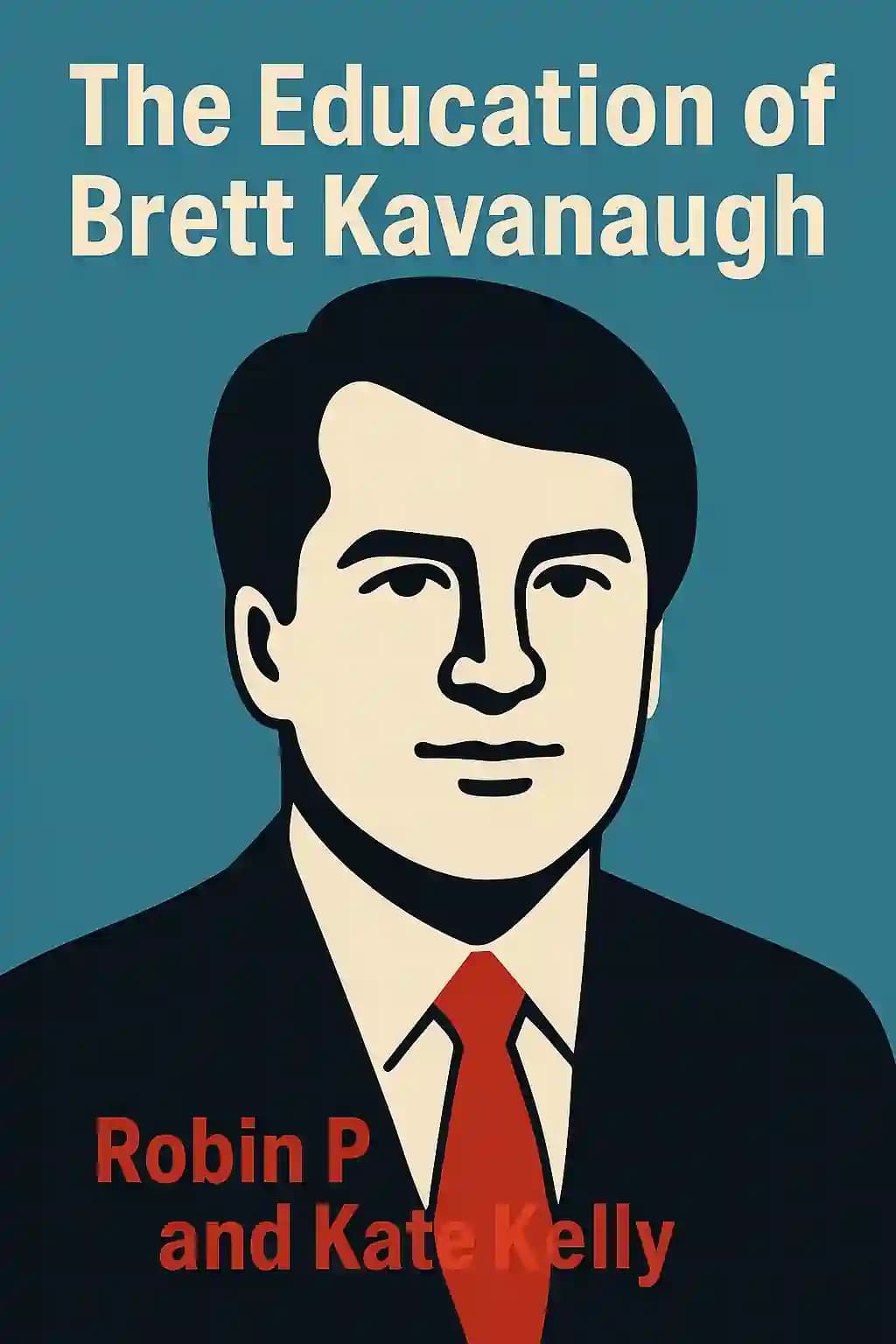
The Education of Brett Kavanaugh
An Investigation
Overview of The Education of Brett Kavanaugh
This explosive investigation into Brett Kavanaugh's past ignited national debate, becoming a #MeToo movement cornerstone. Two NYT journalists uncover allegations that shook a Supreme Court nomination, revealing how power, privilege, and politics intersect when accountability meets America's highest court.

Key Themes in The Education of Brett Kavanaugh
- judicial confirmation process
- elite privilege culture
- sexual misconduct allegations
- partisan tribalism
- supreme court politics
Quotes from The Education of Brett Kavanaugh
"Bushy. Swampy. Chiefy."
"He was no sort of womanizer or lothario."
"We're loud, obnoxious drunks with prolific pukers among us."
"I don't mind the kids having beer if they enjoy it..."
His entire career seemed meticulously crafted toward this ultimate goal.
Characters in The Education of Brett Kavanaugh
- Brett KavanaughSupreme Court nominee and subject of the book
- Christine Blasey FordProfessor who testified regarding misconduct
- Anthony KennedySupreme Court Justice and Kavanaugh's mentor
- Donald McGahnWhite House counsel and champion of the nominee
- Mark JudgeHigh school friend and author of 'Wasted'
About the Author
About the Author of The Education of Brett Kavanaugh
Robin Pogrebin and Kate Kelly, award-winning investigative journalists at The New York Times, co-authored The Education of Brett Kavanaugh: An Investigation, a pivotal work of political nonfiction that dissects the Supreme Court justice’s confirmation hearings amid the #MeToo era.
Pogrebin, a Yale graduate who shared campus life with Kavanaugh, brings firsthand insight into his formative years. Kelly, a seasoned financial reporter raised in Washington, D.C.’s political circles, provides sharp analysis of institutional power dynamics.
Both have built reputations for rigorous journalism—Pogrebin through her cultural reporting and Kelly via her bestselling book Street Fighters: The Last 72 Hours of Bear Stearns. Their collaboration combines over 40 years of experience, with accolades including Gerald Loeb Awards and appearances on major platforms like NPR and CNBC. The Education of Brett Kavanaugh became a national bestseller, solidifying their roles as authoritative voices on legal-political narratives.
Download Summary of The Education of Brett Kavanaugh
Get the The Education of Brett Kavanaugh summary as a free PDF or EPUB. Print it or read offline anytime.
FAQs About This Book
The Education of Brett Kavanaugh by Robin Pogrebin and Kate Kelly investigates Supreme Court Justice Brett Kavanaugh’s formative years, career, and sexual misconduct allegations during his 2018 confirmation. The book examines his elite prep school and Ivy League upbringing, legal trajectory, and the Senate hearings involving Christine Blasey Ford and Deborah Ramirez. It blends investigative reporting with cultural analysis of privilege and institutional biases.
This book suits readers interested in Supreme Court politics, #MeToo-era accountability, or institutional power dynamics. It’s valuable for legal scholars, journalists, and those analyzing partisan confirmation battles. The neutral tone appeals to audiences seeking facts over sensationalism about Kavanaugh’s confirmation saga.
Key findings include:
- Detailed accounts of Kavanaugh’s drinking culture at Georgetown Prep and Yale.
- New interviews with classmates about Deborah Ramirez’s allegation.
- Criticism of the FBI’s limited investigation into the allegations.
- Analysis of how Kavanaugh became a “political Rorschach test” for partisan divides.
Robin Pogrebin (a Yale classmate of Kavanaugh) and Kate Kelly are veteran New York Times reporters with deep investigative experience. Their methodology included 500+ interviews and scrutiny of yearbooks, legal documents, and archival materials. However, their initial reporting faced criticism for perceived oversights in corroborating Max Stier’s claims.
The authors adopt a fact-driven approach, avoiding overt endorsements of accusers or Kavanaugh. They highlight gaps in evidence on both sides and contextualize behaviors within 1980s elite culture. Martha Kavanaugh’s advice—”Use your common sense”—frames their conclusion, leaving interpretation to readers.
Pogrebin and Kelly reconstruct Ford’s experience pre- and post-hearing, including death threats and her motivation to testify. They analyze Senator Dianne Feinstein’s handling of Ford’s letter and the hearing’s emotional impact on national discourse.
Critics argue:
- The authors overemphasize Kavanaugh’s “privileged” upbringing as explanatory.
- Key claims (e.g., Max Stier’s unreported allegation) lack direct verification.
- Some perceive implicit bias in framing Kavanaugh as a cultural symbol over an individual.
It details Georgetown Prep’s “work-hard, play-hard” ethos, including alcohol-fueled parties and social hierarchies. The authors link this environment to broader patterns of toxic masculinity and entitlement among elite institutions.
The allegations against Kavanaugh are framed as a collision between #MeToo’s demand for accountability and Washington’s political machinery. The authors question whether partisan agendas co-opted the movement during his confirmation.
Unlike hagiographies or hit pieces, this book prioritizes investigative rigor over moralizing. It’s closer to Jodi Kantor’s She Said in dissecting institutional responses to misconduct, but narrower in focus than comprehensive Supreme Court histories.
The book remains a case study in how systemic biases shape high-stakes confirmations. With ongoing debates about Supreme Court legitimacy and sexual misconduct accountability, its insights into power, media, and due process stay pertinent.
Key figures include:
- Christine Blasey Ford: Her testimony’s personal and political fallout.
- Deborah Ramirez: Yale-era allegations and media scrutiny.
- Senator Lindsey Graham: His impassioned defense of Kavanaugh.
- Mark Judge: Kavanaugh’s high school friend and alleged witness.