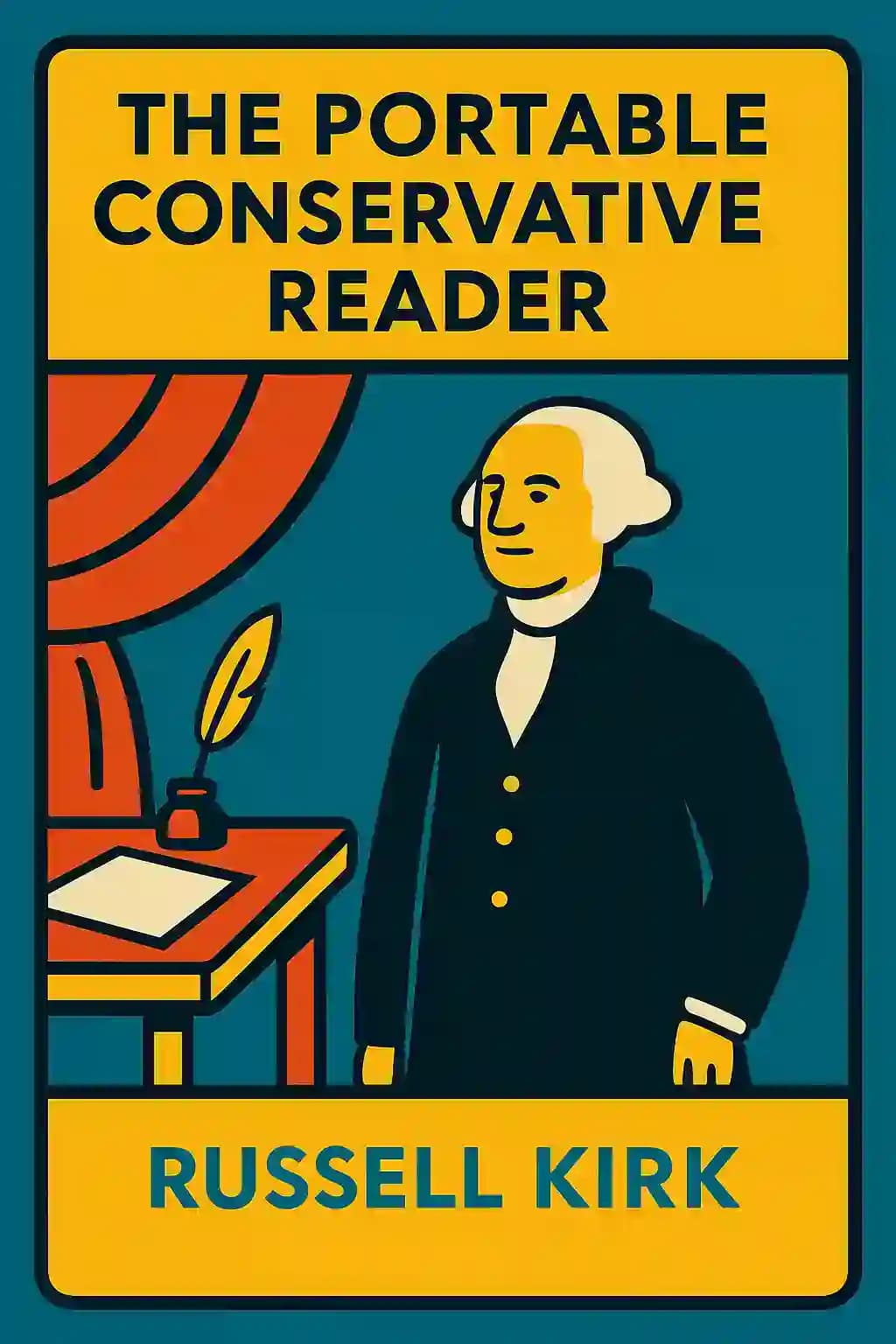
The Portable conservative reader
Overview of The Portable conservative reader
Dive into conservatism's intellectual tapestry with Russell Kirk's definitive anthology spanning Burke to Eliot. This million-selling collection, translated into seven languages, reveals why conservative thought isn't merely political theory but a living tradition that continues to shape global discourse centuries after its inception.

Key Themes in The Portable conservative reader
- intellectual tradition
- social order
- moral imagination
- preservation of custom
- constitutional balance
Quotes from The Portable conservative reader
A state without the means of some change, is without the means of its conservation.
The nature of man is intricate; the objects of society are of the greatest possible complexity.
Men are qualified for civil liberty in exact proportion to their disposition to put moral chains upon their own appetites.
Simple governments are despotisms; and of all despotisms a democracy, though the least durable, is the most violent.
Characters in The Portable conservative reader
- Russell KirkAuthor and editor of the anthology
- Edmund BurkePhilosopher and father of modern conservatism
- Fisher AmesConservative figure who assessed America's potential decline
About the Author
About the Author of The Portable conservative reader
Russell Amos Kirk (1918–1994) was the author of The Portable Conservative Reader and is widely recognized as the "father of the American conservative intellectual movement." This influential anthology showcases the rich tradition of conservative political philosophy, reflecting Kirk's deep expertise in preserving and promoting traditionalist conservative thought.
Kirk's groundbreaking 1953 work The Conservative Mind fundamentally shaped post-World War II American conservatism by giving the movement both intellectual credibility and historical identity. He authored thirty-two books on political theory, history of ideas, and cultural criticism, while also serving as a Distinguished Scholar at the Heritage Foundation. Kirk earned his Doctor of Letters from the University of St Andrews in Scotland, becoming the first American to receive this degree from the prestigious institution.
The New York Times acknowledged that The Conservative Mind "gave American conservatives an identity and a genealogy and catalyzed the postwar movement," cementing Kirk's legacy as one of America's most influential conservative thinkers.
Download Summary of The Portable conservative reader
Get the The Portable conservative reader summary as a free PDF or EPUB. Print it or read offline anytime.
FAQs About This Book
The Portable Conservative Reader by Russell Kirk is a comprehensive anthology that gathers essential writings from major conservative thinkers including Edmund Burke, John Adams, and other influential authors. This collection illuminates the meaning and intellectual foundations of conservatism, tracing the development of conservative thought in the English and American traditions while providing readers with primary sources that shaped the modern conservative movement.
The Portable Conservative Reader is ideal for students of political theory, conservatives seeking to understand their intellectual heritage, and anyone interested in the cultural and philosophical roots of conservatism. It serves as required reading in political theory courses and appeals to readers wanting a foundational understanding of conservative thought from Burke to modern thinkers. The book is particularly valuable for those studying American political movements.
Yes, The Portable Conservative Reader is widely regarded as an excellent compilation and one of the best collections available for understanding conservative intellectualism. Reviews consistently praise it as a valuable anthology that provides essential primary sources, making complex conservative philosophy accessible. Critics describe it as offering a good overview of conservative thought, though some note Kirk's writing could be clearer.
Russell Kirk (1918-1994) was an influential American political philosopher and the chief proponent of traditionalist conservatism. His 1953 book "The Conservative Mind" helped catalyzed the post-World War II American conservative movement and gave conservatives "an identity and a genealogy". Kirk authored thirty-two books on political theory and is considered one of America's leading conservative thinkers by Time and Newsweek.
The Portable Conservative Reader features writings from foundational conservative philosophers including Edmund Burke, John Adams, and other significant conservative authors and novelists. Kirk carefully selected primary sources that trace the development of conservative thought in the Anglo-American tradition, providing readers with direct access to the intellectual foundations that shaped modern conservatism.
The Portable Conservative Reader complements Kirk's famous work "The Conservative Mind" by providing the actual source materials that informed his analysis. While "The Conservative Mind" offered Kirk's interpretation of conservative thought from Burke to Santayana, this anthology lets readers engage directly with the original texts and thinkers that shaped conservative philosophy. Together, they form a comprehensive introduction to conservative intellectual history.
The Portable Conservative Reader explores core conservative principles including the importance of tradition, order, and gradual change over radical reform. The anthology emphasizes Burke's philosophy of organic society, the value of established institutions, and skepticism toward rapid social transformation. Kirk presents conservatism as a coherent intellectual tradition focused on preserving what works while allowing for prudent adaptation.
The book traces conservatism's evolution through carefully selected writings that demonstrate how conservative thought developed from Edmund Burke's foundational principles to American applications. Kirk shows how conservative ideas adapted across different eras while maintaining core commitments to tradition, order, and gradual reform. The anthology reveals conservatism as a living intellectual tradition rather than mere political opposition.
Kirk emphasized "traditionalist conservatism" that valued cultural inheritance, moral imagination, and what he called "permanent things" over purely economic or political concerns. Unlike modern neoconservatism, Kirk remained suspicious of big business and focused on preserving cultural and intellectual traditions. He believed conservatism should be rooted in moral principles and historical wisdom rather than ideological abstractions.
The Portable Conservative Reader remains relevant because it addresses timeless questions about tradition, change, and social order that persist in contemporary politics. Kirk's emphasis on the "permanent things" and gradual reform offers an alternative to both radical progressivism and reactionary politics. The book provides intellectual depth to conservative thought beyond partisan politics, making it valuable for understanding ongoing cultural and political debates.