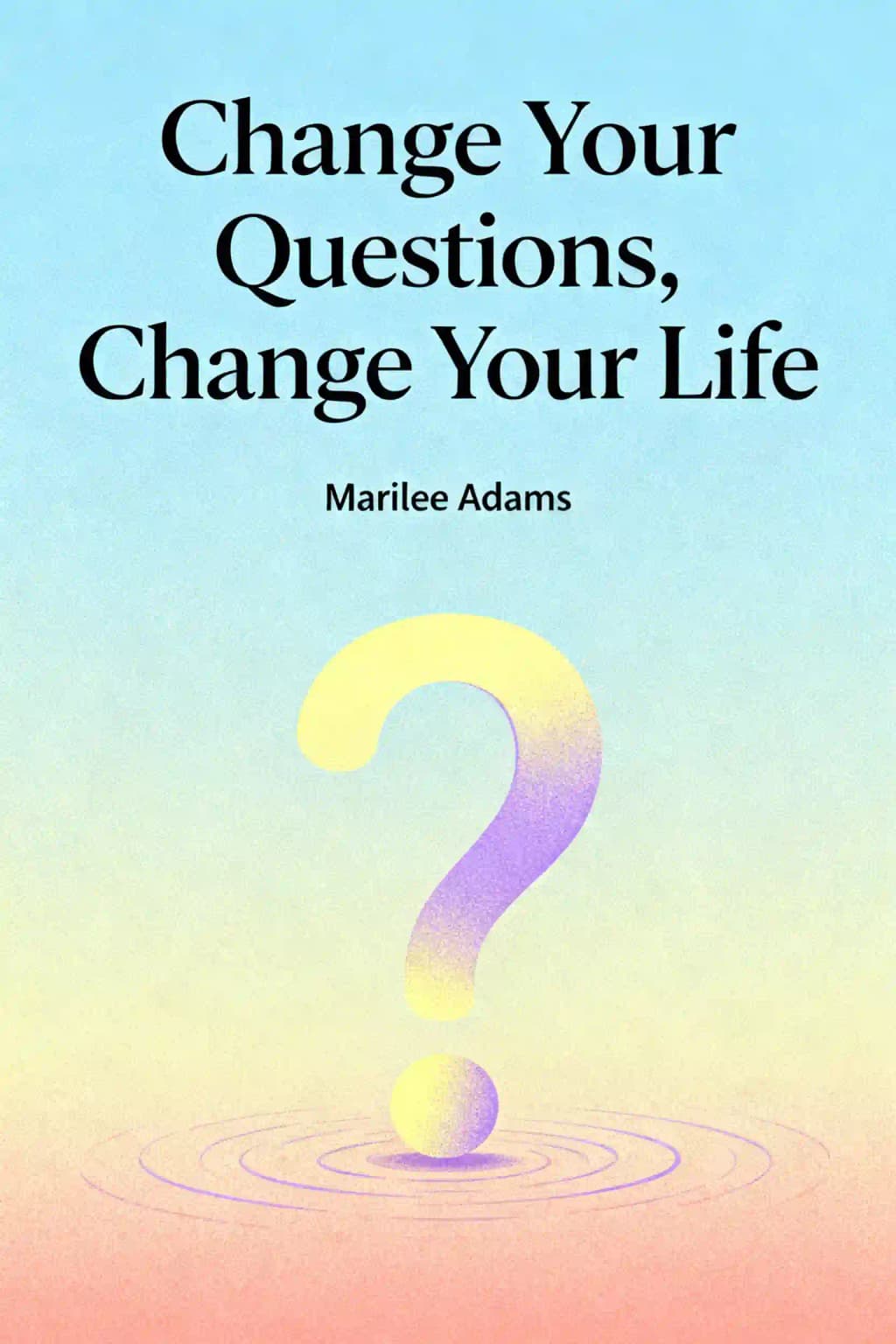
Change Your Questions, Change Your Life
12 Powerful Tools for Leadership, Coaching, and Life
Overview of Change Your Questions, Change Your Life
Transform your life by mastering the art of questioning. Selling 400,000+ copies in 22 languages, "Change Your Questions" introduces the revolutionary "Choice Map" that shifts you from a judgmental "judger" to a curious "learner" mindset - unlocking solutions you never knew existed.

Key Themes in Change Your Questions, Change Your Life
- inquiry based leadership
- learner vs judger mindset
- internal dialogue management
- cognitive reframing
- collaborative problem solving
Quotes from Change Your Questions, Change Your Life
Effective communication requires asking more and telling less.
Judger mindset is always judgmental.
We're all 'recovering Judgers'.
Am I in Judger?
Characters in Change Your Questions, Change Your Life
- Alexa HarteThe CEO of QTec and Ben's mentor
- CharlesA key team member who challenges Ben's leadership
About the Author
About the Author of Change Your Questions, Change Your Life
Dr. Marilee Adams is the bestselling author of Change Your Questions, Change Your Life and a pioneering psychologist specializing in inquiry-based coaching and cognitive-behavioral methodologies. A thought leader in organizational leadership and personal transformation, her work centers on the Question Thinking™ framework, which reveals how shifting internal questions can reshape mindsets, relationships, and outcomes.
Drawing from decades of clinical psychology practice and academic research, Adams ties her expertise to themes of self-awareness, intentional communication, and sustainable behavioral change. She authored the foundational textbook The Art of the Question: A Guide to Short-Term Question-Centered Therapy and the education-focused Teaching That Changes Lives, both of which expand on her research into mindset-driven growth.
As founder of the Inquiry Institute and an adjunct professor at American University’s Key Executive Leadership Program, Adams consults for global organizations and universities, including Columbia University’s Teachers College. Her methodologies are integrated into corporate training programs and leadership curricula worldwide. Change Your Questions, Change Your Life has been translated into multiple languages and remains a staple in professional development and coaching circles.
Download Summary of Change Your Questions, Change Your Life
Get the Change Your Questions, Change Your Life summary as a free PDF or EPUB. Print it or read offline anytime.
FAQs About This Book
Change Your Questions, Change Your Life introduces Question Thinking™, a methodology showing how shifting from judgmental to curious inquiry transforms personal and professional outcomes. Through a business fable, Marilee Adams illustrates tools like the Choice Map and Q-Storming to reframe challenges, improve decision-making, and foster collaborative relationships. The book emphasizes replacing limiting "Judger" questions with empowering "Learner" inquiries.
This book suits professionals, leaders, coaches, and anyone seeking mindset shifts for better communication, leadership, or conflict resolution. Its frameworks benefit teams, educators, and individuals navigating career transitions or relationship challenges. Adams’ storytelling appeals to readers who prefer practical, narrative-driven self-help over theoretical approaches.
A global bestseller translated into 22 languages, the book offers actionable tools for reframing problems through inquiry. Readers praise its relatable fable format and exercises like the Switching Questions technique. With over 400,000 copies sold, it’s recommended for its focus on self-awareness and adaptability in fast-changing environments.
Key ideas include:
- Learner vs. Judger Mindsets: Choosing curiosity over criticism.
- Choice Map: Visualizing paths toward constructive or reactive thinking.
- Q-Storming: Brainstorming questions instead of solutions.
- Switching Questions: Redirecting unhelpful thoughts (e.g., “Why is this happening?” to “What can I learn?”)
The Choice Map guides readers to recognize when they’re in a “Judger” mindset (blaming, rigid) and pivot to a “Learner” stance (curious, open). By asking “Where am I on the map?” individuals gain awareness to choose questions that unlock problem-solving and collaboration, rather than perpetuating conflict.
Q-Storming is a group problem-solving method where participants generate questions instead of answers. This technique surfaces overlooked perspectives and prioritizes inquiry over premature solutions, fostering innovation in teams and organizations.
Dr. Marilee Adams is a psychologist, founder of the Inquiry Institute, and adjunct professor at American University. With a PhD in clinical psychology, she pioneered Question Thinking™ through decades of coaching clients like Lockheed Martin and Johnson & Johnson. She’s also authored Teaching That Changes Lives and The Art of the Question.
- “Great results begin with great questions”: Highlights inquiry as the foundation of growth.
- “Learner begets Learner; Judger begets Judger”: Stresses how mindsets influence group dynamics.
- “Words create worlds”: Underscores language’s role in shaping reality.
By replacing accusatory questions (“Why are you wrong?”) with Learner inquiries (“What’s important here?”), individuals reduce conflict and build trust. The book provides scripts for empathetic communication, helping couples and colleagues collaborate more effectively.
Adams’ tools help leaders foster psychological safety by modeling curiosity. Teams using Q-Storming or Switching Questions report improved problem-solving and reduced blame cultures. Case studies show applications in leadership development and organizational change.
Some reviewers find the fable format oversimplified for complex issues. Others note the Judger/Learner dichotomy may not capture nuanced emotions. However, most praise its practicality, awarding it 4+ stars on major platforms.
Unlike habit-focused titles (Atomic Habits), Adams prioritizes meta-awareness—changing how we think versus what we do. Its inquiry-based approach complements works like The Coaching Habit but stands out for accessible storytelling and workplace applications.