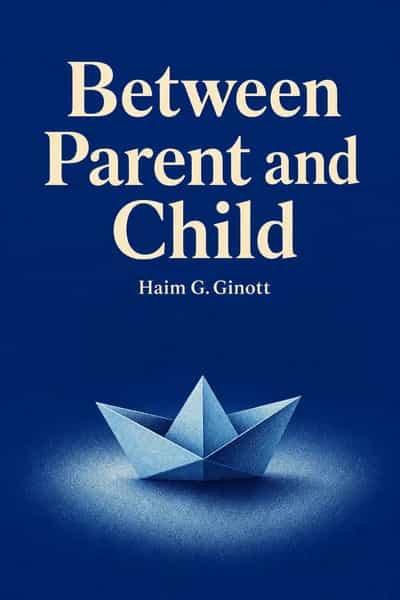
Between parent and child.

Overview of Between parent and child.
Revolutionizing parent-child communication since 1965, Ginott's classic has transformed millions of families with its empathetic approach. Can effective parenting exist without punishment? This pioneering psychologist's techniques remain so influential they're still taught in therapy programs worldwide today.
- Empathy-first communication builds trust without escalating conflicts.
- Replace evaluative praise with specific feedback to foster self-worth.
- Set boundaries without punishment using clear, consistent limit-setting.
- Validate feelings before addressing misbehavior to reduce defiance.
- Avoid rhetorical questions about known misdeeds to prevent lying.
- Use “choice framing” to empower children while maintaining rules.
- Parental self-awareness prevents emotional reactions from derailing discipline.
- Sibling rivalry solutions focus on fairness over forced sharing.
- Transform criticism into guidance using non-judgmental language.
- Music and creative outlets channel emotional intensity constructively.
- Foster independence through “your choice” phrasing in decisions.
- Haim Ginott’s method blends firmness with emotional attunement.
About the Author of Between parent and child.
Haim G. Ginott (1922–1973) was a clinical psychologist and parenting educator, best known for authoring the seminal work Between Parent and Child, a cornerstone of child psychology literature.
A former elementary school teacher in Israel, Ginott earned his doctorate in clinical psychology from Columbia University. He refined his compassionate yet boundary-focused approach through his work at the Jacksonville Guidance Clinic.
Ginott’s expertise in fostering emotional well-being while guiding behavior made him a trusted voice, leading to media prominence as a resident psychologist on NBC’s Today Show and in a syndicated newspaper column.
Ginott’s influential methods also shaped follow-up works like Between Parent and Teenager and Teacher and Child, which expanded his communication principles to adolescent dynamics and educational settings.
Translated into 30 languages, Between Parent and Child has sold millions of copies worldwide and remains a foundational text for parents and professionals seeking to balance empathy with discipline.
FAQs About Between parent and child.
What is Between Parent and Child by Haim G. Ginott about?
Between Parent and Child is a parenting guide that revolutionizes communication by teaching empathy, respect, and practical techniques to address children’s emotions without judgment. It emphasizes acknowledging feelings first, setting boundaries without threats, and fostering mutual trust. The book combines psychological insights with actionable strategies to transform parent-child relationships into nurturing partnerships.
Who should read Between Parent and Child?
This book is ideal for parents, caregivers, and educators seeking to improve communication with children. It’s particularly valuable for those struggling with discipline conflicts, emotional outbursts, or fostering cooperation. Therapists and child psychologists also appreciate its evidence-based approach to emotional validation and boundary-setting.
Is Between Parent and Child worth reading?
Yes, it remains a seminal work in parenting literature, praised for its timeless advice on empathetic communication. Over 50 years since publication, its techniques—like replacing criticism with constructive feedback—are still endorsed by experts. The revised 2003 edition updates examples while preserving Ginott’s core principles.
What are the key communication techniques in Between Parent and Child?
- Acknowledge feelings first: Validate emotions before problem-solving (e.g., “I see you’re upset”).
- Avoid labeling: Use descriptive language instead of judgments (e.g., “This behavior is unsafe” vs. “You’re reckless”).
- Offer choices: Empower children by letting them decide within set boundaries.
How does Between Parent and Child approach discipline?
Ginott advocates for discipline that respects the child’s dignity. Instead of punishment, he recommends natural consequences and collaborative problem-solving. For example, if a child refuses homework, a parent might say, “Let’s plan a study time that works for both of us”.
What is Haim G. Ginott’s most famous quote from the book?
“I have come to the frightening conclusion that I am the decisive element. It is my daily mood that makes the weather.” This underscores the parent’s role in shaping the emotional climate through responsive, intentional communication.
How does Between Parent and Child handle children’s negative emotions?
The book advises parents to mirror emotions neutrally (e.g., “You sound angry about this”) rather than minimize or correct them. This approach helps children feel heard, reducing escalations and building emotional literacy.
What critiques exist about Between Parent and Child?
Some modern readers find its mid-20th-century examples dated, though the 2003 edition addresses this. Others argue it oversimplifies complex dynamics. However, its core philosophy—respectful communication—remains widely influential in child psychology.
How does Between Parent and Child differ from other parenting books?
Unlike punitive or permissive extremes, Ginott’s method balances empathy with structure. It predates but aligns with authoritative parenting research, focusing on mutual respect rather than obedience. Comparable works like How to Talk So Kids Will Listen build directly on its principles.
Can Between Parent and Child help with teenage communication?
Yes, though Ginott’s follow-up Between Parent and Teenager expands on adolescent-specific issues. The original book’s foundation—validating feelings while setting clear expectations—applies to all ages, making it a versatile resource.
What professional background did Haim G. Ginott have?
Ginott (1922–1973) was a clinical psychologist, child therapist, and educator. He taught at NYU and Adelphi University, combining academic rigor with practical insights from his guidance clinics. His work influenced generations of parenting experts.
Are Haim G. Ginott’s other books similar to Between Parent and Child?
Yes, Teacher and Child and Between Parent and Teenager expand his communication philosophy into educational and adolescent contexts. All emphasize emotional attunement, though Between Parent and Child remains his most comprehensive guide.
Feel the book through the author's voice
Turn knowledge into engaging, example-rich insights
Capture key ideas in a flash for fast learning
Enjoy the book in a fun and engaging way
Characters in Between parent and child.
- Haim G. GinottAuthor and psychologist who revolutionized parenting
- EricNine-year-old boy disappointed by a rained-out picnic
- IvanChild who reacted negatively to evaluative praise
Key Themes in Between parent and child.
- emotional validation
- active listening
- mirroring feelings
- non-judgmental praise
- decoding childhood behavior
Quotes from Between parent and child.
I've come to the frightening conclusion that I am the decisive element in the classroom. It's my personal approach that creates the climate. It's my daily mood that makes the weather.
When a child feels understood, his loneliness and hurt diminish.
Children shut down when they sense a lecture coming.
At times of strong emotion, nothing comforts like someone who truly listens and understands.
When things go wrong, it's best to deal with the event, not the person.
Explore Your Way of Learning
 Quick Summary Mode
Read or listen to Between parent and child. Summary in 9 Minutes
Break down key ideas from Between parent and child. into bite-sized takeaways to understand how innovative teams create, collaborate, and grow.

 Fun Mode
Between parent and child. Lessons Told Through 20-Min Stories
Experience Between parent and child. through vivid storytelling that turns innovation lessons into moments you'll remember and apply.
 Personalize Mode
Experience Between parent and child. in your own learning style
Ask anything, choose your learning style, and co-create insights that truly resonate with you.

From Columbia University alumni built in San Francisco
"Instead of endless scrolling, I just hit play on BeFreed. It saves me so much time."


"I never knew where to start with nonfiction—BeFreed’s book lists turned into podcasts gave me a clear path."


"Perfect balance between learning and entertainment. Finished ‘Thinking, Fast and Slow’ on my commute this week."
"Crazy how much I learned while walking the dog. BeFreed = small habits → big gains."
"Reading used to feel like a chore. Now it’s just part of my lifestyle."

"Feels effortless compared to reading. I’ve finished 6 books this month already."
"BeFreed turned my guilty doomscrolling into something that feels productive and inspiring."

"BeFreed turned my commute into learning time. 20-min podcasts are perfect for finishing books I never had time for."
"BeFreed replaced my podcast queue. Imagine Spotify for books — that’s it. 🙌"

"It is great for me to learn something from the book without reading it."
"The themed book list podcasts help me connect ideas across authors—like a guided audio journey."
"Makes me feel smarter every time before going to work"
From Columbia University alumni built in San Francisco
"Instead of endless scrolling, I just hit play on BeFreed. It saves me so much time."
"I never knew where to start with nonfiction—BeFreed’s book lists turned into podcasts gave me a clear path."
"Perfect balance between learning and entertainment. Finished ‘Thinking, Fast and Slow’ on my commute this week."
"Crazy how much I learned while walking the dog. BeFreed = small habits → big gains."
"Reading used to feel like a chore. Now it’s just part of my lifestyle."
"Feels effortless compared to reading. I’ve finished 6 books this month already."
"BeFreed turned my guilty doomscrolling into something that feels productive and inspiring."
"BeFreed turned my commute into learning time. 20-min podcasts are perfect for finishing books I never had time for."
"BeFreed replaced my podcast queue. Imagine Spotify for books — that’s it. 🙌"
"It is great for me to learn something from the book without reading it."
"The themed book list podcasts help me connect ideas across authors—like a guided audio journey."
"Makes me feel smarter every time before going to work"
"Instead of endless scrolling, I just hit play on BeFreed. It saves me so much time."
"I never knew where to start with nonfiction—BeFreed’s book lists turned into podcasts gave me a clear path."
"Perfect balance between learning and entertainment. Finished ‘Thinking, Fast and Slow’ on my commute this week."
"Crazy how much I learned while walking the dog. BeFreed = small habits → big gains."
"Reading used to feel like a chore. Now it’s just part of my lifestyle."
"Feels effortless compared to reading. I’ve finished 6 books this month already."
"BeFreed turned my guilty doomscrolling into something that feels productive and inspiring."
"BeFreed turned my commute into learning time. 20-min podcasts are perfect for finishing books I never had time for."
"BeFreed replaced my podcast queue. Imagine Spotify for books — that’s it. 🙌"
"It is great for me to learn something from the book without reading it."
"The themed book list podcasts help me connect ideas across authors—like a guided audio journey."
"Makes me feel smarter every time before going to work"
"Instead of endless scrolling, I just hit play on BeFreed. It saves me so much time."
"I never knew where to start with nonfiction—BeFreed’s book lists turned into podcasts gave me a clear path."
"Perfect balance between learning and entertainment. Finished ‘Thinking, Fast and Slow’ on my commute this week."
"Crazy how much I learned while walking the dog. BeFreed = small habits → big gains."
"Reading used to feel like a chore. Now it’s just part of my lifestyle."
"Feels effortless compared to reading. I’ve finished 6 books this month already."
"BeFreed turned my guilty doomscrolling into something that feels productive and inspiring."
"BeFreed turned my commute into learning time. 20-min podcasts are perfect for finishing books I never had time for."
"BeFreed replaced my podcast queue. Imagine Spotify for books — that’s it. 🙌"
"It is great for me to learn something from the book without reading it."
"The themed book list podcasts help me connect ideas across authors—like a guided audio journey."
"Makes me feel smarter every time before going to work"

Download Summary of Between parent and child.
Get the Between parent and child. summary as a free PDF or EPUB. Print it or read offline anytime.