Chapter 1
The Quest for Gold: Perseverance in the Face of Adversity
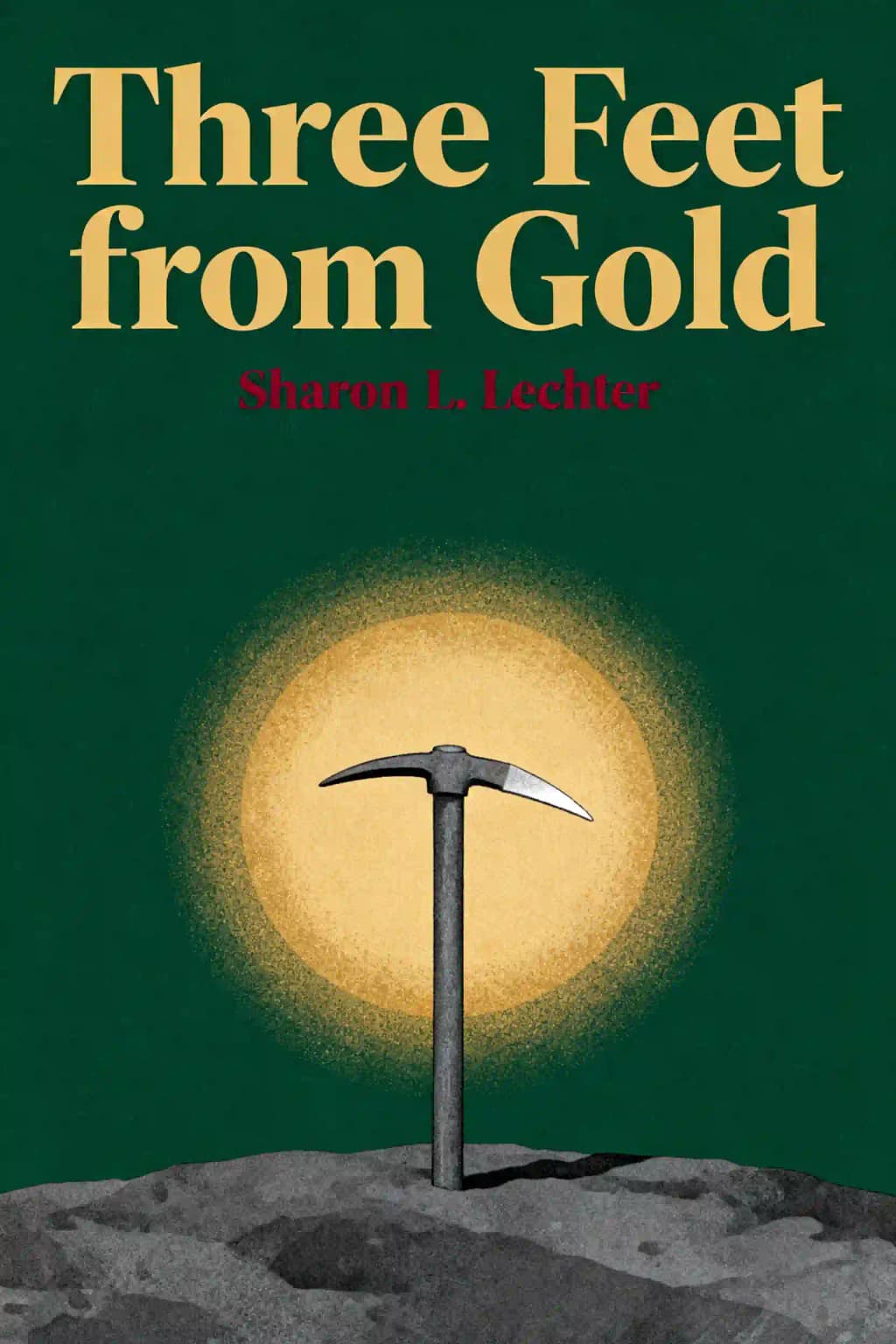
Success isn't a matter of luck or circumstance-it's a product of unwavering determination. Three Feet from Gold takes its name from the story of R.U. Darby, a gold prospector who abandoned his mine just three feet away from striking an immense vein of gold. This powerful metaphor has resonated with millions since Napoleon Hill first shared it in Think and Grow Rich, which launched the personal development movement after Hill's unprecedented access to 500 of America's most successful individuals. A century later, the Napoleon Hill Foundation commissioned a new exploration of these principles, resulting in this modern masterpiece that has become a favorite among entrepreneurs like Elon Musk and celebrities including Oprah Winfrey. The book's cultural impact extends beyond business circles, offering timeless wisdom about perseverance that has helped countless people transform their lives during economic downturns and personal challenges.
Chapter 2
The Breaking Point: When Success Seems Impossible
Greg Mitchell is the epitome of false success - a small marketing company owner drowning in mounting debt while desperately maintaining an expensive facade. His meticulously crafted East Coast business demeanor, designer suits, and luxury apartment in Boston's prestigious Back Bay create an elaborate illusion of prosperity, but beneath the surface, everything is crumbling. His once-passionate relationship with girlfriend Mia has devolved into tense silences and avoided conversations about finances. His business, once promising, is hemorrhaging clients as larger agencies undercut his prices and digital automation threatens his traditional approach.
Returning home one rainy Tuesday evening, Greg discovers Mia has moved out, leaving behind only his favorite leather reading chair and a silver-framed photo from their vacation in Santorini. Her goodbye note, written on expensive stationery, says simply: "Sometimes pretending hurts more than the truth." The empty apartment echoes with missed opportunities and unspoken words.
In his desperation, Greg remembers a business card tucked away in the pocket of an expensive jacket - not his jacket, but one belonging to Jonathan Buckland, a legendary Silicon Valley tycoon whose garment he accidentally took from the coat check at Masa's restaurant three weeks earlier. The card, embossed with Buckland Industries' distinctive logo, represents a lifeline - an unexpected connection to greatness. Greg's fatal flaw isn't a lack of ambition or initiative - it's his deeply ingrained inability to handle adversity and criticism. Like many aspiring entrepreneurs, Greg has what his father always called "Texas-sized expectations" but nothing substantial to show for them beyond surface-level appearances.
When Greg impulsively decides to return the jacket, striding arrogantly into Buckland Industries' gleaming headquarters, he literally bumps into Buckland himself in the lobby. Instead of the humiliating dismissal he expects, Greg finds himself whisked up to Buckland's 45th-floor office, with its panoramic views of San Francisco Bay and the Golden Gate Bridge. In a moment of raw vulnerability, Greg confesses everything - the girlfriend who couldn't bear his pretense anymore, the business teetering on bankruptcy, his readiness to abandon his entrepreneurial dreams.
Buckland, leaning back in his chair, shares an unexpected perspective: "We all make our own breaks, and at the end of the day we are exactly where we choose to be - not where circumstances put us." He reaches into his bookshelf and hands Greg a well-worn copy of Napoleon Hill's Think and Grow Rich, explaining the concept of being "three feet from gold" - how miners often abandon their claims just feet away from striking it rich, much like entrepreneurs who quit just before breakthrough.
What if, Buckland suggests, you're just one crucial conversation, one paradigm-shifting insight, or one bold decision away from the breakthrough you've been seeking? How many times have you given up just before victory was within reach? The question hangs in the air, challenging not just Greg but every reader who has ever stood at the crossroads of perseverance and surrender.
Chapter 3
The Journey Begins: Seeds of Transformation
Greg's encounter with Buckland ends with a humbling question that brings him back to earth. The next morning, he receives a package containing Think and Grow Rich, a notepad, and an airline ticket to meet Don Green, CEO of the Napoleon Hill Foundation. Despite a disturbing call from his alcoholic adopted brother David, Greg heads to the airport, determined not to miss this opportunity.
In Wise, Virginia, Don Green welcomes Greg warmly. Unlike the false modesty Greg is accustomed to, Don acknowledges his accomplishments while remaining humble. He explains that success isn't merely about wealth but discovering one's ultimate purpose and pursuing it relentlessly. Don emphasizes that the most important lesson is never giving up, even when there seems no other choice.
Don shares the story of R.U. Darby and his uncle who discovered gold but quit mining when the vein disappeared. They sold their equipment to a junkman who consulted a mining engineer and discovered the gold vein continued just three feet from where the Darbys had stopped digging. The junkman made millions while the Darbys returned home empty-handed. However, Darby learned from this failure and applied the lesson of persistence to build a fortune in insurance.
The difference between the junkman and the Darbys wasn't luck-it was that the junkman had discovered his life purpose and possessed what Napoleon Hill called "stickability"-the difference between being merely interested and being truly committed. The junkman was committed to becoming a gold miner and did whatever necessary until that opportunity arose, while the Darbys were simply chasing dollars without true passion.
This story forces us to ask ourselves: Are we merely interested in our goals, or are we truly committed to them? Are we willing to persist when obstacles arise, or do we abandon our dreams at the first sign of difficulty?
Chapter 4
Wisdom in the Valleys: Making Decisions That Matter
On his flight home, Greg reflects deeply on Don Green's lessons, realizing Buckland sent him to meet Green for a specific purpose. Greg acknowledges he has often been a quitter, stopping just three feet from success. He needs to find passion, drive, and "stickability" to move forward.
Greg realizes his mistake of trying to do everything himself, creating havoc in both his professional and personal life. He needs to start allowing others with expertise to help him, focusing on his strengths in sales and marketing while hiring others to handle his weaknesses.
When Greg enthusiastically tells Buckland about his plans to seek opinions on his business, Buckland corrects him: he should seek counsel, not opinions. Buckland explains that opinions are usually based on ignorance, whereas counsel comes from wisdom and experience. Friends and family often offer "pooled ignorance" rather than expert guidance. Greg needs to find experts who can provide valuable counsel based on experience, just as the engineer had helped the junkman find gold.
Buckland connects Greg with Ron Glosser, former CEO of Goodyear Bank, who offers a crucial piece of wisdom: "Never make a major decision in your valley." People often make major decisions during low points-job loss, illness, relationship endings, or financial disasters-when emotions run high. Since life is cyclical, with valleys and peaks, one should wait for the cycle to move upward before making major decisions, basing them on progress rather than defeat.
Buckland also teaches Greg that "a dream is just a dream until it is written down. Only then does it become a goal." He introduces the concept of a "Pocket Promise"-a card with "I promise" on one side and space for personal commitments on the other, kept as a constant reminder.
How often do we make life-altering decisions when we're at our lowest points? What might change if we waited until we had perspective before making major choices? And how many of our dreams remain just that-dreams-because we've never committed them to paper and transformed them into goals?
Chapter 5
Outstanding People: Learning from Extraordinary Success
In Las Vegas for business, Greg meets two remarkable women while waiting for a taxi-Lauren Nelson (Miss America 2007) and Erin Gruwell (the real teacher from "Freedom Writers"). Both share profound insights about purpose and perseverance.
Lauren explains her concept of "focused faith"-concentrating on one clear goal rather than multitasking, using skiing as a metaphor where keeping your eye on the destination matters more than fearing obstacles. Erin notes that "goals are aspirations until they become real, then they become responsibilities."
Later, Greg meets Jack Mates, former CEO of Velcro USA, who shares how Velcro faced numerous challenges before success. The product, inspired by cockleburs sticking to a dog's coat, required years of R&D to perfect. Jack emphasizes that most challenges have simple solutions if viewed from different angles.
When Greg asks how they sold Velcro to billions, Jack reveals his brilliant strategy: "We sold Velcro to five people"-specifically, the leaders of automotive, medical, aerospace, fashion, and furniture industries. These leaders then discovered applications and sold to consumers. Jack's commitment was so strong he once mortgaged his house to make payroll.
Jack then introduces Greg to the "Success Equation": (P + T) x A x A = Success, explaining that Passion plus Talent, multiplied by Association and Action equals Success. He shows Greg how to create two lists-things he would do for free (passions) and things he excels at (talents)-then narrow them down to find his unique formula.
This equation offers a powerful framework for evaluating our own lives. What are you passionate about? What are your natural talents? Who are you associating with? And most importantly, what actions are you taking to combine these elements into success?
Chapter 6
The Fire Within: Finding Your Burning Desire
Greg finally calls Mia, his ex-girlfriend. Though she isn't ready to see him, she admits she misses the dreamer he once was, not the image he tried to project. The conversation leaves Greg reflective about who he'd become.
On a detour to Atlanta arranged by Buckland, Greg meets Julie Krone on his first-class flight-the legendary jockey and first woman inducted into the Thoroughbred Hall of Fame with over 3,704 victories. She shares how persistence helped her overcome rejection in a male-dominated sport. "Keep showing up!" she advises, explaining how adversities ultimately brought her peace.
When Julie asks about Greg's burning desire, he opens up about his struggles. Together they work on his personal inventory using the Success Equation, revealing his passion for writing and talent for communication. Julie suggests he write about the people he's meeting.
Richard Cohn, publisher of The Secret, overhears their conversation and suggests Greg's journey could become a book helping others find success. "Collaboration is essential to create miracles," Cohn notes. Despite 22 years of publishing challenges, "the knowing" kept him going-the difference between believing in something and knowing it. Even when facing bankruptcy, Cohn persisted until The Secret sold six million copies in twelve months.
Meeting Truett Cathy, the legendary founder of Chick-fil-A, Greg is surprised by his advice: "Stop planning so much." The 87-year-old billionaire explains that while having a destination is essential, overplanning can blind you to unexpected opportunities. "While people who planned their path focus on their steps, a guy like me looks for shortcuts like a kid's bicycle or skateboard to make my journey shorter."
Cathy reveals he never specifically planned for Chick-fil-A's success. Starting with the tiny Dwarf Grill in 1946, it took twenty years before he developed the pressure-cooked chicken sandwich. "I just kept pushing toward the vision with faith in the process and the 'how' opened itself up to me."
Have you identified your burning desire-that goal that keeps you awake at night and drives you forward despite obstacles? And are you flexible enough to adjust your plans when unexpected opportunities arise?
Chapter 7
The Mastermind: Harnessing Collective Wisdom
When Greg returns home, he goes straight to work on himself, realizing Don Green was right about the gold harvested from great minds. He decides to continue interviewing business leaders despite financial risks. Recognizing his evolving passions, he offers his marketing company to his employees, who are surprised by the "new Greg" but eagerly accept shared ownership.
Greg also reaches out to his brother David with a different approach, offering support for rehab when David is ready, lifting a weight from his shoulders by placing responsibility on his brother. Greg then meets with Don Green to seek the Napoleon Hill Foundation's support for his project, receiving a recommendation letter similar to what Carnegie had given Hill a century earlier.
Buckland later takes Greg to meet his personal mastermind group-four success icons gathered around an oak table in a traditional steakhouse. Buckland explains, "You're a direct reflection of the five people you associate with most," noting that one's income, attitude, and lifestyle become the average of those five people.
Each member offers valuable wisdom. James Amos, former CEO of Mail Boxes Etc., advises patience, noting "the margin between success and failure is a very thin line" and that "all due diligence is historic... but all decision-making is about the future." Scientist John Schwarz, who persisted with his Super String Theory despite a decade of rejection, simply states his secret: "I knew I was right." Dr. Tom Haggai of IGA challenges Greg: "Are you prepared for NO?" explaining that success correlates directly with how many rejections one can sustain while staying excited.
Greg realizes he's witnessing a pattern-the same success blueprint across different backgrounds. As he prepares to leave, Buckland reveals they have arranged one more interview for him-his seventh-and hands him a ticket to Fiji.
The concept of the mastermind alliance is perhaps Napoleon Hill's most powerful contribution to success literature. Who are the five people you spend the most time with? Are they lifting you up or holding you back? And have you created your own mastermind group of individuals committed to mutual growth and success?
Chapter 8
Courage Through Adversity: Transforming Challenges into Triumphs
In Fiji, Greg discovers paradise-thick air, palm trees, and an elegant hotel with breathtaking ocean views. While waiting for his mysterious dinner appointment, he meets John Hope Bryant, a philanthropist who runs Operation Hope and serves on the President's Council on Financial Literacy.
Bryant shares powerful insights about success coming "from going from failure to failure without loss of enthusiasm" and reveals he was once homeless, teaching Greg that "poverty is not what's in your pocket-it's what you have in your head." Bryant emphasizes that "ten percent of your attitude is determined by what life hands you and ninety percent by how you choose to respond" and that "every wealth creator is crystal clear about two things: a vision and a mission."
At dinner, Greg is stunned to find Mia waiting for him-Buckland had arranged their reunion. She explains that Buckland contacted her about Greg's journey, inspiring her to give their relationship another chance. She also shares that Greg's brother David is seeking help for his alcohol problem.
Despite working diligently on his book manuscript and building publishing connections, Greg faces rejection from publishers skeptical of an unknown author. Drawing strength from his notes, he recalls Olympian Ruben Gonzalez's wisdom about needing "two types of courage-the courage to get started and the courage to not quit," and John St. Augustine's advice to "do common things in a common way to get uncommon results."
As Greg nears completion of his first draft, he struggles with rejection from publishers despite believing in his work's value. A bright spot emerges when his brother David calls after completing ninety days in rehab, sounding transformed and committed to sobriety.
Seeking guidance about his publishing struggles, Greg calls Charlie "Tremendous" Jones, who responds with characteristic wisdom: "Want to know the secret to success? Good judgment. Want to know where we get good judgment from? Experience. Know where we get experience? Poor judgment."
Charlie shares a letter from 101-year-old Ruth Stafford Peale describing how her husband Norman Vincent Peale once discarded his manuscript for "A Guide to Confident Living" in frustration. She retrieved it, cleaned it up, and sent it to publishers-it went through twenty-five printings and preceded his classic "The Power of Positive Thinking."
What challenges are you facing right now that might actually be disguised opportunities? How might your perspective change if you viewed these obstacles not as barriers but as stepping stones to greater achievement?
Chapter 9
The Final Breakthrough: Faith in Your Journey
Despite encouragement from his mentors, Greg battles self-doubt as his finances deteriorate. When Mia confronts his self-pity, they nearly argue before Don Green's timely call interrupts them. Don connects Greg with Joe Dudley, a remarkable success story who built a $30 million empire from just $10 despite being labeled "mentally retarded" as a child.
Dudley shares his personal mantra-"I can. I will. I am."-and explains how his mother's belief in him became his foundation for self-belief. He advises Greg to discover his unique advantage and use it before someone else takes it away. Dudley's wisdom crystallizes into powerful advice: "Be a job-maker, not a job-taker. Make your own opportunities."
Energized by Joe Dudley's wisdom, Greg recommits to his book project with renewed determination. His persistence pays off when he and his agent secure meetings with major New York publishing houses that had previously rejected him. Greg feels his big break has finally arrived during an impressive meeting at a prestigious publisher, where everyone seems enthusiastic about his project.
His agent Marge reinforces his optimism, telling him to "Get ready for something big." Greg spends a sleepless night imagining the advance he'll receive, only to have his hopes crushed the next morning when Marge calls with an insultingly low offer that she describes as "almost an embarrassment."
After reflecting on wisdom from Bob Proctor about changing perspective and the principle that "Your first five minutes dictate your day," Greg transforms his disappointment into gratitude for receiving his first-ever publishing offer. With encouragement from Jon Buckland, Greg declines the initial offer, believing something better awaits.
Charlie Jones then provides crucial advice: Greg needs a coauthor to elevate the project. Don Green connects Greg with Sharon Lechter, co-author of Rich Dad, Poor Dad, who agrees to help revamp the manuscript, doubling its length and suggesting they include more women's perspectives.
With Sharon Lechter leading the project, Greg's book gains momentum. The timing couldn't be better-with headlines everywhere announcing economic disaster, people desperately need hope. Publishers recognize the parallel to how Think and Grow Rich was published during the Great Depression, giving millions courage to build businesses that restored financial stability.
Sharon reveals that working on the project helped her through her own personal challenges, noting that faith is what binds all elements of success together. She expands the Success Equation to include faith: ((P + T) x A x A) + F = Success.
What would change in your life if you added faith to your own success equation? Not necessarily religious faith, but faith in yourself, faith in your vision, and faith that persistence will eventually yield results?
Chapter 10
The Gold Within Reach: Your Personal Success Formula
The epilogue reveals that Greg employed the principles of success he learned throughout his journey, exemplifying the "Never give up" principle. The authors hope Three Feet from Gold brings readers encouragement to believe in themselves and find their own Success Equation: ((P+T) x A x A) + F = Success. They emphasize combining passion and talent, taking action with the right association, and maintaining faith in one's path.
The book provides a practical framework for readers to define their own Success Equation. It guides readers through exercises to identify their passions and talents, evaluate their associations, take concrete actions, and develop faith in themselves.
For passions, readers are prompted to list ten things they're passionate about, activities that make their heart sing, and times when they felt most fulfilled. For talents, readers list ten things they excel at-whether communication skills, mathematical ability, cooking, drawing, or other talents.
The association component focuses on evaluating one's social circle and professional connections. Readers consider the five people they spend the most time with, list five successful people they know personally, and identify associations that could help them apply their talent and passion.
The action section emphasizes that making change requires taking action, challenging readers to commit to improving their lives rather than merely being attracted to the possibility. The section reminds readers that "for things to change... you must change!"
Faith, described as often the toughest part of the equation to master, guides readers through remembering life's low and high points, reflecting on their responses to challenges, recognizing that all successful people face setbacks, acknowledging their ability to persevere, and acting with faith that their Success Equation will drive them toward incredible success.
The book concludes with Napoleon Hill's wisdom about actively seeking success rather than passively waiting for it. Hill emphasizes that despite poet John Milton's words about serving by standing and waiting, life's true riches come to those who labor diligently. Golden opportunities lurk at every corner, waiting for someone with initiative to discover them. Hill concludes that taking initiative creates opportunities, and there is no substitute for action backed by a well-conceived plan.
What would happen if you applied this Success Equation to your own life? What if you identified your passions and talents, surrounded yourself with the right people, took consistent action, and maintained unwavering faith in your ability to succeed? Perhaps you too would discover that you've been just three feet from gold all along.