Chapter 1
The House That Harbors Dark Secrets
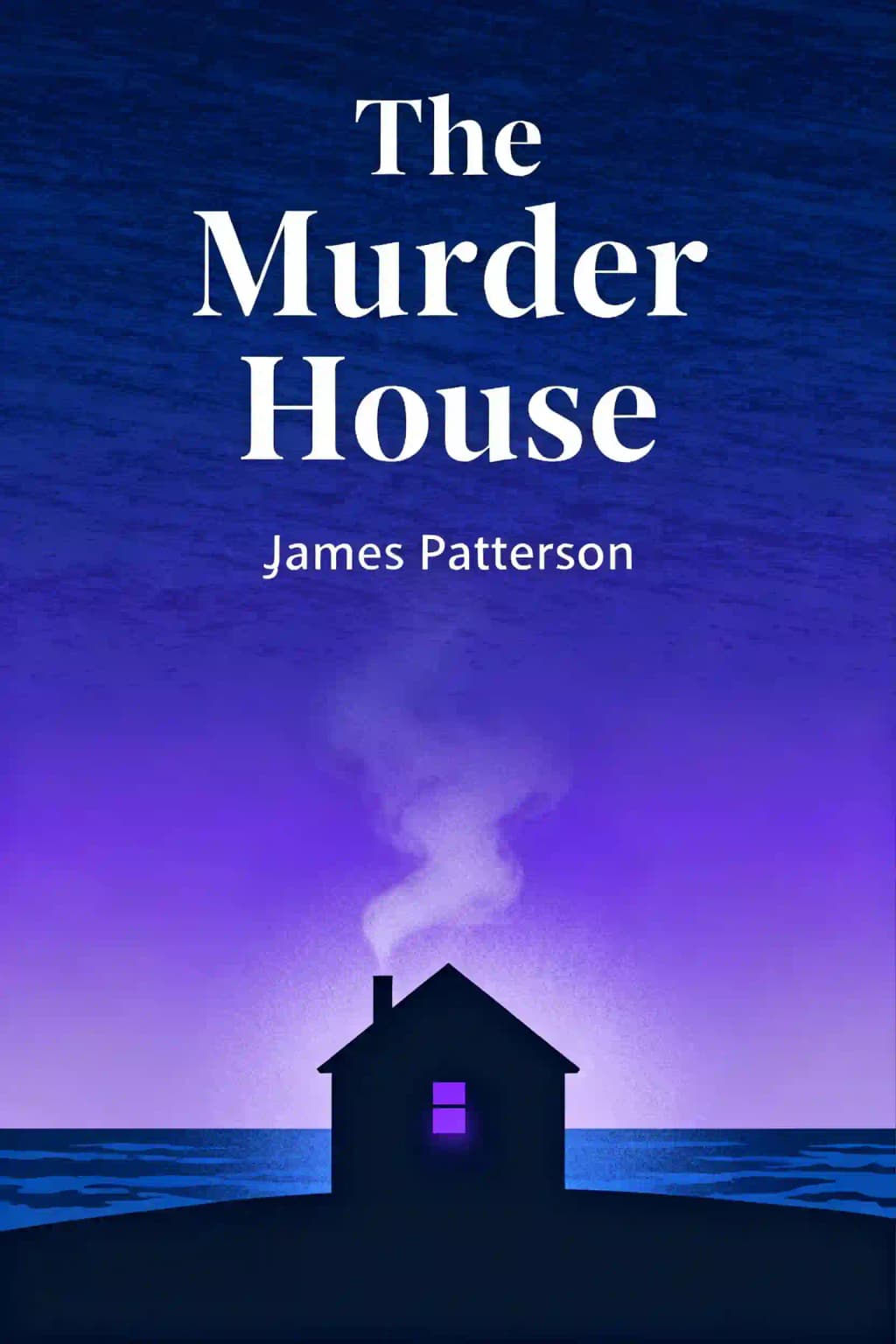
What if the walls of your childhood home held the key to a series of brutal murders? James Patterson's "The Murder House" has captivated millions with its chilling premise and unexpected twists. Since its 2015 release, this psychological thriller has become a staple in airport bookstores worldwide, selling over 2 million copies and spending 15 weeks on the New York Times bestseller list. Stephen King himself called it "unputdownable," while celebrities like Reese Witherspoon featured it in her book club. The novel's exploration of generational trauma and hidden identities resonated deeply during a cultural moment obsessed with ancestry and DNA testing. Beyond entertainment, Patterson's work continues his tradition of accessible thrillers that hook readers from page one-a skill that has made him the world's bestselling author with over 400 million books sold. Let's step inside the Murder House and discover what secrets await.
Chapter 2
A Homecoming Shadowed by the Past
Detective Jenna Murphy returns to the Hamptons with mixed emotions. Having left New York City's police department under mysterious circumstances, she's grateful when her uncle, Police Chief Langdon James, offers her a position in the local force. The Hamptons might seem like a paradise of wealth and leisure to outsiders, but Jenna knows better. She spent childhood summers here, and something about the place has always unsettled her-particularly the abandoned mansion at 7 Ocean Drive.
The locals call it the Murder House. Standing empty on prime beachfront property, the Victorian mansion has witnessed generations of violence. The Dahlquist family who built it carried a dark legacy-six generations of men named Holden, each seemingly cursed to become violent criminals. Though the house has stood vacant for years, its reputation keeps even the bravest locals at bay.
Jenna's return coincides with a brutal double homicide that shocks the community. Hollywood agent David Barrister and his mistress are found murdered in the abandoned Dahlquist mansion-their bodies arranged in a grotesque tableau of violence. The crime scene is particularly disturbing, with evidence of torture and ritualistic elements that suggest a deeply disturbed killer.
When local handyman Noah Walker becomes the prime suspect, Jenna feels conflicted. The evidence against him seems circumstantial at best-he had argued with Barrister earlier that day and lacks a solid alibi for the time of the murders. Yet something about Noah intrigues Jenna, and she can't shake the feeling that there's more to the story than her uncle is willing to investigate.
As Jenna digs deeper, she discovers troubling inconsistencies in the case. Her uncle seems determined to pin the murders on Noah regardless of evidence, even going so far as to fabricate testimony. When powerful local businessman John Sulzman begins pressuring the department for a quick resolution, Jenna's suspicions grow. What connection might Sulzman have to the murders? And why is her uncle, whom she's always trusted, seemingly willing to frame an innocent man?
The investigation takes an even darker turn when Chief James himself is found murdered. With her mentor and relative gone, Jenna finds herself increasingly isolated as she continues to question the official narrative about the killings. Could these modern murders be connected to the Dahlquist family's bloody history? And what about the unsolved disappearances of two young women, Dede and Anne, who vanished after deciding to spend a night in the abandoned mansion?
Chapter 3
Uncovering Corruption in Paradise
The murder of Police Chief Langdon James throws the department into chaos. His replacement, Isaac Marks, immediately makes it clear that he doesn't share Jenna's doubts about Noah Walker's guilt. In fact, he seems determined to sideline her investigation at every turn. When Jenna reveals in court that her uncle fabricated evidence against Noah, she effectively ends her career in law enforcement but frees an innocent man.
Dismissed from the force, Jenna finds herself ostracized by her colleagues and the community. Only Lauren Ricketts, a young officer who shares Jenna's concerns about corruption in the department, remains willing to help. Together, they continue investigating unofficially, risking their careers and possibly their lives.
The corruption Jenna uncovers extends far beyond her uncle's fabricated testimony. Financial records reveal suspicious payments between local officials and businesses. Building permits for valuable beachfront properties seem to have been approved or denied based on personal connections rather than regulations. And most disturbing of all, several unsolved disappearances over the years appear to have been deliberately neglected by investigators.
Justin Rivers, the charming owner of the local inn and restaurant, becomes an unexpected ally. Handsome and successful, Justin seems genuinely concerned about Jenna's well-being and offers both emotional support and practical help with her investigation. Yet something about his interest makes Jenna uneasy-a feeling she can't quite explain.
Meanwhile, Noah Walker remains under suspicion despite his release. His troubled past-including being wrongfully accused of a school shooting as a teenager-has made him an outcast in the community. Though initially resistant to Jenna's help, he gradually opens up about his own connection to the Murder House. As a contractor, he'd been hired to renovate the property years ago, only to abandon the project after experiencing unexplainable phenomena inside the house.
The gravedigger Aiden Willis emerges as another enigmatic figure in the investigation. His menacing presence and apparent knowledge about both the house and the recent murders make him simultaneously a potential threat and information source. When Jenna confronts him about his frequent visits to the abandoned property, his cryptic responses only deepen the mystery.
As Jenna continues investigating against official orders, she discovers that her uncle's corruption wasn't isolated-it was systematic and protected by powerful figures in the community. The question becomes not just who committed the recent murders, but who has been protecting killers in this seemingly idyllic town for generations, and why?
Chapter 4
The House That Whispers Secrets
The Murder House isn't just a setting-it's practically a character in its own right. Standing three stories tall with Victorian architecture that might once have been grand but now appears menacing, the house seems to exert an almost supernatural influence over the community. Its weathered facade, broken windows, and overgrown grounds create an atmosphere of decay and foreboding that perfectly mirrors the corruption Jenna uncovers in the town itself.
Inside, the house reveals even more disturbing secrets. Hidden rooms and passages suggest it was designed for surveillance and concealment. The basement, accessible through a disguised entrance, contains evidence of decades of violence-bloodstains too old to test, restraints bolted to the walls, and scratched messages from victims long forgotten. Most disturbing are the photographs Jenna discovers hidden behind a loose brick-images documenting atrocities committed by generations of Dahlquist men.
The house's history is equally unsettling. Built by the first Holden Dahlquist, a successful businessman with a secret penchant for violence, it passed through six generations of Holden Dahlquists-each seemingly afflicted by the same murderous tendencies. Local legend attributes this to a family curse, but Jenna's investigation reveals a more scientific explanation: a genetic condition affecting male descendants that alters brain chemistry and reduces impulse control.
What makes the house truly terrifying isn't supernatural phenomena but the very human evil it has witnessed. Each generation of Dahlquists used their wealth and influence to cover up their crimes, creating a legacy of protected violence that corrupted the entire community. When Jenna discovers that the sixth Holden Dahlquist didn't die childless as officially recorded but instead fathered a child who might carry the same genetic predisposition, the investigation takes on new urgency.
Noah's experiences during his attempted renovation provide crucial insights. He describes feeling watched constantly, finding rooms rearranged after leaving them empty, and hearing voices when no one else was present. Initially dismissed as imagination or superstition, these accounts gain credibility when Jenna experiences similar phenomena during her own investigations of the property.
The disappearance of Dede and Anne, two young women who decided to spend a night in the abandoned house on a dare, becomes increasingly central to Jenna's investigation. Though officially classified as runaways, evidence suggests they never left the property. When a storm erodes part of the beach behind the house, revealing human remains later identified as Dede's, Jenna realizes the killer never stopped-they simply became more careful about hiding their victims.
As Jenna spends more time in the Murder House, she experiences fragmented memories that suggest a personal connection to the property-flashes of childhood terror she can't fully recall. These episodes intensify as she discovers hidden rooms and passageways that feel strangely familiar, raising questions about her own past that she's not sure she wants answered.
Chapter 5
Unraveling the Dahlquist Legacy
The Dahlquist family history forms the dark heart of the mystery. Through old newspapers, property records, and interviews with elderly residents, Jenna pieces together a disturbing pattern spanning over a century. Each generation produced a son named Holden who eventually exhibited violent tendencies, usually beginning in adolescence. While the family's wealth and influence protected them from consequences, the community developed its own protective mechanisms-warnings passed from parent to child about avoiding the house and its occupants.
The first Holden Dahlquist arrived in the Hamptons in the late 1800s, building both the house and a successful shipping business. Though respected publicly, rumors of missing servants and violent outbursts followed him. His son, Holden II, expanded the family fortune while continuing the pattern of violence. By the time Holden VI inherited the property in the 1970s, the family's reputation was firmly established, though no Dahlquist had ever been convicted of a crime.
Medical records Jenna discovers suggest the family was aware of their condition-a genetic abnormality affecting the prefrontal cortex, leading to reduced impulse control and empathy. Notes from family physicians document attempts at various treatments, from early lobotomy procedures to experimental medications, all unsuccessful. The most disturbing discovery is a journal kept by Holden VI documenting his struggle against his own violent impulses and his decision not to have children to end the family curse.
This makes the possibility of a seventh Holden particularly alarming. If Holden VI did father a child despite his stated intentions, that person would now be an adult, potentially unaware of their genetic heritage and the risks it carries. Jenna's investigation narrows to identifying this potential heir-someone who might be responsible for the recent murders and who might carry the Dahlquist predisposition for violence.
The search becomes more personal when Jenna discovers old photographs suggesting her own mother had connections to the Dahlquist family. Though initially resistant to this possibility, evidence mounts that Jenna herself might be descended from this troubled bloodline. This revelation forces her to question not only her family history but her own identity-if the Dahlquists carried a genetic predisposition to violence, could she inherit it too?
Meanwhile, Noah's troubled past takes on new significance. His wrongful accusation in a school shooting appears connected to the same power structures that protected the Dahlquists. Was he deliberately framed to protect someone else? And does his attraction to Jenna represent genuine connection or manipulation by someone who understands her investigation better than she realizes?
As Jenna delves deeper into the Dahlquist legacy, she uncovers evidence that Holden VI may have attempted to end more than just his family line-documents suggest he planned to destroy the house itself, seeing it as a physical manifestation of the family's evil. His mysterious disappearance shortly after these plans were made raises questions about whether someone intervened to preserve both the property and potentially the Dahlquist bloodline.
Chapter 6
Allies and Adversaries in the Investigation
As Jenna's unofficial investigation continues, the lines between friend and foe become increasingly blurred. Lauren Ricketts, the young police officer who continues to help despite the professional risk, provides access to official resources and a crucial second perspective on the evidence. Their partnership develops into a friendship built on shared commitment to justice, regardless of who might be implicated.
Noah Walker's role evolves from suspect to reluctant ally. Initially distrustful of Jenna given his experience with law enforcement, he gradually shares his knowledge of the Murder House and the community. His skills as a contractor prove invaluable when examining structural changes to the house that might conceal evidence. The attraction between Noah and Jenna adds emotional complexity to their alliance, raising questions about whether personal feelings might cloud professional judgment.
Justin Rivers presents a more complicated relationship. His charm and apparent concern for Jenna seem genuine, and his position as a respected local business owner provides access to community information she couldn't otherwise obtain. Yet something about his interest in her investigation triggers Jenna's instincts-is he helping because he cares, or because he wants to monitor what she discovers?
Aiden Willis, the cemetery caretaker, emerges as one of the most enigmatic figures in Jenna's investigation. His knowledge of local history and apparent connection to the Murder House make him simultaneously valuable and suspicious. His cryptic comments about "watching over the dead" take on new significance when Jenna discovers his family has maintained the local cemetery-including the Dahlquist family plot-for generations.
Isaac Marks, Jenna's former boss, represents the institutional resistance to her investigation. His determination to maintain the official narrative about the murders-even in the face of contradictory evidence-suggests either incompetence or complicity. When Jenna discovers financial connections between Marks and local developer John Sulzman, his opposition to her investigation takes on new significance.
Sulzman himself represents the intersection of wealth, power, and corruption that has protected killers for generations. His interest in developing the Murder House property raises questions about his knowledge of its history. Did he pressure Chief James to close the case quickly to protect his investment, or does his interest in the property have deeper, more personal motivations?
As Jenna navigates these complicated relationships, she must constantly reassess who can be trusted. The corruption she uncovers isn't limited to a few bad actors but represents a community-wide system of silence and protection that has allowed violence to continue unchecked for generations. In this environment, even seemingly innocent interactions might conceal manipulation or threat.
The most disturbing realization is that the killer likely knows more about Jenna than she knows about them. As she gets closer to the truth, subtle warnings appear-her apartment is searched, evidence disappears, and she experiences the unsettling sensation of being watched. These intimidation tactics confirm she's on the right track while highlighting the danger of her investigation.
Chapter 7
Pieces of the Puzzle Fall Into Place
As Jenna continues her investigation, seemingly disparate elements begin to connect. The disappearance of Dede and Anne wasn't an isolated incident but part of a pattern stretching back decades. Other young women had vanished in the area, their cases quickly dismissed as runaways despite evidence suggesting foul play. The common thread: all had some connection, however tenuous, to the Murder House.
The discovery of Dede's remains provides crucial forensic evidence. Analysis reveals similarities to the recent double homicide-signature elements too specific to be coincidental. This confirms Jenna's theory that a single killer is responsible for multiple crimes spanning years, someone familiar enough with police procedures to avoid detection.
Noah's wrongful accusation in the school shooting takes on new significance when Jenna discovers that the actual shooter had connections to the Dahlquist family. Was Noah deliberately framed to protect someone with powerful connections? And was his later arrest for the double homicide part of the same pattern of deflection?
Financial records reveal that despite being officially abandoned, the Murder House property taxes have been paid consistently through a complex network of shell companies. Tracing these payments leads Jenna to discover that someone has been maintaining ownership of the property while deliberately keeping it vacant-preserving it almost like a shrine or museum to past violence.
Justin Rivers' background raises new questions when Jenna learns his mother once worked as a housekeeper for the Dahlquist family. This connection, which Justin never mentioned despite numerous conversations about the house and its history, suggests he knows more than he's revealed. Further investigation shows that his successful restaurant was opened with a substantial anonymous investment shortly after Holden VI's disappearance.
Aiden's cryptic behavior makes more sense when Jenna discovers old photographs showing him as a child with the Dahlquist family. Though not related by blood, he appears to have been a fixture at the house, possibly taken in by Holden VI. His loyalty to the family-even after their apparent extinction-suggests a complicated relationship that might explain his current behavior.
The most significant breakthrough comes when Jenna discovers medical records indicating that Holden VI had a daughter, not a son as she initially suspected. This daughter-who would not carry the genetic condition affecting male Dahlquists-was apparently given up for adoption to protect her from her father's influence. The timing and circumstances of this adoption align disturbingly well with what Jenna knows about her own early childhood.
As these connections solidify, Jenna realizes the truth is both simpler and more complex than she imagined. The murders aren't random acts of violence but carefully orchestrated events designed to protect secrets and preserve a legacy. The killer isn't a stranger to the community but someone integral to it-someone who has created an identity specifically to conceal their connection to the Dahlquist family.
Chapter 8
The Face Behind the Mask
The investigation reaches its climax when Jenna finally connects all the pieces. Justin Rivers isn't just a successful local businessman-he's the adopted son of Holden VI, raised away from the Murder House but brought back as a child and exposed to his father's influence. Though not biologically a Dahlquist, Justin absorbed the family's pathology through years of psychological conditioning.
This revelation explains numerous inconsistencies: Justin's unexplained wealth, his detailed knowledge of the house despite claiming never to have entered it, and his careful cultivation of relationships with local officials who might interfere with his activities. Most disturbing is the realization that he's been monitoring Jenna's investigation from the beginning, first through her uncle and later through direct manipulation.
Confronting Justin in the Murder House itself, Jenna discovers the full extent of his deception. Hidden rooms contain trophies from victims spanning decades-evidence that Justin has been killing since adolescence, initially under Holden VI's guidance and later independently. His restaurant, built on the foundation of Dahlquist money, served as both legitimate business and cover for his activities.
Justin reveals that Holden VI adopted him specifically to continue the family legacy, believing that nurture could replicate what nature had created through genetics. When this experiment proved successful-perhaps too successful-Holden VI apparently had second thoughts. Justin implies that his adoptive father's disappearance wasn't voluntary but his first independent murder, a rite of passage that freed him to continue the family tradition without supervision.
The confrontation becomes even more complex when Justin reveals what he knows about Jenna's past. She isn't descended from the Dahlquists as she feared, but she did visit the house as a child-brought there by her mother, who worked briefly for the family. Justin kidnapped Jenna during this visit, keeping her in the hidden basement rooms for days before Holden VI discovered and released her. This traumatic experience, which Jenna repressed, explains her fragmented memories and instinctive unease about the property.
As Justin details his crimes with disturbing pride, Jenna realizes he's not planning to let her leave alive. The final confrontation becomes a psychological battle as much as a physical one, with Justin attempting to use Jenna's recovered memories to disorient and control her. His ultimate goal isn't just to silence her but to force her to acknowledge what he sees as the inevitability of violence-his twisted belief that everyone harbors the same darkness he embraces.
The arrival of Noah and Lauren interrupts Justin's plans, leading to a violent struggle throughout the house. The confrontation culminates in the basement rooms where Justin kept his victims, with the house itself seeming to participate in the conflict as hidden doors close and ancient timbers shift. When fire breaks out-whether by accident or design remains unclear-the structure that harbored generations of violence begins to consume itself.
Chapter 9
Legacy of Darkness and Light
In the aftermath of Justin's exposure and death, Jenna faces the challenge of rebuilding both her career and her understanding of herself. The corruption she uncovered extended beyond Justin to include officials who knowingly protected him, requiring a comprehensive investigation that implicates several prominent community members. Her vindication is bittersweet, coming at such personal cost.
Noah's exoneration allows him to resume his life and business, though the psychological impact of his wrongful accusations remains. His relationship with Jenna evolves cautiously, both aware that they connected under extraordinary circumstances and need time to know each other under normal conditions. Their shared experience creates a bond that might develop into something deeper, given time.
The Murder House itself, partially destroyed by fire, becomes the subject of intense debate. Some want it razed completely, erasing the physical reminder of decades of violence. Others argue for preservation as a historical site and warning. Ultimately, the decision may not be purely local-the extensive crimes committed there make it a case of national interest, attracting media attention and true crime enthusiasts.
Jenna's discovery of her childhood abduction helps explain her lifelong sense of unease and her career choice. Though traumatic, this recovered knowledge provides closure and understanding of her own psychological landscape. Working with a therapist, she begins integrating these recovered memories into her sense of self, finding strength in surviving an encounter that claimed so many other victims.
The broader community must reckon with its role in enabling generations of violence. The culture of silence, the willingness to look away from suspicious circumstances, and the deference to wealth and influence all contributed to creating an environment where predators could operate with impunity. This collective soul-searching prompts initiatives to address corruption and increase transparency in local institutions.
For Jenna personally, the case's resolution brings a complex mix of emotions. Professional vindication comes with the knowledge that her uncle, despite his final corrupt actions, may have brought her back to the Hamptons specifically to investigate crimes he lacked the courage to address directly. This possibility suggests his character contained more complexity than she initially recognized.
The genetic component of the Dahlquist violence raises uncomfortable questions about determinism and free will. While the male Dahlquists may have had a biological predisposition toward violence, Justin's case demonstrates that environment and choice play equally significant roles. As a non-biological Dahlquist who embraced and continued the family's violent tradition, he represents the complex interplay between nature and nurture in shaping human behavior.
Perhaps most significantly, the case demonstrates how secrets and silence perpetuate cycles of violence. The community's unwillingness to acknowledge the Dahlquist family's true nature allowed their influence to continue long after their apparent extinction. Only by exposing these hidden histories-however painful the process-can similar patterns be prevented in the future.
As the community begins its healing process, the former Murder House site stands as both warning and reminder. Whatever rises from its ashes-whether memorial, public space, or new construction-will carry the weight of its history. The question becomes not how to forget this legacy but how to remember it in ways that honor victims while preventing future violence-a challenge Jenna and the community must address together.