Chapter 1
The Chilling Dance of Love and Death
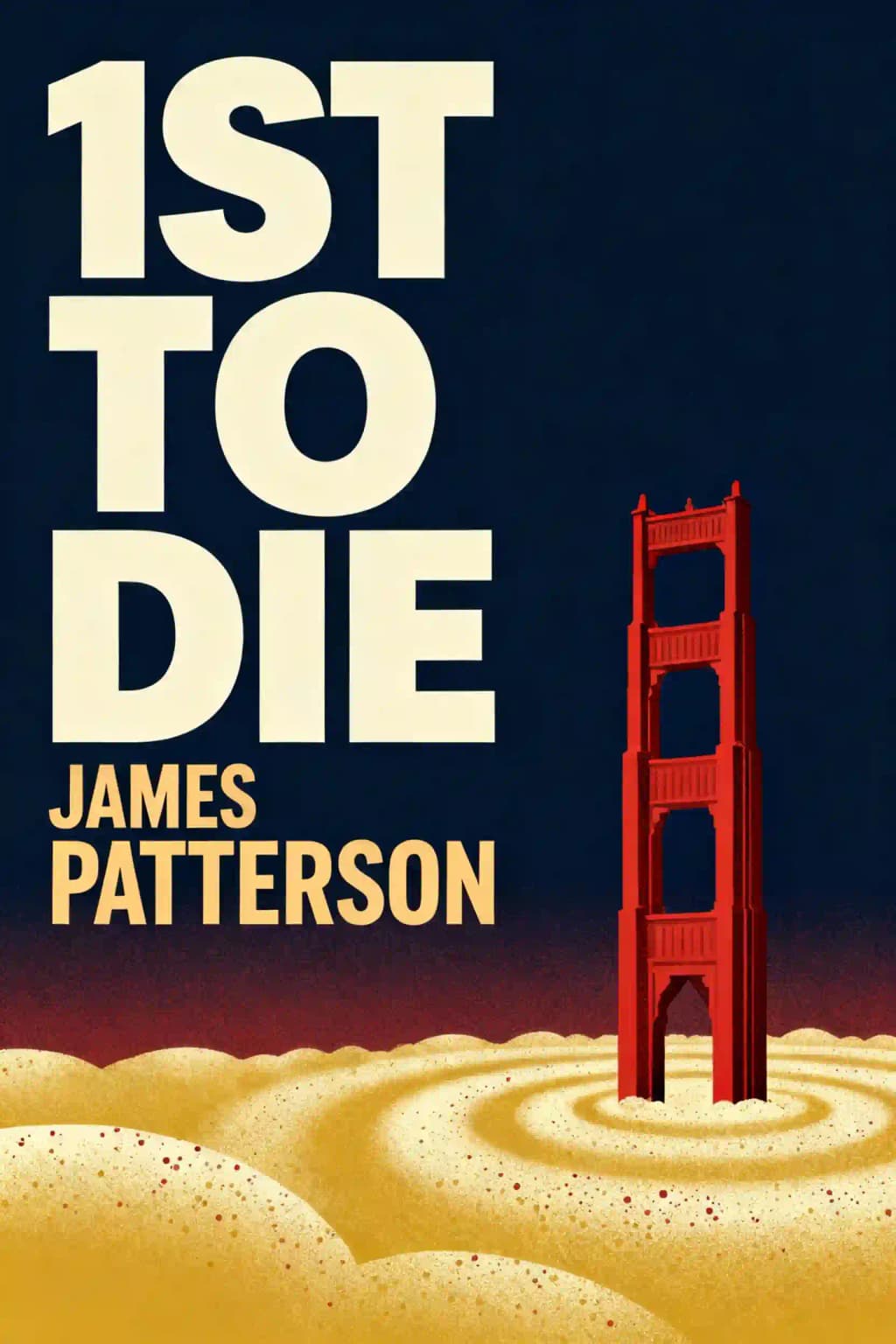
James Patterson's "1st to Die" begins with a haunting image-a female homicide detective standing on her apartment terrace, service revolver pressed against her temple. This gripping psychological thriller introduces readers to Lindsay Boxer, a brilliant detective battling both serial killers and a devastating personal diagnosis. The novel, which launched Patterson's bestselling Women's Murder Club series, has sold over 5 million copies worldwide and remains a fan favorite two decades after publication. Praised for its unflinching portrayal of female friendship and its relentless pacing, the book was adapted into an NBC television series in 2007. What makes this thriller particularly compelling is how it weaves together professional determination and personal vulnerability, creating a protagonist who must solve brutal murders while confronting her own mortality.
Chapter 2
A Wedding Night Turned Nightmare
David and Melanie Brandt's wedding night should have been the beginning of their happily-ever-after. Instead, it becomes the first chapter in a terrifying series of murders that will grip San Francisco with fear. The newlyweds celebrate in the Grand Hyatt's luxurious Mandarin Suite, surrounded by roses and champagne, toasting to their future while gazing at the city skyline. David gives his bride diamond moon earrings from Bulgari, whispering tenderly, "It's you who pulls my tides."
Their romantic moment is interrupted by a knock-someone delivering champagne. While Melanie heads to the bathroom to put on her new earrings, David answers the door to find a man identifying himself as Phillip Campbell. Without warning, Campbell stabs David in the chest. When Melanie emerges asking for her husband, she discovers his body and screams in terror. Campbell tells her, "I'm here to save you," before stabbing her too.
The crime scene Lindsay Boxer encounters the next day is particularly disturbing. Despite the expensive jewelry present, nothing was stolen. The bride's underwear had been pulled down, suggesting sexual assault after death. Most peculiarly, the killer appears to have switched jackets with the groom and left behind an expensive bottle of champagne. These strange details hint at something far more sinister than robbery gone wrong-a killer with a specific, twisted ritual.
The case becomes even more complex when Lindsay receives devastating personal news on the same day. Dr. Roy Orenthaler diagnoses her with Negli's aplastic anemia, a potentially fatal condition where her body no longer manufactures red blood cells. "Fatal, Lindsay," he tells her plainly. With this double burden-a horrific murder investigation and a life-threatening illness-Lindsay must somehow find the strength to continue her pursuit of justice.
Chapter 3
The Women's Murder Club Forms
As the investigation struggles to gain traction, Lindsay finds herself crossing paths with Cindy Thomas, an ambitious crime reporter for the San Francisco Chronicle. Their initial encounter in the ladies' room at the Hyatt creates an unexpected connection-two professional women united by their determination to solve these crimes, albeit from different angles. When Cindy offers her business card saying, "If you ever want to talk," she plants the seed for what will become a powerful alliance.
The investigation intensifies when a second couple, Michael and Rebecca De George, disappears from a Napa Valley resort during their honeymoon. Their bodies are later discovered at Sparrow Ridge winery, murdered while making love. Like the Brandts, the bride's wedding ring is missing, but the killer has changed methods-shooting the victims rather than stabbing them. This inconsistency troubles Lindsay, as sexual predators rarely switch their killing methods.
Feeling overwhelmed by both the case and her illness, Lindsay makes an unconventional decision. She invites her best friend Claire Washburn, the brilliant medical examiner, and Cindy Thomas to meet informally to discuss the case. Over margaritas and Caribbean food at Susie's restaurant, the three women form an immediate bond. When Lindsay suggests they collaborate off the record, Claire agrees with "In margaritas veritas," and Cindy enthusiastically joins despite potential professional consequences. With a toast, the Women's Murder Club is born-a sisterhood of intelligent professionals determined to catch a killer.
The group later expands to include Jill Bernhardt, a tough, savvy Assistant District Attorney known for taking on powerful defendants. Though initially hesitant about their unofficial collaboration, Jill quickly embraces it, offering legal guidance and perspective. Together, these four women-a detective, medical examiner, reporter, and prosecutor-create a formidable team, combining their unique skills and access to information in ways that circumvent the bureaucratic limitations of their official roles.
Chapter 4
A Killer's Twisted Signature
As more victims fall to the killer's hands, a disturbing pattern emerges that sends shockwaves through the investigative team. The murderer demonstrates an uncanny precision in his timing, always striking within 24 hours of victims' wedding ceremonies. His intimate knowledge of their lodgings and itineraries suggests careful planning and surveillance. Most tellingly, he takes only their wedding rings - leaving behind expensive watches, diamond necklaces, and other valuable jewelry - marking a ritualistic aspect to his crimes that speaks to a deeper psychological motivation.
The positioning of the bodies reveals a methodical and theatrical mindset. Each scene is meticulously arranged in sexually explicit poses, with victims placed in ways that suggest both intimacy and violation. The killer leaves deliberate clues - small objects moved or arranged in specific patterns - as if challenging investigators to decode his message. Claire's forensic examination reveals the most horrifying aspect: evidence of postmortem sexual assault on the female victims, indicating a level of sexual deviance that crosses into necrophilia.
The killer's third attack marks a bold escalation. James and Kathy Voskuhl's murders at Cleveland's Rock and Roll Hall of Fame - during their own wedding reception - demonstrates a chilling new level of audacity. The bodies are discovered in a macabre tableau inside a public bathroom stall, positioned to maximize shock value. This dramatic shift to murdering in a crowded venue, with hundreds of potential witnesses nearby, suggests not just growing confidence but a desire for notoriety and public attention.
Through Claire's painstaking forensic analysis, the team uncovers their first substantial physical evidence: a distinctive reddish-brown beard hair recovered from inside Rebecca De George's body. The hair's unusual color and texture provide crucial forensic markers, leading to the killer's nickname "Red Beard" among law enforcement. DNA analysis confirms the hair comes from a single source, definitively linking the murders.
The Women's Murder Club achieves their most significant breakthrough when Claire, analyzing victim patterns, suggests the killer might be targeting brides through wedding dress shops. This theory crystallizes when Lindsay's investigation reveals both Melanie Brandt and Becky De George purchased their dresses from the upscale Bridal Boutique at Saks. The department manager's testimony proves pivotal - she recalls a bearded man lingering unusually long during Becky's fitting and confirms that a crucial folder containing detailed bride information vanished approximately one month before the murders began. This folder, containing everything from wedding dates and ceremony locations to honeymoon itineraries, provided the killer with his hunting ground.
The discovery of the missing folder suggests not just opportunistic killing but a carefully orchestrated campaign of terror, with the killer methodically selecting his victims from a curated list of potential targets. This revelation adds another layer of horror to the investigation - dozens more brides could be at risk, their personal information already in the killer's possession.
Chapter 5
Nicholas Jenks: Famous Author, Sadistic Killer?
The investigation takes a dramatic turn when Lindsay connects the murders to Nicholas Jenks, a bestselling novelist with a distinctive reddish-gray beard. The evidence against him mounts quickly: he had a relationship with Kathy Voskuhl, was a minority partner in Sparrow Ridge Vineyards where the second couple was found, and had purchased cases of the rare Clos du Mesnil champagne found at the first crime scene. Additionally, he owned a registered Glock nine-millimeter pistol matching the murder weapon used in Cleveland.
When Lindsay and her new partner Chris Raleigh confront Jenks at his luxurious home overlooking the Golden Gate Bridge, he initially denies knowing Kathy Kogut. Presented with phone records showing multiple calls between them, including one just days before her wedding, he changes his story, admitting to "mentoring" her but denying any deeper relationship. His refusal to provide a hair sample from his beard only increases their suspicion.
The final piece of evidence comes from Jenks's ex-wife, Joanna Wade, who reveals that his unpublished first novel, "Always a Bridesmaid," featured a protagonist who "goes around killing brides and grooms. A lot like what happened." When Cindy Thomas locates this manuscript at the San Francisco Writers Guild, the Women's Murder Club discovers shocking similarities between the fictional murders and the real crimes-including the Grand Hyatt location of the first murder.
Armed with this evidence, Lindsay and Raleigh arrest Nicholas Jenks, who rages that they're making "the biggest mistake of your little life." The case appears solved, and Lindsay celebrates by beginning a romantic relationship with Chris Raleigh. For a brief moment, despite her illness, she allows herself to feel hope and happiness.
Chapter 6
A Frame Job and a Devastating Truth
As the case against Jenks proceeds, Lindsay notices a troubling detail-he's left-handed, while Claire had determined the killer was likely right-handed. This discrepancy jolts her awake as she prepares for bed one night. Despite having built the case against Jenks herself, Lindsay begins to question whether they've arrested the right man.
Her suspicions intensify when she meets with Jenks in prison. When she asks if he can think of anyone who would want to frame him, he mentions his former agent Greg Marks and his ex-wife Joanna Wade. Though he initially dismisses Joanna as a suspect, insisting she still loves him, Lindsay learns that Joanna once worked at Saks-a potentially crucial connection to the victims.
The case takes another dramatic turn when an earthquake strikes San Francisco, allowing Nicholas Jenks to escape custody. As a massive manhunt gets underway, Claire makes a breakthrough discovery about the Brandt murder: the urine found at the crime scene contained yeast cells and high counts of red blood cells-clear indicators it came from a menstruating woman, not David Brandt as they'd assumed. This evidence proves the killer was female, not Nicholas Jenks, who had been telling the truth about being framed.
Lindsay races to Joanna Wade's apartment, only to find her brutally murdered. Outside, she spots someone who looks like Jenks-bearded with reddish-gray hair-but realizes it's actually a woman in disguise. Chris follows the suspect while Lindsay investigates the apartment. When Chris reports they're heading toward the Palace of Fine Arts, Lindsay remembers a photo from Jenks's house showing the location where he was married.
At the Palace of Fine Arts, Lindsay makes the shocking discovery that the real killer is Chessy Jenks, Nicholas's current wife. Disguised with dyed hair and a fake beard, Chessy has been systematically murdering newlyweds and framing her husband. She explains she killed the brides because they reminded her of herself-innocent women destroyed by Nicholas's cruelty and abuse. In a final confrontation, Lindsay is forced to shoot Chessy, but not before Chris Raleigh is fatally wounded.
Chapter 7
The Price of Justice
The novel reaches its devastating climax when Lindsay races back to find Chris lying in a pool of blood, barely clinging to life. The scene unfolds with gut-wrenching detail-his labored breathing, the growing crimson stain on his shirt, the way his usually strong hands tremble as they reach for her. She tells him through tears that they caught the killer, managing to give him this one final piece of peace. His last words-a weak but proud "That's my girl"-capture everything about their relationship before he dies in her arms. The cruel irony cuts deep: Lindsay was the one diagnosed with Negli's aplastic anemia, yet Chris was "the first to die"-a twist of fate that haunts her relentlessly.
The aftermath sends Lindsay into a spiral of grief and depression. She takes indefinite leave from work, spending days in a fog of memories-Chris's laugh, his touch, the future they'd planned together. She contemplates suicide, going so far as to hold her service weapon, turning it over in her hands night after night. Only the thought of betraying Chris's memory-his sacrifice, his belief in justice-pulls her back from the brink. His funeral becomes a testament to his service: bagpipes echo across the cemetery, a twenty-one-gun salute pierces the air, and fellow officers stand at attention in perfect rows. In an unexpected moment of grace, Chris's ex-wife Marion approaches Lindsay, sharing how Chris had spoken of her often-"pretty and smart," he'd said-and invites her to be part of the family, recognizing the depth of their connection despite its brevity.
The epilogue delivers a final, shocking twist that upends everything. One month after Chris's burial, Nicholas Jenks appears at Lindsay's apartment-uninvited, unhinged, and revealing a horrifying truth. He and Chessy had meticulously planned the bride and groom killings together, viewing the murders as research for his next bestselling novel. But Chessy had betrayed him, going off-script and threatening to expose everything. The confrontation turns violent when Jenks attacks Lindsay with a hunting knife, slashing both her and her loyal companion Martha. Despite her injuries, Lindsay manages to reach her backup revolver hidden behind a bookshelf. The ensuing struggle ends with Jenks dead on her kitchen floor-justice served, but at a terrible cost. Her first and only call is to her three friends-Claire, Cindy, and Jill, the Women's Murder Club-who drop everything and rush to her side, proving once again that some bonds are unbreakable, even in the darkest moments.
Chapter 8
The Bonds That Save Us
At its heart, "1st to Die" is about the life-saving power of connection. Lindsay Boxer begins the novel contemplating suicide on the Golden Gate Bridge, isolated in her pain and fear. Her Negli's disease diagnosis looms like a death sentence, and the brutal wedding murders weigh heavily on her conscience. Through the formation of the Women's Murder Club, she discovers a support system that gives her the strength to continue fighting - both against the killer and her disease. This transformation from solitary despair to collaborative strength forms the emotional backbone of Patterson's narrative.
Each member of the club brings unique strengths to their alliance, creating a formidable investigative team. Claire Washburn, the medical examiner, provides scientific brilliance and emotional wisdom, often serving as the group's moral compass while delivering crucial forensic insights. Cindy Thomas, the crime reporter, contributes investigative tenacity and media savvy, using her journalistic connections to uncover leads the police might miss. Jill Bernhardt, the assistant district attorney, offers legal expertise and strategic thinking, helping the team navigate complex procedural waters while building their case against the killer.
The novel explores how professional women navigate male-dominated fields, creating their own networks of support when traditional structures fail them. In the San Francisco Police Department, Lindsay faces subtle discrimination and skepticism from male colleagues. The other members encounter similar challenges in their respective fields - medicine, journalism, and law. Their unofficial collaboration allows them to circumvent bureaucratic obstacles and solve cases that might otherwise go cold, demonstrating the power of female solidarity in traditionally patriarchal institutions.
Patterson crafts a thriller that balances heart-stopping suspense with genuine emotional depth. Lindsay's struggle with Negli's disease adds a poignant layer to her character, making her determination to solve the case all the more powerful. Her physical symptoms worsen as the investigation intensifies, creating a race against both the killer and her own mortality. When she finally opens up to her friends about her illness during their late-night meeting at Susie's, their immediate rallying around her demonstrates the novel's central theme - that even in our darkest moments, connection to others can be our salvation.
The final sequence, where the Women's Murder Club rushes to Lindsay's aid after her harrowing confrontation with Nicholas Jenks, perfectly encapsulates this message. As Lindsay lies wounded, each member plays a crucial role in saving her life: Claire provides medical expertise, Cindy manages the media circus, and Jill ensures proper legal procedures are followed. In a world full of monsters and mortality, friendship proves to be their most powerful weapon and greatest comfort. As Patterson shows us, sometimes the first to die are not the last to love - and in that love lies our redemption, whether facing personal demons or serial killers.
Chapter 9
The Psychology of Serial Killers
Patterson's portrayal of the killers in "1st to Die" offers a fascinating glimpse into the psychology of serial murder, delving deep into the complex motivations that drive individuals to commit repeated acts of violence. Unlike many thriller antagonists who kill for practical reasons like eliminating witnesses or financial gain, both Chessy and Nicholas Jenks murder for deeply psychological motivations that reflect profound psychological disturbance and pathology.
Chessy's crimes stem from a twisted form of revenge and identification, representing a classic case of trauma-induced violence. By killing brides on their wedding nights, she symbolically destroys versions of her younger, innocent self - the woman who married Nicholas Jenks only to be subjected to years of abuse and humiliation. Her careful staging of the bodies and post-mortem violations reveal a ritualistic quality to her killings, suggesting she's working through her own trauma with each murder. The specific details of her crime scenes - the positioning of the victims, the selection of wedding nights, and her methodical approach - all point to a killer seeking to regain control through violence, a common psychological pattern in trauma survivors who become perpetrators.
Nicholas's participation in planning the murders demonstrates a different but equally disturbing psychological profile - that of a malignant narcissist who views other people's lives as mere material for his art. His calculated involvement reveals classic traits of antisocial personality disorder: superficial charm, manipulation, and a complete absence of empathy. His willingness to orchestrate real murders to create an authentic plot for his novel shows not just a lack of moral compass but an extreme form of artistic narcissism where human life becomes subordinate to his creative vision. The way he methodically plans each killing, treating them as plot points in his narrative, demonstrates the cold, analytical mindset typical of organized serial killers.
Together, they represent two distinct but equally dangerous faces of evil: the traumatized victim-turned-perpetrator and the calculating narcissist who believes himself above moral constraints. Patterson's psychological insight makes these villains all the more terrifying because they remain recognizably human despite their monstrous actions. Their motivations - while twisted - stem from recognizable human emotions and experiences: trauma, ambition, the desire for control, and the need for recognition. This grounding in realistic psychology sets them apart from more theatrical serial killer portrayals and makes them more disturbing because readers can understand, if not sympathize with, their underlying motivations.
The dynamic between Chessy and Nicholas also illustrates how different types of psychological damage can create deadly partnerships, with each killer's pathology reinforcing and enabling the other's - a phenomenon often observed in real-life killer couples. Their relationship demonstrates how abuse cycles can perpetuate and escalate into extreme violence when combined with other forms of psychological dysfunction.
Chapter 10
When Justice Fails, Friendship Prevails
"1st to Die" offers no easy answers or perfect justice in a world where institutional systems often fall short of their intended purpose. The legal system proves woefully inadequate - allowing a guilty man to escape punishment when Jenks is freed after being framed by his wife's calculated manipulation of evidence. This failure of justice highlights how even carefully constructed legal frameworks can be subverted by those who understand how to exploit their weaknesses.
Lindsay's final confrontation with Jenks, culminating in an act of self-defense, provides a form of rough justice that exists outside the boundaries of law. Yet this violent resolution carries its own cost - it can't bring back the innocent victims, restore what Lindsay has lost, or provide the clean closure that following proper legal channels might have offered. The scene underscores how vigilante justice, even when seemingly justified, leaves its own scars on those forced to carry it out.
What remains constant throughout these systematic failures is the unwavering strength of the Women's Murder Club. As traditional support structures crumble - the police department's political maneuvering, the justice system's vulnerabilities, even Lindsay's own body betraying her through illness - the bonds between these four women grow stronger. Their friendship transcends professional obligations, offering emotional support, practical assistance, and a shared determination to find truth despite the obstacles.
The novel suggests that while we may not always achieve perfect justice in an imperfect world, human connections can sustain us through the darkest circumstances. Each member of the Club brings unique strengths: Claire's scientific precision, Cindy's investigative instincts, Jill's legal expertise, and Lindsay's detective skills. Together, they create a support system more reliable than any official institution.
As Lindsay discovers through her harrowing journey, sometimes solving the crime isn't enough to heal what's broken - the trauma remains, the system's flaws persist, and the weight of unavenged wrongs continues to burden those left behind. But having friends who understand both your strength and vulnerability, who stand beside you in both triumph and defeat, provides something perhaps more valuable than justice: the knowledge that you don't have to face life's darkest moments alone.
The Women's Murder Club represents more than just a team solving crimes - it becomes a testament to the power of female friendship and solidarity in a world where traditional systems of justice and protection often fail those they're meant to serve.