Chapter 4
The Supernatural Underworld of Chicago
Harry's Chicago exists in layers-the mundane city most people know, and beneath it, a supernatural ecosystem with its own rules and hierarchies. McAnally's pub serves as neutral ground for the magical community, with thirteen of everything (tables, columns, mirrors) to disperse magical energy. The proprietor, Mac, serves excellent ale and offers silent wisdom to those wise enough to listen.
This underworld has strict governance. The White Council of wizards enforces magical laws with brutal efficiency through enforcers called Wardens. Harry lives under the Doom of Damocles-a magical probation where any violation means execution. His Warden, Morgan, watches him with suspicious hostility, convinced Harry will eventually turn to black magic.
Vampires maintain their own power structure, with Bianca running an exclusive escort service as cover for her feeding operation. Her human appearance is merely a mask for the monstrous predator beneath. When threatened, she transforms into her true form-a horrifying creature with stretched skin and inhuman features. Her feeding is portrayed as both violent and sensual, blurring the line between predation and pleasure.
Even faeries have their place in this world. Harry summons a six-inch tall faerie named Toot-toot using bread, milk, and honey as bait. Despite his diminutive size and comic threats to "rot your teeth and fill your ears with worms," Toot-toot provides crucial information about activities at Victor's lake house. This interaction demonstrates the binding nature of faerie promises and the importance of true names in magical practice.
Harry's own apartment contains supernatural elements-a spirit named Bob who resides in a skull, storing magical knowledge Harry can't keep in computers (which malfunction around wizards). Bob helps Harry create potions but demands payment in the form of romance novels and occasional freedom to indulge his obsession with human sexuality.
This layered world creates a rich backdrop where magic follows consistent rules. Power requires sacrifice, knowledge demands payment, and breaking magical laws has severe consequences. In this environment, Harry walks a precarious line between serving human justice and navigating supernatural politics.
Chapter 5
The Deadly Dance of Magic and Emotion
At the heart of "Storm Front" lies a fundamental truth about magic: it's powered by emotion. The murders Harry investigates aren't just killings-they're the result of intense hatred channeled through ritual. As Harry explains to Murphy, "Women are better at hating than men. They can focus it better, let it go better. Guys tend to hang onto it forever."
This emotional foundation of magic becomes increasingly important as Harry discovers the killer's method. Victor Sells has learned to harness emotions-first fear, then lust-to fuel increasingly powerful spells. The orgies at his lake house aren't just debauchery; they're magical batteries charging his deadly thaumaturgy. The thunderstorms provide additional power, creating perfect conditions for heart-exploding magic.
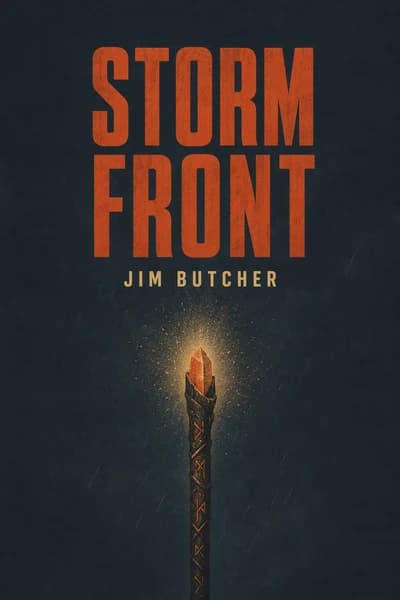
Harry's own magic follows similar principles. When creating potions with Bob, he must channel specific emotions-worry and stubbornness for the escape potion, different feelings for the love potion. When facing the toad demon, he draws power from the storm, directing lightning through his staff. Magic in this world isn't about memorizing Latin phrases; it's about emotional focus and will.
This connection between magic and emotion extends to Harry's investigative tools. The soulgaze he accidentally shares with Marcone reveals the crime boss's true nature-"a soldier, a warrior, with all the deadly precision and iron discipline of a martial artist." Later, when Harry's eyes meet Monica's, he glimpses her abusive past and fierce maternal love. These moments of magical insight provide crucial context for understanding characters' motivations.
The most disturbing application of emotion-powered magic comes through ThreeEye, the drug granting users magical sight. By consuming this substance, ordinary people temporarily gain wizard-like perception-seeing auras, spirits, and magical traces. But this unnatural ability comes at a terrible cost, driving users to violence and madness as they're unable to process what they've seen.
Through these examples, Butcher establishes magic as an extension of human nature rather than an external force. The most dangerous practitioners aren't those with the most knowledge-they're those who can channel the most intense emotions into their spells. This makes magic deeply personal and unpredictable, reflecting the chaotic nature of human feeling.
Chapter 6
A Detective's Code in a Magical World
Despite his supernatural abilities, Harry Dresden approaches investigations with the methodical precision of a classical detective. When confronted with magical murders, he doesn't immediately resort to spells-he interviews witnesses, examines crime scenes for physical evidence, and follows leads like any skilled investigator. His wizard's tools complement rather than replace traditional detective skills, demonstrated when he carefully photographs the crime scene at the Madison Hotel, noting both mundane details like blood spatter patterns and magical residue that only he can detect. This dual approach allows him to bridge the gap between conventional police work and supernatural investigation.
Harry's moral code serves as an unwavering compass guiding his actions, even when magical solutions might offer easier paths. When Monica cancels her missing husband case, Harry continues investigating because his instincts warn him she's in danger - a decision that proves crucial when he discovers Victor's manipulation of her. When Linda Randall is murdered, he pursues justice despite threats from Johnny Marcone and supernatural entities. During Murphy's poisoning by a magical scorpion, he risks exposure and personal safety to save her, even though she suspects him of being involved in the murders.
This ethical framework extends deeply into his use of magic. Harry steadfastly refuses to create love potions that would violate personal consent, won't use magic to harm innocents, and maintains strict boundaries between mortal and supernatural worlds. His interaction with Bob exemplifies this principle - when Bob requests a love potion in exchange for help, Harry reluctantly agrees but creates a mild version that merely enhances existing attraction rather than manufacturing false feelings. He explains to Bob that true love must develop naturally, showing his respect for free will.
Harry's principles face their greatest test during the confrontation with Victor Sells at the lake house. Rather than engaging in a destructive magical duel that could harm bystanders, he relies on cleverness and restraint. He throws a film canister to break Victor's ritual circle, demonstrating that sometimes the simplest solutions are most effective. When cornered by scorpions and armed killers, he animates a broom with a cleaning spell - a creative non-violent solution that showcases his resourcefulness. His final victory over Victor comes not through raw power but through knowledge and wisdom, using the demon's true name to break Victor's control without establishing his own dominance.
This careful balance between magical power and moral restraint fundamentally defines Harry's character and sets him apart from other practitioners. He could easily follow Victor's path, using magic for personal gain and revenge, but consistently chooses to protect others and maintain ethical boundaries. His reflection at the story's conclusion reveals his deeper purpose: "I've found my calling-creating a corner of the world where the supernatural respects boundaries and ordinary people are protected from forces they shouldn't have to face." This philosophy establishes him not just as a detective who happens to be a wizard, but as a guardian striving to maintain harmony between two worlds.
Chapter 7
The Price of Power and Knowledge
Throughout "Storm Front," characters pay prices for power and knowledge-sometimes willingly, sometimes not. Harry's consulting work for the police comes at significant personal cost, particularly regarding his relationship with Murphy. When forced to withhold crucial supernatural information that could protect her, he watches their hard-earned trust erode. His investigation into the ritual murders places him in an impossible position: reveal too much and endanger Murphy with forbidden knowledge, or stay silent and appear suspicious. This dilemma exemplifies how even protective silence carries a steep price.
Harry's magical abilities themselves exact constant tolls. Modern technology malfunctions in his presence, forcing him to live without basic conveniences like reliable electricity or modern appliances. His wizard's power acts like an electromagnetic field, shorting out computers, causing lights to flicker, and making even simple tasks like riding an elevator risky. More dangerously, his power serves as a beacon to supernatural entities, drawing hostile attention from creatures most humans never know exist. Even his basement laboratory, filled with magical tools and ingredients, represents years of careful investment and risk.
Victor Sells' descent illustrates the most dramatic price of power. Starting as an ordinary stockbroker and family man, his initial dabbling in magic stemmed from seemingly noble intentions - providing wealth and security for his family. However, the corrupting influence of black magic transformed him step by step. He began missing family dinners, then grew increasingly paranoid and violent. His experiments with ThreeEye production led him to torture and murder. By forcing Monica to drink ThreeEye and witness his true nature, he crossed a line from which there was no return. The drug itself represents another layer of cost - users gain the ability to see the supernatural world but lose their grip on reality, many ending up in psychiatric wards.
The Beckitts exemplify how the pursuit of vengeance demands payment in kind. Their daughter's death in crossfire during a mob hit destroyed their previous identities as respectable citizens. Their partnership with Victor Sells isn't just financial - it's a deliberate descent into darkness. Harry describes them as people who "died inside long ago," their humanity sacrificed piece by piece in pursuit of revenge against Johnny Marcone. Their transformation from grieving parents to cold-blooded conspirators shows how vengeance hollows out its practitioners.
Even seemingly minor characters demonstrate this principle. Linda Randall's pursuit of pleasure leads her to become entangled with dangerous supernatural powers, ultimately resulting in her brutal murder. Donny Wise's opportunistic attempt to profit from blackmail photos places him in the crosshairs of forces he can't comprehend, demonstrating how even peripheral contact with supernatural power carries risk.
The White Council's harsh laws codify this reality - magical knowledge comes with strict responsibilities and lethal consequences for transgression. Harry lives under the Doom of Damocles, a suspended death sentence that could be executed for any violation. Morgan's constant surveillance and threatening presence remind Harry that power requires perfect control and compliance. As Morgan states with chilling clarity, "One mistake, and I will end your life."
This pervasive theme - that power and knowledge invariably demand payment - provides a moral framework for the supernatural elements in the story. Magic isn't simply a tool or talent; it's a responsibility that requires sacrifice, discipline, and careful consideration of consequences. Those who forget this fundamental truth, like Victor Sells, are ultimately consumed by the very power they sought to master.
Chapter 8
The Vulnerability Behind the Magic
Despite his impressive magical abilities, Harry Dresden remains profoundly human and vulnerable. He lives in a basement apartment with secondhand furniture, drives a multicolored Volkswagen Beetle that frequently breaks down, and struggles to pay his bills. When we first meet him, he's finishing a paperback novel-a small luxury in his financially precarious life.
Harry's physical vulnerability becomes increasingly apparent as the story progresses. He's ambushed and beaten with a baseball bat, shot in the hip during the final confrontation, and nearly killed multiple times. Unlike superhero wizards who shrug off injuries, Harry feels every wound acutely. After being attacked, he notes, "My head hurt. My back hurt. My ribs hurt. My arm hurt. My legs hurt. Even my teeth hurt."
Emotional vulnerability shapes Harry just as significantly. Memories of his father-a kind, struggling stage magician who died when Harry was young-provide both comfort and pain. Harry recalls how his father would show him pictures of his mother every night, talking about her until Harry felt he almost knew her. This formative loss creates both Harry's capacity for empathy and his deep-seated fear of abandonment.
His relationship with Murphy reveals another vulnerability-the fear that those he cares about will reject him once they learn what he truly is. When Murphy refuses to trust him, Harry reflects, "It hurt. It hurt bad. Murphy had been my friend." Later, when she handcuffs him despite being poisoned, he continues trying to save her life-his loyalty transcending her distrust.
Even Harry's magic contains vulnerability. Unlike the clinical, emotionless power some fictional wizards wield, Harry's magic requires emotional investment. When he channels the storm's power against the demon, he describes it as "wild, dangerous" energy that leaves him physically drained with "smoking toenails." His shield bracelet burns his wrist when blocking attacks, his magical sight leaves permanent mental scars, and each spell exacts a physical toll.
This combination of power and vulnerability makes Harry relatable despite his extraordinary abilities. He's not an untouchable magical superhero but a struggling human being who happens to have magical talent. His victories come not from overwhelming power but from persistence, cleverness, and willingness to endure pain for what he believes is right.
Chapter 9
The Birth of a Modern Magical Detective
"Storm Front" establishes Harry Dresden as a unique figure in fantasy literature-a wizard who operates openly in the modern world, combining magical knowledge with detective work. His business card might read "Wizard," but his methods draw as much from Sam Spade as Merlin. This fusion creates a character who bridges multiple genres, appealing to fans of detective fiction, urban fantasy, and traditional magic stories.
Harry's first-person narration provides immediate intimacy with readers. His voice-wry, self-deprecating, occasionally profound-guides us through both mundane and magical aspects of his world. When describing Gentleman Johnny Marcone, he notes, "He looked more like someone's indulgent father than a criminal mastermind," showing his knack for observation. When confronting the toad demon, his thought process reveals both fear and determination: "I wasn't going to leave Susan to die alone. I just wasn't."
The novel establishes Harry's core relationships-his complicated friendship with Murphy, his attraction to reporter Susan Rodriguez, his antagonistic bond with Morgan the Warden, and his grudging respect for crime boss Marcone. Each relationship reveals different aspects of Harry's character while setting up dynamics that will evolve throughout the series.
Most importantly, "Storm Front" establishes Harry's fundamental purpose. He's not just solving crimes or battling supernatural threats-he's creating a bridge between ordinary humans and the magical world. As he reflects in the final pages: "I've found purpose-creating a corner of the world where the supernatural respects boundaries and ordinary people are protected." This mission statement defines not just this novel but the entire series to follow.
By the story's conclusion, Harry has survived multiple attempts on his life, solved the murders, exposed a drug operation, and earned a reprieve from the White Council's suspicion. Yet his victories come with costs-Murphy's trust is damaged, he's made powerful enemies, and he's been forced to witness terrible things. The final line-"My name is Harry Blackstone Copperfield Dresden, and I'm in the book"-serves both as a conclusion and an invitation to further adventures, promising readers that this wizard-detective remains available for consultation whenever darkness threatens Chicago.