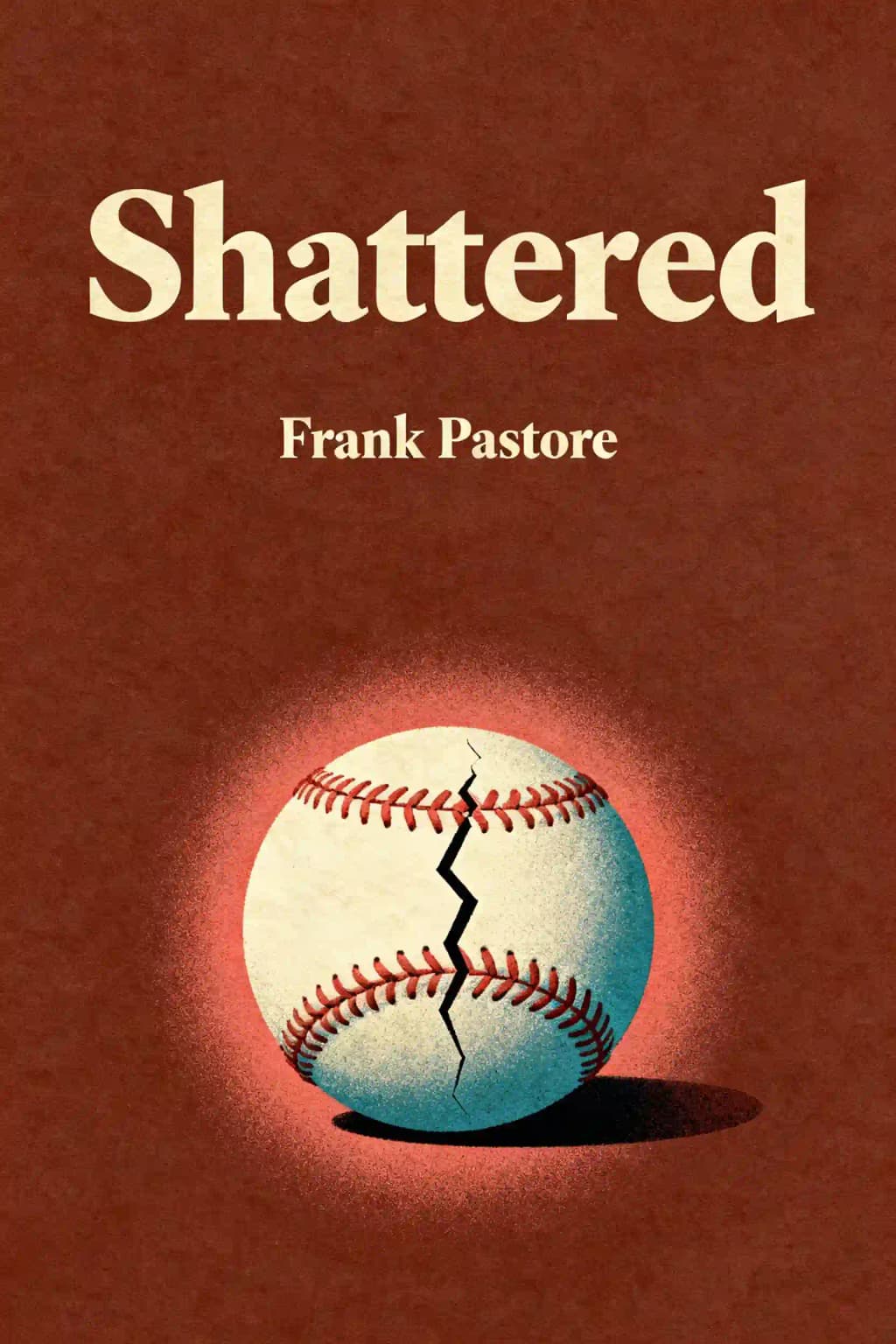
Chapter 1
From Fastballs to Faith: A Shattered Dream Becomes Divine Purpose
Frank Pastore's journey from Major League pitcher to Christian radio host has become a modern parable of transformation. His memoir "Shattered" resonates deeply with readers seeking meaning in life's broken moments-it's no wonder the book has become a staple in Christian book clubs nationwide. Pastore's story particularly captivated Tim Tebow, who cited it as inspiration during his own career transitions. The book's cultural impact extends beyond religious circles, with its unflinching examination of how our greatest disappointments often precede our greatest purpose. In an era where celebrity memoirs typically glorify success, Pastore's vulnerable account of failure and redemption offers a refreshing counternarrative that continues to influence how we view life's inevitable setbacks.
Chapter 2
The American Dream Meets Unexpected Nightmare
At 26, Frank Pastore embodied the American dream-a Cincinnati Reds pitcher with a beautiful wife, young son, and another baby on the way. On a perfect blue day at Dodger Stadium in 1984, he was cruising toward victory when Dodger Steve Sax connected with a routine fastball. The ball rocketed back at 132 mph, giving Pastore less than an eighth of a second to react. His instinctive move to protect his face with his pitching arm saved his life but shattered his elbow-and his career.
As he cradled his arm, feeling bone fragments shifting "like broken cookies in a bag," Pastore found himself raging at a God he didn't even believe in. The stadium fell silent while he contemplated a future without baseball. In that moment of crisis, everything changed.
This shattering moment represents the central metaphor of Pastore's life. Time after time, his plans would be broken apart, only for the pieces to be reassembled into something more meaningful. "I wouldn't trade my worst day as a Christian for my best day as a pagan," he reflects, challenging readers to reconsider their own disappointments.
The Christian life, Pastore discovered, isn't just about personal salvation but about joining a cosmic adventure. He compares it to taking his three-year-old son to Disney World, where the child initially refused to venture past the entrance area. Similarly, many believers miss the bigger picture, reducing faith to a self-centered transaction: "Jesus died for my sins, I'm going to heaven, and I should sin less." But that's Christianity for narcissists. The real adventure-the kingdom of God-begins right now.
Chapter 3
Growing Up in a Web of Deception
Truth was a stranger in Frank Pastore's childhood. His mother, a manipulative woman with multiple failed marriages, created a foundation of lies that would shape his early worldview. She told him he was conceived on her wedding night, when in reality she "accidentally" got pregnant and considered abortion before marrying his high-school dropout father.
As a latchkey kid from age four, Pastore grew up essentially alone, playing with his imaginary friend Elrod while consuming endless junk food. Basic life skills eluded him-he didn't learn about brushing teeth until third grade, by which time he had 21 cavities. His mother's parenting philosophy taught him that failure was always someone else's fault, creating a distorted sense of reality.
This warped perspective became painfully clear in fifth grade when Pastore auditioned for a talent show singing "Born Free." The judges' horrified expressions revealed what his mother had never told him-he couldn't sing at all. By junior high, he was seriously overweight and dressed in clothes his mother bragged about stealing from the store where she worked.
His one talent was throwing things hard-which made him deadly in neighborhood lemon fights and later in Little League. Despite his mother insisting his baseball dreams were stupid, Pastore spent hours throwing pitches against their block wall, imagining himself in the Major Leagues.
The family moved constantly-twelve houses by high school-whenever his mother's lies caught up with her. She once had him deliberately flood their house by leaving the bathtub running to claim insurance money for new carpeting. Life resembled being in the Witness Protection Program: never get close to anyone, never reveal too much, don't make real friends.
What's remarkable is how this environment shaped Pastore not into a recluse but into an extrovert who genuinely loves people. His early experiences with deception would later make him particularly receptive to the concept of absolute truth-a foundation that would become crucial in his spiritual journey.
Chapter 4
Baseball: The One Constant in a Chaotic Life
In Pastore's unstable childhood, baseball provided the only sense of continuity and achievement. His father, born in 1914, had played semipro baseball before a barroom fight injury ended his career. Despite his mother's constant belittling of his father as "the peasant," baseball created a connection between father and son that transcended words.
At age 10, Pastore experienced a formative moment after striking out with bases loaded. When he sat crying on the bench, his father yanked him up: "Get your head up. There's no crying in baseball." This tough lesson taught him emotional resilience that would serve him throughout life.
His talent quickly became evident. By age 11, he made the all-star team. At 12, he threw five no-hitters. At 13, he threw so hard he injured his father's hand when catching for him. "This hurts like hell," his father grinned, "but I am so proud of you!"
Baseball offered Pastore more than just athletic achievement-it provided social acceptance despite being the awkward new kid in school. It made his dysfunctional family appear normal to outsiders, though home life was anything but. His mother once threatened his father with a bat when she thought he'd pushed Frank too hard.
This early athletic success revealed something crucial about Pastore's character: he didn't just love baseball-he loved to win and would do anything to be the best. This competitive drive would fuel both his professional career and later his intellectual pursuits when baseball was no longer an option.
The baseball diamond became his sanctuary, the one place where life made sense and where his value was clear and measurable. In a childhood defined by lies and instability, the straightforward rules and meritocracy of baseball offered a refreshing alternative-you either hit the ball or you didn't, you either struck out the batter or you didn't. This clarity would later attract him to the absolute truth claims of Christianity.
Chapter 5
Violence, Reinvention, and Finding Identity
At age 13, Pastore experienced a brutal attack that would alter his life trajectory. After pitching an excellent game against a Hispanic team called Antimite, four players from the opposing team cornered him in a bathroom, deliberately targeting his pitching arm. The beating left his arm completely black and blue, ending his season-exactly as the attackers had intended.
This incident led to his enrollment at Damien High School, a Catholic institution that presented two major obstacles: the expense and the fact his family wasn't Catholic. To reduce tuition costs, Pastore and his mother "became Catholic," baldly lying through weekly meetings with priests. His mother proudly taught him to deceive them, another lesson in situational ethics that would later contrast sharply with his eventual embrace of absolute truth.
At Damien, Pastore faced social isolation and humiliation due to severe acne (earning him the nickname "pizza face"). Baseball season finally gave him redemption when he deliberately hit the ringleader of his previous attackers with an 85 mph fastball. Though he felt unexpectedly bad afterward, his pitching success eventually overshadowed his rough start. He was no longer defined by embarrassing moments but as "Frank Pastore, pitcher."
Reinvention came naturally to someone who had grown up in what he called his personal "Witness Protection Program." He abandoned the strange old-man attire his mother stole from work, embracing teenage fashion. He developed intellectually thanks to his history teacher Mr. Steck, who became a surrogate father figure, showing him his true potential. With this encouragement, he eventually became senior class president.
What's striking about this period is how Pastore used baseball not just as a sport but as a vehicle for identity formation. In a life where truth was malleable and relationships unreliable, athletic achievement offered concrete validation. This search for identity through external accomplishments would continue throughout his professional career, eventually leading to the existential crisis that would transform his worldview.
Chapter 6
Dreams, Decisions, and a Fateful Kiss
By his senior year of high school, Pastore had transformed from "ye olde marshmallow" into a golden boy-popular athlete, senior class president, academic scholarship recipient to Stanford, and one of the nation's top high school pitchers. His future seemed limitless.
At a graduation party, 13-year-old Gina Pignotti surprised him with an electric kiss that made him see "the man I wanted to become" reflected in her eyes. Days later, the Cincinnati Reds drafted him in the second round. Despite initially wanting to attend Stanford, he impulsively accepted the Reds' $50,000 offer-the largest bonus in team history at that time.
His professional baseball journey began in Billings, Montana at age 17, where he quickly learned the unwritten rules of baseball culture. He embraced tobacco use in all forms-dip, chew, snuff, plug, leaf, pipe, cigars, and cigarettes-to fit in with teammates, despite becoming violently ill after his first attempt. Team bus trips featured cultural geography-country music up front with coaches, rock in the middle, "urban" music further back, and Caribbean at the rear.
When Pastore returned to California, he immediately spent part of his bonus on a persimmon Datsun 280Z. Despite signing with the Reds, he attempted to use his academic scholarship at Stanford, only to discover it had been revoked due to his professional contract. After a brief, disappointing experience paying his own way at Stanford, he withdrew, fully committing to his baseball identity.
What's fascinating about this period is how Pastore's decisions reflect the values of his upbringing. Without stable role models or consistent ethical guidance, he made life-altering choices impulsively, based on immediate gratification rather than long-term consequences. His relationship with Gina, however, would prove to be the exception-a connection that would anchor him through the turbulence ahead.
The contrast between his professional success and personal immaturity creates a compelling tension. On the field, he displayed discipline, focus, and strategic thinking. Off the field, he remained the product of his chaotic upbringing-reactive rather than proactive, seeking validation through external achievements rather than internal values.
Chapter 7
Love, Elopement, and Family Dysfunction
What began as an innocent promise to take 15-year-old Gina Pignotti on her first date transformed Pastore's life unexpectedly. Though he'd been dating cheerleaders and groupies purely for sex, this Thanksgiving evening in 1976 changed everything. Their planned quick burger turned into three hours of effortless conversation.
Pastore found himself drawn to both Gina and the Pignotti family environment he'd never experienced. Mr. Pignotti became more of a father figure than his own dad. With Gina, he could remove his facades-she cared about who he truly was, not his baseball career.
When Mr. Pignotti refused Pastore's request for Gina's hand in marriage due to her young age, the couple planned an elaborate elopement using techniques from Robert Ludlum spy novels. Their plan unraveled spectacularly when a county clerk called Gina's father after Pastore forgot his change from the marriage license fee.
After a dramatic escape to Nashville, they finally married in a courthouse ceremony with two handcuffed armed robbery suspects-Willie and Leroy-serving as their wedding witnesses, their chains clanking as they signed the marriage license.
Meanwhile, Pastore's dysfunctional family continued to create chaos. His mother revealed she had been having an affair throughout her marriages with a man named "Dude," claiming he was the man who "should have been" Pastore's father. Later, she would steal approximately $20,000 from Pastore's bank account, claiming it was for a house she'd put in his name.
These family dynamics highlight the stark contrast between Pastore's biological family and the Pignotti family he was joining. While his mother represented manipulation and deceit, the Pignottis-despite their initial opposition to the relationship-represented stability and genuine love. This contrast would become increasingly important as Pastore began questioning his worldview and values.
What's particularly poignant is how Pastore's relationship with Gina represented his first authentic human connection. After a lifetime of maintaining facades and adapting to survive his unstable environment, he found someone who wanted to know the real person behind the baseball uniform. This authentic relationship would become the foundation that supported him through the crises ahead.
Chapter 8
Major League Success and the Hunger for More
Pastore's Major League career brought all the trappings of success-the Porsche, Mercedes, house, condo, designer clothes, savings, and family. Yet he always hungered for more, embodying the insatiable appetite of materialism.
Johnny Bench became his unexpected mentor. As the youngest player on the team, Pastore was surprised to discover Bench and Tom Seaver discussing Dostoyevsky and bridge strategy rather than just baseball. They ordered him to learn bridge, teaching him that setting up hitters was like playing bridge-knowing strengths, weaknesses, and planning ahead.
The dark side of baseball included connections to organized crime and widespread drug use. After putting "Uncle Tony" and his Italian friends on his pass list for a Cubs game, Pastore was questioned by federal agents monitoring Tony's labor union activities. In the minors, marijuana was common, while in the majors, amphetamines or "greenies" were widespread, especially among veterans.
Despite his professional success, Pastore noticed that the only teammates who seemed genuinely "together" were the religious players he mockingly called "Jesus freaks." For five seasons, these Christian teammates persistently invited him to Bible studies and "fellowship," which he deflected with intellectual challenges about God's existence, evil in the world, and science disproving religion.
His wife Gina protected him from temptation by creating a roster of acceptable teammates he could hang out with on road trips-mostly Christians with good reputations. She made it clear: if he cheated, she'd leave. Pastore stayed faithful not from moral conviction but because he loved her too much to risk losing her.
When his son Frankie was born four weeks premature with only a 50-50 chance of survival, Pastore faced an impossible choice: stay with his critically ill newborn or pitch in a nationally televised game against the Dodgers. He chose to pitch and got the win, though he remembered nothing about the game except wanting it to end so he could return to his son.
This period reveals the hollowness of success without purpose. Despite achieving his childhood dream, Pastore remained unsatisfied, always wanting more. The stability of the Christian players and his growing family responsibilities began to challenge his materialistic worldview, setting the stage for the transformation to come.
Chapter 9
The Shattering That Changed Everything
On June 4, 1984, Steve Sax's line drive shattered Pastore's elbow at Dodger Stadium. Four Christian teammates gathered around him in the training room and asked to pray for him. He was taken aback by how they prayed as if Jesus was real and present.
The doctors claimed it was "just deep bruising," but Pastore knew something was seriously wrong. He returned to pitching just 11 days later and got hammered in game after game. Meanwhile, teammate Tommy Hume invited him to a Bible study where he met Wendel Deyo.
After Pastore's half-hour tirade against Christianity, Deyo cleverly challenged him to disprove three books: C.S. Lewis's Mere Christianity, Josh McDowell's Evidence That Demands a Verdict, and a book on science from a Christian perspective. Instead of disproving them, Pastore devoured them, secretly reading at every opportunity.
Reading C.S. Lewis challenged everything Pastore believed. He'd dismissed Christianity without understanding what Christians actually believed, but Lewis was brilliant and captivating-not at all what he expected from a Christian writer.
Pastore began questioning his nihilistic worldview. Despite having everything-baseball fame, money, a beautiful family-he was never satisfied. No matter how much he accumulated, it was never enough.
On August 25, in a Pittsburgh clubhouse bathroom stall, Pastore read McDowell's argument that Jesus was either a liar, a lunatic, or Lord. Right there on the commode, he prayed: "Lord, I want to be on Your team."
Meanwhile, his baseball career deteriorated. After his June 1984 injury, he struggled through 30 terrible games before surgery in July 1985. Dr. Jobe found his elbow was the "dirtiest" he'd ever worked on, with bone fragments floating inside.
By spring 1986, Pastore was recovering under a guaranteed $450,000 contract. Manager Pete Rose told him he'd start in long relief, then days later released him after a mediocre outing. Rose railed against Pastore's faith: "This God s- isn't going to help you!" Pastore told him he'd pray for him. Rose eventually left baseball himself, banned for life for gambling, and later served prison time for tax evasion.
This period represents the central transformation of Pastore's life. His physical brokenness led to spiritual awakening, challenging the materialistic worldview that had defined his existence. The shattering of his baseball dream created space for something new to emerge-a purpose beyond personal achievement.
Chapter 10
From Baseball to Ministry: Finding New Purpose
After Pete Rose fired him, Pastore briefly played for the Minnesota Twins before being released. The 1986-1987 off-season was brutal for free agents due to owner collusion. Despite his agent's confidence about signing with the Angels, no offers came.
At age 30, Pastore started a construction company with his brother-in-law. Then came the IRS letter demanding $400,000 for investments with fraudulent financial papers. They lost nearly everything-liquid assets, real estate holdings, and luxury cars.
With zero college education, Pastore enrolled at National University while working at Digital Equipment Corporation. Despite Digital's offer to fund his MBA, he impulsively chose ministry with Campus Crusade-a decision his wife Gina reluctantly accepted.
After raising financial support, they moved to Cincinnati to join Athletes in Action. Pastore did chapel services with the Bengals and Reds but found the repetitive player questions shallow. What truly energized him was speaking at college campuses where students could challenge Christianity. He loved the intellectual debate.
After six months, Crusade leadership suggested seminary training. Though his heart wanted seminary, his head said it was time to get a "real job." A week before their planned departure for law school, Pastore received an unexpected call from a former youth pastor who said, "The Lord told me to tell you, 'Go to seminary.'" Since no one knew about their plans to leave, Pastore took this as divine guidance and enrolled at Talbot School of Theology.
At Talbot, Pastore launched TIBS (Talbot Institute of Biblical Studies), offering courses in local churches taught by top instructors. His radio career began unexpectedly when he guest-hosted for Warren Duffy on KKLA. Despite a nerve-wracking first show, he was invited back repeatedly, eventually guest-hosting over 100 times.
By early 1999, everything seemed perfect. Pastore was teaching, broadcasting, speaking at conferences, and his family was thriving. Then his ministry world collapsed when he refused to join a plot against Biola's president Clyde Cook. Despite Gina's warning that he'd be blackballed, he naively believed Christian leaders wouldn't retaliate. They did, systematically destroying his reputation through gossip and slander.
This second major shattering-the collapse of his ministry career-drove Pastore into a deep spiritual crisis. The hypocrisy of Christian leaders wounded him deeply, reminding him of his childhood with his mother's constant deception. After finding truth in Christ, he'd believed Christian leaders would be honest, but discovering their betrayal gutted him.
Chapter 11
Healing, Transformation, and Finding Peace in the Pieces
When his ministry dream shattered, the pain cut deeper than losing baseball. Pastore stopped attending church, not losing faith but furious with God and disillusioned with His people. At friends' urging, he reluctantly agreed to counseling with "Dr. G," who quickly proved herself against his emotional darkness.
Dr. G helped Pastore connect his childhood to adulthood through powerful revelations. He learned about "mirrors"-how we look to others for reflections of who we are. His mother had been a horribly distorted mirror, creating a skewed self-image through chronic lies. Through Mr. Steck, Gina, and eventually God, he found better mirrors.
Pastore spent nine months in weekly therapy, experiencing regular "Aha!" moments connecting his dysfunctional childhood to his present attitudes. Though painful-often waking Gina with his sobbing-therapy gave him a new mirror that more accurately reflected reality. His family noticed the changes as he became more emotionally present-empathizing better, listening more deeply, asking open-ended questions instead of offering quick solutions.
During this wilderness period of unemployment, Dallas Willard's teachings became Pastore's spiritual sustenance. "The Divine Conspiracy" transformed his thinking, shifting his focus from personal sin and fulfillment to participating in God's redemptive work in the world. He realized the gospel wasn't just about him-it was about joining Christ in overcoming evil in all its forms.
In spring 2001, Terry Fahy from KKLA offered Pastore the afternoon drive-time show. His program became "the intersection of faith and reason," showing that Christianity isn't anti-intellectual but provides a worldview that engages science, history, and current events with wisdom.
Live radio reminded Pastore of pitching-when the red light flashes, it's game ON. He maintained consistent energy from first segment to last, knowing one bad moment couldn't derail the entire show. He learned to shake off mistakes and throw his next "pitch" as well as possible.
After becoming a Christian, Pastore had to learn forgiveness and reconciliation-concepts foreign to his atheist past. The hardest relationship was with his mother, who had become a 300-pound, hate-filled recluse living with his father until his death in 1996. Though their relationship never healed, Pastore broke the generational chains with his own children. By God's grace, his home became one of blessing rather than curses, with real love, forgiveness and reconciliation.
Pastore concludes that he's finally "at peace with the pieces." He compares his former life to his history with the Big Texan Steak Ranch in Amarillo, where he once held a 21-year record for consuming their 72-ounce steak challenge. As a young man, he wanted everything he could get-always more, trying to satisfy some inner hunger. Now he's free to savor every bite of life, bitter and sweet-even the shattered pieces-because he knows he's in God's hands.