Chapter 1
When Magic Meets Mortality: A Battle for Power and Identity
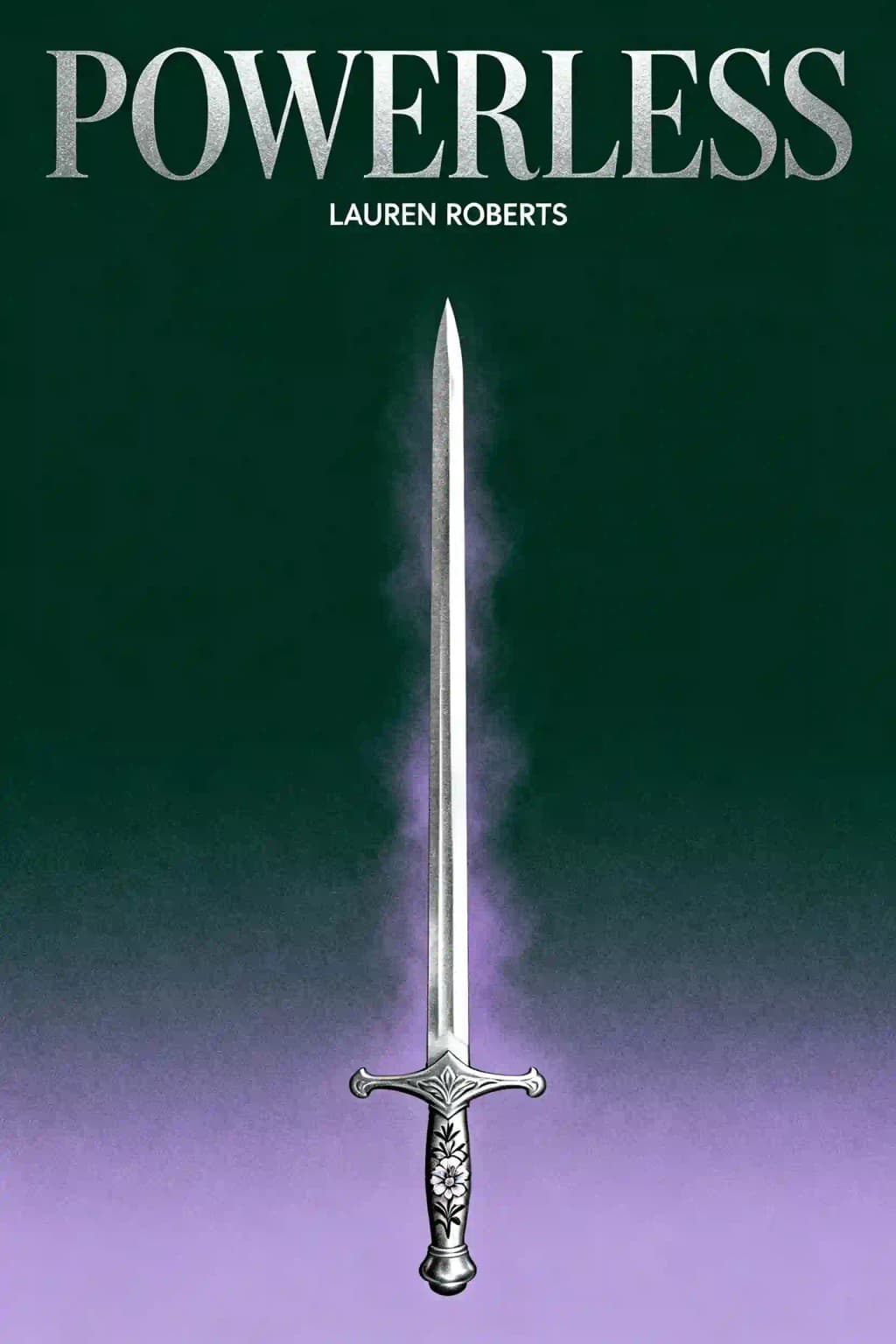
In a world where supernatural abilities divide society, Lauren Roberts' debut novel "Powerless" takes us on a thrilling journey through a kingdom where having powers means everything-and having none means certain death. This breakout fantasy sensation has captivated readers worldwide, climbing bestseller lists and earning praise from celebrities like Olivia Rodrigo, who called it "absolutely unputdownable." With over 2 million copies sold and translations in 27 languages, this enemies-to-lovers tale explores what happens when those with power abuse it, and when those without it fight back. As TikTok's most viral book recommendation of 2023, "Powerless" has sparked conversations about privilege, identity, and resistance that resonate far beyond its fantasy setting.
Chapter 2
A Kingdom Divided by Power and Privilege
In the kingdom of Ilya, the Plague reshaped not just the population but the very fabric of society. What began as a devastating disease that claimed thousands of lives evolved into something unprecedented - a catalyst for supernatural transformation. Survivors emerged with extraordinary abilities, creating a new class of citizens called Elites. These powers manifested differently in each person: some could manipulate elements, others could read minds, and the most powerful could bend reality itself. The royal Azer family, blessed with the ability to control fire and lightning, established themselves at the apex of this new social order.
The hierarchy that emerged was ruthlessly precise. Below the royal family stood the High Elites - those with combat-oriented or particularly impressive abilities. The middle ranks consisted of Utility Elites, whose powers served practical but less spectacular purposes. At the bottom existed the Ordinaries - those who gained no powers at all. These unfortunate souls became pariahs, hunted and persecuted based on the widespread belief that they carried a dormant strain of the Plague capable of stripping Elites of their powers.
Paedyn Gray navigates this treacherous world from Loot Alley, a labyrinth of cramped streets and crumbling buildings in the kingdom's slums. Her distinctive appearance - silver hair that catches the light like polished metal and eyes as blue as arctic ice - makes blending in challenging. She survives through a combination of wit, stealth, and carefully crafted lies, sharing a precarious existence in the Fort - a hidden sanctuary cobbled together from salvaged materials - with her best friend Adena. Their friendship is particularly remarkable given Adena's Elite status as a Phaser, capable of moving through solid matter at will.
The brutality of Ilyan society manifests in countless ways. Imperial guards, instantly recognizable by their white leather masks adorned with gold filigree, conduct regular "safety patrols" that often end in violence. Public whipping posts stand in every market square, and the screams of punished thieves serve as a daily reminder of law and order. Children caught stealing face particularly harsh treatment - guards have been known to break fingers and brand palms as deterrents. The discovery of an Ordinary living among the population triggers an immediate sentence to the Scorches - vast desert wastelands where temperatures soar above 120 degrees and water sources are deliberately poisoned.
The Purging Trials embody this society's obsession with power. Held annually in the capital's Grand Arena, these brutal competitions pit Elites against each other in increasingly dangerous scenarios. Contestants battle exotic beasts, navigate lethal obstacle courses, and ultimately fight to the death - all while thousands cheer from the stands. Victory brings glory, wealth, and social advancement, while defeat often means death.
King Edric Azer, architect of the infamous Purging that sent thousands of Ordinaries to their deaths, maintains his grip on power through calculated cruelty and strategic shows of force. His sons embody different aspects of royal authority: Crown Prince Kitt, groomed in diplomatic arts and strategic governance, represents the sophisticated face of power, while Prince Kai, shaped through years of systematic brutalization, serves as the kingdom's Enforcer. Kai's reputation for unflinching execution of his father's will has earned him the nickname "The Shadow of Death" among the common people.
Chapter 3
The Silver Savior and the Prince of Death
When Paedyn's path crosses with Prince Kai's in the marketplace, their lives become irrevocably intertwined. After stealing his coin pouch during their first encounter, Paedyn unexpectedly saves Kai's life when he's attacked by a Silencer-an Elite who can suppress others' powers. This act of heroism earns her the nickname "Silver Savior" among the slum dwellers and, to her horror, a place in the deadly Purging Trials.
Kai is immediately intrigued by this silver-haired girl from the slums. As a Wielder with the rare ability to temporarily use others' powers, he's disturbed to discover he cannot sense or access Paedyn's supposed Psychic abilities. This mystery draws him to her, creating a dangerous attraction that defies the social boundaries of their world.
Their relationship evolves through a series of charged encounters, from hostile confrontations to reluctant alliances. During training sessions, they spar both physically and verbally, with Paedyn refusing to show deference to the prince. "I don't want your mercy," she demands after a particularly brutal fight. "Next time we fight, impress me." This defiance both frustrates and fascinates Kai, who finds himself drawn to her fierce independence.
As they're forced together through the Trials, moments of vulnerability emerge. When Paedyn is injured during a Trial, Kai saves her life, using his healing abilities and sacrificing his own comfort to tend her wounds. Later, when nightmares plague him, she stays by his side, creating an intimacy neither expected. These moments reveal the complexity beneath their antagonistic facade-two damaged individuals finding unexpected connection despite the world that divides them.
Their relationship is complicated by Paedyn's secret identity as both an Ordinary and a member of the Resistance, a group fighting for equality. Every moment of growing affection is shadowed by the knowledge that if Kai discovered her true nature, his duty as Enforcer would demand her execution. This tension creates a compelling dynamic where attraction and danger are constantly intertwined, leaving both characters torn between duty and desire.
Chapter 4
The Deadly Game of the Purging Trials
The Purging Trials form the central arena where the story's conflicts play out. These brutal competitions pit Elite contestants against each other in a series of increasingly dangerous challenges, designed not just to test their powers but to reinforce the social hierarchy that keeps Ordinaries suppressed.
The first Trial takes place in the Whispers, a dense forest where contestants must hunt each other to claim leather bands from their opponents. Here, Paedyn's survival skills and combat training prove valuable as she navigates the wilderness, crafting weapons and outsmarting opponents with supernatural abilities. When she's gravely injured by Ace, an Illusionist who makes her see terrifying visions, Kai unexpectedly saves her. Their reluctant partnership during this Trial creates the first cracks in their mutual hostility.
The second Trial forces contestants to climb treacherous Plummet Mountain, initially working together before turning on each other at the summit. This challenge reveals the arbitrary cruelty of the Trials-contestants are first made to cooperate, building tentative trust, before being forced to betray one another. When Paedyn claims victory by capturing the flag, it disrupts expectations about who deserves to win in this power-based society.
Throughout these Trials, the contestants' struggles are broadcast to the kingdom via magical Sights that record their every move. The public watches eagerly, placing bets and choosing favorites in this macabre entertainment. Lavish balls are held between Trials, where contestants must perform social niceties with the same people they'll try to kill the next day. This juxtaposition of refined civilization and brutal violence highlights the hypocrisy of Elite society.
The final Trial takes place in a massive, shifting maze controlled by Blooms-Elites who can manipulate plant life. Here, the king's cruelty reaches its peak when Adena, Paedyn's best friend, is revealed as the "criminal" contestants must kill to win. When Blair murders Adena, Paedyn's grief and rage become the catalyst for the Resistance's attack on the royal family, transforming the entertainment spectacle into a revolutionary battlefield.
Chapter 5
The Resistance Rises: Fighting for Equality
Beneath the glamour of Elite society and the brutality of the Trials runs a current of resistance. The Ordinaries, rather than accepting their fate as diseased outcasts, have organized into a movement determined to overthrow the oppressive regime that hunts them.
The Resistance operates from secret locations throughout the kingdom, including Paedyn's childhood home. Each member plays a specific role: Leena creates detailed maps, Finn designs leather armor and masks, Lenny gathers intelligence from inside the castle as an Imperial guard, and Mira serves as a Silencer. Their leader, Calum, is a Mind Reader who knew Paedyn's father before his death.
Paedyn's involvement with the Resistance deepens throughout the story as she reconnects with her father's legacy. Adam Gray was not just a Healer as she believed, but a key figure in the early Resistance movement. His murder by the royal family-specifically by a young Prince Kai on his first mission as Enforcer-provides the personal motivation behind Paedyn's eventual commitment to their cause.
The Resistance's plan unfolds gradually, with Paedyn using her position as a Trial contestant to gather intelligence. When Prince Kitt shows her a secret tunnel system beneath the castle, she immediately recognizes its strategic value. By stealing his key and sharing this information with the Resistance, she enables their infiltration during the final Trial.
The attack during the final Trial reveals the true nature of the conflict. Calum announces to the shocked crowd: "We are Ordinaries. We are Fatals. We are the Resistance." This declaration challenges the kingdom's propaganda that Ordinaries are diseased threats. Instead, they demonstrate that Ordinaries have been living among Elites without spreading any illness, exposing the king's lies that justified genocide.
The revolutionary moment culminates in Paedyn's confrontation with King Edric in the garden. Their battle is both physical and ideological, with the king defending his belief in Elite superiority while Paedyn fights for the recognition of Ordinary humanity. When she finally kills him, driving her father's dagger through his throat with the words "This is for me," it represents not just personal vengeance but a strike against the system that declared her life worthless.
Chapter 6
Secrets, Lies, and Hidden Identities
Throughout "Powerless," identities are concealed, revealed, and transformed as characters navigate a society where survival often depends on being perceived as something you're not. This theme of hidden identity creates layers of dramatic tension and profound character development.
Paedyn's central deception-pretending to be a Psychic Elite while actually being an Ordinary-shapes every aspect of her life. Her father trained her from childhood to fake Psychic abilities, teaching her to observe physical details and use them to make seemingly supernatural insights about others. This performance becomes so ingrained that Paedyn sometimes struggles to separate her true self from the persona she projects.
Her skill at reading people serves her well during the Trials, particularly during the interviews where she demonstrates her "power" by making startlingly accurate revelations about volunteers from the audience. Yet each successful deception increases the danger of discovery. When she reflects that "playing along is the price of survival," it captures the exhausting vigilance required to maintain her false identity.
Prince Kai also wears masks, though his are emotional rather than literal. Trained from childhood to be the king's executioner, he presents himself as cold, calculating, and indifferent to suffering. Yet glimpses of his true nature emerge-his refusal to kill children, his unexpected gentleness when braiding Paedyn's hair, his placement of flowers on a fallen opponent's grave. These moments reveal the conflict between the monster his father created and the man he wishes to be.
The revelation that Kai was responsible for killing Paedyn's father adds another layer to their complex relationship. This shared history, forgotten by Paedyn and unknown to Kai, has subconsciously shaped their connection from the beginning. When Paedyn finally remembers this truth during their final confrontation, it explains the strange familiarity she always felt toward him-"I recognize him as my father's killer, explaining our strange connection."
Even secondary characters maintain facades. Lenny, Paedyn's Imperial guard, secretly works for the Resistance. Kitt, the seemingly perfect crown prince, harbors doubts about his father's policies that he dares not express openly. The entire social structure of Ilya is built on deceptions-the false claim that Ordinaries carry disease, the pretense that the Trials represent honor rather than cruelty, the illusion that power equates to worth.
Chapter 7
The Price of Power and the Strength in Powerlessness
At its core, "Powerless" explores what it truly means to have-or lack-power. Through its complex world and characters, the novel subverts expectations about strength and weakness, suggesting that true power comes in many forms beyond supernatural abilities.
The Elite society values only one kind of power-the magical abilities granted by surviving the Plague. This narrow definition creates a hierarchy where worth is determined solely by the impressiveness of one's supernatural gifts. Brawnies with super strength serve as guards, Flashes with super speed work as messengers, while those with lesser abilities like Mundanes are relegated to menial positions. This system ignores all other forms of human value and potential.
Paedyn challenges this definition through her very existence. As an Ordinary without powers, she should be powerless in this world. Yet she demonstrates remarkable strength through her combat skills, strategic thinking, and sheer determination. When she tackles Blair during their fight, landing solid blows against an Elite with telekinetic abilities, she proves that power exists beyond the supernatural. As she reflects afterward, "I may have lost the match, but Blair lost her pride."
Prince Kai's relationship with power is equally complex. Though born with the rare Wielder ability that allows him to temporarily use others' powers, his true strength comes from his training and resilience. His father's brutal methods-forcing him to break and heal his own bones repeatedly-were meant to eliminate weakness. Yet the king's definition of weakness included compassion, mercy, and love-qualities that ultimately make Kai stronger than his father ever was.
The novel also examines how power corrupts when unchecked. King Edric's absolute authority has led to genocide against Ordinaries, while the Elite society's privilege has made them blind to the suffering they cause. When Kitt visits Loot Alley for the first time, he's shocked by the poverty and harsh conditions-realities he never had to confront from his position of privilege.
Perhaps most powerfully, the story suggests that vulnerability itself can be a form of strength. When Kai admits his fear of heights to Paedyn, when Paedyn allows herself to be comforted after Adena's death, when both characters lower their guards enough to dance together-these moments of vulnerability create connections that prove more powerful than any supernatural ability.
Chapter 8
A Revolution Begins: The Aftermath and New Beginning
The climactic events of the final Trial transform the kingdom irrevocably. With King Edric dead by Paedyn's hand, the power structure that maintained Elite supremacy begins to crumble. The Resistance's attack exposes the lies that justified the persecution of Ordinaries, while the public witnesses the brutality that underpins their entertainment.
In the aftermath, Kitt ascends to the throne, a new king shaped by recent trauma. The once-gentle prince has hardened, his grief transforming him as he sits in his father's chair and feels the weight of the crown. Though he once showed compassion toward the slums and questioned his father's policies, his final command suggests a darker turn: "Find her. Bring me Paedyn Gray."
Kai faces his own crisis of identity. Having let Paedyn escape despite knowing she killed his father, he questions everything he thought he knew about duty and loyalty. The trained killer who never hesitated now finds himself paralyzed by conflicting emotions. "I should bury this blade in your throat," he tells Paedyn during their final confrontation, yet cannot bring himself to harm her. This mercy-or weakness-will haunt him as he assumes his role as Kitt's Enforcer.
Paedyn herself flees into the forest, wounded both physically and emotionally. The king's parting gift-carving an "O" for Ordinary into her chest-brands her with the identity she fought to hide. Yet as she touches this wound, feeling "the jagged 'O' for Ordinary carved into my flesh, a brand as mangled as my barely beating heart beneath it," there's a sense that she's finally embracing her true self. No longer hiding behind a false Elite identity, she carries the mark of what she truly is-an Ordinary who accomplished extraordinary things.
The novel ends with these characters poised at the beginning of a new chapter. A revolution has begun, but its outcome remains uncertain. Will Kitt continue his father's oppressive policies or forge a new path? Will Kai follow orders to hunt Paedyn or choose his own destiny? Will Paedyn find a way to continue the Resistance's fight for equality?
These unresolved questions leave readers contemplating the nature of true power and the cost of revolution. In a world where supernatural abilities determined one's worth, it was ultimately an "Ordinary" girl who changed everything-proving that sometimes the greatest power lies in having nothing left to lose.
Chapter 9
The Paradox of Connection in a Divided World
Throughout "Powerless," characters forge unexpected connections across the divides of power, class, and ideology. These relationships-whether romantic, familial, or friendly-provide both strength and vulnerability in a world designed to keep people separated.
The central relationship between Paedyn and Kai evolves from mutual antagonism to something far more complex. Their connection defies the social boundaries of their world-she's a slum-dwelling "Psychic" (secretly an Ordinary), while he's the prince trained to execute people like her. Yet they're drawn together by a recognition of something familiar in each other. Both have been shaped by trauma, both wear masks to survive, and both question the roles they've been assigned.
Their relationship develops through moments of genuine connection: dance lessons in Kai's room, sharing childhood stories beneath a willow tree, protecting each other during the Trials. When Kai admits he doesn't want to be king, when Paedyn reveals her life of hunger and cold, when they comfort each other through nightmares-these vulnerable exchanges create bonds stronger than their societal divisions.
Yet their connection is built on a foundation of secrets. Paedyn hides her Ordinary status and Resistance ties, while Kai doesn't remember killing her father. This dramatic irony creates tension throughout their relationship, culminating in their final confrontation where truth and deception collide. When Paedyn finally remembers Kai as her father's killer, it explains the strange familiarity she always felt toward him-a connection born from trauma rather than affinity.
Beyond this central relationship, the novel explores how connections sustain people in a harsh world. Paedyn and Adena's friendship represents mutual protection and unconditional acceptance. Their makeshift home in the Fort symbolizes how they've created family from nothing, with Adena's sewing and Paedyn's stealing combining to ensure their survival. When Adena dies in the final Trial, Paedyn loses not just a friend but the only person who knew and accepted her true identity.
The brotherhood between Kai and Kitt offers another example of connection across difference. Though raised for different purposes-Kitt educated to rule, Kai trained to kill-they maintain a bond that transcends their assigned roles. They share private jokes, protect each other from their father's wrath, and understand each other in ways no one else can. Even as they follow diverging paths, with Kitt becoming king and Kai hunting Paedyn, this fraternal bond remains a humanizing influence on both.
In a society designed to separate people based on power, these connections represent acts of resistance. By caring for those they're supposed to hate or fear, characters challenge the fundamental premise of Elite supremacy. When Kai cannot bring himself to kill Paedyn despite her crimes, when Kitt listens to Paedyn's criticism of his kingdom, when Paedyn saves Kai's life despite knowing he represents everything she fights against-these moments suggest that human connection might be more powerful than any supernatural ability.
Chapter 10
When the Powerless Rise: A New Chapter Begins
The final pages of "Powerless" leave readers with the aftermath of revolution-a kingdom in chaos, characters transformed by trauma, and the promise of continued struggle. As Paedyn flees into the forest with the king's blood on her hands, as Kitt assumes the throne with vengeance in his heart, as Kai stands torn between duty and desire, the stage is set for a new chapter in this world's history.
The novel's open ending invites readers to consider what happens when the powerless rise against their oppressors. Revolution has begun, but revolutions are messy, unpredictable things. The Resistance has struck a significant blow against Elite supremacy, yet the power structure remains largely intact. The king is dead, but his son now wears the crown. The truth about Ordinaries has been revealed, but centuries of prejudice won't disappear overnight.
This ambiguous conclusion reflects the complexity of real-world social change. There are no simple victories, no neat resolutions to systemic oppression. Instead, there is ongoing struggle, personal sacrifice, and the slow, painful work of building a more just society. Through Paedyn's journey from thief to revolutionary, from hiding her identity to embracing it, the novel suggests that meaningful change begins with individuals refusing to accept the roles assigned to them.
As readers close the final page, they're left with questions that resonate beyond the fantasy world: What gives someone the right to power over others? How do we resist systems that declare some lives more valuable than others? And perhaps most importantly, what kind of power truly matters-the supernatural abilities prized by Elites, or the human connections that sustain Paedyn and her allies through their darkest moments?
In a world obsessed with supernatural power, "Powerless" ultimately celebrates the extraordinary strength found in ordinary humanity-the courage to fight against overwhelming odds, the resilience to survive trauma, and the capacity to care for others despite everything. As Paedyn discovers, sometimes being "powerless" simply means finding different kinds of strength.