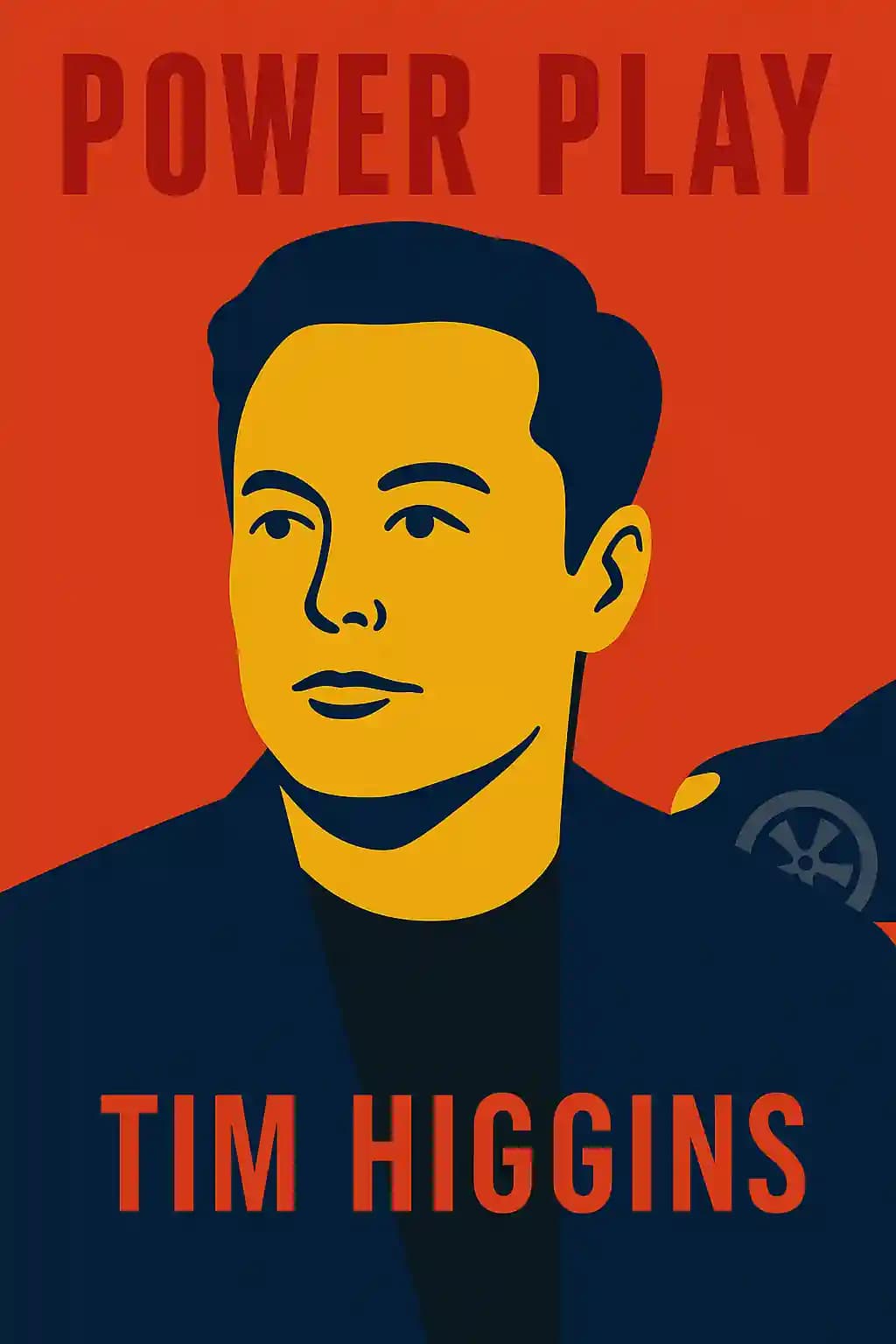
Power Play
Elon Musk, Tesla, and the Bet of the Century
Overview of Power Play
"Power Play" unveils Tesla's electrifying journey through near-death experiences and Elon Musk's controversial leadership. Hailed as "a business thriller for real" by AP, this Wall Street Journal bestseller reveals the thin line between madness and genius that transformed an entire industry.

Key Themes in Power Play
- electric vehicle manufacturing
- corporate power struggles
- disruptive industrial innovation
- startup scaling challenges
- clean energy transition
Quotes from Power Play
Electric was superior.
Tesla couldn't fund Model S development alone.
Tesla was burning $500 million quarterly.
The Roadster's rocky road to reality.
This simple three-step strategy projected Tesla reaching nearly $1 billion in revenue.
Characters in Power Play
- Martin EberhardCo-founder and original CEO of Tesla Motors
- JB StraubelEngineer who developed Tesla's battery technology
- Marc TarpenningCo-founder of Tesla Motors
Download Summary of Power Play
Get the Power Play summary as a free PDF or EPUB. Print it or read offline anytime.
FAQs About This Book
Power Play chronicles Tesla’s turbulent rise from near-bankruptcy to automotive dominance, focusing on Elon Musk’s unorthodox leadership, internal conflicts, and breakthroughs like the Model 3. Tim Higgins reveals how Musk’s relentless vision clashed with industry norms, risking everything to revolutionize electric vehicles and sustainable energy. The book combines behind-the-scenes drama with insights into Tesla’s technological innovation and corporate culture.
Entrepreneurs, business leaders, and Tesla enthusiasts will find this book compelling. It’s ideal for readers interested in corporate disruptors, leadership案例分析, or the electric vehicle industry. Higgins’ investigative depth also appeals to fans of narrative-driven business journalism, offering lessons on innovation and risk-taking in high-stakes environments.
Yes—Power Play is praised for its gripping storytelling and meticulous research into Tesla’s chaotic growth. Higgins balances Musk’s brilliance with his flaws, providing a nuanced portrait of the company’s triumphs and controversies. Critics highlight its relevance for understanding modern tech-industry dynamics and Musk’s impact on sustainable transportation.
Key themes include disruptive innovation, leadership under pressure, and corporate survival. Higgins explores Musk’s “first principles” problem-solving, Tesla’s battles against financial ruin, and the human cost of rapid scaling. The book also examines the tension between visionary goals and operational realities in the automotive sector.
Higgins portrays Musk as a mercurial genius who drove Tesla through sheer willpower but fostered a high-pressure, often chaotic workplace. The book details his hands-on management style, including late-night emails, abrupt firings, and relentless deadlines. While acknowledging his strategic brilliance, Higgins critiques Musk’s unpredictability and its toll on employees.
- Near-bankruptcy in 2008 and 2018
- Production hell during Model 3 manufacturing
- Executive turnover due to Musk’s demanding standards
- Scaling issues with battery technology and supply chains
- Regulatory battles over direct-to-consumer sales
The book highlights Tesla’s battery technology breakthroughs, the Supercharger network, and the Model 3’s affordable design. Higgins emphasizes how Tesla bypassed traditional dealerships, vertically integrated production, and leveraged software updates to redefine car ownership—strategies now emulated across the auto industry.
Some reviewers note potential bias in anonymized sources and Musk’s dismissal of the book as “false and boring.” Others argue it underemphasizes Tesla’s environmental impact relative to its corporate drama. However, most praise its balanced approach to Musk’s legacy.
Unlike Ashlee Vance’s Elon Musk: Tesla, SpaceX, and the Quest for a Fantastic Future, Higgins focuses narrowly on Tesla’s business battles, offering deeper insight into boardroom conflicts and operational crises. It complements Walter Isaacson’s biography by detailing Musk’s leadership in a specific corporate context.
- Embrace first principles thinking to solve entrenched problems
- Balance vision with operational discipline during rapid growth
- Navigate regulatory landscapes when disrupting industries
- Manage stakeholder expectations in high-profile ventures
- “We’re fucking bankrupt.” (Musk during the 2008 crisis)
- “The factory is the product.” (Musk prioritizing production innovation)
- “You can’t just give up because something is hard.” (Musk rallying teams during Model 3 delays)
The book illustrates how Tesla’s blend of audacity, risk tolerance, and public spectacle mirrors Silicon Valley’s startup culture at scale. It’s a case study in managing innovation amidst financial volatility and media scrutiny—a blueprint for today’s climate-tech and AI-driven ventures.


