Chapter 4
The Prince of Darkness and Smoke
Prince Mendax embodies the alluring danger of the Unseelie Court. As a feared Smoke Slayer with wings of sentient smoke that move with their own consciousness, he's known for his cruelty and emotional detachment. He feels nothing but darkness and finds satisfaction only in causing suffering-until Callie enters his world.
From the moment she arrives, Mendax is inexplicably drawn to her, keeping her as his prisoner despite multiple failed attempts to kill her. His fascination manifests as possessiveness and cruelty, yet beneath this lies a growing obsession he can't explain. He even wears her extracted wisdom tooth as a secret talisman around his neck, troubled by his inability to stop thinking about her.
The political landscape Mendax navigates is treacherous. Though his mother remains queen after his father's death, she threatens to bond him to someone of her choosing if he doesn't marry soon and take the throne. She suggests he bond with Callie and kill her before the marriage ceremony, allowing him to claim the throne without sharing power. This manipulation reveals the cold calculus of fae politics, where even family relationships are tools for power.
What makes Mendax such a compelling character is the internal conflict Callie awakens in him. His reputation as a ruthless prince who enjoys inflicting pain clashes with his growing protectiveness toward her. When another fae helps Callie at a court gathering, Mendax murders him instantly, declaring, "He was touching you." This possessiveness marks the beginning of his transformation-a villain who finds himself capable of feelings he never thought possible.
The dynamic between Mendax and Callie evolves from captor and captive to something far more complex. During one intimate encounter, he reveals his vulnerability by showing her what he claims is the killing point beneath his wings, explaining he wears no armor because he accepts any challenge to end him. This moment of apparent honesty creates a false sense of trust between them, complicating Callie's feelings toward her captor.
As Mendax struggles with his growing attachment to Callie, we see glimpses of his capacity for tenderness. When she's injured after facing monstrous creatures in her first trial, he gently tends to her wounds, his touch remaining careful despite his threatening words. These contradictions make him far more than a one-dimensional villain, raising questions about whether redemption is possible for someone who has known only darkness.
Chapter 5
Trials of Fire and Blood
The fae court demands Callie undergo three trials to prove her worth-or more accurately, to ensure her death. These trials reveal not only her resourcefulness but also the growing connection between her and Mendax, despite his outward cruelty.
In her first trial, Callie faces nocturneyes-bat-like monsters that hunt using echolocation. Drawing on her scientific knowledge of luna moths, which use spiral tails as acoustic camouflage against bats, she creates makeshift silk strips to confuse the creatures' senses. When attacked, she stabs them in their vulnerable spot beneath their wings, killing both monsters and earning reluctant respect from the fae court.
The second trial tests her knowledge of poisons and antidotes. In a torch-lit cave filled with snakes, she must identify various poisons-aconite, white snakeroot, water hemlock-and their corresponding antidotes. Working methodically, she drinks each poison followed by its antidote until reaching the final cup of oleander poison with no apparent antidote remaining. In a moment of scientific brilliance, she realizes snake venom's sedative properties would counter oleander's cardiac effects and allows a snake to bite her above her breast, using the venom as the final antidote.
These trials showcase Callie's unique approach to survival. Unlike the fae who rely on magic and physical prowess, she uses scientific knowledge and analytical thinking to overcome seemingly impossible challenges. Her victories confound the fae court, particularly Queen Saracen, who grows increasingly determined to see her dead.
The trials also reveal Mendax's conflicted feelings. After her second trial, when she collapses from the snake venom, he catches her in his arms with unexpected concern. As he carries her away, he whispers that he cannot lose her-a vulnerability he didn't intend for her to hear. These moments of genuine emotion create a compelling contrast with his public persona of merciless cruelty.
What makes these trials particularly effective is how they force both Callie and Mendax to confront their true natures. For Callie, they reveal a strength and resilience she never knew she possessed. For Mendax, they expose the cracks in his carefully constructed facade of indifference, as he finds himself increasingly unwilling to see her harmed.
Chapter 6
Forbidden Desires and Dangerous Games
The relationship between Callie and Mendax evolves into a complex dance of attraction and resistance, with both physical and emotional dimensions that neither can fully deny. Despite knowing he represents everything she should fear, Callie finds herself drawn to his darkness and the rare moments of tenderness he shows only to her.
Their physical encounters are charged with tension-his smoke-like wings sometimes solid as iron, sometimes passing through her fingers like wisps. When she touches the sensitive bases where the smoke joins at his shoulder blades, he shivers with pleasure, revealing vulnerability beneath his imposing exterior. These intimate moments create a powerful contrast with his public persona of merciless cruelty.
What makes their connection so compelling is how it challenges both characters' understanding of themselves. For Callie, her attraction to Mendax forces her to question her moral boundaries-how can she desire someone who has caused her such pain? For Mendax, these unfamiliar feelings threaten the emotional detachment that has defined his existence. When he pulls away from her just before she reaches climax during one encounter, leaving her frustrated and unsatisfied, we see his fear of losing control-not just of her, but of himself.
The queen's manipulation adds another layer of complexity to their relationship. She suggests Mendax bond with Callie and kill her before the marriage ceremony, allowing him to claim the throne without sharing power. This cold political calculus reveals how even intimate relationships are viewed as tools for advancement in the fae court.
When Seelie princes attempt to take Callie back to the human realm, citing fae law, Mendax's possessiveness explodes into violence. He decapitates one prince and demands his mother bond them immediately. Despite Callie's protests, the bonding is completed, tying them together forever. This forced bond represents both imprisonment and protection for Callie-trapping her with Mendax while simultaneously shielding her from other fae who might claim her.
The push and pull between them creates an intoxicating tension that drives the narrative forward. Each moment of connection is followed by betrayal or cruelty, yet neither can fully sever the growing bond between them. Their relationship embodies the central question of the story: can something beautiful emerge from darkness, or are some souls too damaged for redemption?
Chapter 7
The Final Trial and Betrayal
The final trial presents Callie with a seemingly simple choice between two doors-one leading to freedom, the other to a monster created specifically to hunt humans. As she stands in the arena surrounded by excited fae spectators, she looks to Mendax, whose eyes hold both worry and adoration. He gives her a slight nod toward the right door, appearing to help her choose correctly.
When she opens the indicated door, a massive dinosaur-like beast emerges-Mendax has apparently betrayed her, sending her to face the monster. As the creature charges, she raises a stolen dagger in defense, but suddenly Mendax appears before her, wings spread wide, snarling back at the beast to protect her.
In this moment of apparent sacrifice, Callie makes her own choice. She plunges her iron blade deep below his wing-into what she believes is the killing spot he had foolishly shown her. As he falls to his knees, she confesses through tears that she was sent to kill him, not by humans but by Queen Saracen herself.
Despite the blade in his back, Mendax begs her not to leave, to at least stay until he is dead. "You're still the villain, Malum," she says shakily before walking away. With his last strength, he attempts to control her mind: "Callie Peterson, return to me." She pauses, looks back, then continues walking-completely unaffected by his magic.
This final confrontation reveals several shocking truths. First, that "Callie Peterson" is not her true name, explaining why Mendax's magic has no hold over her. Second, that she has been working for Queen Saracen all along, sent specifically to assassinate the prince. And third, that Mendax has been playing his own game-he showed her false weakness points and will survive her attack.
As his shadow guards rush in, Mendax stops them from pursuing her. "No one touches my future queen but me," he warns, revealing his intention to heal, hunt her down, destroy whoever forced her to betray him, and make her his forever. This chilling promise sets the stage for the continuation of their story, leaving readers with the tantalizing question of what happens when the betrayed becomes the hunter.
Chapter 8
Return to Reality or Further Deception?
The narrative takes another unexpected turn when Callie awakens in a hospital bed, surrounded by the rhythmic beeping of cardiac monitors and the sharp, clinical smell of antiseptic. Fluorescent lights cast harsh shadows across sterile white walls, and an IV drips steadily into her arm. A nurse in pale blue scrubs asks her to identify herself, and she responds with surprising clarity: "I'm Callie Peterson. Proud environmentalist and biological technician." Her voice sounds strange to her own ears - hoarse from disuse. She explains that she had been conducting her regular field research, walking through the Blackwood Forest examining luna moths and destroying angel mushrooms, when something occurred that she can't quite remember.
A doctor with kind eyes and graying temples gently informs her that she's been unconscious for nearly three weeks, and that her grandfather Earl had just left to get her family and friends. The doctor's careful tone suggests there's more to the story than he's sharing. This sudden shift raises profound questions about the nature of reality in the story. Was the entire fae realm - the crystalline palace, the shape-shifting creatures, the blood oaths and ancient magic - simply a hallucination caused by poisonous mushrooms, as her family had once suggested about her childhood fairy sighting in the same forest? Or is this apparent return to the human world another layer of deception, a glamour cast by the fae to keep her docile?
The narrative then shifts dramatically to a new perspective - someone chopping wood outside a weathered cottage, watching crimson blood dripping from a suspended goose into a rusty bucket. The methodical thunk of the axe punctuates their dark thoughts. This person reflects on a litany of personal tragedies: a beloved sister Winter's death during the last blood moon, a mother's agonizing passing after childbirth in midwinter, and a father who simply laid down one day and died from grief, his heart too heavy to continue beating. They blame the Enchanted Forest for their cascade of sorrows, believing it's not just alive but malevolently conscious, like the fae who dwell within its shadows.
When villagers approach with torches and grim expressions, bearing news that the local well has gone dry - the third such occurrence this season - this person realizes it's their turn to face the consequences of an ancient curse. Despite their protests of innocence, they're surrounded and herded forward by the desperate crowd. They know there will be no happy ending - like others before them who met gruesome fates after encountering the forest's magic, including the miller's daughter found transformed into a weeping willow, and the blacksmith's son who returned speaking in riddles before disappearing entirely.
This final section introduces compelling new mysteries. Who is this person with memories of a sister named Winter, and why do they seem to understand the forest's malevolent nature so intimately? How do their experiences connect to Callie's story, and are they perhaps two threads in the same tapestry of enchantment? And what is the true nature of the curse they face - is it the forest's revenge for human encroachment, or something more ancient and terrible? These questions suggest that the boundaries between worlds remain permeable, and that Callie's journey through the fae realm may be part of a larger pattern of interaction between humans and magical forces that stretches back generations.
Chapter 9
The Tapestry of Worlds and Identity
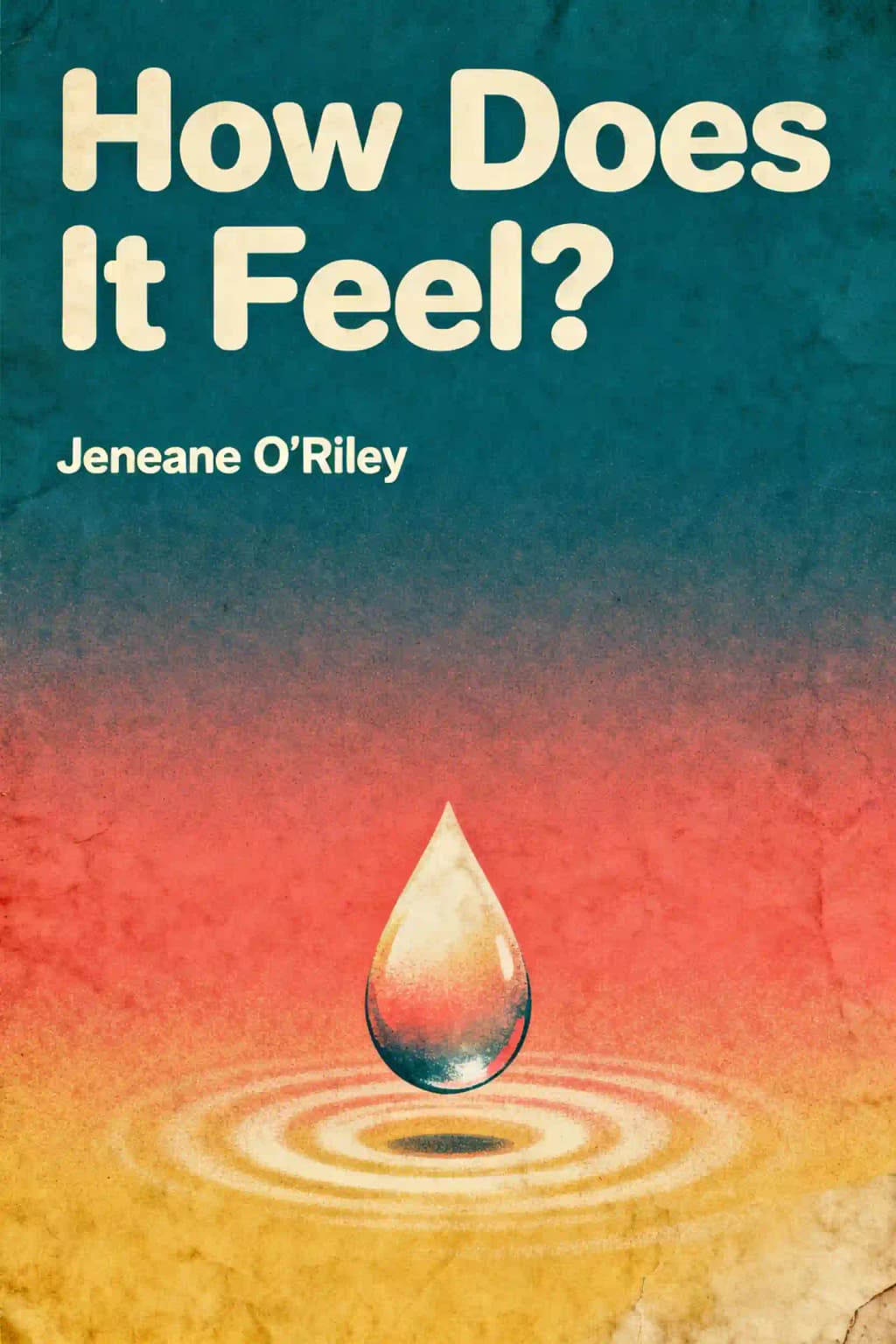
"How Does It Feel?" weaves together themes of identity, power, and the blurred lines between worlds. Callie's scientific mindset provides her with unique tools for survival in the fae realm, yet also blinds her to certain magical realities. Her journey forces her to question not only what she knows about the world but who she truly is.
The revelation that "Callie Peterson" may not be her real name opens fascinating possibilities about her true identity and purpose. Has she been an unwitting pawn in Queen Saracen's schemes all along? Or does she have her own agenda that remains hidden even from readers? These questions transform her from a sympathetic protagonist into a more complex figure whose motivations and loyalties remain ambiguous.
Mendax's evolution throughout the story presents a compelling examination of how love-or perhaps obsession-can transform even the darkest heart. His initial cruelty gives way to possessiveness, then to genuine concern, and finally to a determination to claim Callie despite her betrayal. His declaration that no one will touch his "future queen" suggests he sees in her not just an object of desire but a partner in power.
The book's exploration of boundaries-between worlds, between captor and captive, between love and hatred-creates a rich tapestry of moral complexity. In this universe, traditional notions of good and evil give way to shades of gray, where villains can show unexpected tenderness and heroes can commit acts of betrayal.
As the first book in the Infatuated Fae Series, "How Does It Feel?" masterfully sets the stage for continuing exploration of these themes. The unresolved questions about Callie's true identity, Mendax's hunt for her, and the political machinations of both Seelie and Unseelie courts create a foundation for the deeper dives into this world that subsequent books promise.
The story ultimately asks us to consider: How does it feel to discover that everything you believed about yourself and your world might be a lie? How does it feel to find connection with someone who represents everything you should fear? And perhaps most importantly, how does it feel when the boundaries between worlds-and between good and evil-begin to dissolve before your eyes?