Chapter 1
Behind the Laughter: A Journey Through Addiction and Fame
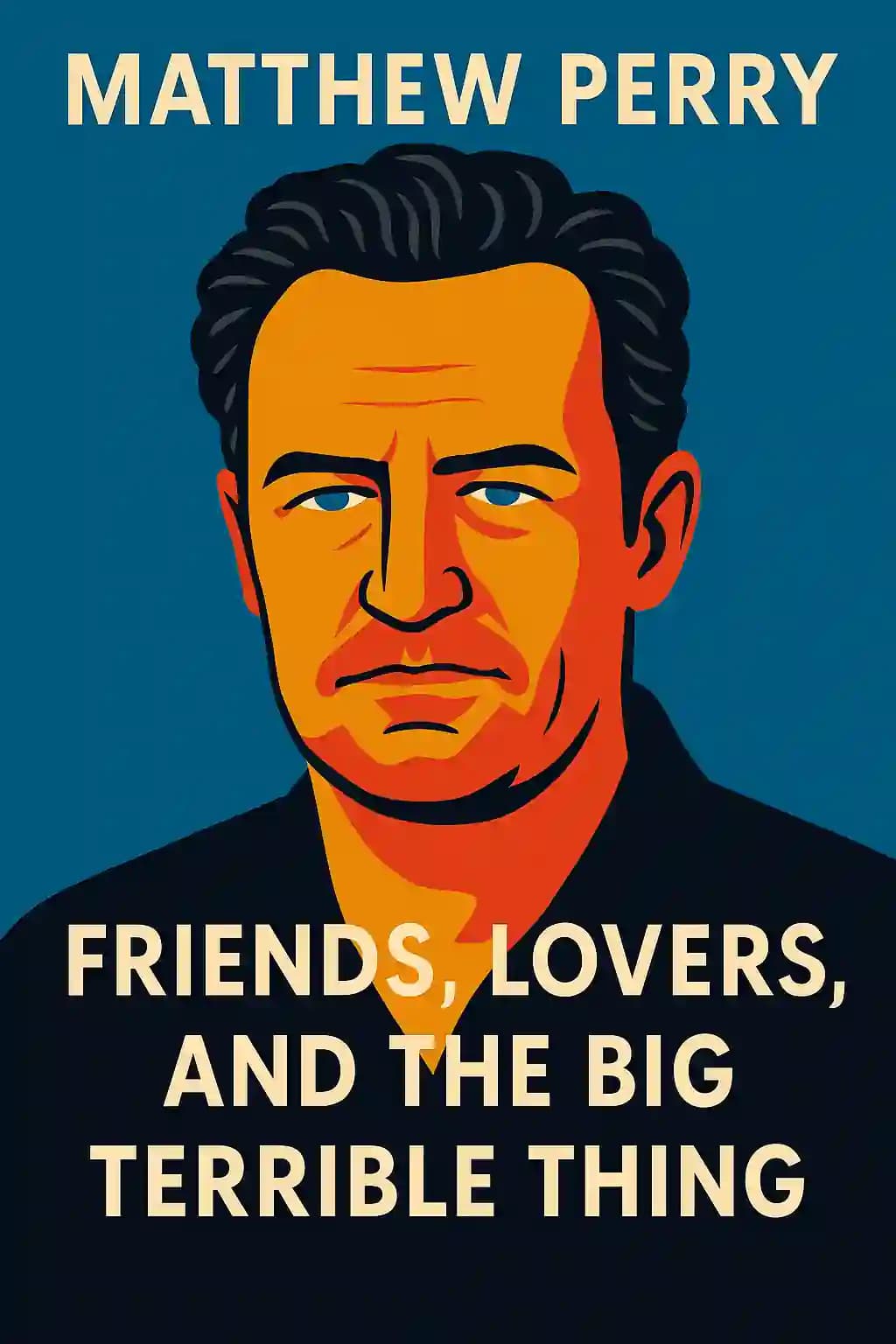
Matthew Perry's memoir "Friends, Lovers, and the Big Terrible Thing" isn't just another celebrity tell-all. It's a raw, unflinching account of a man who had everything the world could offer yet was dying inside. While millions knew him as the sarcastic, lovable Chandler Bing, Perry was fighting a battle that nearly killed him multiple times. This book has resonated deeply with both addiction survivors and the general public, spending weeks on bestseller lists and being praised for its brutal honesty. Even Elton John, who has his own history with addiction, called it "the most important memoir of our generation about the disease that affects millions." Perry's journey through the heights of fame while battling the depths of addiction offers a rare glimpse behind Hollywood's glossy facade, revealing that even those who seem to "have it all" can be suffering immensely.
Chapter 2
The Origins of Abandonment
Perry traces his struggles to his earliest childhood experiences. Born in 1969 to two "gorgeous people on the planet" - his father John Bennett Perry (lead singer of the Serendipity Singers) and his mother Suzanne Langford (crowned Miss Canadian University Snow Queen) - Perry jokes that with such perfect-looking parents, "I didn't stand a fucking chance" against inherited addiction. At just 30 days old, he was prescribed phenobarbital, a major barbiturate, for colic - foreshadowing his lifelong struggles with addiction. Baby photos show him "completely fucking zonked, nodding like an addict at seven weeks."
His first profound abandonment came at nine months old when his father drove the family to the Canadian border, handed baby Matthew to his grandfather, and sped away to pursue acting in California. Left with his twenty-one-year-old mother who was "way too young to parent a child on her own," Perry quickly learned to be the caretaker in the relationship. This role crystallized at age three when he lost the tip of his middle finger in an accident. Finding his sobbing mother at the hospital, little Matthew stood on the gurney and comforted her: "You don't need to cry-I didn't cry." Even then, Perry was becoming "the performer, the people pleaser," taking on the role of "man of the house" despite his own trauma.
With his mother working as press secretary for Prime Minister Pierre Trudeau, Perry became a "latchkey kid" who developed humor as a survival mechanism. His abandonment issues manifested in asking his grandmother if his mother was on passing planes, having been conditioned to expect people to leave. Meanwhile, his father called every Sunday and appeared more often in TV commercials than in Perry's life-becoming "the Old Spice guy" whose image in ads with another family was "never very funny" to young Matthew.
Chapter 3
The First Drink: Finding Peace in a Bottle
At fourteen, Perry had his first drink with friends Chris and Brian Murray in his backyard. While his friends vomited around him, Perry experienced a profound revelation lying in the grass: "For the first time in my life, nothing bothered me." The world finally made sense; he felt complete and at peace. "This is the answer," he thought, "this must be how normal people feel all the time."
This moment planted the seed of what he'd later understand as his "anhedonia"-an inability to enjoy anything unless in pursuit of excitement or intoxication. Though he didn't immediately become a regular drinker, the die was cast. By fifteen, with home life deteriorating despite loving his new half-sisters, Perry made the decision to move to Los Angeles to live with his father, causing "a great rift in the fabric of my family."
The night before leaving was one of the worst of his life. From the basement where he slept, he heard doors banging, hissed conversations, and crying upstairs. His grandparents periodically came down to tell him he was breaking their hearts. He felt "broken... bent... abandoned, terrified, unaccompanied, and scared." Yet somehow he found the courage to leave. The next morning, his mother drove him to the airport to "fly away from her for the rest of her life."
In LA, Perry's tennis dreams quickly evaporated against "bronzed Californian gods" who were vastly superior players. But he fell in love with the city's vastness and possibilities. When someone mentioned people get paid to act, he pivoted careers-a natural extension of his habit of delivering "killer lines" for attention at home. Three weeks into his new school, he landed the lead in "Our Town." His father, sensing his path, left him a book called "Acting with Style" with the inscription: "Another generation shot to hell. Love, Dad."
Chapter 4
The Road to Friends: Becoming Chandler Bing
By 1994, Matthew Perry had carved out a modest career in Hollywood, appearing in various television shows and films. His resume included guest spots on popular series like "Charles in Charge," "Growing Pains," and "Beverly Hills 90210," along with a supporting role in the coming-of-age film "A Night in the Life of Jimmy Reardon" alongside River Phoenix. Despite these credits, Perry was still living paycheck to paycheck, sharing an apartment with a friend and taking whatever acting work he could find to make ends meet.
When the script for "Friends Like Us" (later shortened to simply "Friends") began circulating through Hollywood, it quickly became the most talked-about pilot of the season. Perry immediately felt a deep connection to the character of Chandler Bing - the sarcastic, self-deprecating twenty-something whose humor masked his insecurities. The dialogue seemed to flow naturally in Perry's voice, matching his own comedic timing and delivery style. However, fate had dealt him a cruel hand: he was contractually bound to a pilot called L.A.X. 2194, a poorly conceived science fiction comedy about baggage handlers in the future, complete with ridiculous costumes and a premise that seemed destined for failure.
During this period, Perry experienced the unique torture of helping several actor friends prepare for their Chandler auditions, knowing he could nail the role himself. He watched as other actors struggled with the character's distinctive rhythms and wit, while he effortlessly delivered the lines during practice sessions. Through a fortuitous intervention by influential producer Jamie Tarses, who recognized Perry's perfect fit for the role, his contract with L.A.X. 2194 was eventually dissolved. When he finally got his chance to audition, Perry was more than prepared - he had essentially been rehearsing for weeks while helping others.
Three weeks before his life-changing audition, Perry had made a desperate prayer: "God, you can do whatever you want to me. Just please make me famous." This prayer would prove prophetic in both its blessing and its curse. The fame he sought would come, but so would the struggles he hadn't bargained for. Years later, Perry would reflect that fame is like a drug itself - something you think you want until you have it, and then you realize it's not the answer to happiness. He often noted that this was a truth that non-famous people could never fully comprehend.
Friends premiered on September 22, 1994, and immediately began its ascent to television history. The show's success was unprecedented - it quickly rose to the top five in Nielsen ratings and maintained that position for an entire decade, a feat that remains remarkable even by today's standards. At just 25 years old, Perry found himself at the center of a cultural phenomenon, earning $22,500 per episode in the first season (a figure that would eventually rise to $1 million per episode). But as his professional life soared to new heights, his personal demons were growing stronger. His already concerning relationship with alcohol began to escalate dramatically, marking the beginning of a devastating battle with addiction that would run parallel to his extraordinary success, creating a stark contrast between his public persona and private struggles.
Chapter 5
Fame and Addiction: A Deadly Dance
By season three of Friends, Perry was deep in addiction, having detoxed over 65 times in his life. His Vicodin habit was severe-you can track his addiction throughout the series: when heavy, it was alcohol; when skinny, pills; when sporting a goatee, lots of pills. His weight fluctuated dramatically (128-225 pounds), reflecting his substance abuse.
Perry needed 55 Vicodin daily just to avoid withdrawal, making his life a full-time job of doctor visits, fake migraines, and finding corrupt nurses. He was never high at work-he loved his castmates too much to let them down-but addiction always wanted him alone. While filming "Almost Heroes" with Chris Farley (who would die from his own addictions), Perry was constantly sick, vomiting behind trees and rocks, but still maintaining his pill supply.
The contrast between his public success and private suffering was stark. In 1999, while sitting alone in his massive house overlooking Los Angeles, drinking vodka tonics and chain-smoking Marlboros, Perry received a script called "The Whole Nine Yards." The film became a hit-number one in America for three weeks straight. Perry had achieved his childhood dream of having both the #1 movie and #1 TV show simultaneously, joining Michael J. Fox as the only people to accomplish this. But instead of celebrating, he was so strung out on drugs he could barely leave his bedroom.
His addiction reached catastrophic levels during filming of "Serving Sara." He was consuming a quart of vodka daily, plus methadone, cocaine, and Xanax. On set, he'd pass out in his chair between scenes, wake up to film, then stumble through his lines before returning to sleep. Despite his fame, no one dared confront him-the film producers just wanted to finish and make money, while the "Friends" team wouldn't risk disrupting their moneymaking machine.
Chapter 6
Near-Death and Spiritual Awakening
Perry's addiction nearly killed him multiple times. The most dramatic incident occurred on July 19, 2019, when his colon exploded from opioid abuse, putting him in a coma for fourteen days. When he awoke screaming, his mother told him he had a colostomy bag and would need it for nine months. He was attached to fifty machines and would need to learn to walk again.
His sister later explained that after his colon exploded, he vomited into his ventilator, sending bile and septic material into his lungs. Doctors gave him a two percent chance of survival. The irony wasn't lost on Perry-opiates cause constipation, so he was literally "full of shit" to the point it almost killed him. Throughout his five-month hospital stay, friends and family never left him alone.
Yet despite this near-death experience, Perry immediately asked doctors for more opiates after waking from the coma. When he left the hospital, he lied about pain levels to get medication though he wasn't actually suffering much. His addiction continued unabated as he manipulated doctors and sought drugs through dealers, even while living with a sober companion, nurse, and girlfriend.
During one of his many rehab stays, Perry experienced what he believes was a genuine spiritual awakening. In his lowest moment, sitting on a small couch riddled with shame and guilt, he noticed a strange crinkle in the atmosphere. He began to pray desperately: "God, please help me." The air transformed into a small golden light that grew until it encompassed the entire room. He felt euphoric, as if he was standing on the sun, filled with perfect love and acceptance. For seven minutes, he experienced the presence of God. When the light dimmed, he wept uncontrollably, not from sadness but because he finally felt safe. This divine encounter kept him sober for two years.
Chapter 7
Relationships: The Search for Connection
Perry's struggles with addiction were inextricably intertwined with his complex relationship patterns. He developed a persistent habit of pursuing unavailable women, a pattern that clearly stemmed from his early relationship with his mother, Suzanne - a woman who could command attention in any room but struggled to provide the consistent maternal presence young Matthew desperately needed. This dynamic created what Perry called an addiction to "the turn" - the intoxicating moment when he could make an emotionally distant woman want him, only to find himself disconnecting once they became emotionally available.
His relationship with Julia Roberts stands as perhaps the most prominent example of this pattern. Their connection began unconventionally, with Perry pursuing her through a series of witty faxes before she guest-starred on Friends. What started as playful communication evolved into a genuine romance, reaching its pinnacle during a magical New Year's Eve in 1995 in Taos, New Mexico. That night, surrounded by the desert's stillness and Roberts' undivided attention, Perry felt, in his words, "like the king of the world." However, the relationship's intensity triggered his deep-seated insecurities. By April 1996, despite Roberts' clear commitment, Perry ended things abruptly. The sight of confusion and hurt on her face haunted him for years afterward - a perfect example of his self-sabotaging tendency to leave before being left.
As Perry entered his forties, his approach to relationships shifted toward seeking something more substantial. This led to a complicated situation involving two women: Laura, whom he met through mutual friends, and Rome, whom he encountered at an AA meeting. For six months, he maintained relationships with both women, a decision he later recognized as not just unethical but emotionally destructive for all involved. His genuine feelings for both women created an impossible situation that ultimately exploded when he chose Laura. However, the increasing intimacy with Laura triggered his old fears, leading him back to pill use - initially as a coping mechanism to maintain the relationship, but eventually becoming the very thing that destroyed it.
Perry's relationship patterns reveal a profound paradox: an intense desire for connection coupled with an overwhelming fear of abandonment. Though he had only experienced one significant abandonment - by a 25-year-old girlfriend during a period of heavy drinking - this experience, combined with his childhood emotional wounds, created a template for all future relationships. His addiction and fear of abandonment operated in a destructive feedback loop: he needed substances to tolerate emotional intimacy, but this substance use inevitably poisoned the very connections he sought to preserve.
This pattern extended beyond romantic relationships into his friendships and professional relationships, where he often maintained a careful distance while simultaneously craving deeper connections. His Friends co-stars, for instance, wanted to help him during his struggles but found themselves unable to break through the walls he had built to protect himself from potential hurt.
Chapter 8
The Friends Legacy: More Than Just a Sitcom
For years Perry avoided talking about Friends, partly because he'd done other work but everyone only wanted to discuss Chandler. The New York Times once cruelly wrote that "Friends sticks to [Perry] like a sweaty shirt." He felt penalized for being good at something.
But recently he's come to understand what Friends truly means to people. The show wasn't just a sitcom-it was a cultural phenomenon that connected with millions on a deeply personal level. From day one, the cast had extraordinary chemistry. Director Jimmy Burrows knew this was essential, so he had them talk and joke together about their lives. At lunch on their first day, Courteney Cox said, "There are no stars here. This is an ensemble show." Despite her established status, she wanted them to work as equals.
From that first morning, they were inseparable-eating meals together, playing poker. Perry initially operated as a "joke machine," desperately trying to make everyone like me. They were assigned dressing rooms but rarely used them since they were always together. Each morning, Perry would lean toward the windshield driving to Warner Bros., eager to arrive-a feeling that lasted a decade.
The final episode of Friends ended with all six characters placing their keys on Monica's empty counter. As Phoebe said, "I guess this is it," Perry delivered the show's last line as Chandler: "Where?"-responding to Rachel's suggestion for one last coffee. When filming wrapped on January 23, 2004, most of the cast broke down in tears-Aniston sobbing uncontrollably, even Matt LeBlanc crying. But Perry felt nothing, possibly due to the buprenorphine he was taking.
Instead of sobbing, he took a slow walk around Stage 24, reflecting on the previous decade-being the last one cast, the famous lines he'd delivered, his public battles with addiction, and how the show had been his safe place. Friends had given him a reason to get out of bed every morning and take it easier the night before. The day after the final taping, facing an empty day was terrifying. He woke up thinking, "What the fuck am I going to do now?"
Chapter 9
The Ongoing Battle: Living with Addiction
Perry describes addiction as not just cunning, baffling, and powerful as the Big Book of Alcoholics Anonymous says-it's also patient. When you admit you have a problem, addiction retreats temporarily, just waiting for you to let your guard down. It's doing one-armed push-ups outside while you're in meetings, growing stronger and more insidious. The moment you start thinking you don't need meetings anymore, it comes for you with renewed force. This pattern of false security followed by relapse has repeated throughout Perry's journey, teaching him that recovery requires constant vigilance.
His addiction has cost him dearly across every aspect of his life-financially (upwards of $7 million trying to get sober through various treatment programs, therapies, and rehabilitation centers), physically (fourteen surgeries leaving his stomach looking like "a topographical map of China" due to medical complications), emotionally (countless broken relationships with family, friends, and romantic partners), and professionally (missed opportunities, failed projects, and damaged relationships in Hollywood). He's been to rehab fifteen times and detoxed over 65 times, each attempt representing both hope and heartbreak in his ongoing struggle.
Today, Perry takes Suboxone, a medication that wraps around his opiate receptors 24/7, potentially damaging them permanently and blocking his ability to feel natural dopamine. This chemical intervention, while necessary for his survival, comes with its own set of complications and controversies. The medication might explain why he's always "a little bummed," existing in a state of emotional flatness that's better than active addiction but far from natural joy. He wonders if his receptors could heal if he stopped taking it, but faces conflicting medical opinions - some doctors insist he should remain on it for life, while others argue he's not truly sober while taking it, creating a complex medical and philosophical dilemma about the nature of recovery.
Despite these challenges, Perry has found purpose in helping others with addiction, transforming his personal struggle into a mission of service. When a man asks for help quitting drinking and Perry watches the light return to their eyes, that's God to him - a moment of divine connection through shared healing. His relationship with spirituality remains complicated; he sometimes wants to tell God to go fuck himself for making his road so hard, reflecting the raw honesty of his recovery journey. When he's clean and sober, he can share that light with others who need help-like the golden sunlight glistening on ocean water, a metaphor for hope that pervades even the darkest moments of addiction. This purpose-driven approach to recovery has become central to his identity, proving that even in the midst of ongoing struggle, meaning can be found in helping others navigate their own paths to sobriety.
Chapter 10
Finding Peace: The View from the Other Side
At fifty-two, Perry finds himself single, watching the ocean from his patio. Its vastness calms him-powerful enough to hold oil tankers yet making humans seem insignificant by comparison. This view fills him with peace, gratitude, and understanding of his journey. He's surrendered to the winning side, no longer battling drugs, alcohol, or cigarettes. He feels cleaner and fresher-friends and family notice a brightness they never saw before.
As he stands with coffee in hand, gratitude washes over him like a wave. He sees his mother's face in the spray-her unwavering love making him her priority even when remarrying. He sees his father too, and he's accepted they belong with their respective partners. His siblings' faces appear-they never once abandoned him during his darkest times.
Life now means moving forward with curiosity instead of fear, supported by people who save him daily. He's finally acquired the taste for life after fighting it so hard. The one thing he got right was never giving up. He stands tall now, ready for whatever comes next.
Perry's body bears the physical evidence of his battles, but he's grown through this suffering. He's calmer now, more genuine. He doesn't need to make everyone laugh or put on a show. He is enough as he is-an actor, a writer, a person. He wants to keep learning, teaching, finding love, becoming a father, and making his parents proud.
Martin Sheen once told Perry that Saint Peter asks those trying to enter heaven, "Don't you have any scars?" and when they proudly say no, he asks, "Why not? Was there nothing worth fighting for?" Perry certainly has his scars-both physical and emotional-but they're evidence that he fought for his life against overwhelming odds. And somehow, against all probability, he's still standing.