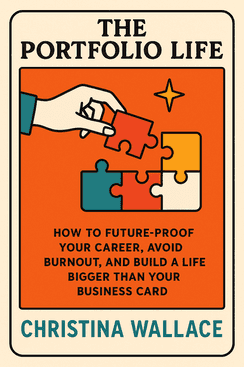
Portfolio Life: Future-Proof Your Career and Craft a Life Worthy of You by Scott Smith with Madeline Ashby Summary

Overview of Portfolio Life
In an era of hyperchange, "How to Future" offers practical tools for strategic foresight. With a 4.04/5 rating, this guidebook by sci-fi writer Madeline Ashby and futurist Scott Smith reveals how industry leaders navigate disruption. Can you afford not to see what's coming?
- Shift from predicting futures to mapping multiple plausible scenarios.
- Cultivate “future culture” by embedding foresight into daily organizational decisions.
- Use sensemaking to transform weak signals into actionable strategic insights.
- Balance scenario planning with entrepreneurial agility to navigate hyperchange.
- Prototype future narratives to test ideas before committing resources.
- Prioritize strategic wayfinding over rigid long-term planning frameworks.
- Develop critical foresight literacy to separate hype from meaningful trends.
- Frame futures work as collaborative inquiry rather than expert-driven prediction.
- Apply science fiction storytelling techniques to make futures tangible.
- Build antifragile strategies using trade-off analysis of potential disruptions.
- Combine horizon scanning with impact assessment to future-proof decisions.
- Treat futuring as continuous practice rather than one-time workshop exercise.
About the Author of Portfolio Life
Scott Smith, co-author of How to Future, is a renowned futurist and founder of Changeist, a strategic foresight firm advising clients like NASA, UNICEF, and the UK government.
Madeline Ashby, his collaborator, is an award-winning science fiction author (vN, Company Town) and consulting futurist with a Master’s in Strategic Foresight from OCAD University.
Together, they blend speculative storytelling and practical frameworks to help organizations navigate technological and societal shifts. Smith’s earlier horror novel The Ruins became a cult classic, while Ashby’s work appears in Slate and MIT Technology Review.
Their combined expertise spans workshops for Engineers Without Borders, keynote talks at global forums, and contributions to the ASU Center for Science and the Imagination. How to Future distills their decade-long partnerships with Fortune 500 companies and NGOs into actionable strategies for anticipating disruption.
FAQs About Portfolio Life
What is How to Future by Scott Smith and Madeline Ashby about?
How to Future provides a strategic framework for anticipating and adapting to rapidly changing business landscapes. It teaches tools like signal scanning, scenario development, and strategic storytelling to help organizations build resilient, future-ready strategies. The book emphasizes treating the future as a dynamic conversation rather than a fixed destination.
Who should read How to Future?
Business leaders, strategists, and innovators facing disruptive trends like AI, geopolitical shifts, or evolving consumer demands will benefit most. It’s also valuable for educators teaching foresight methodologies and teams aiming to build adaptive organizational cultures.
Is How to Future worth reading?
Yes—it translates complex futuring concepts into actionable steps, with practical frameworks for scenario planning and trend analysis. Critics praise its hands-on approach but note it focuses on one methodology rather than comparing multiple foresight models.
What are the key futuring frameworks in How to Future?
The book outlines a 6-step process:
- Scoping to define focus areas
- Signal scanning to identify emerging trends
- Pattern mapping to connect insights
- Scenario development for strategic storytelling
- Prototyping to test ideas
- Cultural integration to sustain foresight practices
How does How to Future approach uncertainty?
It treats uncertainty as a navigable challenge, not a barrier. By stress-testing multiple plausible futures through scenarios, readers learn to identify risks and opportunities early, fostering agility in decision-making.
What is the “future as a conversation” concept in How to Future?
This mantra rejects rigid predictions, urging leaders to continuously engage with emerging trends and recalibrate strategies. It emphasizes collaborative sense-making over top-down forecasting.
How does How to Future compare to other strategy books like Blue Ocean Strategy?
Unlike Blue Ocean’s focus on uncontested markets, How to Future prioritizes adaptive resilience over fixed plans. It complements execution-focused guides by adding tools for navigating volatility and systemic disruptions.
Can How to Future help with AI-driven industry changes?
Yes—its signal-scanning techniques help identify early AI adoption patterns, while scenario-building tools allow teams to prototype responses to ethical, operational, and competitive challenges posed by AI.
What are the main criticisms of How to Future?
Some reviewers note the book promotes a single foresight methodology rather than exploring alternatives. Others suggest deeper coverage of risk assessment and quantification could strengthen its practical application.
How does How to Future advise building a futuring culture?
It recommends embedding foresight into daily workflows via trend dashboards, cross-functional scenario workshops, and leadership incentives tied to long-term adaptability metrics.
What quotes from How to Future summarize its philosophy?
Key lines include:
- “The future isn’t a destination—it’s a relationship.”
- “Prototyping possible tomorrows makes them tangible today.” These emphasize proactive engagement over passive prediction.
How does How to Future address remote work trends?
While not explicitly about remote work, its tools help teams anticipate hybrid collaboration challenges, like using scenario planning to design office/remote policies adaptable to tech or demographic shifts.
Can individuals apply How to Future for career planning?
Absolutely—readers learn to identify skill demand signals, create personal contingency plans for industry disruptions, and build networks aligned with emerging opportunities.
What makes How to Future relevant in 2025?
As climate tech, AI regulation, and supply chain volatility dominate headlines, the book’s emphasis on agile foresight helps organizations stay ahead of compounding crises and innovate responsibly.
Feel the book through the author's voice
Turn knowledge into engaging, example-rich insights
Capture key ideas in a flash for fast learning
Enjoy the book in a fun and engaging way
Key Themes in Portfolio Life
Quotes from Portfolio Life
Most concerning is how modern life punishes uncertainty.
Futuring is not merely an intellectual exercise.
Sensing is the fuel that drives futuring.
Characters in Portfolio Life
Quick Summary Mode - Read or listen to Portfolio Life Summary in 11 Minutes

Break down key ideas from Portfolio Life into bite-sized takeaways to understand how innovative teams create, collaborate, and grow.

Flash Card Mode - Top 10 Insights from Portfolio Life in a Nutshell

Distill Portfolio Life into rapid-fire memory cues that highlight key principles of candor, teamwork, and creative resilience.

Fun Mode - Portfolio Life Lessons Told Through 25-Min Stories

Experience Portfolio Life through vivid storytelling that turns innovation lessons into moments you'll remember and apply.
Personalize Mode - Read or listen to Portfolio Life Summary in 0 Minutes

Ask anything, pick the voice, and co-create insights that truly resonate with you.

From Columbia University alumni built in San Francisco
"Instead of endless scrolling, I just hit play on BeFreed. It saves me so much time."


"I never knew where to start with nonfiction—BeFreed’s book lists turned into podcasts gave me a clear path."


"Perfect balance between learning and entertainment. Finished ‘Thinking, Fast and Slow’ on my commute this week."
"Crazy how much I learned while walking the dog. BeFreed = small habits → big gains."
"Reading used to feel like a chore. Now it’s just part of my lifestyle."

"Feels effortless compared to reading. I’ve finished 6 books this month already."
"BeFreed turned my guilty doomscrolling into something that feels productive and inspiring."

"BeFreed turned my commute into learning time. 20-min podcasts are perfect for finishing books I never had time for."
"BeFreed replaced my podcast queue. Imagine Spotify for books — that’s it. 🙌"

"It is great for me to learn something from the book without reading it."
"The themed book list podcasts help me connect ideas across authors—like a guided audio journey."
"Makes me feel smarter every time before going to work"
From Columbia University alumni built in San Francisco
"Instead of endless scrolling, I just hit play on BeFreed. It saves me so much time."
"I never knew where to start with nonfiction—BeFreed’s book lists turned into podcasts gave me a clear path."
"Perfect balance between learning and entertainment. Finished ‘Thinking, Fast and Slow’ on my commute this week."
"Crazy how much I learned while walking the dog. BeFreed = small habits → big gains."
"Reading used to feel like a chore. Now it’s just part of my lifestyle."
"Feels effortless compared to reading. I’ve finished 6 books this month already."
"BeFreed turned my guilty doomscrolling into something that feels productive and inspiring."
"BeFreed turned my commute into learning time. 20-min podcasts are perfect for finishing books I never had time for."
"BeFreed replaced my podcast queue. Imagine Spotify for books — that’s it. 🙌"
"It is great for me to learn something from the book without reading it."
"The themed book list podcasts help me connect ideas across authors—like a guided audio journey."
"Makes me feel smarter every time before going to work"
"Instead of endless scrolling, I just hit play on BeFreed. It saves me so much time."
"I never knew where to start with nonfiction—BeFreed’s book lists turned into podcasts gave me a clear path."
"Perfect balance between learning and entertainment. Finished ‘Thinking, Fast and Slow’ on my commute this week."
"Crazy how much I learned while walking the dog. BeFreed = small habits → big gains."
"Reading used to feel like a chore. Now it’s just part of my lifestyle."
"Feels effortless compared to reading. I’ve finished 6 books this month already."
"BeFreed turned my guilty doomscrolling into something that feels productive and inspiring."
"BeFreed turned my commute into learning time. 20-min podcasts are perfect for finishing books I never had time for."
"BeFreed replaced my podcast queue. Imagine Spotify for books — that’s it. 🙌"
"It is great for me to learn something from the book without reading it."
"The themed book list podcasts help me connect ideas across authors—like a guided audio journey."
"Makes me feel smarter every time before going to work"
"Instead of endless scrolling, I just hit play on BeFreed. It saves me so much time."
"I never knew where to start with nonfiction—BeFreed’s book lists turned into podcasts gave me a clear path."
"Perfect balance between learning and entertainment. Finished ‘Thinking, Fast and Slow’ on my commute this week."
"Crazy how much I learned while walking the dog. BeFreed = small habits → big gains."
"Reading used to feel like a chore. Now it’s just part of my lifestyle."
"Feels effortless compared to reading. I’ve finished 6 books this month already."
"BeFreed turned my guilty doomscrolling into something that feels productive and inspiring."
"BeFreed turned my commute into learning time. 20-min podcasts are perfect for finishing books I never had time for."
"BeFreed replaced my podcast queue. Imagine Spotify for books — that’s it. 🙌"
"It is great for me to learn something from the book without reading it."
"The themed book list podcasts help me connect ideas across authors—like a guided audio journey."
"Makes me feel smarter every time before going to work"

Get the Portfolio Life summary as a free PDF or EPUB. Print it or read offline anytime.