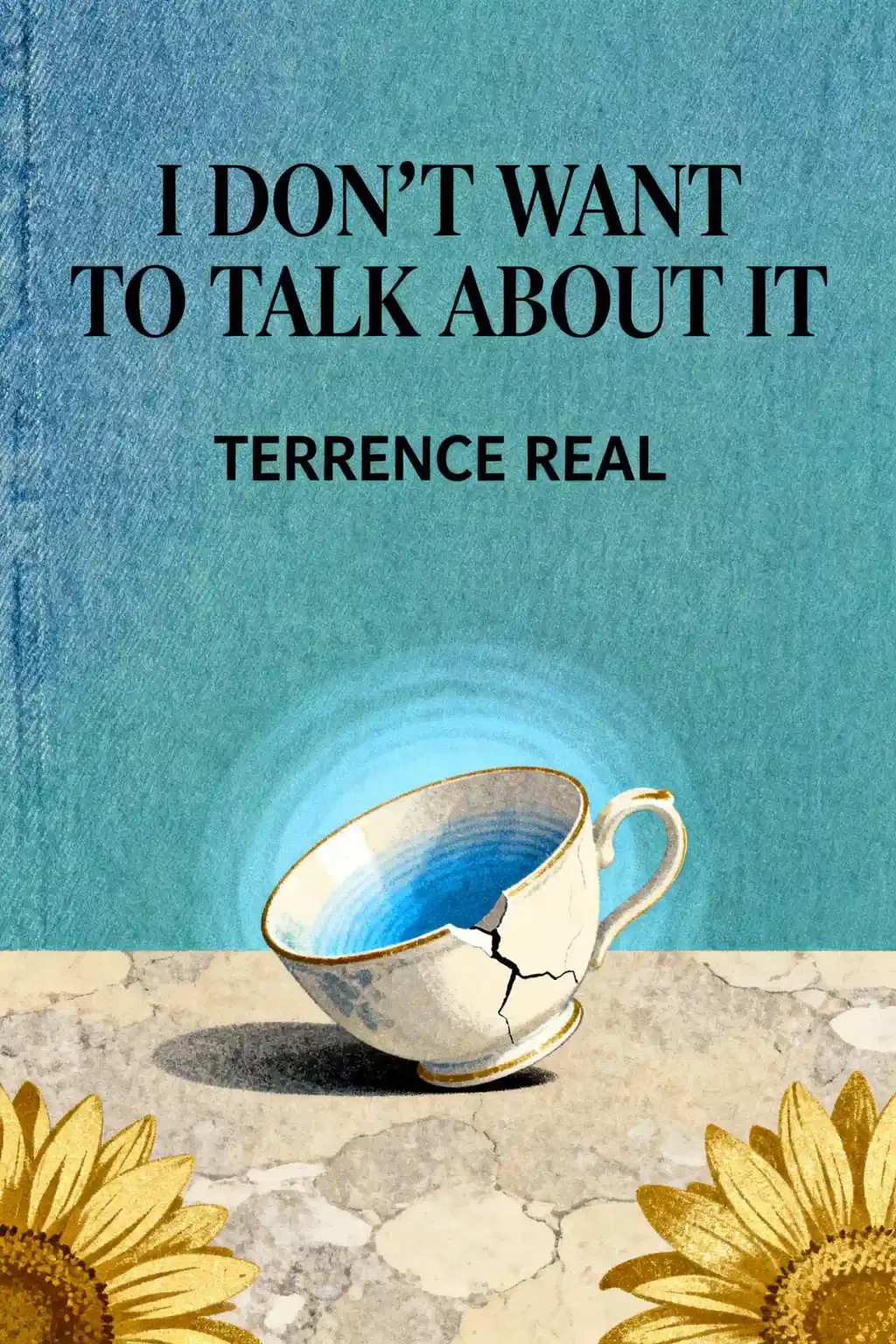
I don't want to talk about it: overcoming the secret legacy of male depression by Terrence Real Summary

Overview of I don't want to talk about it
Terrence Real's groundbreaking bestseller exposes the hidden epidemic of male depression, challenging toxic masculinity norms for over 20 years. Featured on Oprah and praised by The New York Times, it reveals why men's emotional pain often masquerades as rage, workaholism, and substance abuse.
- Covert depression in men masks itself through anger, workaholism, and substance abuse
- Terry Real exposes how traditional masculinity trains emotional disconnection from childhood
- Male depression often stems from unresolved relational trauma passed through generations
- Healing requires replacing stoic self-reliance with radical vulnerability in relationships
- "Relational recovery" helps men break isolation cycles through authentic emotional expression
- Partners play crucial roles in recognizing and addressing covert male depression
- Childhood emotional neglect creates adults who confuse intimacy with vulnerability threats
- Real's approach combines feminist principles with practical steps for emotional reconnection
- Covert depression treatment must address cultural norms, not just individual symptoms
- Relational Life Therapy teaches men to transform defensive behaviors into connective tools
- Breaking the "male trance" involves grieving lost emotional capacity then rebuilding
- Healthy masculinity embraces both strength and tenderness as non-oppositional traits
About the Author of I don't want to talk about it
Terrence Real, licensed family therapist and bestselling author of I Don’t Want to Talk About It: Overcoming the Secret Legacy of Male Depression, is a pioneering voice in men’s mental health and relational psychology. A founder of Boston’s Relational Life Institute and senior faculty member at the Family Institute of Cambridge, Real blends clinical expertise with personal experience—drawing from his own journey overcoming depression—to dismantle stigma around male vulnerability.
His groundbreaking work redefined “covert depression” in men, highlighting how anger and workaholism mask emotional pain, a theme central to this self-help classic.
Real’s authority extends to his other acclaimed books, including The New Rules of Marriage and How Can I Get Through to You?, which offer practical strategies for fostering intimacy. A frequent guest on Oprah, Today, and 20/20, he combines academic rigor with relatable storytelling, informed by over 25 years in private practice.
I Don’t Want to Talk About It has sold over a million copies worldwide and is translated into 12 languages, cementing its status as a pivotal text in men’s psychology.
FAQs About I don't want to talk about it
What is I Don’t Want to Talk About It about?
I Don’t Want to Talk About It by Terrence Real explores male depression as a hidden epidemic, arguing that men often mask symptoms like anger, workaholism, or substance abuse instead of seeking help. Drawing on 25+ years of clinical experience, Real reveals how untreated depression harms relationships and perpetuates intergenerational trauma, offering pathways for healing through vulnerability and reconnection.
Who should read I Don’t Want to Talk About It?
This book is essential for men struggling with emotional isolation, partners/family members seeking to understand male depression, and mental health professionals. It’s particularly valuable for those recognizing patterns of covert depression—outwardly functional lives masking inner turmoil.
What are the main themes in I Don’t Want to Talk About It?
Key themes include:
- Covert depression: How men manifest depression through aggression or addiction rather than sadness
- Intergenerational trauma: The cycle of emotional neglect passed from fathers to sons
- Relational healing: Rebuilding intimacy through vulnerability and communication
How does Terrence Real define “covert depression”?
Real defines covert depression as depression masked by socially acceptable “male” behaviors like rage, dominance, or emotional withdrawal. Unlike classic depression symptoms, these coping mechanisms often go unrecognized while damaging relationships.
What practical advice does I Don’t Want to Talk About It offer?
The book provides strategies to:
- Identify and confront repressed emotional pain
- Break cycles of abusive behavior through accountability
- Develop emotional literacy and relational skills Real combines clinical case studies with personal narratives, including his experiences as a depressed father’s son.
How does this book differ from other depression guides?
Unlike general depression manuals, Real specifically examines how traditional masculinity norms discourage help-seeking. It uniquely connects male socialization to relational dysfunction, offering gender-responsive recovery tools rather than generic advice.
What criticisms exist about I Don’t Want to Talk About It?
Some readers find the academic references dense compared to case studies. Others note its 1997 publication date but acknowledge its continued relevance to modern masculinity issues.
How does I Don’t Want to Talk About It complement Real’s other works?
It forms a trilogy with How Can I Get Through to You? (communication) and The New Rules of Marriage (relationships), collectively addressing men’s emotional health from self-awareness to partnership.
Why is I Don’t Want to Talk About It still relevant in 2025?
With rising awareness of mental health’s societal impact, Real’s framework helps address persistent issues: 45% of men report rarely discussing feelings (2024 CDC data), and male suicide rates remain elevated.
What key quotes summarize the book’s message?
- “Depression in men is often misread as bad behavior.”
- “Healing begins when we stop running from the pain we carry.”
- “Your father wasn’t a monster—he was a wounded son.”
How does Real’s personal history influence the book?
As the son of a depressed, violent father and parent to two sons, Real combines professional expertise with lived experience—a perspective praised for its raw authenticity.
Where can readers apply I Don’t Want to Talk About It’s lessons?
Practical applications include:
- Improving romantic partnerships through emotional transparency
- Parenting sons with healthier emotional templates
- Workplace leadership emphasizing vulnerability over toxic toughness
Feel the book through the author's voice
Turn knowledge into engaging, example-rich insights
Capture key ideas in a flash for fast learning
Enjoy the book in a fun and engaging way
Key Themes in I don't want to talk about it
Quotes from I don't want to talk about it
Men aren't supposed to be vulnerable, and pain is something to rise above.
Men are four times more likely than women to take their own lives.
Addiction often serves as self-medication for covert depression.
Depression carries particular stigma for men, as the definition of manhood involves 'standing up' to pain.
A drowning person will grip you...pull you down with them.
Characters in I don't want to talk about it
Quick Summary Mode - Read or listen to I don't want to talk about it Summary in 11 Minutes

Break down key ideas from I don't want to talk about it into bite-sized takeaways to understand how innovative teams create, collaborate, and grow.

Flash Card Mode - Top 10 Insights from I don't want to talk about it in a Nutshell

Distill I don't want to talk about it into rapid-fire memory cues that highlight key principles of candor, teamwork, and creative resilience.

Fun Mode - I don't want to talk about it Lessons Told Through 25-Min Stories

Experience I don't want to talk about it through vivid storytelling that turns innovation lessons into moments you'll remember and apply.
Personalize Mode - Read or listen to I don't want to talk about it Summary in 0 Minutes

Ask anything, pick the voice, and co-create insights that truly resonate with you.

From Columbia University alumni built in San Francisco
"Instead of endless scrolling, I just hit play on BeFreed. It saves me so much time."


"I never knew where to start with nonfiction—BeFreed’s book lists turned into podcasts gave me a clear path."


"Perfect balance between learning and entertainment. Finished ‘Thinking, Fast and Slow’ on my commute this week."
"Crazy how much I learned while walking the dog. BeFreed = small habits → big gains."
"Reading used to feel like a chore. Now it’s just part of my lifestyle."

"Feels effortless compared to reading. I’ve finished 6 books this month already."
"BeFreed turned my guilty doomscrolling into something that feels productive and inspiring."

"BeFreed turned my commute into learning time. 20-min podcasts are perfect for finishing books I never had time for."
"BeFreed replaced my podcast queue. Imagine Spotify for books — that’s it. 🙌"

"It is great for me to learn something from the book without reading it."
"The themed book list podcasts help me connect ideas across authors—like a guided audio journey."
"Makes me feel smarter every time before going to work"
From Columbia University alumni built in San Francisco
"Instead of endless scrolling, I just hit play on BeFreed. It saves me so much time."
"I never knew where to start with nonfiction—BeFreed’s book lists turned into podcasts gave me a clear path."
"Perfect balance between learning and entertainment. Finished ‘Thinking, Fast and Slow’ on my commute this week."
"Crazy how much I learned while walking the dog. BeFreed = small habits → big gains."
"Reading used to feel like a chore. Now it’s just part of my lifestyle."
"Feels effortless compared to reading. I’ve finished 6 books this month already."
"BeFreed turned my guilty doomscrolling into something that feels productive and inspiring."
"BeFreed turned my commute into learning time. 20-min podcasts are perfect for finishing books I never had time for."
"BeFreed replaced my podcast queue. Imagine Spotify for books — that’s it. 🙌"
"It is great for me to learn something from the book without reading it."
"The themed book list podcasts help me connect ideas across authors—like a guided audio journey."
"Makes me feel smarter every time before going to work"
"Instead of endless scrolling, I just hit play on BeFreed. It saves me so much time."
"I never knew where to start with nonfiction—BeFreed’s book lists turned into podcasts gave me a clear path."
"Perfect balance between learning and entertainment. Finished ‘Thinking, Fast and Slow’ on my commute this week."
"Crazy how much I learned while walking the dog. BeFreed = small habits → big gains."
"Reading used to feel like a chore. Now it’s just part of my lifestyle."
"Feels effortless compared to reading. I’ve finished 6 books this month already."
"BeFreed turned my guilty doomscrolling into something that feels productive and inspiring."
"BeFreed turned my commute into learning time. 20-min podcasts are perfect for finishing books I never had time for."
"BeFreed replaced my podcast queue. Imagine Spotify for books — that’s it. 🙌"
"It is great for me to learn something from the book without reading it."
"The themed book list podcasts help me connect ideas across authors—like a guided audio journey."
"Makes me feel smarter every time before going to work"
"Instead of endless scrolling, I just hit play on BeFreed. It saves me so much time."
"I never knew where to start with nonfiction—BeFreed’s book lists turned into podcasts gave me a clear path."
"Perfect balance between learning and entertainment. Finished ‘Thinking, Fast and Slow’ on my commute this week."
"Crazy how much I learned while walking the dog. BeFreed = small habits → big gains."
"Reading used to feel like a chore. Now it’s just part of my lifestyle."
"Feels effortless compared to reading. I’ve finished 6 books this month already."
"BeFreed turned my guilty doomscrolling into something that feels productive and inspiring."
"BeFreed turned my commute into learning time. 20-min podcasts are perfect for finishing books I never had time for."
"BeFreed replaced my podcast queue. Imagine Spotify for books — that’s it. 🙌"
"It is great for me to learn something from the book without reading it."
"The themed book list podcasts help me connect ideas across authors—like a guided audio journey."
"Makes me feel smarter every time before going to work"

Get the I don't want to talk about it summary as a free PDF or EPUB. Print it or read offline anytime.