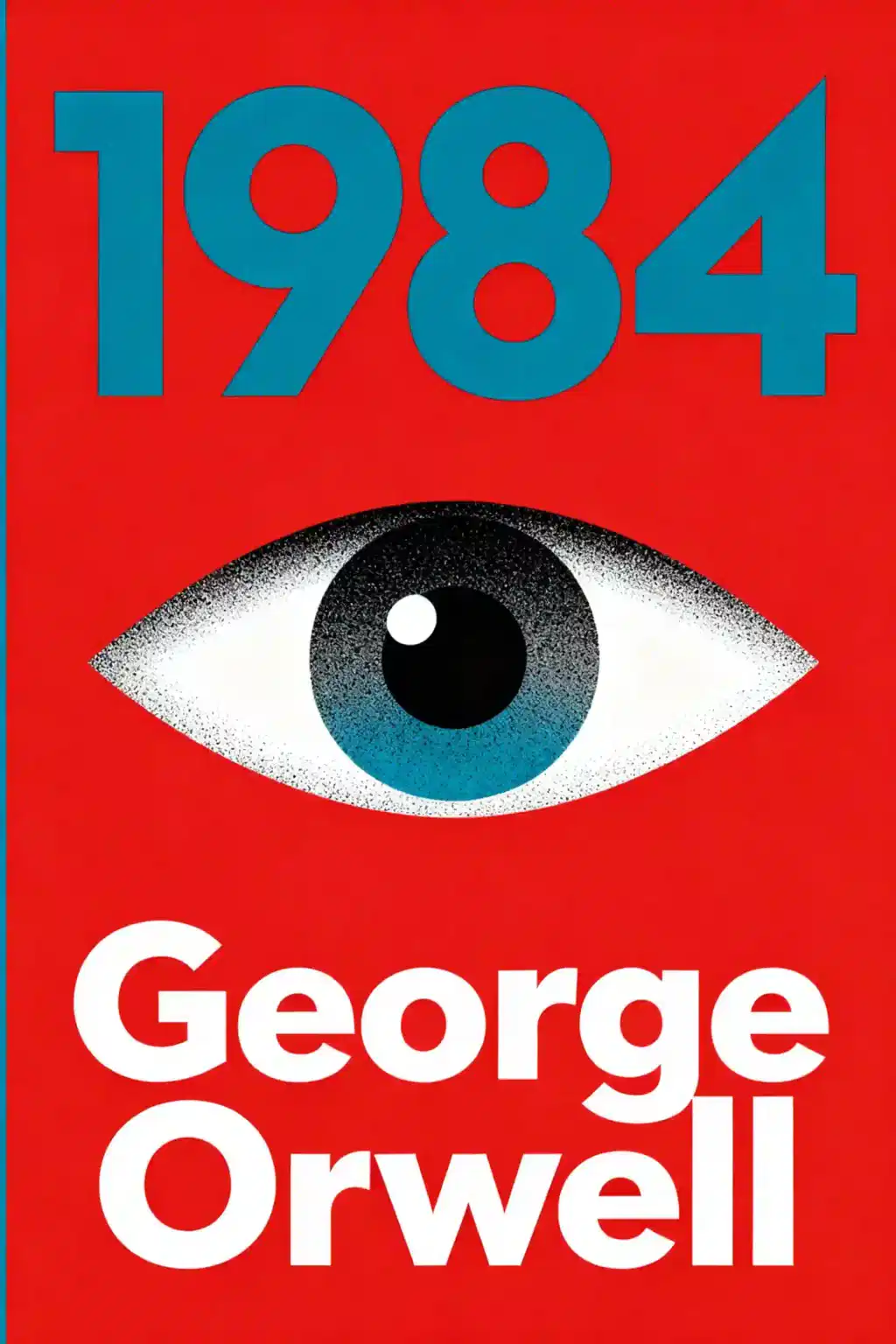
Nineteen eighty-four: a novel by George Orwell Summary

Overview of Nineteen eighty-four
In Orwell's chilling dystopia, Big Brother watches as truth becomes fiction. After NSA surveillance leaks, "1984" topped bestseller charts again - proving its warning about totalitarian control remains our reality. What privacy would you sacrifice for security?
- Surveillance erodes freedom through telescreens and Thought Police monitoring.
- Newspeak restricts independent thought by eliminating rebellious language concepts.
- Doublethink enforces cognitive dissonance to accept contradictory Party truths.
- Big Brother symbolizes totalitarian control through fear and propaganda.
- The Brotherhood's resistance highlights futile hope against omnipresent Party control.
- Room 101 weaponizes personal fears to break individual resistance.
- Perpetual war maintains power by consuming resources and stifling dissent.
- Privacy eradication via telescreens enables unchecked government authority expansion.
- Truth becomes malleable as the Party rewrites history daily.
- Freedom's fragility demands vigilant defense against authoritarian encroachment.
- The human spirit's vulnerability to manipulation under relentless oppression.
- Love and loyalty collapse when survival instincts override morality.
About the Author of Nineteen eighty-four
George Orwell (1903–1950), born Eric Arthur Blair in British India, was a groundbreaking British novelist and political essayist whose dystopian masterwork Nineteen Eighty-Four redefined the genre with its exploration of totalitarianism, surveillance, and linguistic manipulation.
A former colonial policeman and Spanish Civil War volunteer, Orwell channeled his firsthand experiences with poverty, propaganda, and ideological betrayal into his fiction and nonfiction. His earlier works like Animal Farm (a satirical allegory of Stalinism) and Homage to Catalonia (a memoir of revolutionary Spain) established his reputation as a sharp critic of authoritarianism and a defender of democratic socialism.
Nineteen Eighty-Four—published just months before his death from tuberculosis—has sold over 30 million copies worldwide, been translated into 65+ languages, and inspired countless adaptations, from films to operas.
Orwell’s essays on language, politics, and culture remain required reading in universities, while phrases like “Big Brother” and “thoughtcrime” have permanently entered global discourse. His final novel continues to top lists of the 20th century’s most influential books, with the New York Times ranking it third among the greatest works of the past 125 years.
FAQs About Nineteen eighty-four
What is 1984 by George Orwell about?
1984 is a dystopian novel set in a totalitarian society ruled by the Party and its leader, Big Brother. It follows Winston Smith, a Party member who rebels against pervasive surveillance, historical revisionism, and thought control. The story explores themes of propaganda, psychological manipulation, and the erosion of individuality, culminating in Winston's brutal reeducation.
Who should read 1984 by George Orwell?
This book is essential for readers interested in political dystopias, critiques of authoritarianism, or the dangers of mass surveillance. Students, scholars of literature, and those concerned with privacy and free speech will find its themes deeply relevant. It’s particularly timely for debates about technology’s role in governance.
Is 1984 worth reading in 2025?
Yes. Orwell’s exploration of propaganda, censorship, and state control remains alarmingly relevant in an era of digital surveillance and misinformation. Its warnings about the abuse of power and erosion of truth offer critical insights for modern readers.
What are the main themes in 1984?
Key themes include:
- Totalitarianism: The Party’s absolute control over history, language, and thought.
- Surveillance: Ubiquitous telescreens and the Thought Police enforce conformity.
- Reality manipulation: Newspeak and Doublethink erase independent thought.
- Resistance: Winston’s failed rebellion underscores the fragility of dissent.
How does 1984 depict propaganda?
The Party uses slogans like “War is Peace,” media manipulation via the Ministry of Truth, and cult-like devotion to Big Brother to control citizens. Propaganda erases critical thinking, ensuring loyalty through fear and distorted narratives.
What is the significance of Newspeak in 1984?
Newspeak, the Party’s engineered language, aims to eliminate rebellious ideas by restricting vocabulary. Concepts like “freedom” become unthinkable, illustrating how language shapes thought and sustains authoritarian rule.
Why is Big Brother important in 1984?
Big Brother symbolizes the Party’s omnipresent surveillance and psychological control. Posters declaring “Big Brother is watching you” reinforce fear, while his ambiguous existence highlights the regime’s reliance on myth over reality.
What does Room 101 represent in 1984?
Room 101 is where the Party breaks prisoners by exploiting their deepest fears. For Winston, rats in a cage symbolize the destruction of personal loyalty and the triumph of state-induced terror.
How does 1984 relate to modern privacy concerns?
Orwell’s portrayal of mass surveillance parallels contemporary issues like data tracking and AI monitoring. The novel warns how technology can enable authoritarianism if left unchecked, resonating with debates about digital privacy.
What is Doublethink in 1984?
Doublethink is the ability to hold two contradictory beliefs simultaneously (e.g., “War is Peace”). It epitomizes the Party’s manipulation of reality, forcing citizens to accept absurdities without question.
How does 1984 end?
After torture in Room 101, Winston betrays Julia and succumbs to loving Big Brother. The ending underscores the Party’s total victory over individuality, leaving Winston a broken, conformist shell.
Why is 1984 considered a classic?
Its prescient critique of authoritarianism, exploration of psychological control, and iconic concepts (e.g., Big Brother) have made it a cultural touchstone. The novel’s warnings about truth erosion remain urgent in the digital age.
Feel the book through the author's voice
Turn knowledge into engaging, example-rich insights
Capture key ideas in a flash for fast learning
Enjoy the book in a fun and engaging way
Key Themes in Nineteen eighty-four
Quotes from Nineteen eighty-four
People over thirty are typically afraid of their own children.
Who controls the past controls the future; who controls the present controls the past.
thoughtcrime will be impossible because there will be no words to express it.
Reality exists in the human mind and nowhere else.
Their embrace as a political act against the Party itself.
Characters in Nineteen eighty-four
Quick Summary Mode - Read or listen to Nineteen eighty-four Summary in 10 Minutes

Break down key ideas from Nineteen eighty-four into bite-sized takeaways to understand how innovative teams create, collaborate, and grow.

Flash Card Mode - Top 10 Insights from Nineteen eighty-four in a Nutshell

Distill Nineteen eighty-four into rapid-fire memory cues that highlight key principles of candor, teamwork, and creative resilience.

Fun Mode - Nineteen eighty-four Lessons Told Through 25-Min Stories

Experience Nineteen eighty-four through vivid storytelling that turns innovation lessons into moments you'll remember and apply.
Personalize Mode - Read or listen to Nineteen eighty-four Summary in 0 Minutes

Ask anything, pick the voice, and co-create insights that truly resonate with you.

From Columbia University alumni built in San Francisco
"Instead of endless scrolling, I just hit play on BeFreed. It saves me so much time."


"I never knew where to start with nonfiction—BeFreed’s book lists turned into podcasts gave me a clear path."


"Perfect balance between learning and entertainment. Finished ‘Thinking, Fast and Slow’ on my commute this week."
"Crazy how much I learned while walking the dog. BeFreed = small habits → big gains."
"Reading used to feel like a chore. Now it’s just part of my lifestyle."

"Feels effortless compared to reading. I’ve finished 6 books this month already."
"BeFreed turned my guilty doomscrolling into something that feels productive and inspiring."

"BeFreed turned my commute into learning time. 20-min podcasts are perfect for finishing books I never had time for."
"BeFreed replaced my podcast queue. Imagine Spotify for books — that’s it. 🙌"

"It is great for me to learn something from the book without reading it."
"The themed book list podcasts help me connect ideas across authors—like a guided audio journey."
"Makes me feel smarter every time before going to work"
From Columbia University alumni built in San Francisco
"Instead of endless scrolling, I just hit play on BeFreed. It saves me so much time."
"I never knew where to start with nonfiction—BeFreed’s book lists turned into podcasts gave me a clear path."
"Perfect balance between learning and entertainment. Finished ‘Thinking, Fast and Slow’ on my commute this week."
"Crazy how much I learned while walking the dog. BeFreed = small habits → big gains."
"Reading used to feel like a chore. Now it’s just part of my lifestyle."
"Feels effortless compared to reading. I’ve finished 6 books this month already."
"BeFreed turned my guilty doomscrolling into something that feels productive and inspiring."
"BeFreed turned my commute into learning time. 20-min podcasts are perfect for finishing books I never had time for."
"BeFreed replaced my podcast queue. Imagine Spotify for books — that’s it. 🙌"
"It is great for me to learn something from the book without reading it."
"The themed book list podcasts help me connect ideas across authors—like a guided audio journey."
"Makes me feel smarter every time before going to work"
"Instead of endless scrolling, I just hit play on BeFreed. It saves me so much time."
"I never knew where to start with nonfiction—BeFreed’s book lists turned into podcasts gave me a clear path."
"Perfect balance between learning and entertainment. Finished ‘Thinking, Fast and Slow’ on my commute this week."
"Crazy how much I learned while walking the dog. BeFreed = small habits → big gains."
"Reading used to feel like a chore. Now it’s just part of my lifestyle."
"Feels effortless compared to reading. I’ve finished 6 books this month already."
"BeFreed turned my guilty doomscrolling into something that feels productive and inspiring."
"BeFreed turned my commute into learning time. 20-min podcasts are perfect for finishing books I never had time for."
"BeFreed replaced my podcast queue. Imagine Spotify for books — that’s it. 🙌"
"It is great for me to learn something from the book without reading it."
"The themed book list podcasts help me connect ideas across authors—like a guided audio journey."
"Makes me feel smarter every time before going to work"
"Instead of endless scrolling, I just hit play on BeFreed. It saves me so much time."
"I never knew where to start with nonfiction—BeFreed’s book lists turned into podcasts gave me a clear path."
"Perfect balance between learning and entertainment. Finished ‘Thinking, Fast and Slow’ on my commute this week."
"Crazy how much I learned while walking the dog. BeFreed = small habits → big gains."
"Reading used to feel like a chore. Now it’s just part of my lifestyle."
"Feels effortless compared to reading. I’ve finished 6 books this month already."
"BeFreed turned my guilty doomscrolling into something that feels productive and inspiring."
"BeFreed turned my commute into learning time. 20-min podcasts are perfect for finishing books I never had time for."
"BeFreed replaced my podcast queue. Imagine Spotify for books — that’s it. 🙌"
"It is great for me to learn something from the book without reading it."
"The themed book list podcasts help me connect ideas across authors—like a guided audio journey."
"Makes me feel smarter every time before going to work"

Get the Nineteen eighty-four summary as a free PDF or EPUB. Print it or read offline anytime.