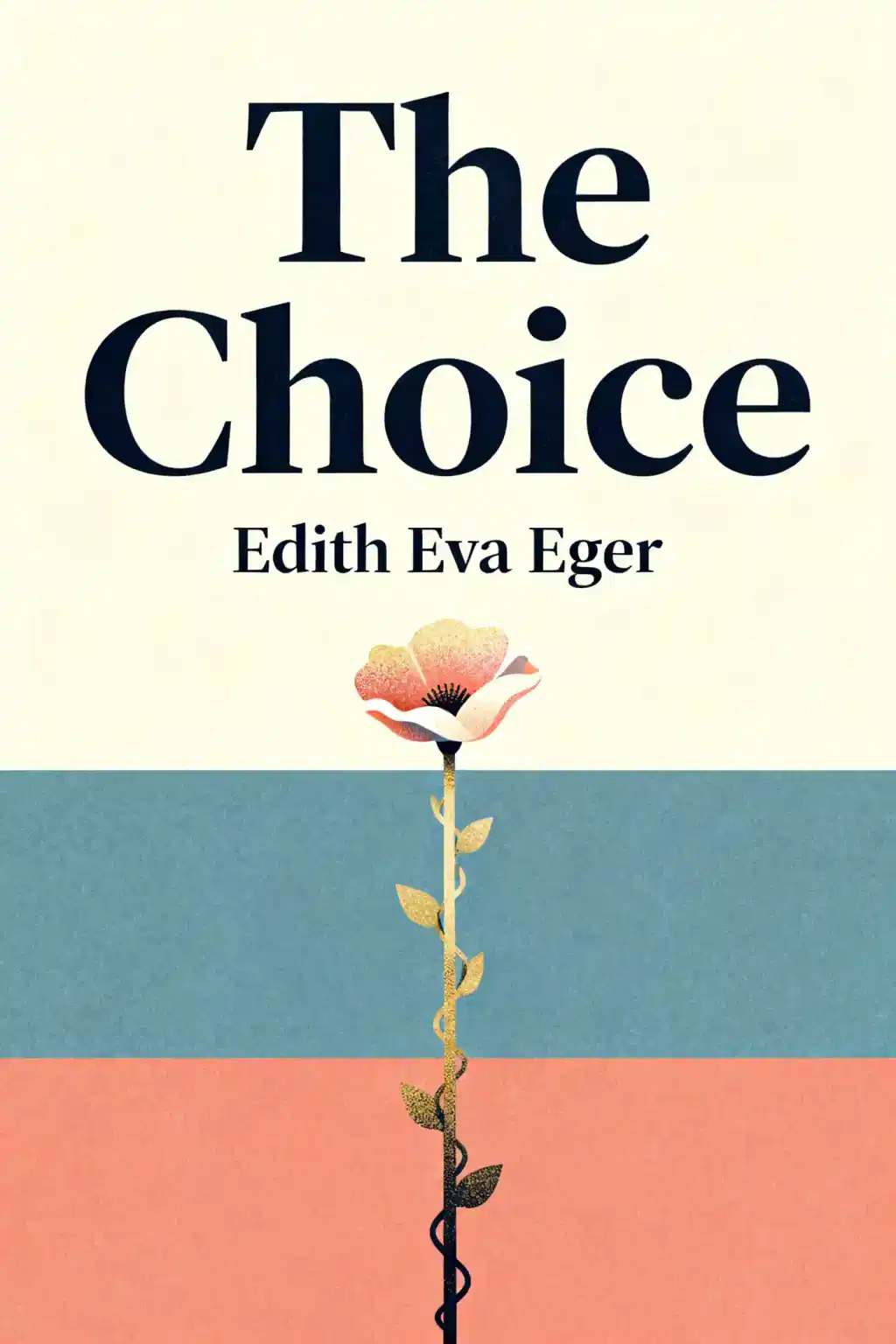
Choice: Embrace the Possible by Edith Eva Eger Summary

Overview of Choice
Holocaust survivor Dr. Edith Eva Eger's memoir reveals how choosing freedom amid unimaginable trauma transforms suffering into strength. Praised by Elizabeth Zaborowska and compared to Viktor Frankl's work, this New York Times bestseller unlocks the power of perspective in your darkest moments.
- Edith Eger redefines trauma as a universal experience requiring acceptance, not denial.
- Choosing victimhood over victimization traps you in mental prisons of the past.
- Embracing suffering’s meaning unlocks Edith Eger’s path from Auschwitz to empowerment.
- The Choice reveals forgiveness as self-liberation requiring no reconciliation with perpetrators.
- Edith Eger’s healing framework: confront your story → practice self-compassion → seek connection.
- Mental freedom comes through daily choices to release resentment and reclaim agency.
- Self-compassion beats self-blame in Edith Eger’s trauma recovery methodology.
- Edith Eger transformed Holocaust survival into a blueprint for post-trauma growth.
- The Choice proves healing begins when we stop comparing suffering and start processing.
- Edith Eger’s Auschwitz survival secret: finding agency where none seemed to exist.
- True freedom in The Choice means becoming your own liberator first.
- Edith Eger’s “active acceptance” model helps reframe pain as purposeful growth.
About the Author of Choice
Dr. Edith Eva Eger, author of the bestselling memoir The Choice: Embrace the Possible, is a renowned clinical psychologist, Holocaust survivor, and international authority on trauma recovery. Born in Hungary in 1927, her harrowing experiences at Auschwitz and subsequent liberation inform her profound insights into resilience, forgiveness, and healing.
A PhD graduate from the University of Texas at El Paso, Dr. Eger has treated patients for decades through her La Jolla practice while serving as a faculty member at the University of California, San Diego. Her work has been featured on CNN, The Oprah Winfrey Show, and in a Dutch Holocaust documentary.
The Choice blends memoir with therapeutic wisdom, exploring themes of survival, post-traumatic growth, and reclaiming agency—a framework expanded in her follow-up book, The Gift: 12 Lessons to Save Your Life. Translated into over 50 languages and endorsed by thinkers like Viktor Frankl, The Choice has sold millions of copies globally, cementing Dr. Eger’s status as a transformative voice in psychology and Holocaust testimony.
FAQs About Choice
What is The Choice: Embrace the Possible about?
The Choice: Embrace the Possible is a memoir by Holocaust survivor Dr. Edith Eva Eger, detailing her imprisonment at Auschwitz, survival through trauma, and journey to becoming a psychologist. It explores how she overcame survivor’s guilt, forgave herself, and now teaches others to break free from mental prisons by embracing resilience and the power of choice.
Who should read The Choice: Embrace the Possible?
This book is ideal for readers seeking inspiration from survival stories, those interested in trauma recovery, or anyone grappling with guilt, fear, or self-limiting beliefs. It’s particularly valuable for psychology enthusiasts and individuals navigating personal transformation.
Is The Choice: Embrace the Possible worth reading?
Yes—ranked a New York Times bestseller and praised by Oprah Winfrey and Desmond Tutu, the book offers profound insights into resilience and healing. Its blend of memoir and therapeutic wisdom makes it a timeless resource for understanding human strength.
What does "the biggest prison is in your mind" mean in The Choice?
This metaphor underscores Eger’s belief that self-imposed limitations—like shame, anger, or unresolved trauma—can trap us more than physical prisons. She argues freedom comes from taking responsibility for one’s mindset and releasing self-judgment.
How did Edith Eger’s dance for Josef Mengele impact her survival?
Forced to dance for Nazi officer Josef Mengele at Auschwitz, Eger used this moment to mentally escape brutality by focusing on technique and memories of her mother. This act symbolized her refusal to let oppression destroy her inner spirit.
What lessons does The Choice offer about forgiveness?
Eger emphasizes forgiving oneself as the hardest but most liberating step. By returning to Auschwitz decades later, she reconciled with her past, urging readers to release blame and focus on creating a compassionate legacy.
How does The Choice compare to other Holocaust memoirs?
Unlike purely historical accounts, Eger’s memoir integrates psychological frameworks for healing, making it both a survival narrative and a guide to overcoming adversity through mindset shifts.
Can The Choice help with modern-day challenges like anxiety or grief?
Absolutely. Eger’s principles—such as reframing trauma as empowerment and choosing hope—apply to contemporary struggles, offering tools to navigate loss, career stress, or relationship conflicts with resilience.
What criticisms exist about The Choice: Embrace the Possible?
Some readers may find Holocaust-era details emotionally heavy, though Eger balances grim realities with uplifting lessons. A few critics note repetitive themes, but most praise its raw honesty and practical wisdom.
How does Edith Eger’s psychology background shape the book?
As a clinical psychologist, Eger pairs personal anecdotes with patient case studies, illustrating how techniques like cognitive reframing and mindfulness can dismantle destructive thought patterns.
Why is The Choice relevant in 2025?
In an era marked by global crises and mental health struggles, Eger’s message—that we control our responses to adversity—resonates deeply. Her focus on post-traumatic growth aligns with modern resilience research.
What is the legacy of The Choice: Embrace the Possible?
The book’s enduring impact lies in its universal call to transform suffering into purpose. Eger’s work continues to inspire generations to replace victimhood with agency, proving hope persists even in darkness.
Feel the book through the author's voice
Turn knowledge into engaging, example-rich insights
Capture key ideas in a flash for fast learning
Enjoy the book in a fun and engaging way
Key Themes in Choice
Quotes from Choice
"No one can take away from you what you've put in your mind."
"The opposite of depression is expression"
"I'll never forget your eyes. I'll never forget your hands."
"Your mother is burning in there. You better start talking about her in the past tense."
"We've escaped the gas chamber, but we'll die eating potato peels," someone jokes.
Characters in Choice
Quick Summary Mode - Read or listen to Choice Summary in 7 Minutes

Break down key ideas from Choice into bite-sized takeaways to understand how innovative teams create, collaborate, and grow.

Flash Card Mode - Top 10 Insights from Choice in a Nutshell

Distill Choice into rapid-fire memory cues that highlight key principles of candor, teamwork, and creative resilience.

Fun Mode - Choice Lessons Told Through 19-Min Stories

Experience Choice through vivid storytelling that turns innovation lessons into moments you'll remember and apply.
Personalize Mode - Read or listen to Choice Summary in 0 Minutes

Ask anything, pick the voice, and co-create insights that truly resonate with you.

From Columbia University alumni built in San Francisco
"Instead of endless scrolling, I just hit play on BeFreed. It saves me so much time."


"I never knew where to start with nonfiction—BeFreed’s book lists turned into podcasts gave me a clear path."


"Perfect balance between learning and entertainment. Finished ‘Thinking, Fast and Slow’ on my commute this week."
"Crazy how much I learned while walking the dog. BeFreed = small habits → big gains."
"Reading used to feel like a chore. Now it’s just part of my lifestyle."

"Feels effortless compared to reading. I’ve finished 6 books this month already."
"BeFreed turned my guilty doomscrolling into something that feels productive and inspiring."

"BeFreed turned my commute into learning time. 20-min podcasts are perfect for finishing books I never had time for."
"BeFreed replaced my podcast queue. Imagine Spotify for books — that’s it. 🙌"

"It is great for me to learn something from the book without reading it."
"The themed book list podcasts help me connect ideas across authors—like a guided audio journey."
"Makes me feel smarter every time before going to work"
From Columbia University alumni built in San Francisco
"Instead of endless scrolling, I just hit play on BeFreed. It saves me so much time."
"I never knew where to start with nonfiction—BeFreed’s book lists turned into podcasts gave me a clear path."
"Perfect balance between learning and entertainment. Finished ‘Thinking, Fast and Slow’ on my commute this week."
"Crazy how much I learned while walking the dog. BeFreed = small habits → big gains."
"Reading used to feel like a chore. Now it’s just part of my lifestyle."
"Feels effortless compared to reading. I’ve finished 6 books this month already."
"BeFreed turned my guilty doomscrolling into something that feels productive and inspiring."
"BeFreed turned my commute into learning time. 20-min podcasts are perfect for finishing books I never had time for."
"BeFreed replaced my podcast queue. Imagine Spotify for books — that’s it. 🙌"
"It is great for me to learn something from the book without reading it."
"The themed book list podcasts help me connect ideas across authors—like a guided audio journey."
"Makes me feel smarter every time before going to work"
"Instead of endless scrolling, I just hit play on BeFreed. It saves me so much time."
"I never knew where to start with nonfiction—BeFreed’s book lists turned into podcasts gave me a clear path."
"Perfect balance between learning and entertainment. Finished ‘Thinking, Fast and Slow’ on my commute this week."
"Crazy how much I learned while walking the dog. BeFreed = small habits → big gains."
"Reading used to feel like a chore. Now it’s just part of my lifestyle."
"Feels effortless compared to reading. I’ve finished 6 books this month already."
"BeFreed turned my guilty doomscrolling into something that feels productive and inspiring."
"BeFreed turned my commute into learning time. 20-min podcasts are perfect for finishing books I never had time for."
"BeFreed replaced my podcast queue. Imagine Spotify for books — that’s it. 🙌"
"It is great for me to learn something from the book without reading it."
"The themed book list podcasts help me connect ideas across authors—like a guided audio journey."
"Makes me feel smarter every time before going to work"
"Instead of endless scrolling, I just hit play on BeFreed. It saves me so much time."
"I never knew where to start with nonfiction—BeFreed’s book lists turned into podcasts gave me a clear path."
"Perfect balance between learning and entertainment. Finished ‘Thinking, Fast and Slow’ on my commute this week."
"Crazy how much I learned while walking the dog. BeFreed = small habits → big gains."
"Reading used to feel like a chore. Now it’s just part of my lifestyle."
"Feels effortless compared to reading. I’ve finished 6 books this month already."
"BeFreed turned my guilty doomscrolling into something that feels productive and inspiring."
"BeFreed turned my commute into learning time. 20-min podcasts are perfect for finishing books I never had time for."
"BeFreed replaced my podcast queue. Imagine Spotify for books — that’s it. 🙌"
"It is great for me to learn something from the book without reading it."
"The themed book list podcasts help me connect ideas across authors—like a guided audio journey."
"Makes me feel smarter every time before going to work"

Get the Choice summary as a free PDF or EPUB. Print it or read offline anytime.