The Discomfort Zone: How to Achieve Success by Leaving Your Comfort Zone by Farrah Storr Summary

Overview of The Discomfort Zone
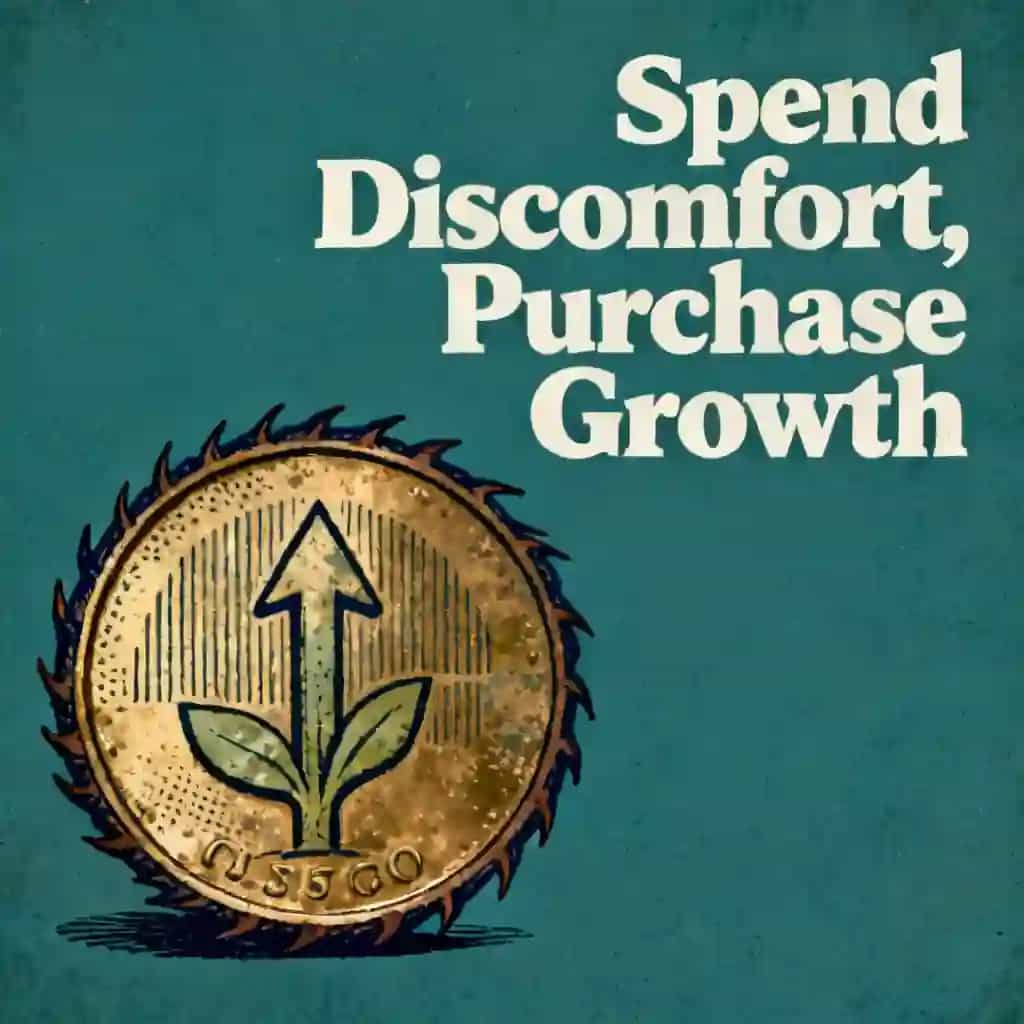
Farrah Storr's "The Discomfort Zone" reveals how brief moments of fear become catalysts for success. Endorsed by #Girlboss author Sophia Amoruso, this guide transforms obstacles into opportunities. What if your biggest breakthroughs are hiding just beyond your comfort zone?
- The Discomfort Zone argues growth happens when you embrace fear, not avoid it
- Storr’s “Creative Constraint” method shows limitations fuel innovation better than endless options
- Rewire your brain to see discomfort as proof of progress, not failure
- Successful people don’t eliminate fear—they make discomfort their competitive advantage daily
- “Micro discomforts” practiced regularly build resilience faster than rare big challenges
- Stop waiting for confidence—act first and let courage follow through experience
- Your most authentic voice emerges when you stop censoring uncomfortable truths
- Career pivots require leaning into identity shifts, not just skill-building
- The Discomfort Zone framework: Name It → Reframe It → Sustain It
- Creative breakthroughs happen when constraints force unconventional solutions, not unlimited freedom
- Fearlessness isn’t the absence of doubt—it’s deciding your purpose matters more
- Storr proves discomfort isn’t oppositional energy but creative fuel in human form
About the Author of The Discomfort Zone
Farrah Storr, award-winning editor and author of The Discomfort Zone: How to Get What You Want by Living Fearlessly, is a leading voice in personal development and resilience. Born in Manchester in 1978, her career spans transformative editorial roles at Cosmopolitan UK, ELLE UK, and as founding editor of Women’s Health UK—the most successful women’s magazine launch of the millennium.
The book, blending memoir and self-help, draws on her expertise in leveraging discomfort to drive creativity and growth, themes honed through revitalizing legacy brands and mentoring underrepresented talent via initiatives like her landmark collaboration with the UK’s Social Mobility Commission.
Storr’s Substack newsletter, Things Worth Knowing, extends her mission to empower readers through lifestyle insights and candid essays. A two-time PPA Editor of the Year and 2019 King’s College London Alumna of the Year, she serves on the National Theatre board and the UK government’s Social Mobility Commission. The Discomfort Zone has been celebrated for its pragmatic approach to overcoming fear, reflected in its paperback reissue and inclusion in leadership curricula.
FAQs About The Discomfort Zone
What is The Discomfort Zone by Farrah Storr about?
The Discomfort Zone explores how embracing challenges, fear, and uncertainty can unlock creativity and human potential. Farrah Storr combines personal anecdotes with research to argue that growth happens when we step outside our comfort zones, offering strategies to reframe discomfort as a catalyst for achievement. The book blends memoir, psychology, and practical advice to inspire fearless living.
Who should read The Discomfort Zone?
This book is ideal for professionals navigating career transitions, creatives facing creative blocks, or anyone seeking resilience in times of change. It’s particularly relevant for leaders, entrepreneurs, and individuals in high-pressure industries like media or tech who want to harness discomfort for innovation.
Is The Discomfort Zone worth reading?
Yes—the book earned praise for its actionable insights and Storr’s credibility as a former editor-in-chief of ELLE UK and Cosmopolitan. It won acclaim for blending storytelling with strategies to transform anxiety into empowerment, making it a standout in self-help and leadership genres.
What are the main concepts in The Discomfort Zone?
Key ideas include:
- The 3Ms of growth: Moment, Mindset, Method—a framework for reframing challenges.
- “Productive discomfort”: Leveraging short-term stress for long-term gains.
- The “Fear Ladder”: Gradual exposure to build confidence in daunting situations.
How does The Discomfort Zone define success?
Storr argues success isn’t about avoiding fear but learning to thrive within it. She emphasizes “micro-moments of bravery”—small, consistent acts of courage—as the foundation for achieving ambitious goals.
Can The Discomfort Zone help with career changes?
Absolutely. The book provides tools to navigate uncertainty, such as the “90-Day Rule” (committing to a challenging path for three months before reassessing) and techniques to silence self-doubt during transitions.
What criticisms exist about The Discomfort Zone?
Some readers note the advice leans heavily on Storr’s media-industry experiences, which may feel niche. Others suggest the strategies require existing privilege to implement fully. However, most praise its relatable tone and research-backed methods.
How does The Discomfort Zone relate to resilience?
Storr posits that resilience isn’t innate but built through repeated exposure to discomfort. The book teaches readers to “court discomfort” intentionally, using techniques like “stress inoculation” to build mental toughness over time.
What quotes from The Discomfort Zone are iconic?
While direct quotes aren’t widely publicized, key themes include:
- “Discomfort is the price of admission to a meaningful life.”
- “You don’t overcome fear—you outgrow it.”
These encapsulate the book’s focus on embracing, not avoiding, struggle.
How does The Discomfort Zone compare to Atomic Habits?
While James Clear’s Atomic Habits focuses on incremental behavior change, Storr’s work prioritizes mindset shifts during upheaval. Both emphasize small steps, but The Discomfort Zone targets those facing acute challenges rather than gradual improvement.
Why is The Discomfort Zone relevant in 2025?
In an era of AI-driven workplace shifts and economic volatility, its lessons on adapting to uncertainty remain critical. The book’s strategies align with modern needs for agile leadership and continuous reskilling.
How can teams apply The Discomfort Zone principles?
Storr suggests leaders create “safe-to-fail” environments where calculated risks are encouraged. Tactics include rotating team roles quarterly and hosting “discomfort debriefs” to normalize learning from setbacks.
Feel the book through the author's voice
Turn knowledge into engaging, example-rich insights
Capture key ideas in a flash for fast learning
Key Themes in The Discomfort Zone
Quotes from The Discomfort Zone
The home is the foundation of true happiness in America.
You'll get over it!
Parents couldn't understand why their children would reject security.
I felt guilty about everything.
Schulz wasn't an artist because he suffered; he suffered because he was an artist.
Characters in The Discomfort Zone
Quick Summary Mode - Read or listen to The Discomfort Zone Summary in 11 Minutes

Break down key ideas from The Discomfort Zone into bite-sized takeaways to understand how innovative teams create, collaborate, and grow.

Flash Card Mode - Top 8 Insights from The Discomfort Zone in a Nutshell

Distill The Discomfort Zone into rapid-fire memory cues that highlight key principles of candor, teamwork, and creative resilience.

Personalize Mode - Read or listen to The Discomfort Zone Summary in 0 Minutes

Ask anything, pick the voice, and co-create insights that truly resonate with you.

From Columbia University alumni built in San Francisco
"Instead of endless scrolling, I just hit play on BeFreed. It saves me so much time."


"I never knew where to start with nonfiction—BeFreed’s book lists turned into podcasts gave me a clear path."


"Perfect balance between learning and entertainment. Finished ‘Thinking, Fast and Slow’ on my commute this week."
"Crazy how much I learned while walking the dog. BeFreed = small habits → big gains."
"Reading used to feel like a chore. Now it’s just part of my lifestyle."

"Feels effortless compared to reading. I’ve finished 6 books this month already."
"BeFreed turned my guilty doomscrolling into something that feels productive and inspiring."

"BeFreed turned my commute into learning time. 20-min podcasts are perfect for finishing books I never had time for."
"BeFreed replaced my podcast queue. Imagine Spotify for books — that’s it. 🙌"

"It is great for me to learn something from the book without reading it."
"The themed book list podcasts help me connect ideas across authors—like a guided audio journey."
"Makes me feel smarter every time before going to work"
From Columbia University alumni built in San Francisco
"Instead of endless scrolling, I just hit play on BeFreed. It saves me so much time."
"I never knew where to start with nonfiction—BeFreed’s book lists turned into podcasts gave me a clear path."
"Perfect balance between learning and entertainment. Finished ‘Thinking, Fast and Slow’ on my commute this week."
"Crazy how much I learned while walking the dog. BeFreed = small habits → big gains."
"Reading used to feel like a chore. Now it’s just part of my lifestyle."
"Feels effortless compared to reading. I’ve finished 6 books this month already."
"BeFreed turned my guilty doomscrolling into something that feels productive and inspiring."
"BeFreed turned my commute into learning time. 20-min podcasts are perfect for finishing books I never had time for."
"BeFreed replaced my podcast queue. Imagine Spotify for books — that’s it. 🙌"
"It is great for me to learn something from the book without reading it."
"The themed book list podcasts help me connect ideas across authors—like a guided audio journey."
"Makes me feel smarter every time before going to work"
"Instead of endless scrolling, I just hit play on BeFreed. It saves me so much time."
"I never knew where to start with nonfiction—BeFreed’s book lists turned into podcasts gave me a clear path."
"Perfect balance between learning and entertainment. Finished ‘Thinking, Fast and Slow’ on my commute this week."
"Crazy how much I learned while walking the dog. BeFreed = small habits → big gains."
"Reading used to feel like a chore. Now it’s just part of my lifestyle."
"Feels effortless compared to reading. I’ve finished 6 books this month already."
"BeFreed turned my guilty doomscrolling into something that feels productive and inspiring."
"BeFreed turned my commute into learning time. 20-min podcasts are perfect for finishing books I never had time for."
"BeFreed replaced my podcast queue. Imagine Spotify for books — that’s it. 🙌"
"It is great for me to learn something from the book without reading it."
"The themed book list podcasts help me connect ideas across authors—like a guided audio journey."
"Makes me feel smarter every time before going to work"
"Instead of endless scrolling, I just hit play on BeFreed. It saves me so much time."
"I never knew where to start with nonfiction—BeFreed’s book lists turned into podcasts gave me a clear path."
"Perfect balance between learning and entertainment. Finished ‘Thinking, Fast and Slow’ on my commute this week."
"Crazy how much I learned while walking the dog. BeFreed = small habits → big gains."
"Reading used to feel like a chore. Now it’s just part of my lifestyle."
"Feels effortless compared to reading. I’ve finished 6 books this month already."
"BeFreed turned my guilty doomscrolling into something that feels productive and inspiring."
"BeFreed turned my commute into learning time. 20-min podcasts are perfect for finishing books I never had time for."
"BeFreed replaced my podcast queue. Imagine Spotify for books — that’s it. 🙌"
"It is great for me to learn something from the book without reading it."
"The themed book list podcasts help me connect ideas across authors—like a guided audio journey."
"Makes me feel smarter every time before going to work"

Get the The Discomfort Zone summary as a free PDF or EPUB. Print it or read offline anytime.