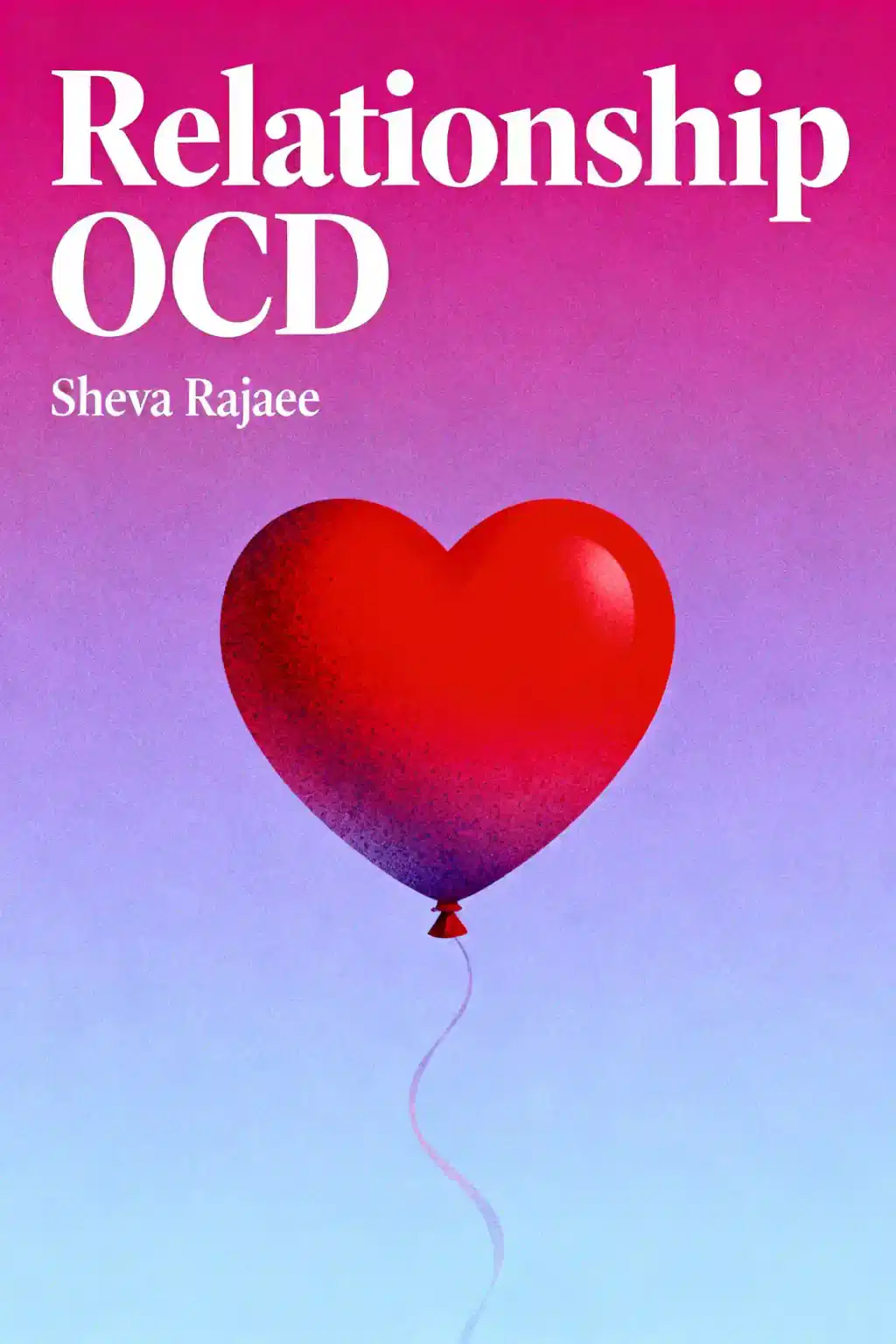
Relationship OCD: A CBT-Based Guide to Move Beyond Obsessive Doubt, Anxiety, and Fear of Commitment in Romantic Relationships by Sheva Rajaee Summary

Overview of Relationship OCD
Trapped in relationship doubts? Sheva Rajaee's 4.7-star guide dismantles the "soulmate myth" with CBT and ACT techniques that mental health professionals praise. What if uncertainty isn't your enemy? Discover why readers call this compassionate approach "truly life-changing" for relationship anxiety.
- Sheva Rajaee redefines love as effort, not the "Myth of the One" perfect partner.
- Relationship OCD manifests through partner-focused flaws or relationship-centered doubt patterns.
- CBT techniques break obsessive thought loops about compatibility and commitment.
- ERP exercises reduce anxiety by facing triggers without reassurance-seeking.
- ACT principles teach radical acceptance of uncertain relationship outcomes.
- Partner-focused ROCD fixates on perceived flaws; relationship-centered doubts question connection quality.
- The "Myth of the One" cultural narrative fuels unrealistic relationship expectations.
- Instead of seeking reassurance, practice self-validation through thought diffusion strategies.
- ROCD treatment requires embracing imperfection over false certainty in partnerships.
- Compulsive comparisons to fictional relationships worsen ROCD symptoms long-term.
- Relationship OCD thrives on emotional checking rituals about the "rightness" of love.
- Rajaee’s dual perspective as therapist and ROCD survivor creates actionable frameworks.
About the Author of Relationship OCD
Sheva Rajaee, MFT, is a licensed marriage and family therapist and OCD specialist renowned for her evidence-based approach to relationship-focused anxiety. Her book Relationship OCD: A CBT-Based Guide to Move Beyond Obsessive Doubt, Anxiety, and Fear of Commitment in Romantic Relationships combines clinical expertise with personal experience, as she openly shares her own journey with obsessive-compulsive disorder.
As founder and director of The Center for Anxiety and OCD in Irvine, California, Rajaee leads a team specializing in cognitive behavioral therapy (CBT), exposure and response prevention (ERP), and acceptance and commitment therapy (ACT) for OCD spectrum disorders.
A frequent media contributor, she’s appeared on CNN, been featured in HuffPost, and delivered a 2017 TEDxUCLA talk about confronting OCD. Rajaee expands her reach through the Relationship OCD Masterclass, a self-paced therapeutic program praised for its practical tools and supportive community.
Her work emphasizes dismantling societal myths about romantic partnerships while teaching readers to tolerate uncertainty—a methodology informed by her clinical training at USC and the UCLA Semel Institute for Neuroscience. The book has been widely recommended by mental health professionals and readers alike for its compassionate yet actionable framework.
FAQs About Relationship OCD
What is Relationship OCD by Sheva Rajaee about?
Relationship OCD by Sheva Rajaee is an evidence-based guide using cognitive behavioral therapy (CBT), acceptance and commitment therapy (ACT), and exposure therapy to help readers manage relationship anxiety, obsessive doubt, and fear of commitment. It provides practical exercises to challenge perfectionism, accept uncertainty, and reframe the “Myth of the One” belief that fuels unrealistic partnership standards.
Who should read Relationship OCD?
This book is ideal for individuals struggling with relationship anxiety or obsessive-compulsive disorder (ROCD), partners supporting someone with ROCD, and mental health professionals seeking actionable strategies. Rajaee’s blend of clinical expertise and personal OCD experience makes it accessible for both sufferers and therapists.
Is Relationship OCD worth reading?
Yes—readers praise its actionable tools, compassionate tone, and integration of multiple therapeutic frameworks. Reviewers highlight its effectiveness in reducing shame, providing relatable examples, and offering long-term strategies for managing intrusive thoughts.
What are the main concepts in Relationship OCD?
Key ideas include:
- The Myth of the One (MOTO): Debunking the belief in a “perfect” soulmate.
- Lighthouse Effect: How the brain fixates on relationship uncertainties as threats.
- Fence Management: Accepting that ROCD recovery requires daily practice, not a permanent “fix”.
How does Relationship OCD approach treatment?
Rajaee combines CBT to reframe negative thoughts, ACT to build tolerance for uncertainty, and exposure therapy to reduce compulsive behaviors like reassurance-seeking. She emphasizes values-driven action over eliminating doubt entirely.
What is the “Myth of the One” in the book?
This concept critiques societal and personal beliefs that a flawless partner exists. Rajaee argues MOTO fuels ROCD by creating unrealistic benchmarks, and she guides readers to replace it with a narrative embracing imperfection.
Does Sheva Rajaee share personal experiences in the book?
Yes—Rajaee openly discusses her own ROCD journey, including struggles with perfectionism and anxiety. Her dual perspective as a therapist and patient adds authenticity and depth to the guidance.
What therapeutic techniques are recommended in Relationship OCD?
The book teaches:
- ERP (Exposure and Response Prevention): Facing fears without compulsions.
- Cognitive Defusion: Distancing from obsessive thoughts using ACT principles.
- Values Clarification: Aligning actions with personal priorities rather than anxiety.
How does Relationship OCD address fear of commitment?
Rajaee reframes commitment as a choice to embrace uncertainty, not a guarantee of future happiness. Exercises help readers differentiate intuition from OCD-driven doubt and take incremental steps toward vulnerability.
What do experts say about Relationship OCD?
Russ Harris, author of The Happiness Trap, calls it a “well-written, extremely practical step-by-step guide,” while Yale’s Eli Lebowitz praises its blend of neuroscience, psychology, and empathy.
How does the book help with relationship anxiety?
It provides tools to identify anxiety triggers, challenge catastrophic thinking, and engage in value-based decisions. Case studies illustrate how to apply techniques to real-life scenarios like dating or long-term partnerships.
Are there critiques of Relationship OCD?
Some reviewers note the exercises require consistent effort and may feel overwhelming during acute anxiety. However, most emphasize its realism in framing ROCD as manageable rather than “curable”.
Feel the book through the author's voice
Turn knowledge into engaging, example-rich insights
Capture key ideas in a flash for fast learning
Enjoy the book in a fun and engaging way
Key Themes in Relationship OCD
Quotes from Relationship OCD
Certainty in love is a myth.
You can't control your thoughts, you can't control your feelings.
Modern society has elevated romantic relationships to almost spiritual importance.
Those butterfly feelings we're taught to seek have absolutely no correlation with long-term happiness.
ROCD prevents you from experiencing real love.
Characters in Relationship OCD
Quick Summary Mode - Read or listen to Relationship OCD Summary in 9 Minutes

Break down key ideas from Relationship OCD into bite-sized takeaways to understand how innovative teams create, collaborate, and grow.

Flash Card Mode - Top 8 Insights from Relationship OCD in a Nutshell

Distill Relationship OCD into rapid-fire memory cues that highlight key principles of candor, teamwork, and creative resilience.

Fun Mode - Relationship OCD Lessons Told Through 20-Min Stories

Experience Relationship OCD through vivid storytelling that turns innovation lessons into moments you'll remember and apply.
Personalize Mode - Read or listen to Relationship OCD Summary in 0 Minutes

Ask anything, pick the voice, and co-create insights that truly resonate with you.

From Columbia University alumni built in San Francisco
"Instead of endless scrolling, I just hit play on BeFreed. It saves me so much time."


"I never knew where to start with nonfiction—BeFreed’s book lists turned into podcasts gave me a clear path."


"Perfect balance between learning and entertainment. Finished ‘Thinking, Fast and Slow’ on my commute this week."
"Crazy how much I learned while walking the dog. BeFreed = small habits → big gains."
"Reading used to feel like a chore. Now it’s just part of my lifestyle."

"Feels effortless compared to reading. I’ve finished 6 books this month already."
"BeFreed turned my guilty doomscrolling into something that feels productive and inspiring."

"BeFreed turned my commute into learning time. 20-min podcasts are perfect for finishing books I never had time for."
"BeFreed replaced my podcast queue. Imagine Spotify for books — that’s it. 🙌"

"It is great for me to learn something from the book without reading it."
"The themed book list podcasts help me connect ideas across authors—like a guided audio journey."
"Makes me feel smarter every time before going to work"
From Columbia University alumni built in San Francisco
"Instead of endless scrolling, I just hit play on BeFreed. It saves me so much time."
"I never knew where to start with nonfiction—BeFreed’s book lists turned into podcasts gave me a clear path."
"Perfect balance between learning and entertainment. Finished ‘Thinking, Fast and Slow’ on my commute this week."
"Crazy how much I learned while walking the dog. BeFreed = small habits → big gains."
"Reading used to feel like a chore. Now it’s just part of my lifestyle."
"Feels effortless compared to reading. I’ve finished 6 books this month already."
"BeFreed turned my guilty doomscrolling into something that feels productive and inspiring."
"BeFreed turned my commute into learning time. 20-min podcasts are perfect for finishing books I never had time for."
"BeFreed replaced my podcast queue. Imagine Spotify for books — that’s it. 🙌"
"It is great for me to learn something from the book without reading it."
"The themed book list podcasts help me connect ideas across authors—like a guided audio journey."
"Makes me feel smarter every time before going to work"
"Instead of endless scrolling, I just hit play on BeFreed. It saves me so much time."
"I never knew where to start with nonfiction—BeFreed’s book lists turned into podcasts gave me a clear path."
"Perfect balance between learning and entertainment. Finished ‘Thinking, Fast and Slow’ on my commute this week."
"Crazy how much I learned while walking the dog. BeFreed = small habits → big gains."
"Reading used to feel like a chore. Now it’s just part of my lifestyle."
"Feels effortless compared to reading. I’ve finished 6 books this month already."
"BeFreed turned my guilty doomscrolling into something that feels productive and inspiring."
"BeFreed turned my commute into learning time. 20-min podcasts are perfect for finishing books I never had time for."
"BeFreed replaced my podcast queue. Imagine Spotify for books — that’s it. 🙌"
"It is great for me to learn something from the book without reading it."
"The themed book list podcasts help me connect ideas across authors—like a guided audio journey."
"Makes me feel smarter every time before going to work"
"Instead of endless scrolling, I just hit play on BeFreed. It saves me so much time."
"I never knew where to start with nonfiction—BeFreed’s book lists turned into podcasts gave me a clear path."
"Perfect balance between learning and entertainment. Finished ‘Thinking, Fast and Slow’ on my commute this week."
"Crazy how much I learned while walking the dog. BeFreed = small habits → big gains."
"Reading used to feel like a chore. Now it’s just part of my lifestyle."
"Feels effortless compared to reading. I’ve finished 6 books this month already."
"BeFreed turned my guilty doomscrolling into something that feels productive and inspiring."
"BeFreed turned my commute into learning time. 20-min podcasts are perfect for finishing books I never had time for."
"BeFreed replaced my podcast queue. Imagine Spotify for books — that’s it. 🙌"
"It is great for me to learn something from the book without reading it."
"The themed book list podcasts help me connect ideas across authors—like a guided audio journey."
"Makes me feel smarter every time before going to work"

Get the Relationship OCD summary as a free PDF or EPUB. Print it or read offline anytime.