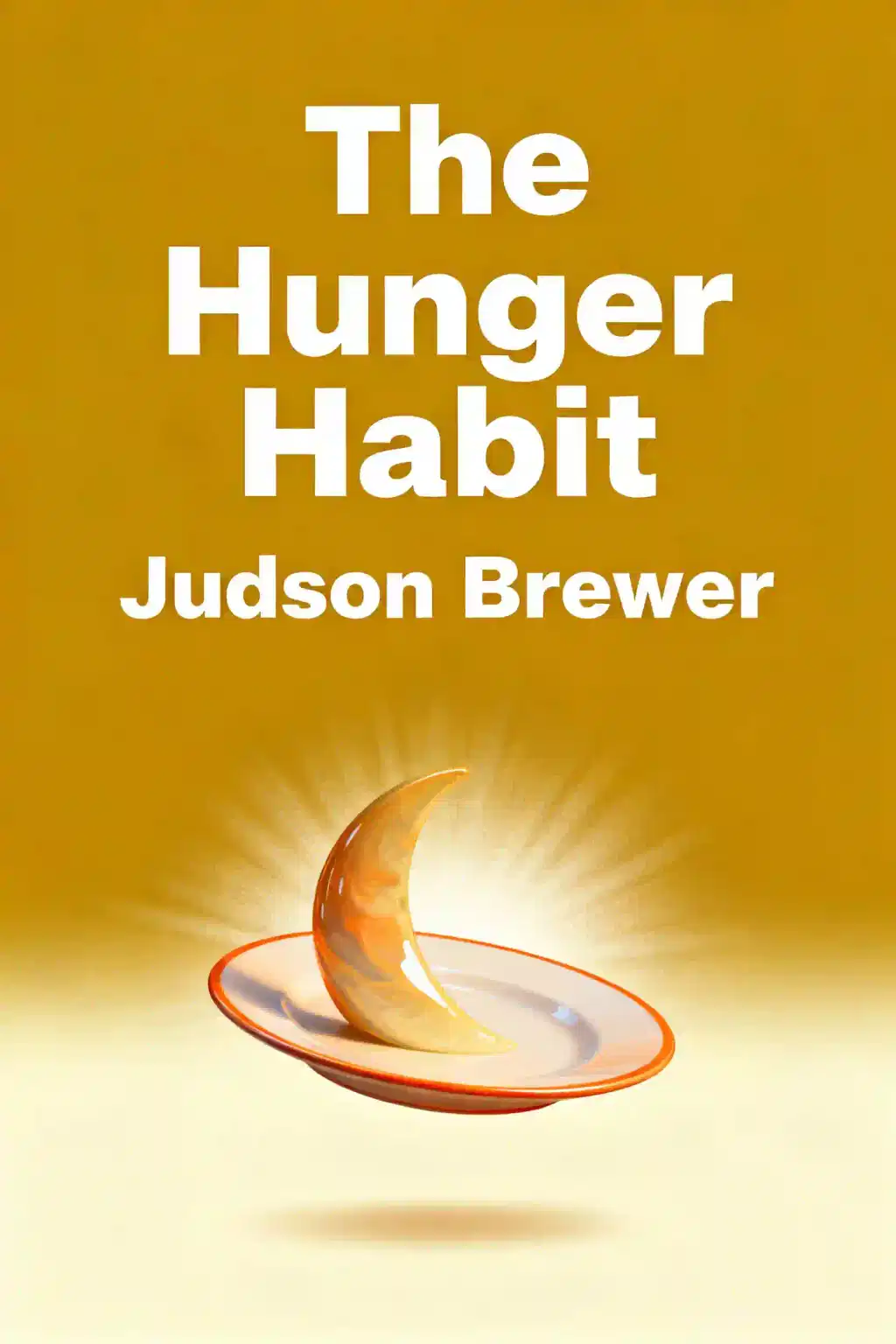
The Hunger Habit: Why We Eat When We're Not Hungry and How to Stop by Judson Brewer Summary

Overview of The Hunger Habit
Discover why we eat when we're not hungry with Dr. Brewer's neuroscience-backed guide. Endorsed by Arianna Huffington, this revolutionary approach replaces willpower with "kind curiosity." What if your food cravings aren't about hunger at all, but a habit your brain can unlearn?
- Hunger habits form through reward-based reinforcement loops, not willpower failures.
- True hunger is physical; habitual hunger is a learned behavior needing unlearning.
- Emotional eating roots in childhood food-as-comfort conditioning, not biological necessity.
- Awareness of habit loops’ emptiness creates space for intentional food choices.
- Survival brain prioritizes immediate food rewards over planning brain’s long-term goals.
- Diets fail by fighting biology; mindful curiosity rewires neural reward pathways instead.
- Food engineering exploits bliss points to override natural satiety signals unconsciously.
- Stress-triggered eating bypasses prefrontal cortex, creating automatic food-mood associations.
- Judson Brewer’s method replaces food rules with reward-based awareness practices.
- Habit change requires upgrading old patterns’ reward value through mindful experimentation.
- Self-kindness dissolves shame cycles more effectively than calorie-counting ever could.
- “What am I getting from this?” breaks automatic eating via conscious reward analysis.
About the Author of The Hunger Habit
Judson Brewer, MD, PhD, bestselling author of The Hunger Habit, is a globally recognized psychiatrist and neuroscientist specializing in evidence-based habit change.
A professor at Brown University and director of research at its Mindfulness Center, Brewer bridges 25+ years of clinical expertise with mindfulness practices to address anxiety, addiction, and emotional eating—core themes of his practical, science-driven guide to breaking unhealthy food patterns. His prior works, including the New York Times bestseller Unwinding Anxiety and The Craving Mind, established his reputation for translating neurobehavioral research into accessible strategies, further amplified through app-based programs like Eat Right Now.
Featured on TED (20M+ views), 60 Minutes, and in Time magazine, Brewer has trained U.S. Olympic athletes and government leaders while pioneering digital therapeutics acquired by Sharecare. His methods, validated by NIH-funded studies, emphasize curiosity and awareness to dismantle destructive habits. The Hunger Habit builds on his legacy of merging mindfulness with modern neuroscience, solidifying his role as a foremost authority on sustainable behavior change.
FAQs About The Hunger Habit
What is The Hunger Habit by Judson Brewer about?
The Hunger Habit explores why people eat when not hungry and how to break this cycle using neuroscience, mindfulness, and behavioral psychology. Dr. Judson Brewer combines clinical research with practical tools like the "habit loop" and "RAIN technique" to help readers rewire cravings, address emotional eating, and build a healthier relationship with food.
Who should read The Hunger Habit?
This book is ideal for anyone struggling with emotional eating, overeating, or dieting burnout. It’s also valuable for mindfulness enthusiasts, psychology students, and readers interested in evidence-based strategies for habit change. Dr. Brewer’s accessible approach caters to both self-help seekers and professionals in mental health or nutrition.
Is The Hunger Habit worth reading?
Yes—readers praise its blend of scientific rigor and actionable steps, contrasting it with willpower-focused diet books. Reviewers highlight its compassionate tone, workbook-like structure, and effectiveness in addressing cravings. However, critics note it may oversimplify complex emotional triggers for some individuals.
What are the main concepts in The Hunger Habit?
Key ideas include:
- Habit loops: Understanding the trigger-behavior-reward cycle driving overeating.
- Reward-based learning: Using mindfulness to disrupt cravings by noting their lack of payoff.
- RAIN technique: Recognize, Allow, Investigate, Note experiences to reduce emotional reactivity.
How does The Hunger Habit differ from Atomic Habits?
While both books address habit change, The Hunger Habit focuses specifically on food-related behaviors, emphasizing mindfulness and neurobiology over general habit-forming strategies. Brewer’s approach targets the emotional roots of cravings, whereas Clear’s work provides broad principles for building positive routines.
What is the “habit loop” in The Hunger Habit?
The habit loop refers to the cycle of trigger (e.g., stress), behavior (eating), and reward (temporary relief). Brewer teaches readers to identify and interrupt this loop by mapping cravings and reassessing their actual satisfaction, weakening the brain’s association between triggers and eating.
Does The Hunger Habit include mindfulness exercises?
Yes. Exercises include:
- Body scans to differentiate hunger from emotional cravings.
- Craving diaries to track triggers and outcomes.
- Mindful tasting to slow down eating and enhance awareness of satiety signals.
What criticisms exist about The Hunger Habit?
Some reviewers argue the book underestimates the role of trauma or societal factors in eating behaviors. Others note its focus on individual responsibility may feel dismissive to those with chronic dieting struggles or clinical eating disorders.
How does The Hunger Habit address emotional eating?
Brewer advocates using mindfulness to “curiosity override” cravings—observing urges without judgment until they lose power. He emphasizes leaning into boredom or discomfort rather than numbing them with food, helping readers build tolerance for difficult emotions.
What are key quotes from The Hunger Habit?
Notable quotes include:
- “Cravings are like waves—they rise, peak, and fall. You don’t have to surf them.”
- “Hunger is a sensation; craving is a story.”
- “Your brain isn’t broken—it’s just using outdated maps to find rewards”
Can The Hunger Habit help with weight loss?
While not a diet plan, the book addresses psychological barriers to sustainable weight management. By reducing mindless eating and emotional binges, many readers report natural weight regulation. Success depends on consistent practice of its mindfulness techniques.
Why is The Hunger Habit relevant in 2024?
With rising stress-related eating and diet culture backlash, Brewer’s non-restrictive, neuroscience-backed approach aligns with modern demands for mentally healthy nutrition strategies. Its app-integrated tools (via Sharecare) also cater to tech-oriented audiences seeking digital health solutions.
Feel the book through the author's voice
Turn knowledge into engaging, example-rich insights
Capture key ideas in a flash for fast learning
Enjoy the book in a fun and engaging way
Key Themes in The Hunger Habit
Quotes from The Hunger Habit
Willpower is more myth than muscle.
When we deny ourselves something, we want it even more.
Our brains are wired to crave certainty.
The more we focus on metrics, the less we listen to ourselves.
Impatience is natural, this process requires patience.
Characters in The Hunger Habit
Quick Summary Mode - Read or listen to The Hunger Habit Summary in 8 Minutes

Break down key ideas from The Hunger Habit into bite-sized takeaways to understand how innovative teams create, collaborate, and grow.

Flash Card Mode - Top 10 Insights from The Hunger Habit in a Nutshell

Distill The Hunger Habit into rapid-fire memory cues that highlight key principles of candor, teamwork, and creative resilience.

Fun Mode - The Hunger Habit Lessons Told Through 16-Min Stories

Experience The Hunger Habit through vivid storytelling that turns innovation lessons into moments you'll remember and apply.
Personalize Mode - Read or listen to The Hunger Habit Summary in 0 Minutes

Ask anything, pick the voice, and co-create insights that truly resonate with you.

From Columbia University alumni built in San Francisco
"Instead of endless scrolling, I just hit play on BeFreed. It saves me so much time."


"I never knew where to start with nonfiction—BeFreed’s book lists turned into podcasts gave me a clear path."


"Perfect balance between learning and entertainment. Finished ‘Thinking, Fast and Slow’ on my commute this week."
"Crazy how much I learned while walking the dog. BeFreed = small habits → big gains."
"Reading used to feel like a chore. Now it’s just part of my lifestyle."

"Feels effortless compared to reading. I’ve finished 6 books this month already."
"BeFreed turned my guilty doomscrolling into something that feels productive and inspiring."

"BeFreed turned my commute into learning time. 20-min podcasts are perfect for finishing books I never had time for."
"BeFreed replaced my podcast queue. Imagine Spotify for books — that’s it. 🙌"

"It is great for me to learn something from the book without reading it."
"The themed book list podcasts help me connect ideas across authors—like a guided audio journey."
"Makes me feel smarter every time before going to work"
From Columbia University alumni built in San Francisco
"Instead of endless scrolling, I just hit play on BeFreed. It saves me so much time."
"I never knew where to start with nonfiction—BeFreed’s book lists turned into podcasts gave me a clear path."
"Perfect balance between learning and entertainment. Finished ‘Thinking, Fast and Slow’ on my commute this week."
"Crazy how much I learned while walking the dog. BeFreed = small habits → big gains."
"Reading used to feel like a chore. Now it’s just part of my lifestyle."
"Feels effortless compared to reading. I’ve finished 6 books this month already."
"BeFreed turned my guilty doomscrolling into something that feels productive and inspiring."
"BeFreed turned my commute into learning time. 20-min podcasts are perfect for finishing books I never had time for."
"BeFreed replaced my podcast queue. Imagine Spotify for books — that’s it. 🙌"
"It is great for me to learn something from the book without reading it."
"The themed book list podcasts help me connect ideas across authors—like a guided audio journey."
"Makes me feel smarter every time before going to work"
"Instead of endless scrolling, I just hit play on BeFreed. It saves me so much time."
"I never knew where to start with nonfiction—BeFreed’s book lists turned into podcasts gave me a clear path."
"Perfect balance between learning and entertainment. Finished ‘Thinking, Fast and Slow’ on my commute this week."
"Crazy how much I learned while walking the dog. BeFreed = small habits → big gains."
"Reading used to feel like a chore. Now it’s just part of my lifestyle."
"Feels effortless compared to reading. I’ve finished 6 books this month already."
"BeFreed turned my guilty doomscrolling into something that feels productive and inspiring."
"BeFreed turned my commute into learning time. 20-min podcasts are perfect for finishing books I never had time for."
"BeFreed replaced my podcast queue. Imagine Spotify for books — that’s it. 🙌"
"It is great for me to learn something from the book without reading it."
"The themed book list podcasts help me connect ideas across authors—like a guided audio journey."
"Makes me feel smarter every time before going to work"
"Instead of endless scrolling, I just hit play on BeFreed. It saves me so much time."
"I never knew where to start with nonfiction—BeFreed’s book lists turned into podcasts gave me a clear path."
"Perfect balance between learning and entertainment. Finished ‘Thinking, Fast and Slow’ on my commute this week."
"Crazy how much I learned while walking the dog. BeFreed = small habits → big gains."
"Reading used to feel like a chore. Now it’s just part of my lifestyle."
"Feels effortless compared to reading. I’ve finished 6 books this month already."
"BeFreed turned my guilty doomscrolling into something that feels productive and inspiring."
"BeFreed turned my commute into learning time. 20-min podcasts are perfect for finishing books I never had time for."
"BeFreed replaced my podcast queue. Imagine Spotify for books — that’s it. 🙌"
"It is great for me to learn something from the book without reading it."
"The themed book list podcasts help me connect ideas across authors—like a guided audio journey."
"Makes me feel smarter every time before going to work"

Get the The Hunger Habit summary as a free PDF or EPUB. Print it or read offline anytime.