Chapter 1
Flames of Destiny: Where Loyalty Meets Vengeance
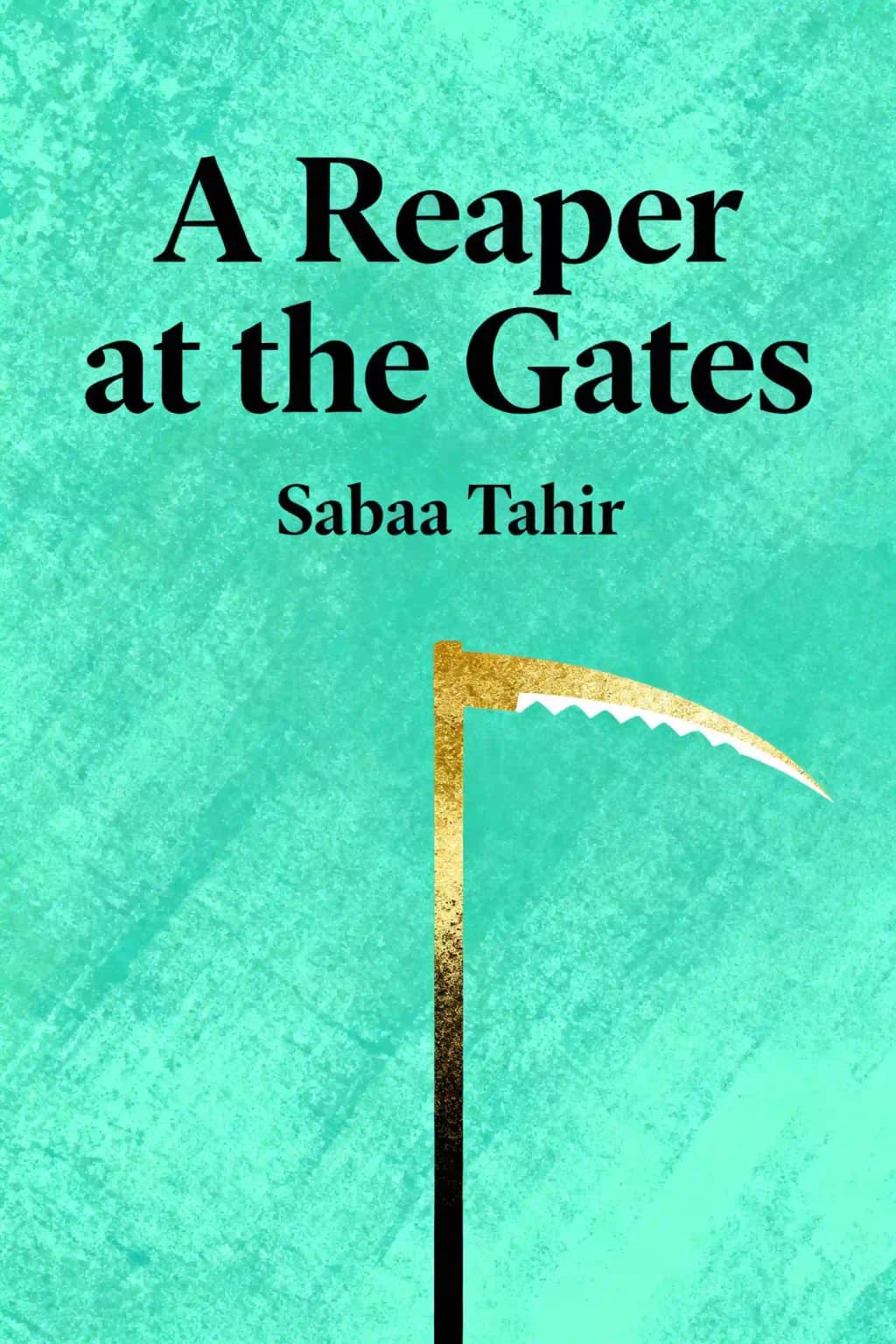
In a world where ancient magic clashes with brutal imperial rule, Sabaa Tahir's "A Reaper at the Gates" emerges as a masterful exploration of duty, identity, and the cost of vengeance. The third installment in her bestselling series has captivated readers worldwide, with Entertainment Weekly calling it "spectacular" and Publishers Weekly praising Tahir's masterful command of suspense. What began as a fantasy debut that combined "the addictive quality of The Hunger Games with the brutality of Game of Thrones" has evolved into something even more profound-a meditation on how far we'll go to protect those we love, and what we're willing to sacrifice for duty. The series has catapulted Tahir into literary stardom, with critics suggesting she could reach "J.K. Rowling territory." As we delve into this richly textured world where Scholars, Martials, and supernatural beings battle for supremacy, prepare to have your understanding of heroes and villains fundamentally challenged.
Chapter 2
The Nightbringer's Vengeance: A Thousand-Year Plan Unfolds
The ancient jinn known as the Nightbringer stands at the precipice of his thousand-year quest for vengeance. With the Star - a powerful artifact forged from sacred jinn metal and imbued with celestial magic - nearly complete, he needs only one final piece to free his imprisoned brethren and unleash devastation upon humanity. Though he deceived Laia of Serra as he had hundreds before her, something unprecedented occurred during their interaction - he glimpsed his long-dead queen's disappointed gaze in Laia's eyes, a momentary connection that briefly pierced his hardened resolve and stirred long-buried memories of love and loyalty.
The Nightbringer's motivations become increasingly complex as we uncover layers of his tragic history. Once known as Meherya, he ruled as a benevolent king alongside his beloved queen, presiding over a peaceful civilization of jinn who coexisted with humans. Their society flourished in the lands that would later become the Scholar empire, with jinn sharing their knowledge of magic and metallurgy with human allies. This golden age ended in betrayal when Scholar soldiers, fearing jinn power, launched a coordinated assault during a sacred celebration. The Nightbringer witnessed the slaughter of jinn children, including his own family, their ethereal forms scattered like stardust in the wind. This massacre transformed him from protector to destroyer, from loving ruler to vengeful spirit, his very essence twisted by grief and rage.
His deception runs deeper than anyone initially suspects. Over centuries, he methodically infiltrated human societies, most recently embedding himself within the Martial Empire as the Commandant's mysterious ally. His mastery of shapeshifting allowed him to pose as "Keenan," winning Laia's trust while searching for Star fragments. Meanwhile, he orchestrates widespread conflicts - from tribal uprising to political instability - systematically weakening human defenses in preparation for the jinn's return.
What makes the Nightbringer such a compelling antagonist is that his grievances are legitimate and rooted in historical atrocity. The Scholars didn't merely defeat the jinn - they committed systematic genocide, using forbidden magic to imprison survivors in the Forest of Dusk for a millennium. His quest represents justice delayed by centuries, vengeance for unimaginable loss that echoes through time. When he tells Laia, "Your people reduced mine to dust," each word carries the weight of countless murdered children, shattered families, and a civilization erased from history.
Yet his methods reveal how vengeance has corrupted his once-noble spirit. He manipulates the Commandant's ruthless ambition, orchestrates the brutal Karkaun invasion of Antium, and unleashes supernatural terrors that devastate civilian populations across the Empire. Most chillingly, he shows no remorse for the innocent lives destroyed in his crusade. When Laia pleads that her people have already been "reduced to dust" under Martial rule, he dismisses generations of Scholar suffering as mere prelude to the true retribution he plans.
The Nightbringer's arc serves as a dark meditation on the corrupting nature of revenge. As he finally completes the Star and frees his people in the book's climactic scene, his transformation back to his true form - a being of living flame still called by his true name, Meherya ("Beloved") - represents both triumph and tragedy. The contrast between his name's meaning and his actions highlights how far he has fallen from the loving king he once was. Justice for his people comes at the cost of potentially millions of innocent lives, raising profound questions about cycles of violence and the price of vengeance. His story forces readers to grapple with uncomfortable truths: When does justified retribution become unjustifiable destruction? Can vengeance ever truly heal ancient wounds, or does it simply create new victims?
Chapter 3
Laia's Journey: From Reluctant Revolutionary to Determined Leader
Laia's evolution from frightened Scholar girl to revolutionary leader accelerates in this chapter of her story. When we first encounter her, she and her brother Darin are raiding Martial prisoner caravans, freeing hundreds of Scholar and Tribal prisoners. Her invisibility magic has become a powerful asset, though using it increasingly causes troubling blackouts. These raids represent her growing confidence and commitment to her people's freedom, yet she remains haunted by the Nightbringer's betrayal and Elias's absence.
The revelation that her mother Mirra-whom she believed died heroically as the Lioness of the Scholars-is actually alive as Cook, the scarred woman from Blackcliff Academy, shatters Laia's understanding of her own past. Even more devastating is learning that her mother mercy-killed Laia's sister and father in Kauf Prison to end their suffering under torture. This truth forces Laia to confront complex questions about heroism, sacrifice, and the sometimes blurry line between mercy and murder.
"The stories we tell ourselves about who we are-they're not always true," Cook tells her daughter. This insight becomes central to Laia's journey as she must reconcile the idealized version of her mother with the broken, vengeful woman before her.
Despite these personal struggles, Laia's commitment to her people never wavers. In Adisa, she advocates for Scholar refugees before King Irmand, standing tall even when Princess Nikla dismisses her as "nothing." Her response captures her growth perfectly: "I broke into Blackcliff Academy. I survived the Commandant. I escaped Kauf Prison. I have freed hundreds of Scholar slaves." She owns her accomplishments without arrogance, speaking truth to power with newfound confidence.
Perhaps most significantly, Laia begins making the difficult decisions of leadership. When faced with using newly forged Serric steel weapons to barter for information-weapons that might be used against innocent Martials-she chooses the greater good over moral purity. "Sometimes leadership requires making ugly decisions," she reflects, echoing her mother's painful choices. This willingness to make difficult choices, to compromise ideals for survival, marks her transition from follower to leader.
By the novel's end, as Antium falls to the Karkauns, Laia demonstrates true leadership by risking her life to help not only Scholar slaves escape but also Martial Plebeians with children. She transcends tribal loyalties to protect the innocent of all backgrounds, embodying the compassion that might ultimately distinguish her approach from the Nightbringer's cycle of vengeance.
Chapter 4
Elias's Transformation: The Price of Becoming Death
Elias Veturius undergoes the most radical transformation in the story, evolving from human warrior to supernatural Soul Catcher-the guardian of the boundary between life and death. When Shaeva, the previous Soul Catcher, is murdered by the Nightbringer, the full weight of the Waiting Place crashes onto Elias "like a boulder." He can feel the entire Forest mapped in his mind-its borders, ghosts, and trees-but struggles to access Mauth's magic, the living power of death itself.
Elias's journey becomes a painful study in the cost of duty. Each time he leaves the Forest to help Laia or the Tribes, the boundary between life and death weakens. When he chooses to save Laia from the jinn's mental torture rather than reinforce the crumbling borders, thousands of ghosts escape into the world of the living-a catastrophic consequence of choosing love over duty.
The most heartbreaking aspect of Elias's transformation is his gradual loss of humanity. As Mauth's magic grows stronger within him, his human connections begin to fade. When he reunites with Laia in Antium during the siege, he no longer sees her as his beloved but merely as a mortal whose concerns are secondary to his cosmic duty. "The world must burn before it is reborn," he tells her, his voice devoid of the warmth that once defined him.
This transformation raises profound questions about identity and sacrifice. Is Elias still himself if his memories and feelings are subsumed by Mauth? What is the value of duty if it requires abandoning everything that makes us human? When Shaeva warned him that "love cannot live here," she wasn't being cruel-she was preparing him for the inevitable cost of his role.
Yet traces of his humanity persist. When processing Marcus Farrar's ghost, Elias finds a joyful childhood memory to ease the twins' passage-a small mercy that suggests compassion still exists within him. And when Laia returns her wooden armlet to him in anger, "something within him briefly rages to be set free," hinting that Elias Veturius might not be entirely gone.
The tragedy of Elias's arc lies in its necessity. Without a Soul Catcher to maintain the boundary between life and death, chaos would reign. His sacrifice serves a greater purpose, even as it breaks Laia's heart and his own. As Mauth explains, "Death cannot surrender-man must adapt to it." In becoming death incarnate, Elias loses himself to save everyone else.
Chapter 5
The Blood Shrike's Crucible: Duty, Family, and Impossible Choices
Helene Aquilla, the Blood Shrike of the Empire, walks a tightrope between duty and family throughout the narrative. As second-in-command to Emperor Marcus Farrar-a man she despises for murdering her parents and torturing her sister Livia-she must navigate court politics while secretly undermining the Commandant's power and protecting her pregnant sister.
The Shrike's journey is defined by impossible choices. When Marcus breaks Livia's fingers as punishment for the Shrike's failure to destroy the Commandant, she must swallow her rage to prevent further harm to her sister. When she discovers Livia is pregnant with Marcus's heir, she recognizes both the danger and opportunity this presents-a chance for a regency government where they could shape a just ruler.
Her relationship with Avitas Harper adds unexpected emotional complexity to her character. Though she initially distrusts him, their shared purpose creates a growing bond. When she heals him with her song after a battle, she glimpses his true feelings for her-"respect and something more, something that makes my heart flutter uncomfortably"-revealing her capacity for connection despite her hardened exterior.
The Shrike's healing abilities represent another dimension of her character-a nurturing power at odds with her warrior identity. When she secretly heals injured children after the Karkaun attacks, we see the compassion she hides beneath her Mask. This duality becomes literal when the Nightbringer asks for "a bit of her soul" to save her people-her silver mask that has fused to her face. In tearing it away in excruciating pain, she symbolically sheds the armor she's hidden behind, revealing her true self in an act of sacrifice.
Perhaps her most defining moment comes when she finds Marcus pinned to a wall, deliberately left by the Commandant to die slowly. Despite years of hatred, she grants him mercy-a clean death-fulfilling her duty "even to the man who tortured her family." This act transcends revenge, showing that even in the darkest circumstances, the Shrike chooses honor over hatred.
By the siege's end, with Antium fallen and her forces decimated, the Shrike makes a final stand at Pilgrim's Gap to buy time for evacuees. Her rallying cry to her troops-"Duty first, unto death"-ironically echoes the Commandant's words, yet the Shrike imbues them with true nobility. In her willingness to sacrifice everything for others, she embodies the best qualities of the Empire she serves, even as that Empire crumbles around her.
Chapter 6
The Commandant's Machinations: Power at Any Price
Keris Veturia, the Commandant of Blackcliff Academy and mother to Elias, emerges as a master strategist whose ambitions extend far beyond her current position. Cold, calculating, and utterly ruthless, she orchestrates the fall of Antium while positioning herself to seize power in the aftermath.
The Commandant's backstory reveals the origins of her cruelty. Once a young woman who loved her mother Karinna, she was transformed at Blackcliff into something monstrous. Her relationship with Elias's father, Arius Harper, ended in tragedy when he was murdered by fellow Masks upon graduation-a killing orchestrated by their Illustrian fathers. This loss hardened her further, turning grief into calculated vengeance against the Empire's power structure.
What makes the Commandant truly terrifying is her methodical approach to chaos. In Navium, she tricks the Blood Shrike into launching the fleet during a supernatural storm, destroying the Martial navy and undermining the Shrike's authority. In Antium, she secretly relocates the treasury and Hall of Records weeks before the Karkaun attack, sabotages communications with other legions, and evacuates Illustrian Paters while leaving everyone else to die. As Marcus realizes too late, "She planned this. All of it."
Her alliance with the Nightbringer reveals her ultimate ambition. When confronted about betraying her own people, she tells the Shrike she seeks "more than just being Empress"-the Nightbringer has promised her "dominion over all peoples." This unholy partnership between human ambition and supernatural vengeance creates a formidable threat, with the Commandant willing to sacrifice countless lives for her own advancement.
Perhaps most disturbing is how the Commandant weaponizes motherhood itself. She attempts to kill her grandchild by poisoning Livia and eliminating midwives who might help with the birth. When the Blood Shrike discovers sculptures of a mother and child in the Commandant's quarters, we glimpse a haunting suggestion that maternal feelings might exist somewhere in her psyche, though thoroughly corrupted by her pursuit of power.
The Commandant represents the logical extreme of the Empire's values-strength through brutality, power through fear, victory at any cost. As Quin Veturius warns the Blood Shrike, understanding that Keris "cares only about power, not orders or loyalty to the Empire" is the only way to defeat her. In her willingness to burn everything for personal gain, she serves as the human counterpart to the Nightbringer's supernatural vengeance-both willing to destroy the world to reshape it in their image.
Chapter 7
The Star and the Prophecy: Ancient Magic Resurfaces
At the heart of the conflict lies the Star-an ancient magical artifact that once imprisoned the jinn and now holds the key to their freedom. Throughout the narrative, the Nightbringer seeks the final piece needed to complete the Star and release his people, while Laia races to prevent this catastrophe.
The Star's power is tied to prophecy, specifically the Augurs' ancient predictions about how it might be completed. These cryptic verses guide much of the action: "The Pearl shall crack... The sparrows will drown, and none will know it... The Child shall be bathed in blood but will survive." As events unfold-Antium (the Pearl) falls, Scholar refugees (the sparrows) suffer, and Livia's child survives despite attempts on his life-the prophecy proves disturbingly accurate.
The magic system itself becomes increasingly complex as the story progresses. We learn that magic takes from its users in different ways: Laia's invisibility causes blackouts, Musa's manipulation magic makes him tyrannical when overused, and the Blood Shrike's healing abilities drain her life force. This cost creates a natural limitation that prevents magic from becoming an easy solution to the characters' problems.
Particularly fascinating is the revelation about the jinn's history and their relationship with humans. Once peaceful beings who worked alongside human Soul Catchers to guide ghosts to the afterlife, they were betrayed and nearly exterminated by Scholar kings. The fourteen Augurs stole the jinn's power, using it to create the Star that imprisoned the survivors in the Forest of Dusk. This historical context transforms the conflict from a simple good-versus-evil narrative into a complex cycle of historical injustice and retribution.
The magic of the Waiting Place itself represents another layer of supernatural complexity. Mauth-the living magic of death-selects Soul Catchers to maintain the boundary between life and death. Without this balance, ghosts would overwhelm the living world, possessing humans and causing chaos. When this boundary weakens during the siege of Antium, we witness the devastating consequences as possessed soldiers turn on each other in a frenzy of violence.
By the novel's climactic ending, when the Nightbringer completes the Star and drives it into the ground of the Waiting Place, the supernatural elements reach their zenith. Trees split open as flames pour forth, the earth trembles, and "for a moment, every human within a thousand leagues feels a unified sense of dread." The thirteen Augurs collapse into ash as their stolen power returns to the jinn, and the Star crumbles to dust-its purpose fulfilled after a millennium. This moment of supernatural reckoning sets the stage for the final confrontation between humans and jinn, with the fate of both races hanging in the balance.
Chapter 8
The Siege of Antium: When Worlds Collide
The fall of Antium represents the convergence of all narrative threads-political machinations, supernatural forces, and personal vendettas culminating in a devastating siege that changes the Empire forever. The attack unfolds in layers of betrayal and horror: the Karkauns surround the city with an army twice as large as anticipated, escaped ghosts possess Martial defenders, and the Commandant deliberately sabotages the city's defenses from within.
The siege scenes are rendered with visceral intensity. The Blood Shrike fights "with pure rage" as Karkauns flood through breached gates. Laia navigates burning streets, helping Scholar slaves and Martial civilians escape through hidden tunnels. The Soul Catcher moves coldly through the chaos, reclaiming escaped ghosts while remaining detached from human suffering. These multiple perspectives create a comprehensive picture of a city's death throes.
Particularly haunting is the moment when "a pale cloud of shrieking ghosts" descends on Antium, bypassing the salt barriers around the Karkaun army to possess Martial soldiers. This supernatural element elevates the siege beyond conventional warfare, introducing an enemy that cannot be fought with traditional weapons. The possessed turn on their comrades with inhuman strength, creating chaos that allows the Karkauns to breach the supposedly impregnable walls.
The siege also forces characters into their defining choices. The Commandant reveals her ultimate betrayal, having planned Antium's fall all along. Marcus Farrar, dying slowly after being pinned to a wall by his own scim, asks the Blood Shrike for mercy-a final order she grants despite their history. Laia risks her life to help not just Scholars but also Martial civilians escape, transcending tribal loyalties in the face of humanitarian crisis.
Most heartbreaking is the Blood Shrike's last stand at Pilgrim's Gap, where she and a thousand soldiers face more than ten thousand Karkauns to buy time for evacuees. Hour by hour, her forces dwindle until she stands alone-the last defender of a fallen empire. Her sacrifice embodies the noblest aspects of duty, contrasting sharply with the Commandant's self-serving betrayal.
The fall of Antium represents more than just a military defeat-it's the collapse of the world order that has structured the entire narrative. With the capital in ruins, the Emperor dead, and supernatural forces unleashed, the characters must navigate a fundamentally altered reality. The siege serves as both climax and catalyst, resolving some conflicts while setting others in motion for the final installment of the series.
Chapter 9
Legacy and Sacrifice: The Price of Survival
As "A Reaper at the Gates" reaches its conclusion, the theme of legacy emerges as a central concern for characters facing an uncertain future. What will remain of them when the dust settles? What sacrifices are worth making for those who will come after?
For the Blood Shrike, legacy becomes literal through her sister's child-the future Emperor who might restore justice to the Empire. When healing the unborn boy through song, she deliberately shapes his spirit with her family's best qualities: "Livia's kindness. My father's conviction. My mother's intelligence. Hannah's fire." From Marcus, she takes only his strength in battle, imagining "Marcus if the world had not ruined him." Most importantly, she adds her own love for her people, "something deeply rooted that will sustain him" as a future ruler. This act represents hope amid destruction-a belief that the next generation might transcend the failures of the current one.
Elias's sacrifice of his humanity for duty represents another form of legacy. In becoming the Soul Catcher, he ensures the continued functioning of the boundary between life and death, protecting countless lives he will never meet. When he tells Laia "Elias is who I was," he acknowledges that his individual identity must be sacrificed for this greater purpose. His legacy becomes not who he was, but what he prevents-the chaos that would ensue without a Soul Catcher to guide the dead.
For Laia, legacy means continuing her parents' fight for Scholar freedom while learning from their mistakes. When she helps evacuate both Scholar slaves and Martial civilians from Antium, she transcends the tribal thinking that perpetuated cycles of violence. Her mother notes how she resembles her father in this moment-suggesting Laia embodies the best of both parents' legacies while forging her own path.
The Nightbringer's release of the jinn represents the most ancient legacy coming full circle-a thousand-year quest for justice finally fulfilled. When his people gather around him, calling him "Meherya" (Beloved), we witness the restoration of what was lost. Yet this triumph comes at tremendous cost, with the potential destruction of millions of innocent lives who had no part in the original crime against the jinn.
This tension between justice and vengeance, between necessary sacrifice and needless suffering, forms the moral core of the novel. As the characters move toward the final confrontation, they must decide what legacy they wish to leave-one of perpetuating cycles of violence, or one of breaking those cycles, even at great personal cost. The question remains: in a world shaped by ancient grudges and recent atrocities, is redemption still possible, or are some wounds too deep to heal?