Chapter 4
The Aftermath of Loss: Grief's Many Forms
Misbah's funeral becomes a pivotal moment for both teenagers. Salahudin struggles with his grief while caring for his alcoholic father. When his uncle Faisal and cousin Arsalan arrive from Los Angeles, Sal retreats to the empty swimming pool-once filled for childhood parties but drained after Abu's drinking worsened. Noor joins him there, and they address "the Fight" that damaged their friendship. When she tells him "I'm over you," Sal feels a disappointed flip in his stomach despite his fear of their connection.
After walking her home, Sal breaks down in the middle of the road, finally releasing his grief and realizing that his mother's death has left a permanent hole in him that can never be filled. Meanwhile, Noor struggles with her own complicated emotions. She regrets avoiding Misbah over "a stupid fight with Salahudin." At home, her uncle Chachu mocks her attendance at the funeral prayers, calling religion "backward" and "opium of the people." He reveals rare details about their family in Pakistan-how they lived in a hut that collapsed during an earthquake, killing everyone except Noor. Chachu saved her, digging through rubble with his bare hands when she was six, sacrificing his promising engineering career to raise her.
Two weeks after the funeral, creditors have found the motel's number and call constantly. When Noor answers one of these calls during a study session in the front office, she learns about their eight hundred dollars in past-due cable bills. She suggests selling the motel, but Sal refuses-it was Misbah's dream. Later, a repo man arrives for Misbah's car. When Sal explains that his mother recently died and his father is a drunk, the man's demeanor softens, though he still must take the car.
Grief manifests differently for each character. Toufiq drinks more heavily, Sal becomes increasingly desperate to save his mother's legacy, and Noor throws herself into her college applications as a means of escape. The emotional distance between Sal and Noor grows, even as they both desperately need each other's support during this devastating time.
Chapter 5
Desperate Measures: Sal's Descent into Dealing
Faced with mounting bills and the threat of losing the Clouds' Rest Motel, Sal makes a fateful decision. Looking through Misbah's desk, he discovers a stack of bills revealing their dire financial situation. Most alarming is a letter from the bank: they're 60 days late on their business loan payments and owe over $5,000. If they don't pay in ten weeks, they'll lose everything his mother worked for.
Determined not to let his mother's life's work be taken away, Sal reaches out to Art Britman, a classmate known for dealing drugs. At Art's house in Legacy Village, Sal lays out his mother's pill bottles, and Art suggests he sell drugs himself rather than through him, taking a 30% cut. Though scared, Sal agrees to start with basic pills like painkillers, Adderall, and Xanax. He rationalizes that this isn't forever-just until the motel improves.
By April, Sal has managed to pay bills and recover the repossessed Civic. Despite feeling paranoid about getting caught, he continues dealing to save the motel. When Noor unexpectedly appears during a drug transaction with Art, Sal deflects her questions. Later, a moment of intimacy between them is interrupted by a text about a party-a chance for Sal to make money. When Noor notices his burner phone, he lies about its purpose, feeling guilty but determined to fix their financial problems before confessing.
The situation grows more complicated when Sal's ex-girlfriend Ashlee begins buying pills from him. After calculating that he's sixteen hundred dollars away from paying the bank, Sal promises himself he'll stop dealing after that. But his plan spirals out of control when Art reveals that Ashlee has taken both painkillers and a patch, potentially overdosing. Sal rushes to find her at Ronnie D's, arriving to see paramedics pulling an unconscious Ashlee from her car while her daughter Kaya screams. Consumed by guilt, Sal thinks about how disappointed his mother would be, and how Noor would never speak to him again if she knew what he'd done.
Chapter 6
Hidden Wounds: Noor's Fight for Freedom
Behind Noor's seemingly perfect academic record lies a painful reality. Her uncle Chachu, while her savior from the earthquake, has become her abuser. When Jamie Jensen announces her UCLA acceptance, Noor realizes she hasn't received her own decision yet. After Jamie discovers Noor's expired green card and publicly accuses her of being "illegal," tensions escalate. Jamie confronts Noor in the hallway, threatening to expose that Salahudin wrote her college essays and hurling a racist insult. Noor punches her, resulting in a suspension that threatens her college applications.
Despite Principal Ernst offering to keep the incident off her record if she writes an apology letter, Noor refuses, accepting a two-day suspension. Brooke, Chachu's wife, drives Noor home, promising to keep the suspension between them by claiming Noor is sick. Their secret only lasts a day before Jamie mentions Noor's college applications in front of Chachu, who didn't know about them.
At home, Chachu confronts Noor about her college applications. When she defends herself by mentioning Misbah's support, Chachu erupts in violence, punching and kicking her while raging about her ingratitude. Through the beating, Noor flashes back to her childhood trauma-how Chachu rescued her after the earthquake but resented the burden of raising her. Seeing her chance when Chachu turns away, Noor throws a brass eagle sculpture at him and flees with her backpack.
Sal discovers Noor standing in his driveway with blood trickling down her face. When she refuses to go to the hospital, he drives her to Veil Meadows, a serene mountain location. They spend the day flying a kite, making bulrush boats, and listening to music. As night falls, they lie beneath the stars, and their relationship transforms when they share an intimate kiss. Though the moment allows Noor to temporarily forget her trauma, reality eventually returns.
As they drive back from the river, discussing their traumas while listening to music, police lights flash behind them. Officer Marks pulls them over, and Salahudin becomes unusually tense. He quickly hides items from the glove compartment and passes Noor a pill bottle and baggie to hide under her seat. When the officer notices Noor's bruised face, the situation escalates, resulting in both teens being arrested.
Chapter 7
The Justice System: Unequal Treatment and Hard Choices
At the county jail, Noor experiences the dehumanizing booking process-fingerprinting, mugshots, and questioning. The officer notes her Pakistani birthplace with suspicion about "terrorist types." During interrogation, Officer Brewer tries to manipulate her, suggesting her uncle or Salahudin got her into dealing drugs. Noor refuses to speak without a lawyer, recognizing that Brewer has already decided who she is. She's devastated by Salahudin's betrayal, thinking of him now as "the Liar" who has cut her loose after twelve years of friendship.
Sal faces a similar manipulation during his interrogation when Officer Brewer tries to get him to talk without a lawyer. At his arraignment, Sal is represented by Martin Chan and faces multiple felony drug charges that could result in eight years imprisonment. The judge sets bail at $25,000, which Abu will need to pay 10% of through a bondsman.
After her arraignment, Noor is released on her own recognizance and meets Khadija, who's come to represent her. Khadija takes Noor to stay with her and Imam Shafiq, protecting her from Riaz. Despite this comfort, Noor feels crushed by her circumstances and betrayed by Sal, yet still painfully in love with him.
When Shaukat Riaz pounds on Sal's door at midnight, demanding to know if Noor is "at that damn mullah's house," Sal sneaks out to warn her. He intervenes when Riaz confronts her, accusing Riaz of hitting Noor and pointing to his reddened knuckles as evidence. Riaz threatens that Noor won't be going to UVA or UCLA, a comment that later sparks Sal's desperate plan.
Sal confronts Art outside his house, threatening to report him to the police unless he helps retrieve Noor's UCLA acceptance letter from Riaz's house. They break into Riaz's study through a window and manage to escape with the letter just as Riaz discovers the intrusion. When Sal delivers the news to Noor that she's been accepted to UCLA with financial aid, she's momentarily moved but her anger resurfaces. She cruelly tells him she was with his mother when she died and that Misbah's final word was "forgive," but declares Salahudin doesn't deserve forgiveness.
Chapter 8
The Trial: Truth, Sacrifice, and Redemption
The trial unfolds in a suffocating Friarsfield courtroom during the peak of summer, with ancient ceiling fans doing little to dispel the oppressive heat. To Sal's mounting horror, his defense attorney Martin unveils a strategy that makes his stomach turn - attempting to paint Noor as the mastermind who manipulated an innocent Sal into drug trafficking. Martin methodically constructs a narrative suggesting Noor secretly stashed drugs under her seat, playing on racial stereotypes that make Sal increasingly uncomfortable.
The prosecution presents a parade of witnesses, but it's Oluchi's testimony that captures the courtroom's attention. Noor's former boss at the convenience store speaks with unwavering conviction about her character, describing countless instances of Noor's integrity - staying late without pay to help elderly customers, donating her lunch to homeless visitors, maintaining perfect attendance despite walking miles to work in all weather conditions.
When Noor takes the witness stand, she demonstrates remarkable composure under aggressive cross-examination. Her testimony about their friendship rings with authenticity as she describes their shared dreams, study sessions, and how Sal helped her practice for medical school interviews. Throughout her testimony, she maintains eye contact with the jury, never wavering from her assertion that Sal never coerced or abused her trust.
As his own testimony approaches, Sal observes a transformation in Noor. Gone is the frightened girl from the traffic stop - in her place sits a young woman with squared shoulders and unflinching determination. This new version of Noor, paradoxically both familiar and strange, catalyzes Sal's decision. Despite Martin's frantic whispered objections, Sal implements what he calls his "drastic intervention," requesting permission to read a prepared statement to the court.
In a voice that starts shakily but grows stronger, Sal confesses complete ownership of the drugs. He details how his mother's death and mounting medical bills pushed him toward dealing - first small amounts, then larger quantities - all in a desperate attempt to save their family motel. He emphasizes Noor's complete ignorance of his activities, explaining how panic during the traffic stop led him to betray her trust by passing her the drugs. His statement concludes with a powerful declaration that Noor's only crime was believing in their friendship.
The impact is immediate. After an intense closed-door conference between the judge and attorneys, the District Attorney drops all charges against Noor. When Khadija, tears streaming down her face, tells her sister she can now leave Juniper to pursue her medical dreams, Noor and Sal share a loaded glance across the courtroom - a complex mixture of gratitude, betrayal, and unresolved emotions passing between them.
Sal's prison adjustment proves brutal, particularly regarding physical boundaries. The constant violations of his personal space - guards roughly directing him, inmates brushing against him in narrow corridors - trigger deep anxiety. He's forced to embrace violence when two inmates attempt to steal his mattress pad, fighting them off with a desperation that surprises even himself. Though Abu faithfully deposits money for commissary purchases, Sal refuses all visits, unable to bear the thought of his father seeing him in prison orange.
His salvation arrives in the form of books that begin appearing in his name - volumes of poetry, medical texts, and novels that he strongly suspects come from Noor. When assigned a permanent cell, his cellmate Santiago, a middle-aged man serving time for tax evasion, recognizes Sal's restless mind and encourages him to channel his thoughts into writing. Following Santiago's advice, Sal begins documenting his family's story, finding unexpected healing in reconstructing memories of his mother, understanding his father's struggles, and gradually working toward self-forgiveness.
Chapter 9
Forgiveness: The Bridge Over Troubled Water
After Sal's imprisonment, Noor initially carries cold, fresh anger, telling herself they're done. But memories erode her anger-how he raged at Chachu for hurting her, how he looked at her when she laughed. Hearing U2's "With or Without You" in the dining hall, she finally understands the song's meaning. Her anger fades faster than expected, replaced by questions about his wellbeing. She begins sending him books and imagining him beside her through college life.
When Khadija tells her Chachu was arrested for hitting Brooke (though receiving only probation), imaginary Sal holds her hands as she cries. Though she dates other boys, it's never enough. Listening repeatedly to "Turn" by the Wombats, she realizes she only wants Sal-despite telling herself they're done.
Upon Sal's release, he visits his mother's grave, pouring tea for himself and Misbah, sitting to talk to her about everything since her death. When Noor arrives unexpectedly, she shares a song that represents their relationship-about brightness, beginnings, love and hope. They forgive each other and reconnect with a kiss. Sal reveals a letter from Dr. Ellis explaining that Misbah knew about Riaz abusing Noor and wanted to help but fell ill too quickly. Her dying word wasn't asking Noor to forgive, but asking for forgiveness herself for not being able to protect her.
From beyond death, Misbah's spirit feels her son's presence at her grave-his voice deeper now but with an inner calm like a strong oak. She senses when Noor joins him, initially cringing with guilt for not having helped her, but then feeling Noor's daughter-like love and forgiveness. Misbah sees them as two halves of a whole, meant to bear witness to each other's lives. As the whiteness around her dims, her father appears, calling her "little butterfly" and offering his hand as it's time to sleep.
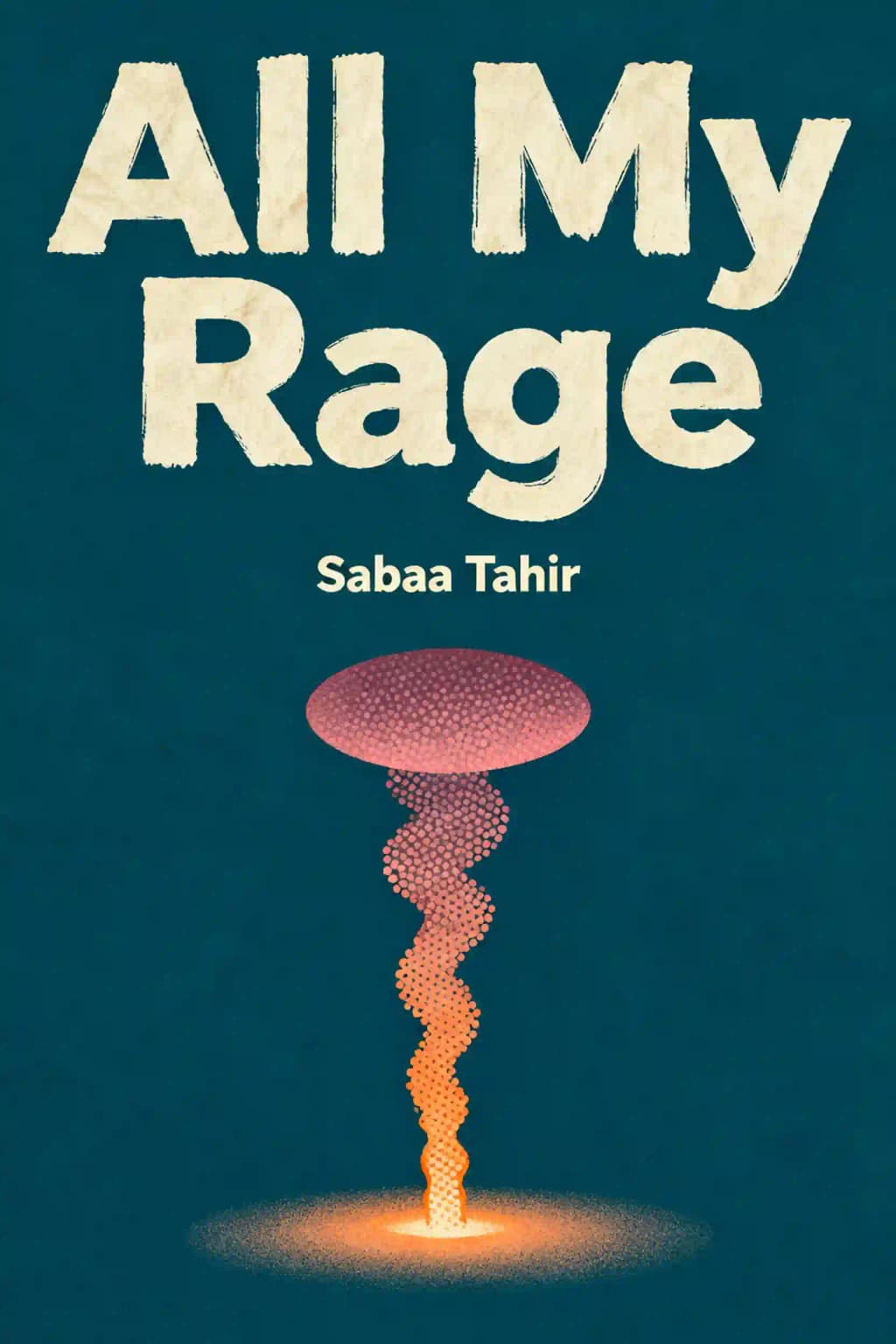
In the end, "All My Rage" isn't just about anger-it's about how we channel that rage into protection of those we love, how we find the strength to forgive, and how we build bridges over the troubled waters of our lives. Through Sal and Noor's journey, we learn that sometimes the most powerful act isn't holding on to rage, but letting it go in favor of love and forgiveness.
Chapter 10
The Art of Losing: Finding Meaning in Elizabeth Bishop's Poem
Throughout the novel, Elizabeth Bishop's poem "One Art" serves as a thematic backbone, with each section opening with different stanzas. The poem's central message-"The art of losing isn't hard to master"-resonates deeply with the characters' journeys through grief, betrayal, and forgiveness.
For Misbah, loss begins with leaving her homeland and family behind, continues through her husband's descent into alcoholism, and culminates in her own premature death. Yet even in loss, she finds ways to create-building a motel, raising a son, and becoming a surrogate mother to Noor.
Salahudin loses his mother, nearly loses the motel, and temporarily loses his freedom and his relationship with Noor. His journey teaches him that some losses can be recovered from, while others create permanent holes that can only be lived with, not filled.
Noor's losses began with the earthquake that took her entire family, continued with the emotional loss of her uncle to abuse and resentment, and extended to her temporary loss of Salahudin's friendship and trust. Through her academic pursuits and eventual reconciliation with Sal, she learns that loss doesn't have to define her future.
Even Toufiq, who loses his parents in a tragic accident and later his wife to illness, demonstrates that loss can either destroy us or push us toward recovery. His journey through alcoholism and eventual return to sobriety with the help of his AA sponsor Janice shows that even the most profound losses can be survived.
Bishop's poem suggests that mastering the "art of losing" requires practice-losing keys, names, places, and eventually people. The characters in "All My Rage" undergo this painful practice, learning that while some losses feel like disaster, they can still find ways to continue living, loving, and creating meaning from what remains.
Chapter 11
The Power of Connection: Finding Home in Each Other
At its heart, "All My Rage" is a story about connection-how it saves us, how its absence damages us, and how rebuilding it can heal even the deepest wounds. From the moment six-year-old Noor and Salahudin first connected over a spider in elementary school, they formed a bond that would sustain them through years of hardship.
Misbah recognized this special connection, observing how they interacted "not like typical playful children but like small, careful birds speaking a language of shared pain." Her own connection to Noor was equally powerful-she considered Noor "a daughter of her soul" despite having no blood relation.
The novel explores various forms of connection: familial bonds (both healthy and toxic), friendship, romantic love, religious community, and cultural heritage. When these connections break-as when Sal pushes Noor away after "the Fight" or when Chachu abuses his position as Noor's guardian-the characters suffer profoundly. When connections are restored-as when Abu attends AA meetings or when Sal and Noor finally reconcile at Misbah's grave-healing becomes possible.
Music serves as a powerful connector throughout the story. From Johnny Cash and Fiona Apple's "Bridge Over Troubled Water" that Noor plays for Misbah to the Wombats' "Turn" that helps Noor understand her feelings for Sal, songs create emotional bridges between characters and across time. Even in prison, Sal finds connection through the books Noor sends him, allowing their relationship to slowly heal despite physical separation.
The novel's final image of Misbah watching Sal and Noor reunite at her grave captures this theme perfectly: "She sees them as two halves of a whole, meant to bear witness to each other's lives." In a world full of rage, loss, and pain, it is these connections that ultimately save us-the bridges we build over troubled water, the hands we extend to each other in darkness, the forgiveness we offer when it seems impossible.