Chapter 1
Where Shadows Linger and Ghosts Remain
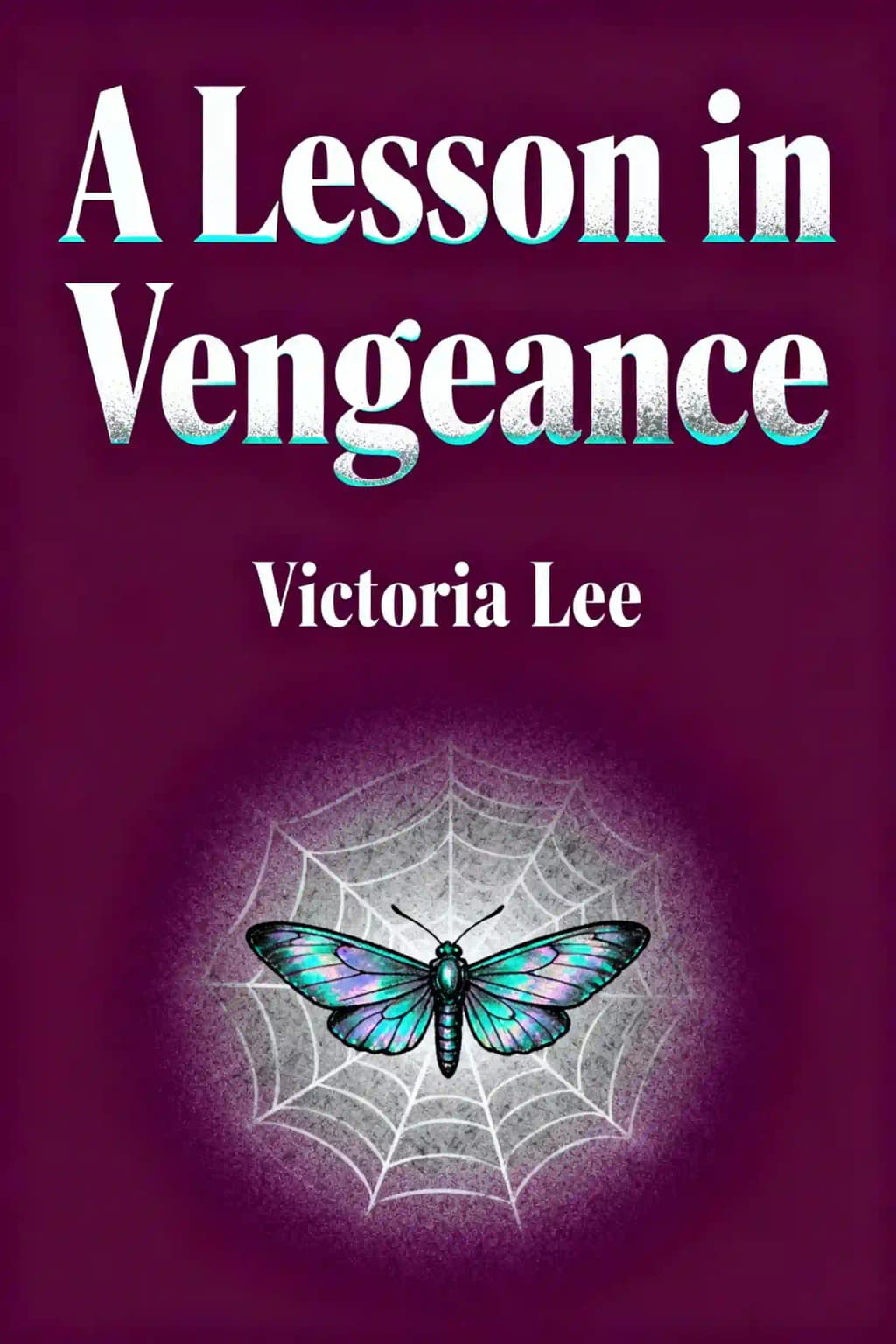
In the rarefied world of dark academia fiction, Victoria Lee's "A Lesson in Vengeance" stands as a masterclass in psychological suspense. This gothic thriller has become something of a cult phenomenon among readers drawn to its intoxicating blend of witchcraft, literary obsession, and queer romance. Since its 2021 release, the novel has garnered praise from luminaries like V.E. Schwab and earned a devoted following on BookTok, where readers are captivated by its atmospheric exploration of grief, guilt, and manipulation. What makes this book particularly compelling is Lee's background in psychology, which infuses the unreliable narration with clinical authenticity. The story unfolds at the fictional Dalloway School, a prestigious boarding institution with a history of witchcraft and murder-where the line between past and present blurs dangerously for our protagonist, a girl haunted by both literal and figurative ghosts.
Chapter 2
A Haunted Return to Hallowed Halls
Felicity Morrow arrives at the elite Dalloway School with a burden heavier than her luggage - the death of her girlfriend Alex the previous year. The prestigious boarding school rises from the Catskill foothills "like a crown," accessible only by a winding gravel road that snakes through dense forest before opening to reveal the mirror-glass lake that reflects the institution's Gothic spires. The September air carries the sharp scent of pine and approaching autumn, a familiar perfume that only intensifies Felicity's sense of deja vu.
Unlike previous years when she'd arrived by taxi, Felicity's mother personally drives her to campus, their three-hour journey marked by suffocating silence and occasional, stilted attempts at small talk. Every few minutes, her mother's eyes dart to the rearview mirror, watching Felicity as if expecting her to shatter. Dean Marriott, a tall woman whose gray hair is pulled into a severe bun, escorts them to Godwin House - an isolated, crooked building perched precariously on an ancient avalanche site. The structure lists slightly to one side, its weathered stone facade bearing witness to generations of literary students who've passed through its doors. Despite numerous renovation attempts over the years, the students have successfully fought to preserve its gnarled skeleton - a fitting metaphor for Felicity's own determination to return to the scene of her trauma rather than heal elsewhere.
After her mother departs with visible relief, shoulders relaxing as she hurries down the gravel path, Felicity meticulously unpacks her belongings. Her movements are measured and deliberate as she arranges her clothes in perfect rows, carefully ignoring the loose floorboard where she once hid tarot cards and dried herbs. Her once-overflowing book collection, which used to span three full shelves, has been reduced to a single, partially filled shelf - another symbol of her diminished self following Alex's death. The empty spaces mock her, reminding her of all she's lost.
When memories unexpectedly pierce through her carefully constructed defenses - the sound of Alex's laugh echoing down the corridor, the phantom smell of her lavender shampoo - Felicity finds herself dizzy in the doorway as the house seems to tilt and spin around her. The wooden floors appear to ripple like water, and the wallpaper patterns swirl in impossible patterns. This disorientation foreshadows the blurring of reality and imagination that will characterize her entire year.
The house feels eerily empty compared to the previous year's energy, when laughter and music would drift through its halls at all hours. Though her mother wanted her to transfer to Exeter, practically begged her during late-night conversations, Felicity couldn't explain how being friendless at Dalloway was somehow better than being friendless anywhere else. "At least here," she thinks, running her fingers along the worn banister, "the walls know me." This sentiment reveals her deep connection to the place despite - or perhaps because of - its association with her trauma. When she discovers someone new occupying Alex's old room, catching a glimpse of unfamiliar posters through the half-open door, the boundaries between past and present begin to blur, setting the stage for Felicity's descent into obsession and delusion. The creak of floorboards and whisper of wind through ancient eaves seem to carry echoes of the past, suggesting that Godwin House remembers everything - even the secrets Felicity wishes she could forget.
Chapter 3
The Mysterious Ellis Haley
The girl in Alex's room isn't a ghost, but she might as well be for the disruption she causes in Felicity's carefully constructed world. After their first encounter-when Felicity finds her sitting at Alex's desk and she shuts the door in her face-they barely cross paths. This mysterious new student leaves dirty coffee cups in the kitchen and reads on the porch in a seersucker suit, smoking cigarettes with an air of detached sophistication.
When they finally have a proper introduction, the girl simply says "Ellis," refusing to clarify if it's her first or last name. This deliberate ambiguity becomes characteristic of everything about Ellis-her intentions, her history, her very nature remain elusive throughout their relationship. As Felicity watches Ellis walk away, she realizes she wants to unravel her-"to find the loose thread that will help me understand who she is and why she's here." This desire to decode Ellis becomes Felicity's new obsession, replacing her previous fixation on witchcraft and the Dalloway Five.
The truth about Ellis emerges at a party when Hannah Stratford excitedly reveals that Ellis Haley is a seventeen-year-old Pulitzer Prize-winning novelist who has transferred to Dalloway for her senior year. Mortified at her previous interactions with such a literary celebrity, Felicity escapes Hannah's enthusiasm. Later, Ellis reveals she's writing a novel about the Dalloway Five, specifically Margery Lemont, exploring "whether witchcraft merely reflected a pathologization of female anger." This academic interest in the school's dark history creates an immediate connection between Ellis and Felicity, who had been researching the same topic for her senior thesis before Alex's death.
Ellis quickly establishes herself as the center of gravity among the Godwin House residents. Her charisma draws everyone in, creating a social hierarchy with herself at the top. She possesses an uncanny ability to make each girl feel special in her presence while maintaining an air of mystery. This calculated charm, combined with her literary fame, makes her both irresistible and dangerous-particularly to someone as vulnerable as Felicity.
Chapter 4
Witchcraft and History: The Dalloway Five
The dark history of Dalloway School serves as both backdrop and catalyst for the events of the novel. In 1714, five students-known as the Dalloway Five-were accused of witchcraft and murdering their classmate Flora Grayfriar. Though accounts of Flora's death varied wildly between ritualistic murder and hunting accident, the girls were convicted and executed. According to legend, each died in mysterious circumstances, as if Flora's death was avenged with their blood.
This history becomes central to both Felicity's thesis work and Ellis's novel-in-progress. While researching in the library's occult collection, Felicity rereads the entire record of the Dalloway Five murder trial, searching for details about what spells they cast and whether they truly required Flora's death. Despite their claims of innocence, townspeople testified they'd seen the girls holding bacchanals in the woods. The educated town leaders didn't believe in witchcraft, but common folk feared the girls might curse their crops and cattle.
Most significant is the confession of Margery Lemont, who claimed to have murdered Flora as the devil's sacrifice after being possessed by a spirit or demon. This historical account parallels Felicity's own fears that she might be possessed or cursed-that something supernatural might explain her actions and memories surrounding Alex's death. The blurring of history and present creates a psychological hall of mirrors where Felicity increasingly cannot distinguish between what is real and what is delusion.
Ellis's fascination with this history takes a disturbing turn when she suggests they form their own coven to recreate the experiences of the Dalloway Five. "If I'm to do this properly, like a real method writer, I should explore the same pastimes the Five explored," she insists. Despite Felicity's warnings that "magic is dangerous," Ellis dismisses her concerns with "magic isn't real," seeing their activities as both research and potential material for her book. This fundamental disagreement about the nature of reality-whether supernatural forces exist or whether human psychology creates its own monsters-becomes central to their relationship and the novel's exploration of truth.
Chapter 5
The Unreliable Mind: Memory and Delusion
At the heart of "A Lesson in Vengeance" lies the question of memory's reliability and the mind's capacity for self-deception. Throughout the novel, Felicity's recollection of events-particularly those surrounding Alex's death-shifts and transforms. What begins as a clear memory of a mountain climbing accident gradually reveals itself as a fabrication, a more palatable version of the truth her mind created to protect her from unbearable guilt.
After an emotional breakdown in an antiques shop, Ellis gently confronts Felicity with reality: Alex hadn't died climbing a mountain; she had drowned at school. The mountain climbing story was actually an exercise Dr. Ortega had Felicity write-an alternate universe version of Alex's death without their fight. She'd created a scenario where her death was still Felicity's fault but in a more heroic context. The truth was messier: Alex had a violent temper, and her death at Dalloway was the result of a drunken accident after an argument, not a dramatic mountain rescue gone wrong.
This revelation forces Felicity to question everything she believes about her past. If she could construct such an elaborate alternative history about Alex's death, what else might her mind be hiding or inventing? When strange events begin occurring-missing postcards, books appearing where they shouldn't be, ghostly sensations-Felicity cannot trust whether these are supernatural occurrences, someone's deliberate manipulations, or manifestations of her own unstable psyche.
Dr. Ortega had warned Felicity about her mind's power to both summon and banish terrible things. This psychological insight becomes increasingly relevant as Felicity navigates a world where reality seems fluid and unreliable. Her medication, which she often neglects to take, is meant to stabilize these perceptions, but her resistance to treatment allows her delusions to flourish. The novel brilliantly keeps readers questioning which events are objectively happening and which exist only in Felicity's mind-a disorientation that mirrors her own experience.
Chapter 6
Dangerous Games: The Night Migrations
The "Night Migrations"-ritualistic outings organized by Ellis-become increasingly central to the plot as the novel progresses. These nocturnal adventures blend occult practices, literary research, and psychological manipulation into experiences that blur the boundaries between reality and performance. For Ellis, they represent "method writing"-immersive research for her novel about the Dalloway Five. For Felicity, they reawaken her interest in witchcraft while triggering memories of similar rituals she performed with Alex.
During one particularly significant Night Migration, Felicity leads the Godwin House girls to an abandoned nineteenth-century church that the Margery coven has used for initiations for decades. Despite her excommunication from the official coven, Felicity still possesses the key to this sacred space. Inside, she performs a snow summoning ritual with candles, crystals, holly berries in sugar, and rainwater. When snow begins falling on the church roof shortly afterward, the line between coincidence and magic becomes tantalizingly blurred.
The most disturbing Night Migration occurs when Ellis takes Felicity alone to a cemetery-specifically, to Alex's grave. This cruel pilgrimage forces Felicity to confront her grief and guilt directly. When Ellis suggests they dig up the empty coffin for "closure," Felicity is horrified by the desecration but also by Ellis's increasingly erratic behavior. This moment marks a turning point in their relationship, as Felicity begins to see the darkness beneath Ellis's charismatic exterior.
The Night Migrations escalate further when Ellis convinces Felicity to help her recreate Flora Grayfriar's murder. Armed with a rifle borrowed from her sibling Quinn, Ellis leads Felicity into the woods to test whether "an unskilled girl could shoot something in near darkness and actually hit her target." Though Ellis frames this as an experiment to help Felicity see the Dalloway witches as fallible humans rather than magical beings, the exercise crosses a dangerous line when they kill a coyote. Ellis marks Felicity's face with its blood in an "old English tradition" for new hunters-a ritual that foreshadows the more sinister violence to come.
Chapter 7
Love and Obsession in the Shadows
The relationship between Felicity and Ellis evolves from cautious curiosity to passionate romance to deadly obsession. Their connection is built on shared intellectual interests, mutual trauma, and a dangerous attraction to darkness. For Felicity, Ellis represents both a new beginning and a reflection of her relationship with Alex-another brilliant, charismatic figure who draws her into potentially destructive patterns.
Their first intimate moment occurs during a tarot reading in Felicity's room. Ellis reclines against the pillows while Felicity shuffles the deck, the scent of phosphorus lingering in the air from Ellis's cigarette. For Ellis's question about whether they'll become friends, Felicity draws three cards: Knight of Swords for Ellis (ambitious, driven, sometimes recklessly pursuing goals), The Hermit for Felicity (on a journey of self-discovery, needing to trust her intuition), and Death for their relationship. This prophetic reading perfectly captures the transformation their connection will undergo-from friendship to romance to destruction.
When they finally become lovers during Thanksgiving break, Felicity describes the experience with literary intensity: "When Ellis touches me, it's with the same slow, determined care I imagine she uses writing her books. Unlike previous experiences, with Ellis it feels like she creates and unravels me simultaneously, like I'm a sentence she writes, erases, and rewrites. I feel invented by her." This metaphor proves more literal than Felicity realizes, as Ellis is indeed crafting a narrative with Felicity at its center-not just in her novel but in reality.
Their relationship becomes increasingly toxic as Ellis's manipulation escalates. She isolates Felicity from others, creates situations that trigger her trauma, and exploits her mental instability. When Ellis reveals she came to Dalloway specifically to write about Felicity after reading about Alex's death, their relationship is exposed as predatory rather than romantic. Ellis has been using Felicity as research material all along, studying her breakdown and recovery as fodder for her work.
Chapter 8
The Terrible Truth Unravels
The novel's final act delivers a cascade of shocking revelations that force readers to reevaluate every scene, conversation, and memory that came before. When Clara Kennedy vanishes during the autumn festival, Felicity's desperate search leads her to a horrifying discovery in the garden where Alex's grave lies - Clara's body arranged in a meticulous recreation of Flora Grayfriar's century-old murder. The staging is eerily precise: wormwood leaves scattered around the corpse, fresh hellebore flowers replacing the eyes, and Clara's hands folded peacefully across her chest just as historical accounts described Flora's position.
Ellis's confession unfolds with chilling composure in the library of Godwin House. She methodically explains how she orchestrated each detail, from stealing Quinn's hunting rifle months ago to ensuring Felicity's fingerprints would be found on the weapon. The preparation reveals a depth of premeditation that spans back to Ellis's first arrival at the university - every shared coffee, late-night conversation, and moment of supposed friendship had been carefully calculated to build toward this moment.
However, the novel's most devastating revelation emerges through Felicity's own fractured memories, which finally crystallize during a thunderstorm that mirrors the night of Alex's death. The truth shatters both the mountain climbing accident story she told the police and the drowning narrative she'd convinced herself was real. During a bitter argument near Raven's Point, Alex had taunted Felicity about her family history of mental illness, sneering "You're batshit, just like your mother - it's in your blood." In a surge of rage, Felicity shoved Alex with both hands, watching in horror as her friend pinwheeled backward over the cliff edge, her scream echoing all the way down to the dark water below.
The memory continues to unspool, revealing how Felicity waded into the frigid lake to retrieve Alex's body, dragging it through the woods to Godwin House. In a panic-driven state, she buried Alex in the crawl space beneath the house's foundation, creating an impromptu grave that would hold its secret for months. This truth transforms our understanding of Felicity not as a victim of circumstances but as someone capable of both murder and elaborate self-deception - her unreliable narration stemming not just from mental instability but from a desperate need to protect herself from her own guilt.
The novel builds to its climactic confrontation on the roof of Godwin House, where Felicity deliberately recreates the circumstances of Alex's death - but this time with clear intent rather than impulse. She lures Ellis to the edge with the pretense of a confession, then delivers a calculated push that sends her former friend plummeting to the courtyard below. Unlike the confused violence with Alex, "this push is deliberate - hard enough that even as Ellis reaches for me, it's too late." The look that crosses Ellis's face in those final moments combines "surprise but also grim recognition," suggesting she may have anticipated, or even counted on, this violent conclusion to their deadly game of manipulation and revenge.
Chapter 9
The Cycle Continues
Three years after Ellis's death, Felicity has meticulously crafted a new identity in London. Her Mayfair flat - with its pristine white walls and carefully curated minimalist decor - represents everything Godwin House wasn't. She's adopted a Yorkshire terrier named Pip, maintains a successful facade as a doctoral candidate at Imperial College studying theoretical physics, and shares her bed with Talia, a gallery curator with kind eyes and no knowledge of her past. Yet beneath this carefully constructed normalcy, Felicity's restlessness grows. She's already mapping out her inevitable departure, collecting train schedules and researching cities where she might disappear next. The anonymity of London, with its millions of strangers and endless possibilities for reinvention, fits her like a well-worn glove.
The discovery of Ellis's novel "Avocet" in a Charing Cross bookshop window stops her heart. The book has become a sensation in literary circles, praised for its gothic atmosphere and unreliable narrator. The dedication - "For Felicity. I did it all for you" - serves as both love letter and accusation. The novel Ellis spent his final months writing weaves together their shared history with elements of supernatural horror, blurring the lines between Felicity's actions and Margery Lemont's influence. Critics have dissected every page, unaware that the "fictional" murders they're analyzing are painfully real.
Standing behind Talia on their rooftop terrace one winter evening, Felicity feels the familiar urge rising. Her girlfriend leans precariously over the railing, pointing out the lights of the London Eye in the distance. The setup is almost too perfect - like a scene Ellis might have written. Felicity's hands twitch as she calculates the angle, the force required, how the fall would look to witnesses below. "I wonder what Ellis would think of me now, so predictable, as I contemplate another fall," she muses, recognizing that his novel wasn't just documentation but prophecy. He had seen through her performances to the unchangeable truth of her nature.
As snow begins to fall - fat, impossible flakes in otherwise clear weather - Felicity feels an electric charge in the air reminiscent of Night Migration rituals. The parallel is unmistakable: the same supernatural atmosphere that surrounded her previous murders has returned. This meteorological impossibility raises questions about whether Margery Lemont's influence truly ended with Ellis's death.
The novel's conclusion masterfully balances multiple interpretations. Is Felicity trapped in a cycle of violence because of ancestral curse or psychological compulsion? Does her ability to conjure impossible weather prove supernatural involvement, or is she experiencing elaborate delusions? The snow continues to fall as Felicity weighs her options, leaving readers to grapple with the story's central mystery: whether evil requires supernatural explanation or if human nature alone is capable of such darkness. Victoria Lee refuses to provide easy answers, instead crafting an ending that mirrors the ambiguity of real-world violence and the human capacity for self-deception.
Chapter 10
The Power of Narrative and Self-Deception
"A Lesson in Vengeance" ultimately explores how stories shape our understanding of ourselves and our actions. Both Felicity and Ellis are storytellers-Felicity through her academic research and personal mythology, Ellis through her novels. They each construct narratives that justify their darkest impulses, using literature and history to contextualize their violence.
Felicity repeatedly rewrites her own history to make her actions more palatable. She transforms her murder of Alex into a heroic mountain climbing accident, then into a tragic but accidental drowning. She convinces herself she's being haunted by Alex's ghost rather than confronting her guilt. She frames her relationship with Ellis as a romance rather than recognizing the manipulation at its core. These self-deceptions allow her to continue functioning despite the weight of her actions.
Ellis, meanwhile, uses her writing to process and justify her fascination with murder. Her "method writing" approach becomes an excuse to explore violent impulses under the guise of artistic research. When she kills Clara, she does so to create the perfect story-a recreation of Flora Grayfriar's murder that completes the parallel between the Dalloway Five and the current Godwin House residents. For Ellis, life is material to be shaped into narrative, with real people as characters she can manipulate for dramatic effect.
The novel suggests that this power of narrative can be both healing and destructive. Stories help us make sense of trauma and find meaning in chaos, but they can also become elaborate mechanisms for avoiding truth and responsibility. In Felicity's case, her self-deceptions initially protect her fragile psyche but ultimately prevent her from breaking the cycle of violence. By the novel's end, she has become trapped in a narrative of her own making-doomed to repeat her crimes because she cannot fully acknowledge them.
In this way, "A Lesson in Vengeance" offers a chilling meditation on how easily we can convince ourselves of comfortable lies rather than facing uncomfortable truths. The real witchcraft in the novel isn't found in spells or rituals but in the mind's remarkable capacity to rewrite reality-a power that proves far more dangerous than any supernatural curse.