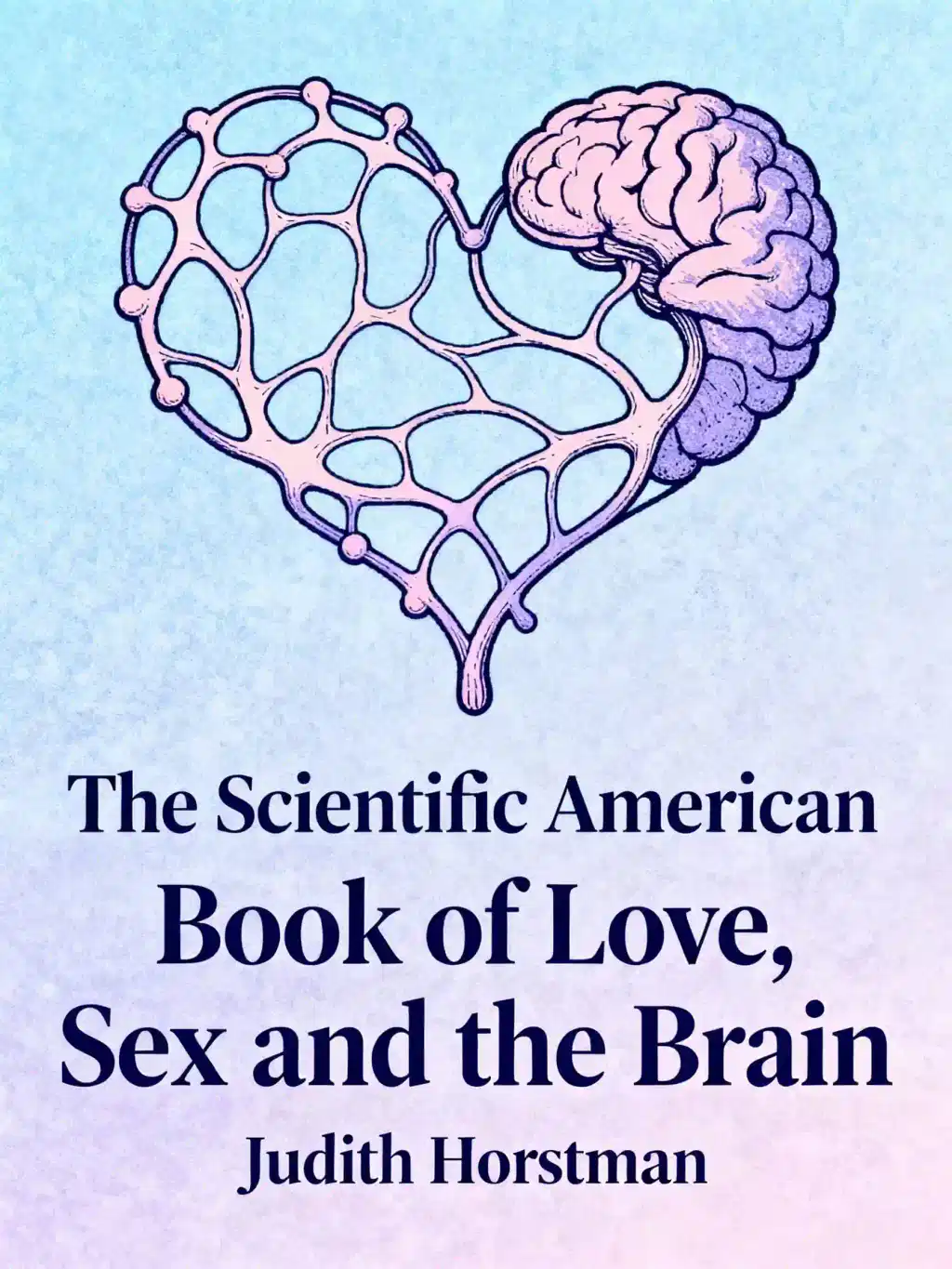
Scientific American Book of Love, Sex and the Brain: The Neuroscience of How, When, Why and Who We Love by Judith Horstman Summary

Overview of Scientific American Book of Love, Sex and the Brain
Discover how your brain navigates love and sex. Parental affection grows healthier brains, while orgasms activate the same pleasure centers as music and food. Did you know friendship might outrank romance as our most vital relationship? Neuroscience meets intimacy in this mind-expanding exploration.
- Oxytocin and dopamine drive romantic euphoria, bonding, and long-term attachment
- Parental love boosts brain size and shapes future relationship patterns
- Social isolation activates brain stress responses linked to misery and illness
- Sexual orientation is hardwired neurologically, not a social choice
- Friendship triggers serotonin for mood stability and longevity benefits
- Orgasm activates brain reward centers similarly to exercise and music
- Fatherhood rewires neural pathways for enhanced emotional sensitivity
- Mirror neurons create involuntary emotional synchronization during human connection
- Postpartum depression disrupts maternal brain chemistry and infant bonding
- Childhood attachment styles predict adult romantic relationship success
- Romantic craving mirrors addiction patterns in brain reward systems
- Senior brains maintain sexual desire through preserved sensory activation
About the Author of Scientific American Book of Love, Sex and the Brain
Judith Horstman, acclaimed author of The Scientific American Book of Love, Sex, and the Brain, is an award-winning science journalist renowned for translating neuroscience into accessible insights.
A former Washington correspondent for Gannett, Fulbright scholar, and journalism professor, Horstman has authored seven books, including the bestselling The Scientific American Day in the Life of Your Brain and The Scientific American Healthy Aging Brain.
Her work bridges brain science and human behavior, demystifying topics like love, aging, and cognition through rigorous research and engaging prose. As a senior editor at Time Inc. and contributor to major publications, she blends academic authority with storytelling flair.
Horstman’s books, frequently cited in educational and professional contexts, have cemented her reputation as a trusted voice in popular neuroscience, helping readers harness brain science to enrich their lives.
FAQs About Scientific American Book of Love, Sex and the Brain
What is The Scientific American Book of Love, Sex, and the Brain about?
The Scientific American Book of Love, Sex, and the Brain explores how neuroscience shapes human relationships, sexual orientation, and emotional bonds. Judith Horstman synthesizes research to explain how the brain drives romantic passion, parental attachment, and social connection, while addressing topics like orgasm’s health benefits, the hardwired nature of sexuality, and the lifelong need for companionship.
Who should read The Scientific American Book of Love, Sex, and the Brain?
This book suits curious general readers, psychology enthusiasts, and professionals seeking accessible neuroscience insights. Its blend of Scientific American research and engaging prose appeals to anyone interested in how biology influences love, sexuality, and social bonds.
Is The Scientific American Book of Love, Sex, and the Brain worth reading?
Yes—it’s praised for translating complex neuroscience into relatable concepts. Critics highlight its compelling mix of studies on topics like heartbreak’s physical toll, friendship’s longevity benefits, and the brain’s role in sustaining desire, though some note methodological gaps in cited research.
What are the key concepts in The Scientific American Book of Love, Sex, and the Brain?
Key ideas include:
- Mirror neurons fostering empathy.
- Parental love increasing brain volume.
- Social isolation triggering neurological distress.
- Romantic passion activating the same brain regions as addiction.
How does Judith Horstman explain love and the brain?
Horstman categorizes love into types (romantic, companionate, parental) and links each to specific brain circuits. For example, romantic love triggers dopamine-driven cravings, while long-term attachment involves oxytocin and vasopressin pathways.
What does the book say about sexuality and the brain?
It asserts sexual orientation is biologically hardwired, not chosen. Studies cited suggest female sexuality may be more fluid, while male bisexuality remains debated due to conflicting research methodologies.
How does The Scientific American Book of Love, Sex, and the Brain address friendship?
Friendship is framed as critical for brain health, with social bonds reducing stress and enhancing longevity. Horstman argues platonic relationships may outweigh romantic ones in sustaining mental well-being.
What are criticisms of The Scientific American Book of Love, Sex, and the Brain?
Some critiques note oversimplification of studies, such as a 2005 paper questioning male bisexuality’s validity, which relied on controversial methods like measuring genital arousal instead of self-reported identity.
How does this book compare to other neuroscience books?
Unlike Mary Roach’s Bonk (focused on humor), Horstman prioritizes scientific rigor while maintaining accessibility. It’s closer to The Anatomy of Love by Helen Fisher but emphasizes brain imaging over anthropological data.
What real-life applications does the book suggest?
- Prioritizing social connections to combat isolation.
- Viewing romantic rejection as a neurological “withdrawal”.
- Recognizing orgasm’s role in stress reduction and brain health.
Who is Judith Horstman?
Judith Horstman is an award-winning science journalist and author of seven books, including the Scientific American Day in the Life of Your Brain series. Her expertise lies in distilling complex research for mainstream audiences.
Why is The Scientific American Book of Love, Sex, and the Brain relevant today?
As loneliness rises globally, the book’s insights into the brain’s need for connection resonate strongly. It also clarifies debates on gender/sexuality through neuroscience, aligning with contemporary discussions on identity.
Feel the book through the author's voice
Turn knowledge into engaging, example-rich insights
Capture key ideas in a flash for fast learning
Enjoy the book in a fun and engaging way
Key Themes in Scientific American Book of Love, Sex and the Brain
Quotes from Scientific American Book of Love, Sex and the Brain
Our need for love isn't merely emotional-it's biological.
Loneliness ranks among the top causes of death.
Love activates the same reward pathways as cocaine addiction.
Our earliest experiences of love profoundly shape our adult relationships.
The maternal bond creates an imprint in the brain that lasts a lifetime.
Characters in Scientific American Book of Love, Sex and the Brain
Quick Summary Mode - Read or listen to Scientific American Book of Love, Sex and the Brain Summary in 9 Minutes

Break down key ideas from Scientific American Book of Love, Sex and the Brain into bite-sized takeaways to understand how innovative teams create, collaborate, and grow.

Flash Card Mode - Top 7 Insights from Scientific American Book of Love, Sex and the Brain in a Nutshell

Distill Scientific American Book of Love, Sex and the Brain into rapid-fire memory cues that highlight key principles of candor, teamwork, and creative resilience.

Fun Mode - Scientific American Book of Love, Sex and the Brain Lessons Told Through 25-Min Stories

Experience Scientific American Book of Love, Sex and the Brain through vivid storytelling that turns innovation lessons into moments you'll remember and apply.
Personalize Mode - Read or listen to Scientific American Book of Love, Sex and the Brain Summary in 0 Minutes

Ask anything, pick the voice, and co-create insights that truly resonate with you.

From Columbia University alumni built in San Francisco
"Instead of endless scrolling, I just hit play on BeFreed. It saves me so much time."


"I never knew where to start with nonfiction—BeFreed’s book lists turned into podcasts gave me a clear path."


"Perfect balance between learning and entertainment. Finished ‘Thinking, Fast and Slow’ on my commute this week."
"Crazy how much I learned while walking the dog. BeFreed = small habits → big gains."
"Reading used to feel like a chore. Now it’s just part of my lifestyle."

"Feels effortless compared to reading. I’ve finished 6 books this month already."
"BeFreed turned my guilty doomscrolling into something that feels productive and inspiring."

"BeFreed turned my commute into learning time. 20-min podcasts are perfect for finishing books I never had time for."
"BeFreed replaced my podcast queue. Imagine Spotify for books — that’s it. 🙌"

"It is great for me to learn something from the book without reading it."
"The themed book list podcasts help me connect ideas across authors—like a guided audio journey."
"Makes me feel smarter every time before going to work"
From Columbia University alumni built in San Francisco
"Instead of endless scrolling, I just hit play on BeFreed. It saves me so much time."
"I never knew where to start with nonfiction—BeFreed’s book lists turned into podcasts gave me a clear path."
"Perfect balance between learning and entertainment. Finished ‘Thinking, Fast and Slow’ on my commute this week."
"Crazy how much I learned while walking the dog. BeFreed = small habits → big gains."
"Reading used to feel like a chore. Now it’s just part of my lifestyle."
"Feels effortless compared to reading. I’ve finished 6 books this month already."
"BeFreed turned my guilty doomscrolling into something that feels productive and inspiring."
"BeFreed turned my commute into learning time. 20-min podcasts are perfect for finishing books I never had time for."
"BeFreed replaced my podcast queue. Imagine Spotify for books — that’s it. 🙌"
"It is great for me to learn something from the book without reading it."
"The themed book list podcasts help me connect ideas across authors—like a guided audio journey."
"Makes me feel smarter every time before going to work"
"Instead of endless scrolling, I just hit play on BeFreed. It saves me so much time."
"I never knew where to start with nonfiction—BeFreed’s book lists turned into podcasts gave me a clear path."
"Perfect balance between learning and entertainment. Finished ‘Thinking, Fast and Slow’ on my commute this week."
"Crazy how much I learned while walking the dog. BeFreed = small habits → big gains."
"Reading used to feel like a chore. Now it’s just part of my lifestyle."
"Feels effortless compared to reading. I’ve finished 6 books this month already."
"BeFreed turned my guilty doomscrolling into something that feels productive and inspiring."
"BeFreed turned my commute into learning time. 20-min podcasts are perfect for finishing books I never had time for."
"BeFreed replaced my podcast queue. Imagine Spotify for books — that’s it. 🙌"
"It is great for me to learn something from the book without reading it."
"The themed book list podcasts help me connect ideas across authors—like a guided audio journey."
"Makes me feel smarter every time before going to work"
"Instead of endless scrolling, I just hit play on BeFreed. It saves me so much time."
"I never knew where to start with nonfiction—BeFreed’s book lists turned into podcasts gave me a clear path."
"Perfect balance between learning and entertainment. Finished ‘Thinking, Fast and Slow’ on my commute this week."
"Crazy how much I learned while walking the dog. BeFreed = small habits → big gains."
"Reading used to feel like a chore. Now it’s just part of my lifestyle."
"Feels effortless compared to reading. I’ve finished 6 books this month already."
"BeFreed turned my guilty doomscrolling into something that feels productive and inspiring."
"BeFreed turned my commute into learning time. 20-min podcasts are perfect for finishing books I never had time for."
"BeFreed replaced my podcast queue. Imagine Spotify for books — that’s it. 🙌"
"It is great for me to learn something from the book without reading it."
"The themed book list podcasts help me connect ideas across authors—like a guided audio journey."
"Makes me feel smarter every time before going to work"

Get the Scientific American Book of Love, Sex and the Brain summary as a free PDF or EPUB. Print it or read offline anytime.